Activated charcoal can remove surface stains from coffee, tea, and wine, giving your teeth a temporarily brighter appearance. However, it doesn’t change intrinsic discoloration or affect yellow dentin beneath the enamel. Its abrasive texture may erode enamel over time, increasing your cavity risk. No charcoal product holds an ADA Seal of Acceptance, meaning safety and effectiveness aren’t clinically confirmed. If you want to make a truly informed decision about your smile, there’s much more you should know.
Key Takeaways
- Activated charcoal removes extrinsic stains from coffee, tea, wine, and smoking but cannot change intrinsic discoloration or yellow dentin.
- Its strong adsorptive properties bind surface debris, producing early whitening effects through stain removal rather than structural tooth changes.
- Regular use risks enamel erosion, increased surface roughness, bacterial buildup, and ultimately deeper yellowing from thinning enamel.
- No charcoal product holds an ADA Seal of Acceptance, meaning safety and effectiveness remain clinically unverified.
- For safer, lasting results, ADA-accepted professional whitening treatments targeting deeper discoloration are strongly recommended over charcoal alternatives.
What Is Activated Charcoal Teeth Whitening?
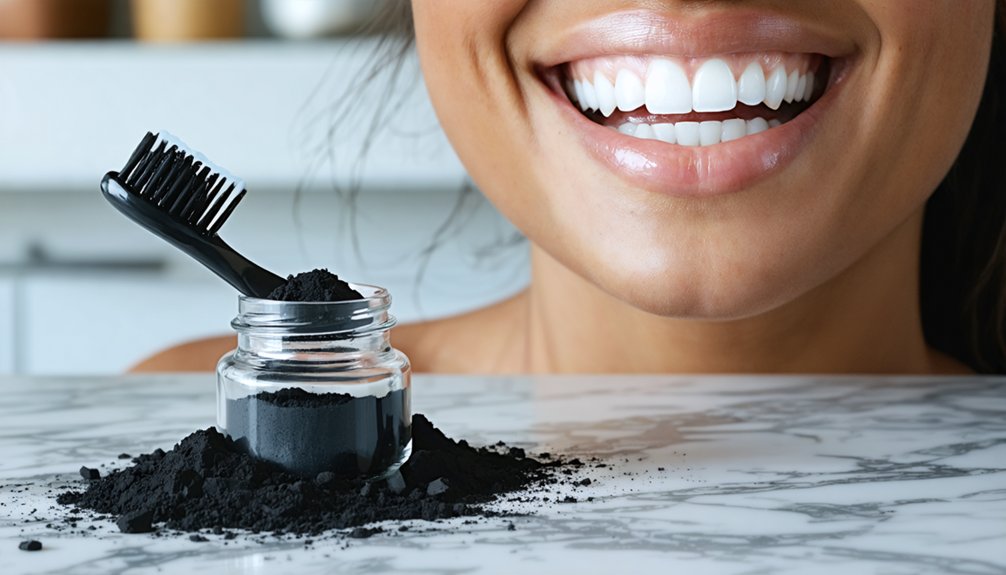
Activated charcoal is a processed form of carbon with an extremely porous surface that gives it strong adsorptive properties—meaning it can bind and draw certain substances to itself.
Activated charcoal’s highly porous surface acts like a magnet, binding and pulling certain substances toward itself.
Dental products leverage this mechanism to target surface debris and extrinsic stains from coffee, tea, wine, and smoking. You’ll find it sold as powder, toothpaste, capsules, or kits—none of which are the same as regular grilling charcoal.
Understanding the claimed charcoal benefits requires recognizing their limits: effects target surface discoloration only, not intrinsic tooth color.
Current evidence doesn’t support strong whitening claims, and no charcoal product holds ADA Seal approval.
Before choosing this route, you should weigh charcoal alternatives—particularly professional bleaching—which address deeper discoloration more reliably and with established safety data.
Can Charcoal Actually Whiten Your Teeth?
The core question behind charcoal’s popularity is whether it actually whitens teeth or simply cleans them.
Charcoal effectiveness is largely limited to stain removal from surface enamel, not true bleaching. You’re removing debris, not changing your tooth’s base color.
Understand what the evidence actually shows:
- Charcoal removes extrinsic stains from coffee, tea, wine, and smoking.
- It can’t alter intrinsic discoloration or naturally yellow dentin.
- No strong clinical evidence confirms it as a legitimate whitening agent.
- The ADA hasn’t granted its Seal of Acceptance to any charcoal product.
- Early “whitening” you notice is stain removal, not structural color change.
If you want genuine control over your results, you need to distinguish surface cleaning from actual whitening before investing in charcoal-based products.
Is Professional Whitening More Effective?
When surface stain removal isn’t enough, professional whitening addresses what charcoal can’t. Whitening comparisons consistently show that dentist-administered treatments reach intrinsic discoloration—the deeper, structural yellowing charcoal never touches.
Professional techniques use clinically tested peroxide concentrations that penetrate enamel and alter tooth color at its source.
Charcoal only removes extrinsic stains while potentially roughening enamel and thinning it over time. That degradation can make your teeth appear more yellow, not less.
Professional methods work under controlled conditions, reducing risks that unsupervised charcoal use introduces.
If you want measurable, lasting results rather than temporary surface improvement, you need an evidence-based approach. Consulting a dentist before committing to any whitening method gives you accurate expectations and protects your long-term dental health.
What Are the Real Risks of Charcoal on Teeth?
Charcoal’s abrasive nature can gradually wear down enamel, the hard outer layer protecting your teeth. While it offers some stain removal, repeated use risks enamel erosion, exposing the yellower dentin beneath—the opposite of your whitening goal.
Key risks you’re taking with charcoal include:
- Enamel erosion that’s permanent and irreversible
- Increased surface roughness, giving bacteria more places to cling
- Higher cavity and gum disease risk from that rougher surface
- Deeper yellowing as thinning enamel reveals underlying dentin
- No ADA endorsement—current evidence doesn’t support safe, effective whitening
You can’t rebuild lost enamel. Before using any charcoal-based product, consult your dentist to weigh whether limited stain removal justifies these documented, lasting consequences.
Should You Use Charcoal Toothpaste at All?
Given the documented risks and limited evidence, should you use charcoal toothpaste at all? Most dental professionals advise against regular use. The enamel safety concerns are real—repeated abrasion thins protective enamel, exposes yellow dentin, and increases cavity risk.
These outcomes contradict your whitening goals entirely.
If you’re determined to try it, limit use to occasional, short-term application and consult your dentist first. Don’t treat it as a daily replacement for fluoride toothpaste.
Charcoal alternatives offer better risk-to-benefit profiles. ADA-accepted whitening toothpastes, professional bleaching treatments, and peroxide-based products deliver measurable results with established safety data.
For intrinsic stains or significant discoloration, professional intervention remains your most effective option. Make informed decisions—your enamel doesn’t regenerate once it’s gone.
Frequently Asked Questions
Can Activated Charcoal Whiten Teeth With Braces or Dental Veneers?
You shouldn’t use activated charcoal for braces care or veneer maintenance. It can damage brackets, stain veneer edges, and lacks strong evidence for safe whitening. Consult your dentist before attempting any charcoal-based treatment.
How Does Activated Charcoal Toothpaste Compare to Whitening Strips?
Whitening strips outperform charcoal effectiveness by targeting intrinsic stains through peroxide bleaching, while charcoal only removes surface debris. You’ll also face safety concerns with charcoal, as it can erode enamel, unlike strips used as directed.
Can Children or Teenagers Safely Use Charcoal Teeth Whitening Products?
Over 40% of children experience enamel erosion early. You shouldn’t use charcoal whitening products without consulting a dentist first, as child safety concerns and dental age factors make these abrasive formulas potentially harmful to developing teeth.
How Often Should Activated Charcoal Be Used for Teeth Whitening?
You shouldn’t use activated charcoal daily. Dental professionals caution against frequent application because long term effects include enamel erosion and increased surface roughness. Limit use, consult your dentist, and consider evidence-backed professional whitening alternatives instead.
Does Activated Charcoal Interact With Medications or Dental Treatments?
Yes, charcoal absorption can reduce medication efficacy if you swallow it. It’s known to bind drugs, potentially lowering their effectiveness. You should consult your dentist or doctor before using charcoal products alongside any medications or dental treatments.
References
- https://www.lilburnfamilydentistry.com/pros-and-cons-of-activated-charcoal-for-teeth-whitening/
- https://www.webmd.com/oral-health/what-to-know-about-activated-charcoal-whitening
- https://www.123dentist.com/blog/whitening-teeth-activated-charcoal/
- https://www.amazon.com/Natural-Whitening-Activated-Charcoal-Sensitive/dp/B071GJXF3G
- https://www.hrccd.com/blog/smokey-smiles-does-activated-charcoal-whiten-teeth/
- https://www.news-medical.net/health/Charcoal-Toothpaste-Benefits-and-Risks.aspx
- https://www.smilesbydesignhuntsville.com/blog/teeth-whitening-baking-soda-vs-charcoal/
- https://www.healthline.com/health/activated-charcoal-teeth-whitening
- https://www.youtube.com/watch?v=QnBZfF9zZzw
- https://www.reddit.com/r/beauty/comments/auw7dk/have_any_of_you_ever_tried_the_charcoal_teeth/