You can whiten teeth at home using activated charcoal through several methods, including brushing with loose powder, using pre-measured capsules, or mixing DIY pastes with baking soda or coconut oil. Each approach targets surface stains from coffee, tea, and wine, but none penetrate enamel or alter intrinsic tooth color. Limit use to once or twice weekly, and always brush gently to protect your enamel. Keep going to discover which method best balances results with safety.
Key Takeaways
- Dip a wet toothbrush into activated charcoal powder and brush gently in circular motions for two minutes, limiting use to twice weekly.
- Open charcoal capsules onto a damp toothbrush for a controlled, mess-free whitening application, brushing gently for two minutes before rinsing thoroughly.
- Create a DIY charcoal paste by grinding tablets with water, applying it to teeth for three minutes, then rinsing completely.
- Mix activated charcoal with baking soda and coconut oil to form a whitening paste, though enamel erosion risks apply to this method.
- Activated charcoal only removes surface stains from coffee, tea, and wine without penetrating enamel or altering intrinsic tooth color.
What Is Activated Charcoal and How Does It Whiten Teeth?
Activated charcoal is a form of carbon processed at high temperatures to create a highly porous surface that’s designed to trap and absorb toxins, chemicals, and impurities.
When you apply it to your teeth, its adsorptive properties latch onto surface stains from coffee, tea, and wine, pulling them away during rinsing.
The charcoal benefits you’ll encounter are largely surface-level. It doesn’t penetrate enamel or alter intrinsic tooth color.
Understanding dental safety here is critical — activated charcoal is abrasive. While it may lift superficial discoloration temporarily, its gritty texture can gradually erode your enamel with repeated use, increasing sensitivity and cavity risk.
You’re not getting a scientifically validated whitening treatment. You’re managing surface stains through mechanical and adsorptive action, which demands cautious, infrequent application.
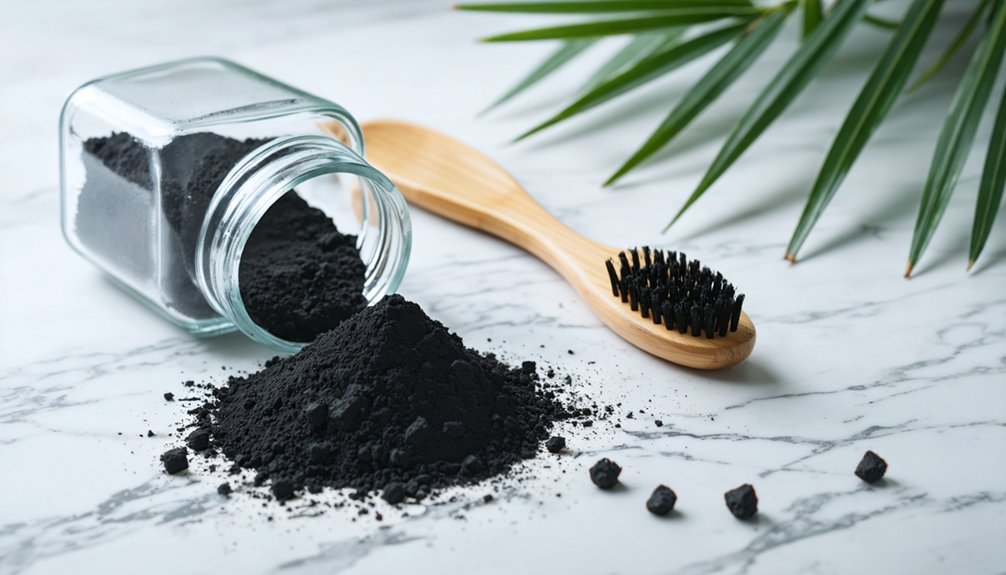
The Simplest Way to Brush With Activated Charcoal
Two methods stand out as the most straightforward approaches for brushing with activated charcoal: dipping a wet toothbrush directly into loose powder, or emptying a pre-measured capsule onto a damp brush. Both deliver similar charcoal benefits — absorbing surface stains and plaque through direct contact.
For either approach, follow these brushing tips: use gentle circular motions for two minutes, avoid aggressive scrubbing, and rinse your mouth thoroughly afterward.
Limit use to once or twice weekly, as charcoal’s abrasive nature can erode enamel with overuse, increasing sensitivity and cavity risk.
The capsule method offers slightly better portion control, reducing mess and waste.
Capsules make charcoal brushing tidier — pre-measured doses mean less mess, less waste, and more consistent use.
Whichever you choose, you’re targeting surface discoloration only — don’t expect results beyond that. When uncertain, consult your dentist first.
The Charcoal Capsule Method for Easier Application
If you find loose charcoal powder messy to handle, activated charcoal capsules offer a more controlled alternative.
To use this method, you simply open one capsule and empty its contents directly onto your damp toothbrush, eliminating the need to dip into a powder jar.
You then brush gently for two minutes, though you should limit this to once or twice weekly to reduce the risk of enamel erosion.
Opening Charcoal Capsules Properly
One simple way to apply activated charcoal to your teeth is by using pre-measured capsules, which eliminate the mess of scooping loose powder.
To open them correctly, hold the capsule firmly over your toothbrush, then twist and pull both ends apart slowly. This controlled separation prevents powder from dispersing into the air or onto surfaces.
Different capsule brands vary in shell thickness, so apply consistent, gentle pressure to avoid spilling.
Check your capsule storage conditions beforehand, as humidity can cause shells to soften or stick, making clean opening difficult. Store capsules in a cool, dry place to maintain their integrity.
Empty the full contents onto your damp toothbrush, ensuring an even distribution before you begin brushing.
Precise application gives you better control over the process.
Brushing With Capsule Powder
Once you’ve emptied the capsule powder onto your damp toothbrush, brush your teeth gently using small, circular motions for approximately two minutes. One of the primary capsule benefits is precise powder measurement, which prevents you from applying excessive amounts.
Among practical application tips, keep pressure light — charcoal’s abrasive properties can erode enamel if you brush too aggressively.
After brushing, rinse your mouth thoroughly multiple times until no black residue remains, particularly along your gum line. Limit this method to once or twice weekly, as frequent use increases sensitivity and cavity risk over time.
It’s worth noting that while this technique may reduce surface staining temporarily, no substantial scientific evidence confirms activated charcoal delivers reliable whitening results.
Consulting your dentist before continuing any charcoal-based routine remains strongly advisable.
Activated Charcoal Paste for Deeper Stain Removal
While activated charcoal paste may seem like a powerful solution for deeper stain removal, the evidence supporting its efficacy remains limited.
To use this method, grind one to two charcoal tablets into fine dust, mix with water to form a paste, and dab it onto your teeth without rubbing. Leave it on for three minutes, allowing it to bind surface stains, then rinse thoroughly before brushing clean.
Although charcoal paste benefits are often cited in DIY communities, you should approach these stain removal techniques cautiously. Activated charcoal’s abrasive properties can gradually erode enamel, increasing sensitivity and cavity risk.
No peer-reviewed research confirms its whitening effectiveness. If you’re serious about stain removal, consulting your dentist before using this method remains your most responsible choice.
Activated Charcoal and Baking Soda Whitening Paste
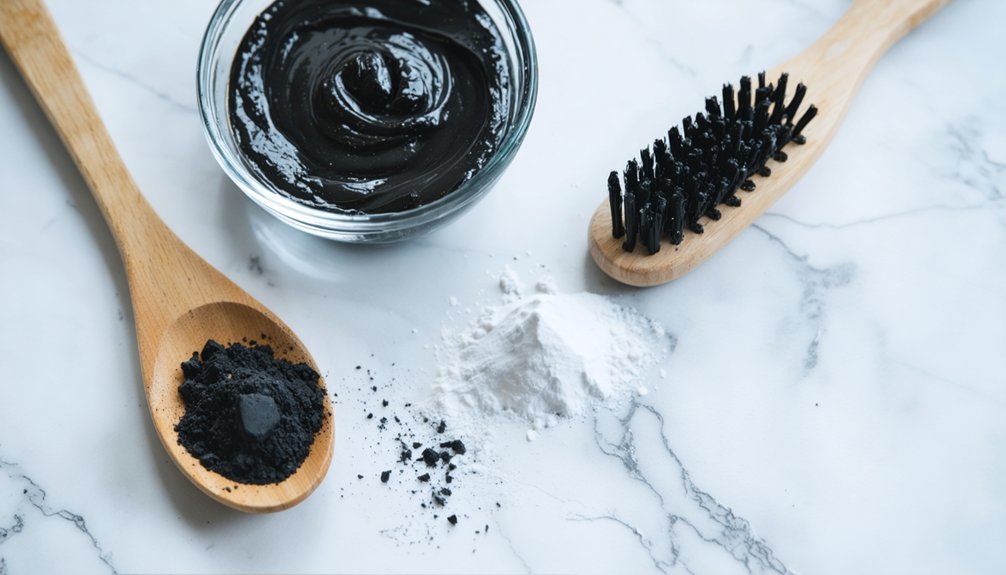
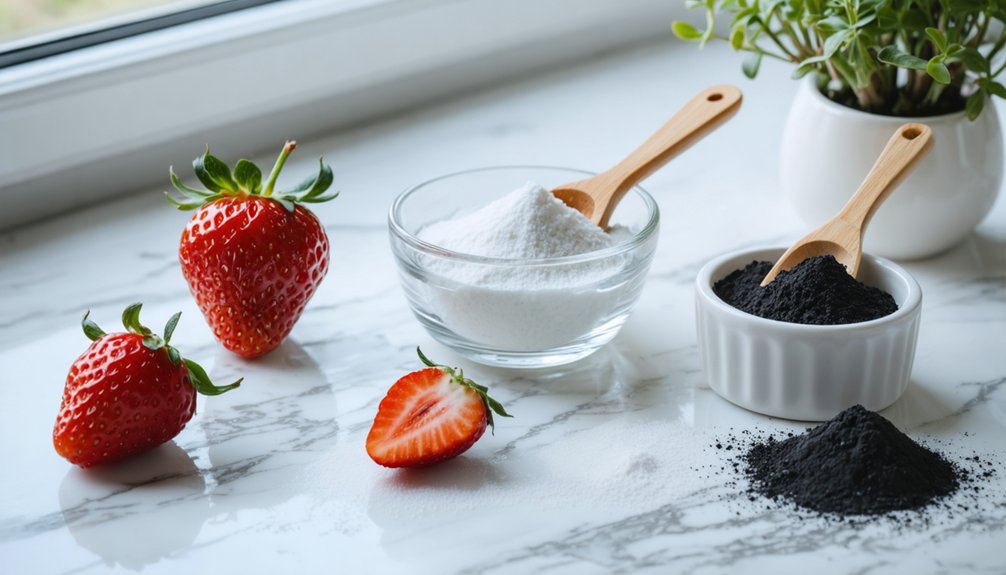
Combining three ingredients—activated charcoal powder, baking soda, and coconut oil—creates a DIY whitening paste that some users claim removes surface stains effectively.
To prepare it, mix the ingredients thoroughly and let the mixture sit for a few minutes before applying it with a travel toothbrush. The charcoal benefits include absorbing surface debris, while baking soda adds mild abrasiveness to help lift discoloration.
However, you should approach this method cautiously. Neither ingredient has strong scientific backing for whitening efficacy, and both carry risks—particularly enamel erosion from combined abrasiveness.
If you choose to use this paste, limit application to once or twice weekly. Consulting your dentist beforehand helps you make an informed decision and protect your long-term dental health.
How Long to Brush With Activated Charcoal for Better Results
When brushing with activated charcoal, you should limit each session to 2–3 minutes to reduce unnecessary enamel abrasion while still allowing the charcoal to bind surface stains.
Extending the brushing time beyond this range increases the risk of enamel erosion and heightened tooth sensitivity without delivering additional whitening benefits.
To protect your teeth, restrict use to once or twice per week, as frequent application compounds long-term damage without scientific evidence supporting improved results.
Optimal Brushing Duration
Brushing duration plays a critical role in how effectively activated charcoal interacts with surface stains on your teeth. Most methods recommend brushing gently for 2 to 3 minutes, balancing whitening effectiveness against enamel preservation.
Extended brushing techniques suggest up to 5 minutes, but that increases abrasion risk considerably.
You’ll want to apply gentle, circular brushing techniques rather than aggressive scrubbing, which accelerates enamel erosion. The charcoal’s adsorptive properties work within that 2-3 minute window — additional time doesn’t enhance stain removal and only increases damage potential.
Limit use to once or twice weekly, never daily. There’s no scientific evidence supporting longer sessions producing better outcomes.
When in doubt, consult your dentist before incorporating activated charcoal into your whitening routine.
Weekly Usage Frequency
Limiting activated charcoal use to once or twice per week is essential for protecting your enamel while still targeting surface stains. Exceeding this weekly frequency accelerates enamel erosion, increasing sensitivity and cavity risk over time.
These application tips keep your routine effective and safe.
- Space applications at least three to four days apart to allow enamel recovery.
- Track your usage weekly to avoid accidental overuse.
- Combine charcoal sessions with your regular fluoride toothpaste routine on non-charcoal days.
- Monitor tooth sensitivity closely — reduce frequency immediately if discomfort appears.
No scientific evidence confirms charcoal’s long-term whitening efficacy, so you’re managing surface stains only.
Stay disciplined with your weekly schedule, and consult your dentist if you notice increased sensitivity or gum irritation developing.
Why Dentists Warn Against Activated Charcoal Whitening
Although activated charcoal has gained popularity as a DIY whitening solution, dentists consistently caution against its use due to significant oral health risks.
Its highly abrasive texture causes enamel erosion, permanently weakening your teeth’s protective layer. Once enamel’s gone, it doesn’t regenerate.
You’ll likely notice increased tooth sensitivity to hot and cold temperatures as erosion progresses. Charcoal particles also accumulate along gum lines, triggering gum irritation and potential inflammation.
The long-term effects include heightened cavity risk and structural tooth damage that’s costly to reverse.
There’s no peer-reviewed evidence confirming charcoal’s whitening efficacy. You’re fundamentally trading surface-level cosmetic results for serious dental consequences.
Before pursuing any whitening method, consult your dentist to identify safer, clinically proven alternatives that protect your oral health.
Frequently Asked Questions
Can Activated Charcoal Whiten Teeth With Braces or Dental Implants?
You shouldn’t use activated charcoal with braces or implants. Its abrasive nature compromises braces effectiveness by damaging brackets, while implant safety is at risk since charcoal can scratch surfaces. Consult your dentist instead.
Is Activated Charcoal Teeth Whitening Safe During Pregnancy or Breastfeeding?
Like walking a tightrope, you’re balancing beauty and safety. You shouldn’t use activated charcoal for whitening due to pregnancy concerns and breastfeeding safety risks. It lacks scientific backing, so consult your doctor first.
How Does Activated Charcoal Compare to Professional Teeth Whitening Treatments?
Professional treatments outperform activated charcoal effectiveness markedly. You’ll get clinically proven, lasting results with professional whitening, while activated charcoal safety concerns—including enamel erosion—make it a riskier, less reliable choice for achieving genuinely whiter teeth.
Can Children or Teenagers Safely Use Activated Charcoal for Whitening?
You shouldn’t let children or teenagers use activated charcoal for whitening. There are no established safety guidelines or age restrictions, but its abrasive nature can permanently damage their still-developing enamel. Consult a dentist instead.
Does Activated Charcoal Interact With Medications Taken Orally?
Yes, activated charcoal absorption can interfere with oral medication interactions by binding to drugs before they’re absorbed. If you’re taking any medications, you should consult your doctor before use to maintain control over your health outcomes.
References
- https://wayzatadental.com/natural-teeth-whitening/
- https://conyers-dental.com/diy-teeth-whitening-hacks-you-can-do-at-home/
- https://mavedds.com/cosmetic-dentistry-blog/the-latest-diy-whitening-trend-charcoal-teeth-whitening
- https://www.123dentist.com/blog/whitening-teeth-activated-charcoal/
- https://www.youtube.com/watch?v=HElv_3ufsqg
- https://www.dental-concepts.com/blog/diy-teeth-whitening-the-worst-offenders-and-the-professional-solution/
- https://www.evolutiondental.ca/myths-vs-facts-activated-charcoal-baking-soda-and-more-for-teeth-whitening/
- https://en.ultradent.blog/2020/06/02/debunking-diy-whitening
- https://www.webmd.com/oral-health/what-to-know-about-activated-charcoal-whitening