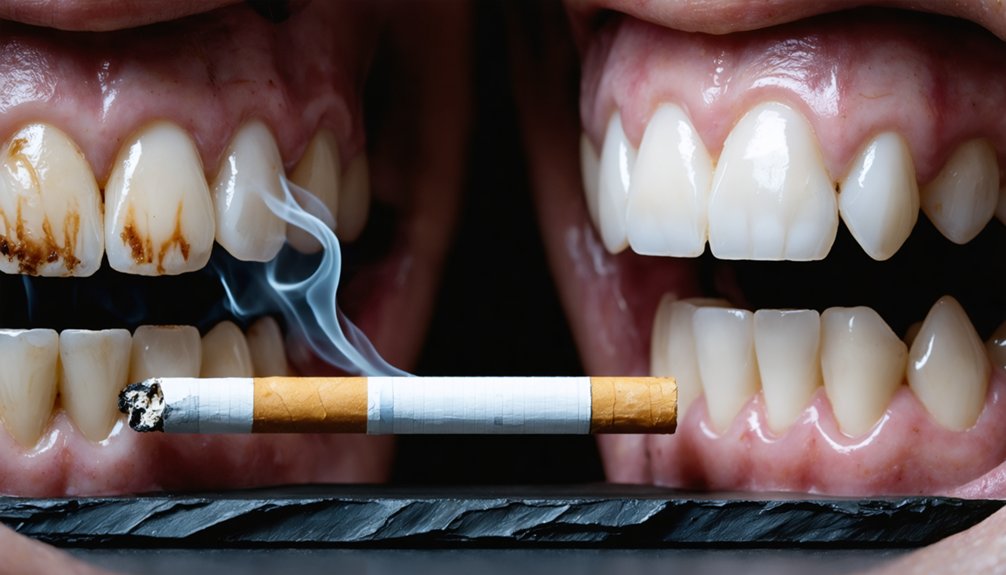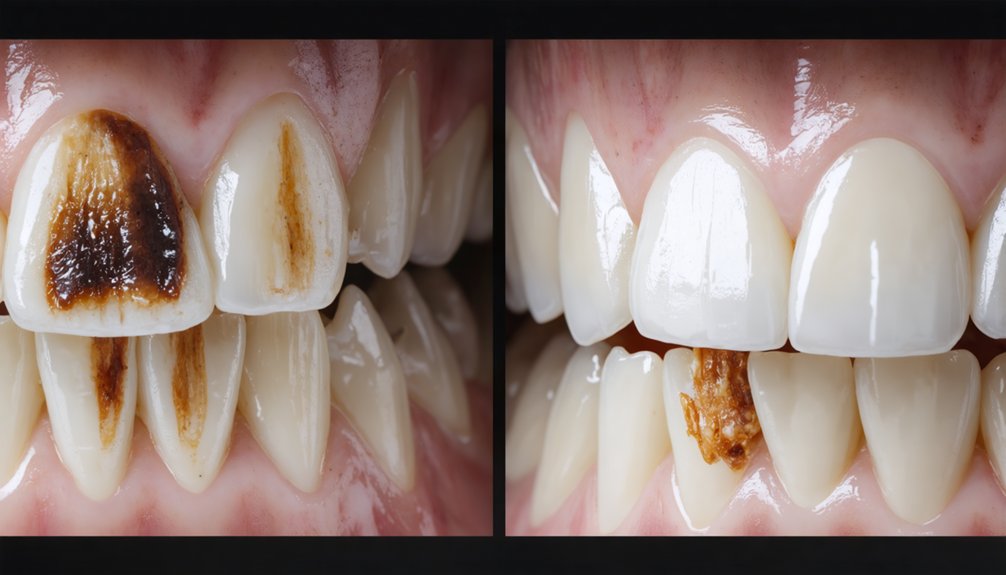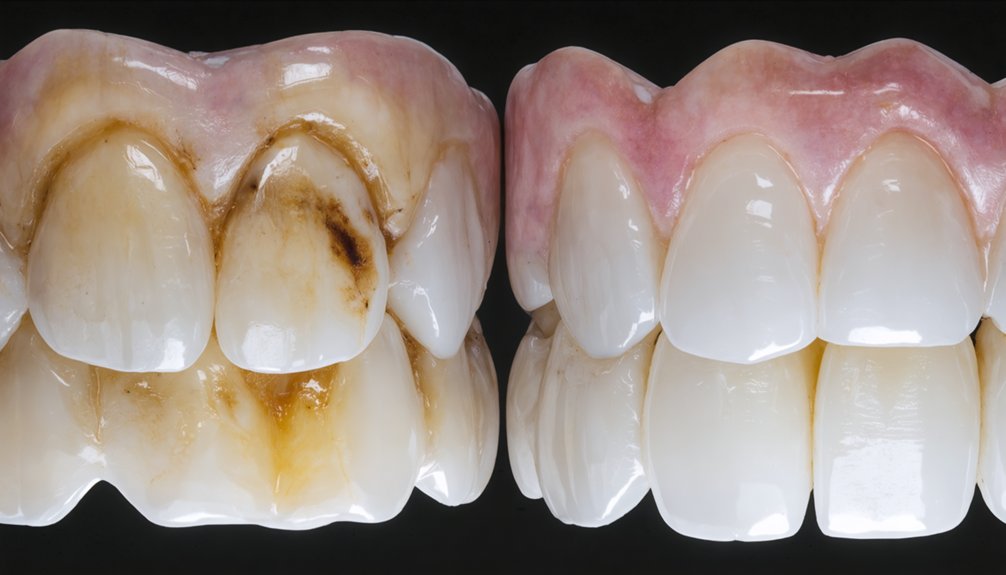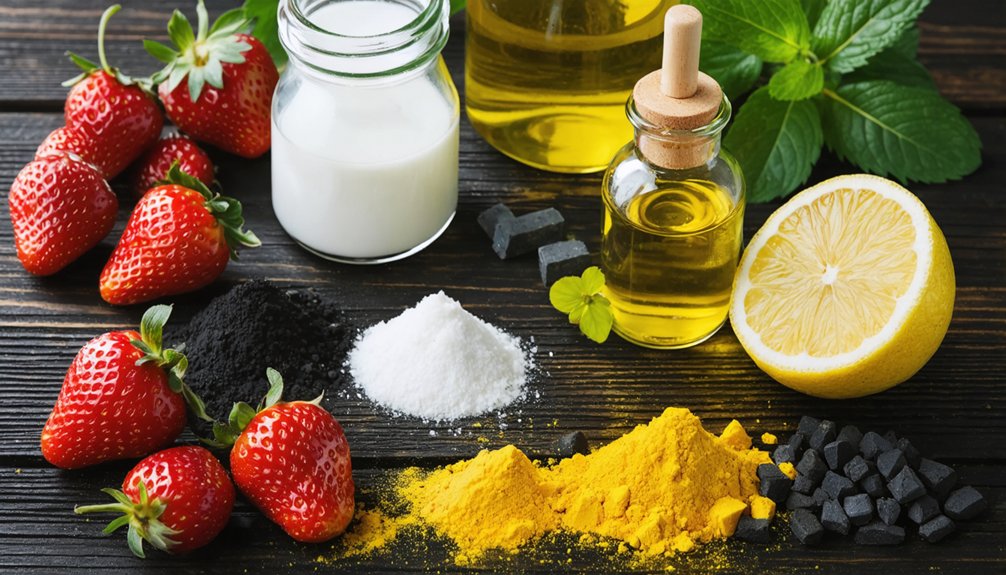
Smoker’s teeth respond well to several natural remedies, including baking soda paste, hydrogen peroxide rinses, coconut oil pulling, activated charcoal, and fruit peels. Each targets nicotine and tar stains differently—some through mild abrasion, others through chemical breakdown or plaque removal. You’ll get the best results by rotating these methods strategically rather than relying on just one. Knowing which remedies work fastest, which combinations are safest, and which to avoid entirely makes all the difference.
Key Takeaways
- Baking soda paste, mixed at a 2:1 ratio with water, removes nicotine and tar stains when brushed weekly for two minutes.
- Diluted hydrogen peroxide rinse breaks chemical bonds of stains, improving teeth by one to two shades within weeks.
- Coconut oil pulling, swished for 10–30 minutes, reduces plaque and bacteria contributing to yellowing without causing irritation.
- Activated charcoal can whiten teeth within four weeks, though its high abrasiveness poses risks for sensitive teeth and gums.
- Fruit peels containing d-limonene and citric acid may lift surface stains but should be limited to 2–3 weekly uses.
Baking Soda Paste: The Smoker’s Go-To Scrub
Decades of smoking can leave teeth coated in stubborn tar and nicotine stains, but baking soda paste offers a scientifically supported first line of defense.
A 2012 study confirmed its baking soda benefits, demonstrating reduced staining and improved whiteness. Its mild abrasiveness scrubs surface discoloration without damaging enamel, making it reliable for plaque removal.
To use it correctly, mix one teaspoon of baking soda with water at a 2:1 ratio and brush for two minutes weekly.
Alternatively, add a few drops of hydrogen peroxide to baking soda and brush for 30 seconds.
Don’t overuse it—excessive application risks gradual enamel wear. Consistency and restraint are what’ll give you measurable, lasting results.
Hydrogen Peroxide Rinse for Nicotine and Tar Stains
When you swish a diluted hydrogen peroxide rinse, it chemically breaks the molecular bonds holding nicotine and tar stains to your enamel, making it one of the more science-supported natural options for smokers.
You’ll want to dilute standard 3% hydrogen peroxide with equal parts water, then swish for no longer than 30 seconds, two to three times weekly, as higher concentrations risk gum irritation.
With consistent use alongside other treatments, you can realistically expect a one-to-two shade improvement within a few weeks—but avoid swallowing the solution, and discontinue use if sensitivity develops.
How Hydrogen Peroxide Works
Hydrogen peroxide works by breaking the chemical bonds of dark stain molecules left behind by nicotine and tar, effectively lightening the yellowness they cause on tooth enamel.
Understanding the hydrogen benefits helps you use it strategically rather than recklessly. When diluted correctly, it oxidizes surface discoloration without aggressively stripping enamel.
Peroxide safety depends entirely on concentration and frequency. You should never use solutions stronger than 3%, and always dilute it equally with water before swishing.
Limit use to two or three times weekly to prevent gum irritation and sensitivity. Avoid swallowing any amount, as ingesting even small quantities poses health risks.
Used responsibly, hydrogen peroxide can deliver one to two shades of improvement within a few weeks, particularly when combined with other targeted treatments.
Safe Dilution And Usage
To use hydrogen peroxide safely as a rinse for nicotine and tar stains, you’ll need to dilute a 3% solution equally with water before swishing. This dilution guideline guarantees you’re breaking down dark stain molecules without exposing your gums to harmful concentrations.
Swish the solution for 30 seconds, then spit thoroughly—never swallow it.
For usage frequency, limit applications to two or three times weekly. Exceeding this increases your risk of gum irritation and enamel sensitivity, both counterproductive outcomes for smokers already dealing with compromised oral tissue.
When you follow proper dilution guidelines and controlled usage frequency, you can realistically expect one to two shades of improvement within a few weeks, particularly when combined with other targeted treatments.
Expected Whitening Results
Following safe dilution and proper usage frequency, your next question is likely what you can actually expect to see in the mirror.
Hydrogen peroxide rinse delivers modest but measurable expected results, typically producing a one-to-two shade improvement within a few weeks of consistent use.
Your whitening timeline accelerates when you combine peroxide rinsing with complementary treatments like baking soda brushing.
However, nicotine and tar stains run deep, so you shouldn’t expect dramatic overnight transformation. Results depend heavily on stain severity, usage consistency, and whether you’ve reduced smoking frequency.
Peroxide breaks the chemical bonds holding dark pigments to enamel, but it doesn’t reverse years of discoloration instantly.
Manage your expectations realistically — gradual lightening is the achievable outcome, not a complete restoration to natural white.
Coconut Oil Pulling: Does It Remove Smoker’s Plaque?
Coconut oil pulling works by swishing one to two teaspoons of high-quality organic oil around your mouth for 10 to 30 minutes, which helps remove plaque and bacteria that contribute to smoker’s yellowing.
A 2015 study confirmed coconut oil benefits for plaque removal, though evidence for significant whitening remains limited.
Follow these key steps for best results:
- Use only high-quality organic coconut oil to avoid reintroducing toxins.
- Swish consistently for 10 to 30 minutes, then spit thoroughly.
- Never swallow the oil, as it contains extracted bacteria and debris.
While it’s effective for surface stains, you shouldn’t rely solely on oil pulling to reverse heavy nicotine or tar discoloration.
Apple Cider Vinegar: Whitening Claims vs. Enamel Risks
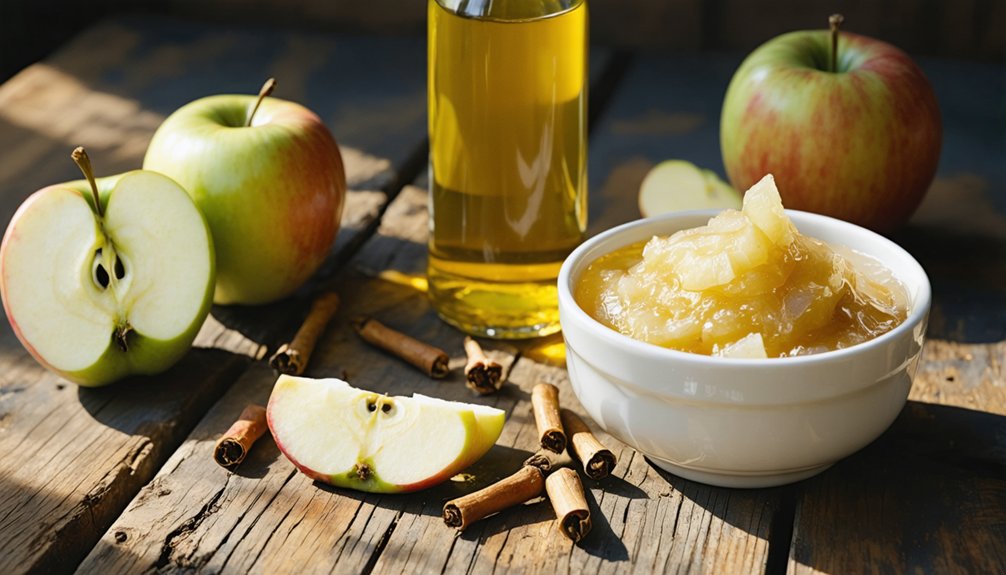
Although apple cider vinegar has a proven whitening effect on teeth, it carries a serious risk of enamel erosion that you shouldn’t ignore. It targets surface stains from nicotine and tar, but the acid simultaneously weakens your enamel over time, increasing sensitivity and long-term damage.
Apple cider vinegar may whiten teeth, but its acid quietly erodes enamel, causing lasting sensitivity and damage.
If you choose to use it, dilution methods are essential. Mix it with equal parts water before using it as a mouthwash, and limit application to a few times weekly rather than daily.
Always rinse thoroughly and brush afterward to neutralize residual acid.
The evidence supporting apple cider vinegar for human teeth remains weak compared to other natural options. Proceed cautiously, prioritize enamel protection, and consider safer alternatives if sensitivity develops.
Activated Charcoal: Does It Actually Work for Smokers?
Activated charcoal has gained popularity as a natural teeth-whitening remedy, but does it actually deliver results for smokers? A 2019 study found charcoal toothpaste can whiten teeth within four weeks, though it’s less effective than conventional whiteners.
Understanding activated charcoal benefits and charcoal safety helps you make an informed decision.
How to Use It Carefully:
- Dab charcoal powder onto your teeth and brush in small circles for two minutes.
- Rinse thoroughly to minimize abrasive residue buildup.
- Limit use if you have sensitive teeth or gums to prevent enamel damage.
While charcoal absorbs bacteria and surface stains from nicotine and tar, its high abrasiveness poses real risks.
Use it cautiously and avoid making it a daily habit.
Which of These Natural Remedies Are Safest for Smoker’s Enamel?
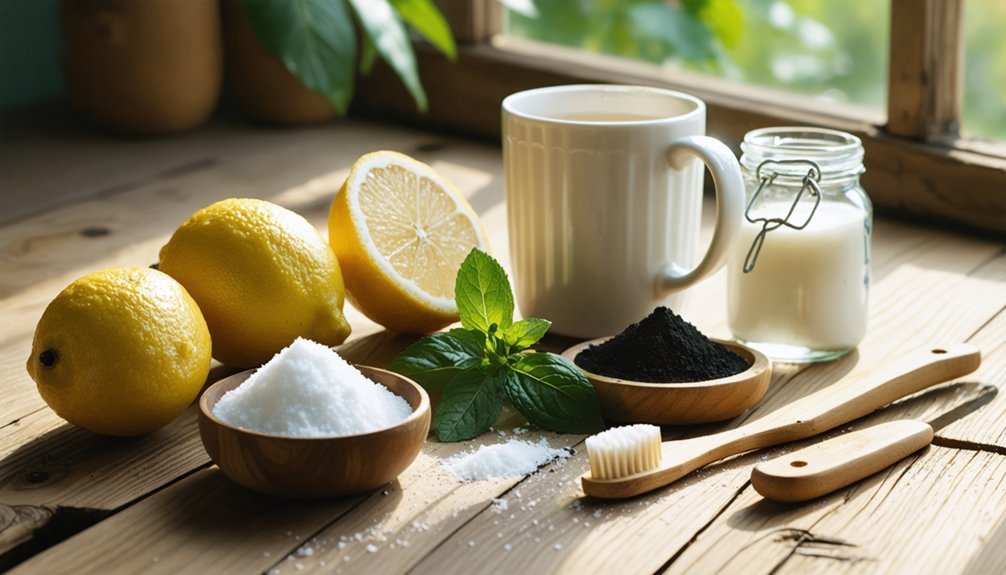
When it comes to protecting smoker’s enamel, not all natural remedies carry equal risk. Smoking effects weaken enamel over time, making your choice of whitening method critical.
The safest options for natural enamel care include baking soda with hydrogen peroxide and coconut oil pulling. Both clean effectively without aggressive erosion.
Baking soda with hydrogen peroxide and coconut oil pulling offer effective cleaning without the enamel erosion risk.
Hydrogen peroxide rinse, when properly diluted, also poses minimal risk used two to three times weekly.
Avoid apple cider vinegar for daily use — it erodes enamel despite its whitening reputation. Activated charcoal‘s abrasiveness makes it a poor long-term choice for already-compromised smoker’s teeth.
Fruit peels carry low risk but little proven benefit.
Prioritize gentleness over speed. Your enamel doesn’t regenerate, so protecting it matters more than rapid whitening results.
Fruit Peels That Target Nicotine Stains on Teeth
If you’re looking for a gentler approach to tackling nicotine stains, fruit peels from lemons, oranges, and bananas may offer some surface-level benefit through compounds like d-limonene and citric acid.
You apply them by rubbing the inner peel directly against your teeth for about two minutes, then rinsing and brushing immediately afterward to prevent acid from sitting on your enamel.
It’s worth noting, however, that no strong scientific evidence currently supports their effectiveness, so you should treat them as a low-risk supplementary option rather than a reliable whitening solution.
Peels That Whiten
Fruit peels—particularly lemon, orange, and banana—are a popular home remedy for smoker’s teeth, though the scientific evidence supporting their effectiveness is limited. The d-limonene and citric acid in these peels are believed to lift surface discoloration, making them appealing natural whitening methods.
However, you should proceed cautiously.
To maximize fruit peel benefits while minimizing risk:
- Rub the peel directly on your teeth for two minutes, focusing on stained areas.
- Rinse thoroughly with water immediately after to neutralize residual acids.
- Brush gently afterward to remove any remaining debris without compounding acid exposure.
Results remain largely anecdotal. While these chemicals are relatively harmless, they won’t penetrate deep nicotine stains. Treat this method as supplementary, not a standalone whitening solution.
Proper Application Techniques
Applying fruit peels correctly makes the difference between a mildly helpful whitening boost and unnecessary enamel damage. Rub the inner peel side directly against your teeth using small, deliberate strokes for two minutes. You’re working the d-limonene and citric acid onto surface stains, not scrubbing aggressively into enamel.
Technique variations matter here. Banana peels carry lower acidity than citrus options, making them the safer choice for sensitive teeth. Lemon and orange peels deliver stronger whitening compounds but carry higher erosion risk.
Regarding application frequency, limit citrus peel use to two or three times weekly at most. Always rinse thoroughly immediately afterward, then wait thirty minutes before brushing. This neutralizes acid exposure and protects your enamel from compounded daily damage.
Fastest-Acting Natural Remedies for Smoker’s Stains, Ranked
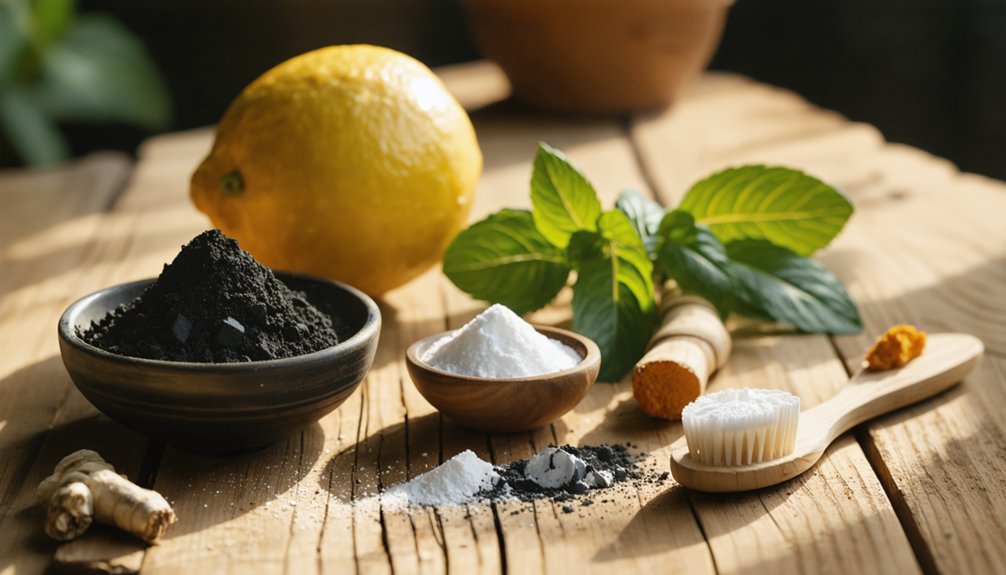
When you’re trying to reverse smoker’s stains quickly, not all natural remedies work at the same speed. Prioritizing the most effective natural stain removers helps you regain control over your smile faster.
- Hydrogen Peroxide Rinse – Breaks tar and nicotine bonds directly, delivering 1–2 shade improvements within weeks when used consistently 2–3 times weekly.
- Baking Soda & Hydrogen Peroxide Paste – Combines mild abrasiveness with chemical whitening, targeting surface stains in under 30 seconds per session.
- Coconut Oil Pulling – Reduces plaque-related yellowing over time, though results appear more gradually than peroxide-based methods.
Following these oral hygiene tips in sequence maximizes your results.
Always dilute peroxide properly and monitor for gum sensitivity to avoid compromising enamel integrity.
How to Combine These Remedies for Faster Smoker’s Whitening
Combining remedies strategically can accelerate whitening results, but you’ll need to space treatments carefully to avoid compounding sensitivity or enamel damage.
A well-structured weekly routine—such as pairing a hydrogen peroxide rinse with a baking soda brush on alternating days—lets each treatment work without overwhelming your teeth.
Understanding which pairings complement rather than conflict with each other is essential for smokers seeking faster, safer results.
Optimal Remedy Pairing Strategies
Since smoker’s stains involve both surface deposits and deeper discoloration from tar and nicotine, no single remedy tackles every layer effectively on its own.
Ideal pairing increases remedy effectiveness by targeting multiple stain mechanisms simultaneously. Use these three evidence-informed combinations:
- Baking soda paste + hydrogen peroxide rinse — scrubs surface tar while breaking deeper stain molecule bonds
- Coconut oil pulling + baking soda brush — reduces plaque bacteria buildup before mechanical abrasion removes loosened deposits
- Hydrogen peroxide rinse + activated charcoal — chemical whitening followed by absorbent removal of loosened toxins
Avoid combining acidic remedies like apple cider vinegar with abrasives on the same day.
You’ll protect your enamel while maximizing results through strategic, not excessive, application.
Weekly Whitening Routine Schedule
Structuring your remedies into a consistent weekly schedule prevents overuse damage while accelerating visible whitening results.
Prioritize stain removal strategically: use the baking soda and hydrogen peroxide paste once weekly to avoid enamel abrasion.
Practice coconut oil pulling three times weekly, targeting surface nicotine and tar deposits.
Incorporate a diluted hydrogen peroxide rinse two to three times weekly on alternating days.
Reserve activated charcoal for biweekly use only, given its abrasive potential.
Avoid applying apple cider vinegar daily; limit it to once weekly, heavily diluted.
Monitor your whitening frequency carefully — more isn’t better. Overusing multiple abrasive methods simultaneously accelerates enamel erosion rather than whitening.
Track visible changes every two weeks, adjusting frequency downward if sensitivity develops.
Got Sensitive Teeth? These Remedies Won’t Make It Worse
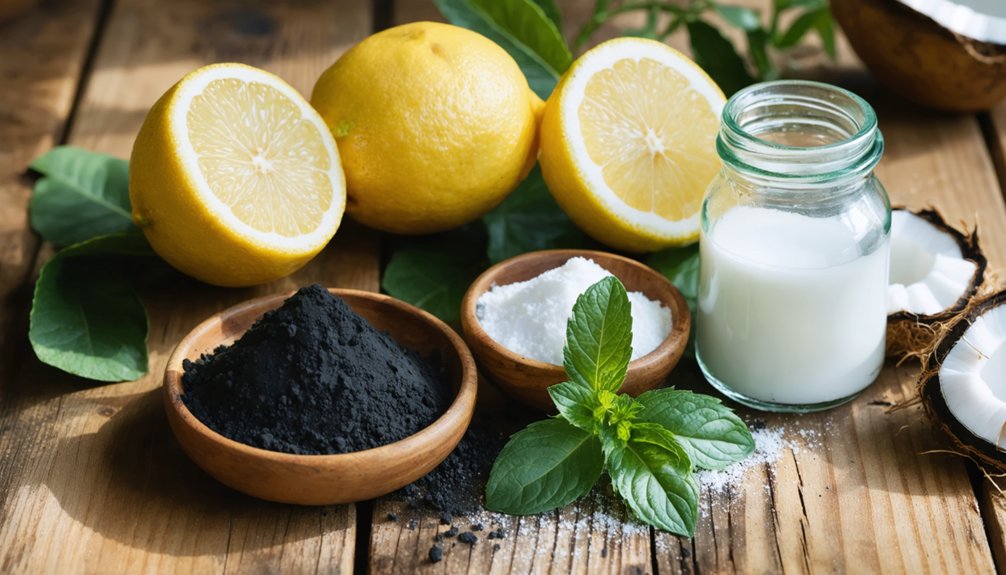
Smokers with sensitive teeth need to be cautious, as several popular whitening remedies can aggravate existing sensitivity or cause irreversible enamel damage.
Smokers with sensitive teeth risk worsening discomfort by using popular whitening remedies that damage enamel irreversibly.
Apple cider vinegar and activated charcoal are particularly risky, eroding enamel and worsening discomfort over time. For effective sensitivity solutions and gentle whitening, prioritize these safer alternatives:
- Coconut oil pulling – Swish one teaspoon for 10–20 minutes to reduce plaque without irritating enamel or gums.
- Diluted hydrogen peroxide rinse – Mix equal parts 3% peroxide and water, swishing for 30 seconds to target nicotine stains gently.
- Baking soda paste – Brush lightly for two minutes weekly; its mild abrasiveness removes surface stains without compromising enamel integrity.
Avoid daily application of any remedy to maintain long-term dental health.
Frequently Asked Questions
Can Natural Remedies Replace Professional Teeth Whitening for Heavy Smokers?
Coincidentally, you’re asking the right question. Natural stain removal can’t replace professional care for heavy smokers. While smoker’s oral hygiene improves with baking soda or oil pulling, you’ll still need professional whitening for deep, stubborn nicotine stains.
How Long Before Natural Remedies Show Visible Results on Smoker’s Teeth?
You’ll typically notice teeth whitening results within 2–4 weeks of consistent natural remedy use, but smoking effects can slow progress considerably. Don’t expect dramatic changes—these methods offer gradual improvement, not instant transformation.
Are These Natural Remedies Safe to Use With Dental Crowns or Veneers?
Like walking a tightrope, you’ll need caution—these remedies can compromise your dental care. Abrasives like charcoal and baking soda may scratch veneers or crowns, reducing whitening effectiveness. Consult your dentist before applying any natural treatment.
Can Quitting Smoking Improve Results When Using Natural Whitening Remedies?
Yes, quitting smoking dramatically boosts your natural whitening results. You’ll prevent new nicotine and tar stains from forming, allowing remedies to work more effectively. Smoking cessation also supports enamel health, giving your teeth a stronger foundation for lasting brightness.
Should Smokers Consult a Dentist Before Starting Any Natural Whitening Remedy?
Yes, you should absolutely consult a dentist before tackling teeth discoloration causes through natural remedies. Safeguarding smoker’s dental hygiene starts with professional guidance—they’ll pinpoint your enamel’s condition and recommend remedies that won’t worsen sensitivity or damage.
References
- https://www.healthline.com/health/dental-and-oral-health/how-to-get-rid-of-yellow-teeth
- https://sfdental.com.au/top-4-home-remedies-for-yellow-teeth/
- https://www.medicalnewstoday.com/articles/321172
- https://sunbit.com/knowledge-center/dental/dental-tips/smokers-teeth/
- https://activedentalonline.com/blog/how-remove-smoking-stains-from-teeth/
- https://clearclub.com/blogs/clearclub/10-effective-ways-to-whiten-teeth-after-smoking-or-taking-medications
- https://norwood-dental.com/how-to-remove-nicotine-stains-from-teeth/
- https://www.pleasantfamilydentistry.com/blog/6-natural-ways-to-whiten-your-teeth