For the best holiday photo results, start your whitening regimen 2–4 weeks before your event. Use Opalescence Go prefilled trays with 10% hydrogen peroxide for 30–60 minutes daily, or 15% for 15–20 minutes. Avoid coffee, red wine, and acidic foods 48–72 hours before photos, since chromogenic compounds can reverse whitening gains. Consistent daily use over 5–10 days delivers cumulative brightness. Keep exploring to discover which approach fits your exact timeline and goals.
Key Takeaways
- Start a whitening regimen 2–4 weeks before holiday events for optimal, gradual results without triggering sensitivity.
- Use Opalescence Go 15% hydrogen peroxide trays for just 15–20 minutes daily for faster results.
- Avoid coffee, red wine, and dark sauces 48–72 hours before photos to preserve whitening gains.
- Book a single in-office professional whitening session one to two weeks before your event for noticeable improvement.
- Brush twice daily with whitening toothpaste and use a straw for staining beverages to maintain brightness.
Why Holiday Photos Make Teeth Look More Yellow
Have you ever noticed your smile looking more yellow in holiday photos than it does in the mirror? It’s not your imagination. Holiday environments rely heavily on yellow lighting from candles, string lights, and warm indoor fixtures, all of which amplify yellow and gray undertones in tooth enamel.
Holiday lighting doesn’t lie — candles and warm fixtures reveal the yellow undertones your bathroom mirror conveniently hides.
When photo flash fires, it intensifies those tones further, exposing discoloration that softer, diffused lighting typically masks.
Seasonal habits compound the problem. Increased consumption of coffee, red wine, and dark-pigmented holiday foods accelerates surface staining. Cold weather drives heavier intake of hot beverages, adding to cumulative discoloration.
Teeth that appear acceptable in everyday mirrors can look noticeably dingy once captured under flash photography. Understanding these environmental and behavioral factors helps you take targeted action before the season’s most photographed moments arrive.
Start Teeth Whitening 2–4 Weeks Before the Holidays
Because teeth need time to stabilize at their brightest shade, starting your whitening regimen 2–4 weeks before holiday gatherings gives you the best chance at consistent, even results.
This timeline lets you address teeth sensitivity gradually rather than forcing aggressive treatment into a compressed window. It also dispels common whitening myths—faster isn’t better. Rushing the process increases discomfort and risks uneven outcomes.
Early planning also builds in flexibility. If your initial results need refinement, you’ll have time for follow-up sessions without scrambling.
Custom take-home trays work progressively over several days, lifting stains methodically rather than abruptly. This controlled approach aligns with how professional whitening is clinically designed to function.
Starting early puts you in command of the outcome well before the first holiday photo is taken.
At-Home or Professional Whitening: Which Fits Your Timeline?
If you’re short on time, one or two in-office sessions performed one to two weeks before your event can deliver noticeable improvement without requiring a lengthy at-home regimen.
For a more gradual approach, Opalescence Go prefilled trays come in 10% hydrogen peroxide—worn 30–60 minutes daily—or 15% hydrogen peroxide, worn just 15–20 minutes daily, letting you match treatment intensity to your available time.
Once you’ve completed your initial whitening cycle, custom take-home trays make it easy to maintain and refresh your results each season without starting from scratch.
Last-Minute Professional Sessions
Even though December may already be underway, professional whitening sessions can still deliver meaningful results before major holiday events.
In-office whitening techniques use professional-grade gel formulations that can lighten teeth up to five shades in a single or short series of appointments, making them effective emergency solutions for tight timelines.
If you’ve already missed the ideal two-to-four-week preparation window, scheduling a session one to two weeks before your event still produces noticeable improvement.
You can also use whitening strips or touch-up trays between appointments to maintain progress.
Avoid heavily pigmented foods and beverages—coffee, red wine, and dark sauces—in the days leading up to photos.
Even limited intervention, applied consistently, gives you measurable control over your smile‘s appearance before the season’s most photographed moments.
At-Home Kit Strengths
When choosing between at-home and professional whitening, understanding the concentration differences between available products helps you match treatment intensity to your timeline.
At home kits like Opalescence Go come prefilled in two strengths: 10% and 15% hydrogen peroxide. The 10% formulation requires 30–60 minutes of daily wear, while the 15% concentration delivers comparable whitening effectiveness in just 15–20 minutes.
Both options follow a prescribed treatment duration of 5–10 days before requiring a break. Professional-grade gels exceed these concentrations considerably, making them more suitable when your timeline is compressed.
If you have two or more weeks before your event, at-home kits give you precise, manageable control over your results. Selecting the correct strength based on your schedule prevents overuse and minimizes sensitivity risk.
Custom Tray Maintenance
Custom trays offer two distinct advantages that prefilled options can’t match: a precise fit that maximizes gel-to-tooth contact and long-term reusability that eliminates the need to restart from scratch each season.
Proper custom tray care directly affects both performance and longevity. After each session, rinse trays with cool water—never hot, which distorts the thermoplastic material—and brush them gently with a soft toothbrush. Store them in their ventilated case to prevent warping and bacterial buildup.
Whitening tray maintenance also means inspecting trays periodically for cracks or fit changes, particularly if your bite has shifted.
Well-maintained trays remain effective year after year, letting you execute targeted touch-ups before holiday events without additional lab fees or appointments. Consistent upkeep protects your investment and keeps your protocol ready when timing matters most.
How Long Should You Wear Whitening Trays Each Day?
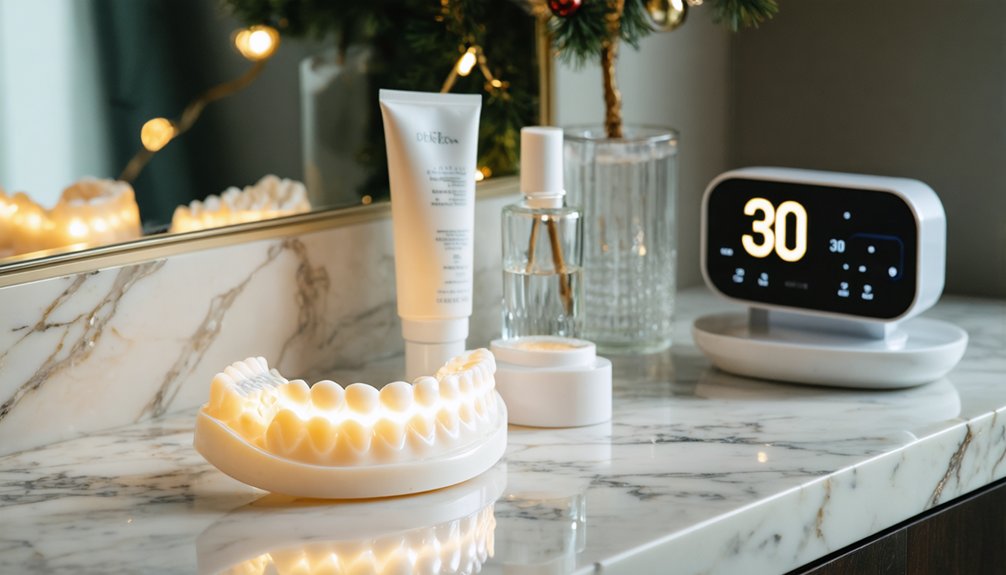
The duration you wear your whitening trays each day depends directly on the hydrogen peroxide concentration in your gel — 15% formulas require only 15–20 minutes daily, while 10% formulas need 30–60 minutes to deliver comparable results.
You should follow the prescribed treatment window of 5–10 days consistently, as irregular use slows the whitening process and delays noticeable improvement.
Building tray wear into an established nightly routine, such as after brushing, helps you stay on schedule and achieve the even, predictable results that consistent application produces.
Daily Tray Wear Duration
Depending on the hydrogen peroxide concentration in your whitening trays, daily wear time will vary. Adhering to the correct daily tray wear schedule is critical for ideal treatment outcomes and minimizing sensitivity.
Follow these evidence-based guidelines:
- 10% hydrogen peroxide trays: Wear 30–60 minutes per day
- 15% hydrogen peroxide trays: Wear 15–20 minutes per day
- Treatment duration: Maintain consistent use for 5–10 days, then take a break
Higher concentrations require shorter exposure times to protect enamel while still delivering effective results.
Building your whitening sessions into a fixed nightly routine, such as directly after brushing, reinforces consistency. Skipping sessions or wearing trays irregularly undermines progress and extends the timeline before you achieve your target shade.
Hydrogen Peroxide Strength Matters
When selecting a whitening tray, hydrogen peroxide concentration directly determines how long you’ll need to wear it each day. Hydrogen peroxide effectiveness scales with concentration—higher percentages penetrate enamel faster, requiring shorter sessions.
A whitening gel comparison between available strengths makes this clear: 15% hydrogen peroxide trays require only 15–20 minutes daily, while 10% formulations demand 30–60 minutes to achieve equivalent results.
Neither strength is inherently superior; your choice depends on sensitivity tolerance and scheduling flexibility. Higher concentrations deliver faster results but may increase sensitivity risk. Lower concentrations work more gradually, suiting those with reactive teeth.
Regardless of strength, consistency drives outcomes. Wearing trays daily for the prescribed 5–10 day period guarantees you reach your target shade without unnecessary delays or discomfort.
Consistency Drives Whitening Results
Achieving noticeable whitening results depends less on which strength you choose and more on whether you wear your trays consistently every day.
Whitening frequency and treatment duration determine your outcome. Follow the prescribed protocol:
- 15% hydrogen peroxide: Wear trays 15–20 minutes daily
- 10% hydrogen peroxide: Wear trays 30–60 minutes daily
- Recommended treatment duration: 5–10 consecutive days, followed by a break
Skipping sessions disrupts the cumulative effect that professional-grade whitening relies on.
Build tray wear into your nightly routine directly after brushing to eliminate guesswork. Irregular use delays results and wastes product.
You control the timeline—commit to daily consistency, and your teeth will reach their brightest shade before your holiday photos.
Foods and Drinks to Avoid Before Holiday Photos
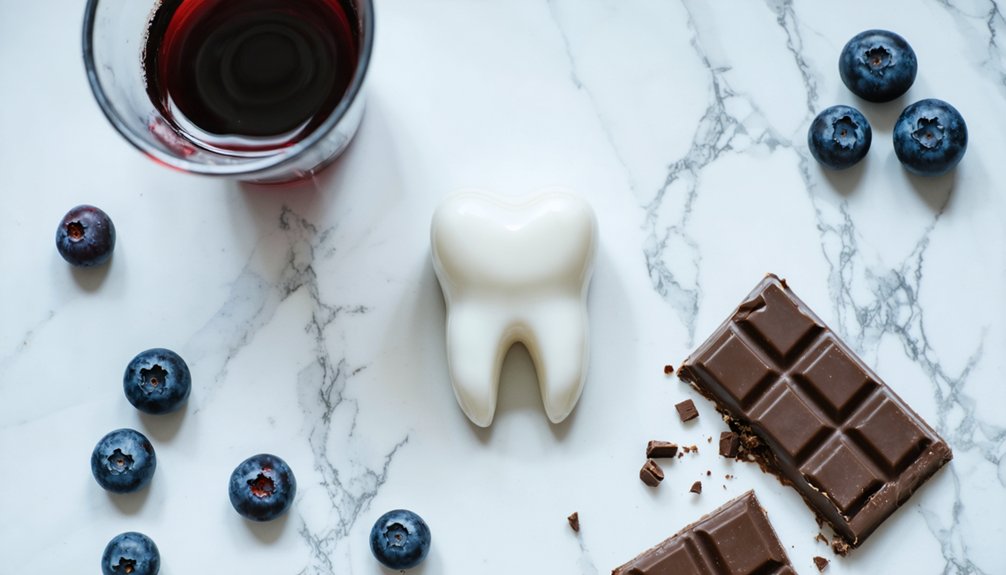
Even a successful whitening treatment can lose its impact if heavily pigmented foods and beverages aren’t avoided in the days leading up to holiday photos.
Chromogenic compounds in coffee, red wine, tea, and dark sauces penetrate enamel and reverse whitening gains quickly. Stain prevention requires you to eliminate these exposures 48–72 hours before your scheduled photos.
Chromogenic compounds reverse whitening gains fast — eliminate coffee, red wine, and dark sauces 48–72 hours before photos.
Acidic foods like citrus temporarily weaken enamel, making teeth more susceptible to reabsorbing pigment. Seasonal culprits — cranberry sauce, mulled wine, and dark chocolate — carry concentrated staining agents.
Choosing whitening foods like crunchy vegetables and water-rich fruits supports surface cleanliness while reinforcing enamel integrity.
Using a straw for unavoidable staining beverages minimizes direct contact with your front teeth.
Last-Minute Teeth Whitening Options That Actually Work
Avoiding stain-causing foods protects your whitening investment, but if you’re already deep into the holiday season without having started a whitening regimen, effective options still exist. Dismiss whitening myths suggesting last-minute treatments don’t deliver results—targeted interventions can meaningfully brighten your smile before key events.
Proven last minute tips include:
- Whitening strips or touch-up trays: Short sessions boost brightness without requiring a full treatment cycle.
- In-office professional whitening: One session performed one to two weeks before an event produces noticeable, clinically supported improvement.
- Avoiding staining beverages pre-event: Cutting coffee and red wine 24–48 hours before photos preserves any gains achieved.
Consistency during even a compressed whitening schedule determines your outcome. Prioritize each session and avoid skipping applications to maximize results within your available timeframe.
Daily Habits That Protect Your Teeth Whitening Results
Protecting your whitening results long-term depends on a few consistent daily habits.
Brush twice daily using a whitening toothpaste to actively combat surface stains before they penetrate enamel. Daily flossing removes plaque from interdental spaces, preventing tartar buildup that discolors teeth over time.
Use a straw when consuming coffee, red wine, or dark-pigmented beverages to minimize direct contact with your front teeth. Avoid heavily staining foods and drinks in the hours following any whitening session, as enamel remains temporarily more porous.
Skipping days weakens your overall results and extends the time needed to reach your brightness goal. Building these habits into your existing nightly routine—immediately after brushing—ensures consistency without disrupting your schedule.
You control how long your results last.
How to Keep Your Smile White Between Holiday Events
Maintaining whiteness between holiday events requires targeted, consistent action rather than passive avoidance.
Smile maintenance depends on behavioral consistency, not luck. Whitening myths suggest results are permanent after treatment—they aren’t. Active upkeep determines longevity.
Whitening results don’t maintain themselves—consistent daily habits determine how long your bright smile actually lasts.
Apply these evidence-based strategies between events:
- Use a straw when consuming coffee, red wine, or seasonal beverages to limit direct contact with enamel.
- Brush twice daily and floss consistently to prevent plaque progression into stain-trapping tartar.
- Run touch-up whitening sessions using your custom trays or Opalescence Go strips before each major gathering.
These measures compound over the season. Skipping any component weakens the entire maintenance protocol.
You control the outcome—treat each day between events as active smile protection.
Frequently Asked Questions
Can Teeth Whitening Damage Enamel if Used Too Frequently?
Yes, overusing whitening treatments can compromise your enamel health. You’ll want to respect recommended whitening frequency—5–10 days followed by a break—to prevent sensitivity and structural damage while still achieving your brightest, photo-ready smile.
Is Professional Whitening Safe for People With Sensitive Teeth?
Yes, it’s safe if your dentist conducts a sensitivity assessment first. They’ll tailor treatment options—like lower-concentration gels or shorter wear times—so you can achieve whiter teeth while minimizing discomfort throughout the process.
At What Age Is Teeth Whitening Considered Safe to Begin?
Dentists typically recommend you begin whitening after age 16, once permanent teeth have fully erupted. You’ll want to assess teeth sensitivity beforehand and consult a professional to determine which whitening methods suit your dental development appropriately.
Does Teeth Whitening Work on Crowns, Veneers, or Dental Implants?
Whitening gels don’t alter crown whitening or veneer maintenance outcomes — restorations resist peroxide entirely. For example, if you’ve got a porcelain crown, it’ll stay its original shade while your natural teeth brighten around it.
How Many Shades Whiter Can Professional Whitening Realistically Achieve?
Professional whitening techniques can lighten your teeth up to 5 shades. Shade longevity depends on your maintenance habits—consistent brushing, flossing, and avoiding staining beverages help you preserve those clinically achieved results long-term.
References
- https://www.familydentalcare561.com/blog/want-to-brighten-your-smile-for-holiday-photos-heres-how
- https://www.allentowndentist.com/how-teeth-whitening-can-brighten-your-holiday-photos/
- https://111dental.com/teeth-whitening-before-the-holidays-how-early-treatment-helps-you-shine-in-every-photo/
- https://www.kentwoodpremierdentistry.com/teeth-whitening-tips-for-the-holidays/
- https://manassassmilesva.com/party-ready-smiles-how-to-keep-your-teeth-white-for-christmas-photos/
- https://www.drmatthewswilmington.com/blog/smile-bright-holiday-photos/49918
- https://galliganvilla.com/blog/make-your-smile-the-star-of-your-holiday-photos-with-professional-whitening/
- https://thedentalbarlouisville.com/five-ways-to-whiten-your-teeth-before-holiday-photos/