Teeth whitening poses enamel erosion risks because peroxide agents penetrate your enamel, increasing its porosity and vulnerability to acid damage. This chemical process temporarily softens your enamel’s surface, making it more susceptible to mechanical abrasion and mineral loss. Saliva can partially remineralize your enamel afterward, but frequent whitening prevents full recovery, causing cumulative damage over time. Understanding exactly how this process unfolds — and what worsens it — can help you protect your smile more effectively.
Key Takeaways
- Peroxide agents in whitening products penetrate enamel, increasing porosity and making teeth more vulnerable to acid erosion.
- Frequent whitening prevents salivary remineralization, causing cumulative mineral depletion and progressive enamel weakening over time.
- OTC whitening products often contain high peroxide concentrations with uncontrolled application frequency, accelerating enamel damage.
- Abrasive ingredients in whitening products scratch softened enamel surfaces, contributing to structural deterioration and mineral loss.
- Consuming acidic foods post-whitening worsens damage, as peroxide-softened enamel is significantly more susceptible to acid erosion.
How Whitening Products Actually Weaken Your Enamel
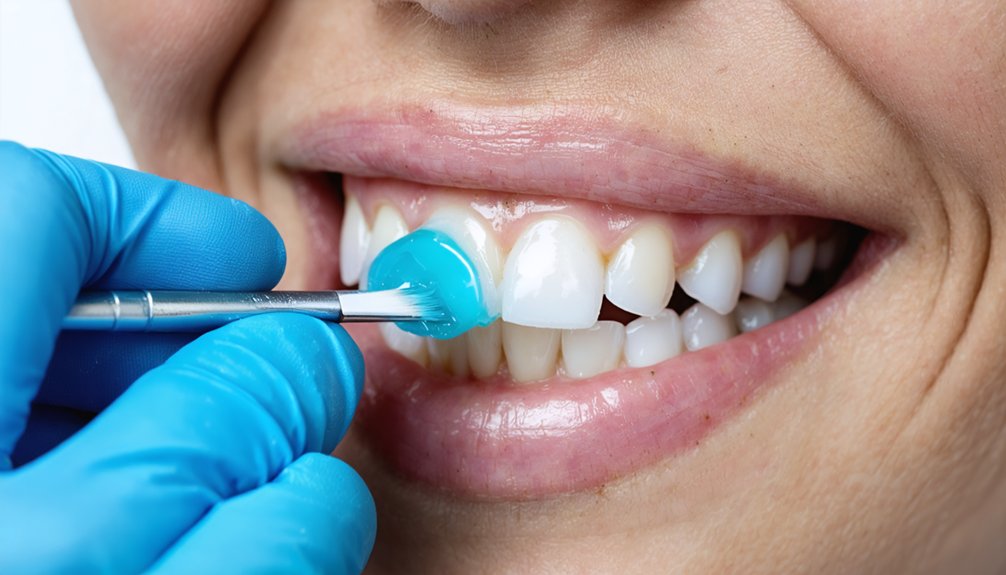
Whitening products don’t strip enamel directly, but the peroxide-based agents they contain penetrate the enamel surface and temporarily increase its porosity.
This elevated enamel permeability leaves your teeth more vulnerable to acid erosion, abrasive brushing, and pH fluctuations in saliva during the post-whitening window.
A single session allows salivary remineralization to restore surface hardness before significant damage accumulates.
However, whitening frequency changes that equation entirely. Regular bleaching creates cumulative mineral depletion, surface roughening, and softening that remineralization can’t fully offset between sessions.
Whitening too often tips the balance — cumulative mineral loss outpaces what remineralization can repair between sessions.
Laboratory evidence links aggressive regimens to measurable demineralization and increased susceptibility to structural wear.
You’re not losing enamel in one application, but repeated chemical softening compounds over time, gradually raising your erosion risk with each subsequent treatment cycle.
Habits That Make Enamel Erosion Worse While Whitening
Chemical softening from repeated bleaching raises your baseline erosion risk, but specific habits can amplify that damage considerably during and after each whitening cycle.
Consuming acidic foods or beverages immediately after treatment attacks temporarily porous enamel before protective measures like remineralizing agents or fluoride application can support enamel recovery.
Aggressive brushing during this vulnerable window introduces mechanical abrasion onto already softened surfaces.
Overusing OTC strips or gels beyond recommended intervals compounds cumulative mineral loss.
Neglecting hydration reduces salivary buffering capacity, prolonging the period when enamel remains susceptible.
Pre-existing bruxism accelerates surface wear when enamel integrity is already compromised by bleaching chemistry.
Skipping professional oversight removes the dosing controls that prevent excessive peroxide exposure, leaving you more likely to repeat high-risk behaviors without recognizing early warning signs like sensitivity or translucency.
Why Overusing OTC Whitening Products Raises Erosion Risk
Over-the-counter whitening products place erosion risk directly in your hands, and without clinical oversight, misuse becomes easy.
OTC product ingredients often include high peroxide concentrations or abrasive compounds that compound surface damage when applied too frequently.
Uncontrolled whitening frequency prevents enamel from remineralizing between sessions, leaving it progressively softer and more vulnerable to acid erosion.
Three critical mechanisms drive this risk:
- Peroxide overexposure increases enamel porosity faster than saliva can restore mineral density.
- Abrasive OTC product ingredients scratch softened enamel surfaces, accelerating structural wear beyond chemical damage alone.
- Excessive whitening frequency depletes calcium content cumulatively, increasing translucency and dentin visibility over time.
You control the dosing schedule, which means you also control whether erosion risk escalates or stays manageable.
Warning Signs of Whitening-Related Enamel Erosion
Four warning signs indicate that whitening is eroding your enamel rather than simply brightening it.
First, heightened sensitivity to cold drinks, sweets, or brushing signals that dentin is becoming exposed through thinning enamel.
Sensitivity to cold, sweets, or brushing isn’t minor discomfort — it’s dentin exposure signaling that your enamel is thinning.
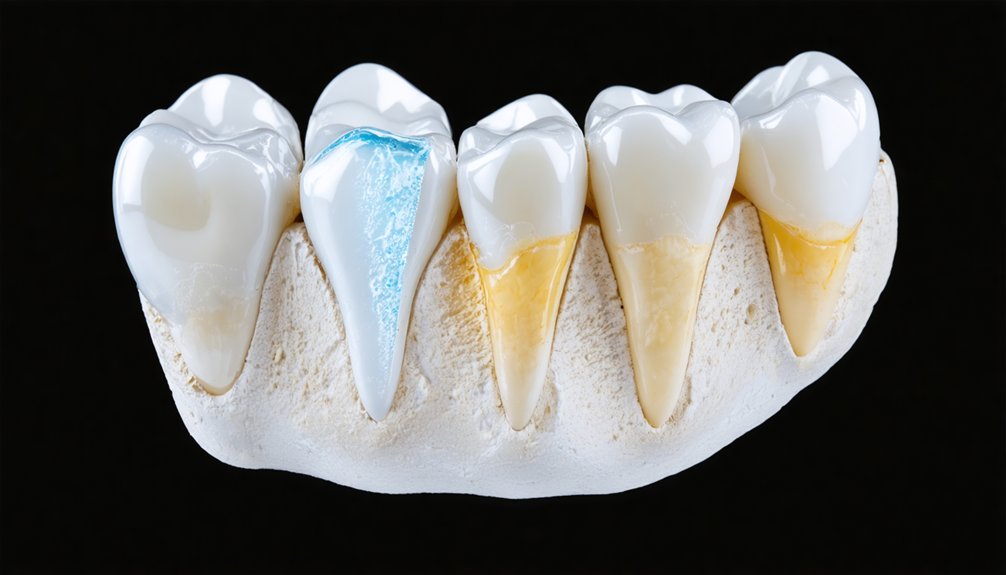
Second, translucent edges on your front teeth are direct demineralization indicators, confirming that enamel density has decreased.
Third, a paradoxically yellower appearance after repeated whitening suggests your enamel is thinning enough to reveal the dentin beneath.
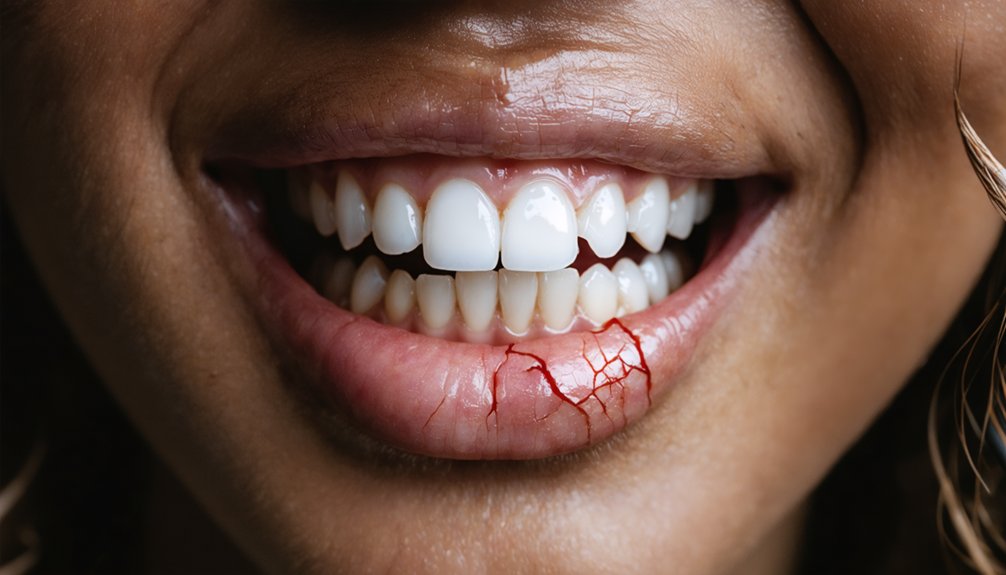
Fourth, surface roughness that you detect with your tongue indicates structural softening rather than normal post-treatment porosity.
These sensitivity signs and demineralization indicators shouldn’t be dismissed as temporary inconvenience.
Each signals cumulative mineral loss that accelerates further erosion.
If you notice any combination of these changes, discontinue whitening immediately and consult a dental professional for a structural assessment.
Does Professional Whitening Reduce Your Erosion Risk?
Professional supervision meaningfully reduces your erosion risk, but it doesn’t eliminate it entirely.
Regulated peroxide concentrations, controlled application times, and monitored aftercare allow remineralization to restore enamel health between sessions.
Unsupervised OTC use removes those safeguards entirely.
Three factors distinguish professional whitening from DIY approaches:
- Concentration control — clinicians select peroxide levels appropriate for your enamel’s current condition, reducing unnecessary chemical exposure.
- Frequency management — supervised protocols space treatments to allow adequate remineralization before the next session.
- Pre-treatment screening — existing erosion, bruxism, or acid wear is identified before whitening begins, preventing compounded damage.
Your erosion risk rises sharply when you override recommended intervals or combine professional treatment with frequent OTC products.
Professional supervision only protects you if you follow the prescribed protocol precisely.
Frequently Asked Questions
Can Enamel Erosion From Whitening Be Reversed or Repaired?
Like cracked armor, you can’t fully rebuild it—but you can reinforce it. Enamel restoration techniques like fluoride remineralization partially reverse softening caused by whitening product ingredients, though severely eroded enamel won’t regenerate completely. Act decisively and early.
Are Children or Teenagers More Vulnerable to Whitening-Related Enamel Erosion?
Yes, children and teenagers face heightened enamel sensitivity because their developing teeth haven’t fully mineralized. Whitening agents can accelerate long-term effects from age factors, making erosion more likely—you should avoid unsupervised whitening until enamel matures completely.
How Long Should You Wait Between Whitening Treatment Sessions?
Studies show enamel requires up to 48 hours to remineralize post-bleaching. You should space whitening frequency to every four–six weeks minimum, ensuring treatment intervals allow salivary remineralization to restore hardness before you reapply peroxide agents.
Does Enamel Erosion From Whitening Affect Dental Restorations or Veneers?
Whitening won’t directly erode restorations or veneers, but it can compromise restoration integrity and veneer durability by weakening surrounding natural enamel, creating uneven surfaces, and increasing marginal gaps where bacteria accumulate and further structural breakdown begins.
Can Certain Medications Increase Enamel Erosion Risk During Whitening?
Like armor already cracked before battle, certain medication types weaken your defenses—yes, they can heighten enamel sensitivity during whitening. Antidepressants, antihistamines, and diuretics reduce saliva, stripping your natural remineralization shield and accelerating erosion risk markedly.
References
- https://adanews.ada.org/huddles/risks-of-frequent-teeth-whitening/
- https://bridgedentalcharleston.com/does-teeth-whitening-damage-enamel/
- https://pmc.ncbi.nlm.nih.gov/articles/PMC7105286/
- https://www.smiledentist.co.uk/blog/can-teeth-whitening-damage-enamel-long-term
- https://depacific.com/doctors-blog/does-whitening-teeth-weaken-enamel/
- https://pmc.ncbi.nlm.nih.gov/articles/PMC4058574/
- https://bentonvilledentist.com/blog/can-whitening-damage-my-teens-tooth-enamel/
- https://pubmed.ncbi.nlm.nih.gov/26718302/
- https://willoughbydentiststuart.com/does-teeth-whitening-damage-enamel-dentist-backed-insights/
- https://www.greenponddental.com/blog/does-whitening-toothpaste-damage-enamel