Activated charcoal can lift surface stains from your teeth, but it won’t bleach or whiten beyond what’s visible on the enamel’s outer layer. You’ll need to choose dental-grade charcoal, apply it gently, and limit use to once or twice weekly to avoid irreversible enamel erosion. Watch for sensitivity or roughness, as these signal damage. If you’re serious about safer, more effective whitening, there’s a lot more to take into account before you start.
Key Takeaways
- Use food-grade or dental-grade activated charcoal derived from coconut shells, avoiding BBQ-grade products, and check RDA values stay below 250.
- Dab a paste onto teeth using a fingertip or soft toothbrush, leave for 2–3 minutes, then rinse thoroughly.
- Limit use to once or twice weekly, waiting 3–4 days between applications to prevent enamel erosion.
- Activated charcoal only removes surface stains from coffee, tea, or wine; it cannot treat deep or intrinsic discoloration.
- Reduce staining beverages, use a straw, rinse after consumption, and brush twice daily to maintain brighter teeth naturally.
What Activated Charcoal Actually Does to Your Teeth
Although activated charcoal has gained popularity as a natural teeth-whitening remedy, it doesn’t actually bleach your teeth. It works by binding to surface stains from coffee, tea, or wine, then lifting them away when you rinse. That’s the extent of its action.
Activated charcoal doesn’t bleach teeth — it simply binds to surface stains and lifts them away when you rinse.
It can’t penetrate enamel to address deep discoloration, and it produces no chemical bleaching effect. What it does produce, however, is risk. Its abrasive texture contributes to enamel erosion over time, which paradoxically makes your teeth more vulnerable to staining, not less.
Thinning enamel also increases teeth sensitivity, leaving you with discomfort that outlasts any temporary brightness.
The American Dental Association confirms there’s no clinical data supporting its safety or effectiveness, and it carries no ADA Seal of Acceptance.
Choose the Right Activated Charcoal Product for Your Teeth
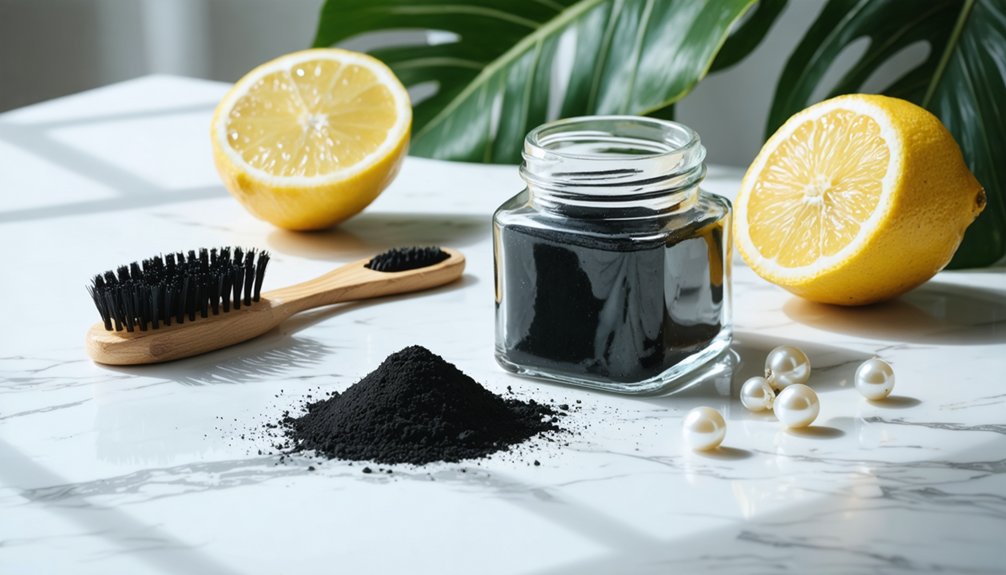
If you decide to try activated charcoal, product selection matters. Not all charcoal products are equal, and choosing poorly can accelerate enamel damage rather than improve whiteness. Scrutinize charcoal packaging carefully before purchasing. You want food-grade or dental-grade activated charcoal derived from coconut shells or hardwood, not BBQ-grade alternatives.
Check product labeling for relative dentin abrasivity (RDA) values; anything exceeding 250 poses serious enamel risk. The American Dental Association grants no Seal of Acceptance to activated charcoal products, so you’re steering through an unregulated market.
Avoid products containing additives like artificial sweeteners or alcohol, which compound irritation risks. Tablets or loose powder formats give you better control over concentration than pre-mixed pastes, letting you minimize unnecessary enamel exposure during each application.
How to Prep Your Activated Charcoal Paste Correctly
To prep your activated charcoal paste, grind one to two tablets into a fine dust and mix the powder with enough water to form a spreadable consistency. Once you’ve achieved a smooth paste, dab it gently onto your teeth using a fingertip or cotton swab rather than rubbing, which reduces abrasive friction against your enamel.
Leave the paste on for two to three minutes to allow it to bind with surface stains before rinsing thoroughly.
Grinding Tablets Into Powder
When preparing activated charcoal paste from tablets, you’ll want to grind one to two tablets into a fine dust before mixing with water. Controlling particle consistency directly impacts your risk of enamel erosion and unintended dental polishing damage.
Follow these steps precisely:
- Crush one to two tablets using a spoon or mortar until no coarse fragments remain.
- Add minimal water to create a thick, manageable paste rather than a runny mixture.
- Inspect the texture — visible grit signals incomplete grinding, which increases abrasion risk.
- Mix thoroughly to distribute particles evenly before application.
Uneven grinding concentrates abrasive particles, accelerating enamel wear with each use.
Consistent fine powder gives you maximum control over application and minimizes preventable dental damage.
Mixing Paste With Water
Once your charcoal is ground into a uniform fine powder, add only a few drops of water at a time, mixing gradually until you achieve a thick, controlled paste. Consistency matters — too thin, and it’ll spread uncontrollably; too thick, and application becomes unnecessarily abrasive.
Historical usage of charcoal in oral hygiene across various cultures influenced modern cultural perceptions of it as a natural whitening solution. However, controlled preparation remains critical regardless of tradition.
Your paste should hold its shape without dripping. A runny mixture increases the risk of ingestion and reduces contact time with surface stains. Use a small, clean dish for mixing, and prepare only what you’ll immediately use — leftover paste degrades quickly and shouldn’t be stored for reapplication.
Applying Paste Safely
With your paste prepared to the right consistency, how you apply it matters just as much as how you’ve mixed it. Careless application undermines dental hygiene and accelerates enamel erosion—defeating the purpose of natural remedies entirely.
Follow these controlled application steps:
- Dab or tap the paste onto teeth—never rub or scrub aggressively.
- Use a soft-bristled child’s toothbrush, fingertip, or cotton swab to minimize abrasive contact.
- Leave the paste on for 2–3 minutes, allowing it to bind with surface stains.
- Start with just 1 minute initially, gradually increasing tolerance over sessions.
Skipping these precautions risks enamel thinning and heightened sensitivity. You control the outcome—precise application is non-negotiable.
Apply Activated Charcoal Gently to Protect Your Enamel
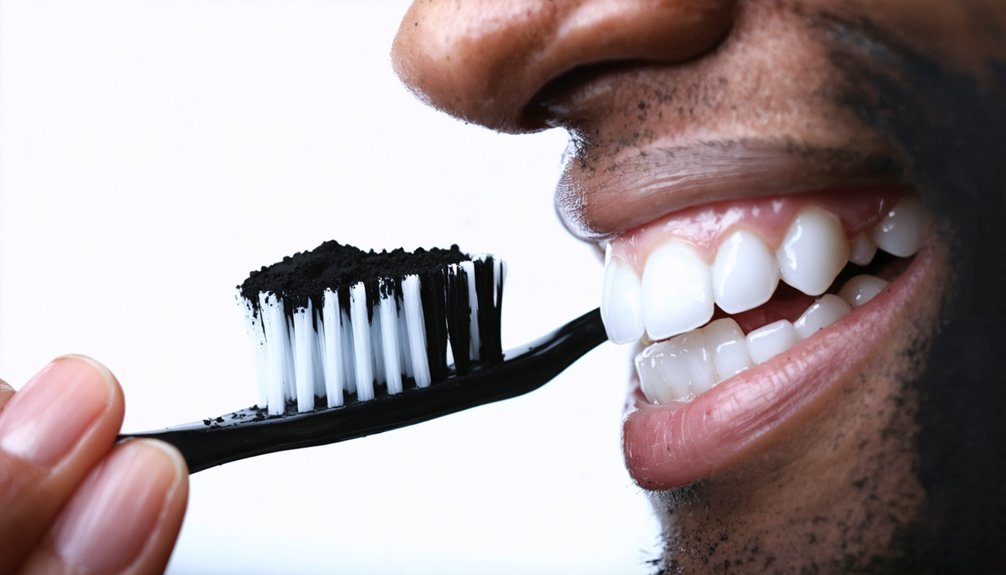
Although activated charcoal may seem harmless, how you apply it directly determines whether it helps or harms your enamel. Its abrasive texture makes technique critical. Rather than scrubbing, dab or tap the paste onto your teeth using a fingertip or cotton swab. If you prefer a toothbrush, use the softest bristles available—a child’s toothbrush works best.
Aggressive application accelerates enamel erosion and increases gum sensitivity, two outcomes that worsen discoloration over time rather than correcting it. Leave the paste on for two to three minutes, then rinse thoroughly before brushing with regular toothpaste.
Monitor your gums and enamel closely after each session. If you notice roughness, bleeding, or heightened sensitivity, discontinue use immediately and consult your dentist.
Watch for These Signs of Enamel Damage
As you use activated charcoal, watch closely for early warning signs of enamel damage, including increased tooth sensitivity, gum irritation, or a rougher texture on your tooth surfaces.
If you notice any bleeding, persistent discomfort, or visible changes to your enamel, stop use immediately.
The American Dental Association cautions that charcoal’s abrasive properties can harm teeth rather than whiten them, making close self-monitoring essential.
Recognize Early Warning Signs
Monitoring your teeth and gums during activated charcoal use isn’t optional — it’s essential. Enamel erosion and gum irritation can develop gradually, making early detection critical for preventing lasting damage.
Stop use immediately if you notice any of the following:
- Increased sensitivity to hot, cold, or sweet foods — a direct signal of enamel erosion
- Rough or chalky texture on tooth surfaces when running your tongue across them
- Gum irritation, redness, or bleeding after application
- Visible yellowing despite continued use, indicating deeper enamel compromise
These aren’t minor inconveniences — they’re your body’s warnings. You control whether damage progresses.
Discontinuing use at the first sign protects your enamel and preserves long-term dental health far better than any surface whitening benefit activated charcoal offers.
Stop Use Immediately
Three warning signs demand you stop activated charcoal use without delay: persistent tooth sensitivity to temperature or sweets, a rough or chalky surface texture when you run your tongue across your teeth, and gum bleeding or redness following application.
Despite widespread dental myths promoting charcoal as a safe stain removal solution, the ADA confirms no evidence supports its safety or effectiveness.
These symptoms signal enamel erosion — irreversible damage that permanently weakens your teeth and accelerates discoloration over time. Once you notice any of these signs, discontinue use immediately and schedule a dental consultation.
Don’t let marketing claims override physical warning signals your body sends. Protecting your enamel takes priority over any temporary cosmetic benefit charcoal may appear to offer.
How Often to Use Activated Charcoal Without Harming Enamel
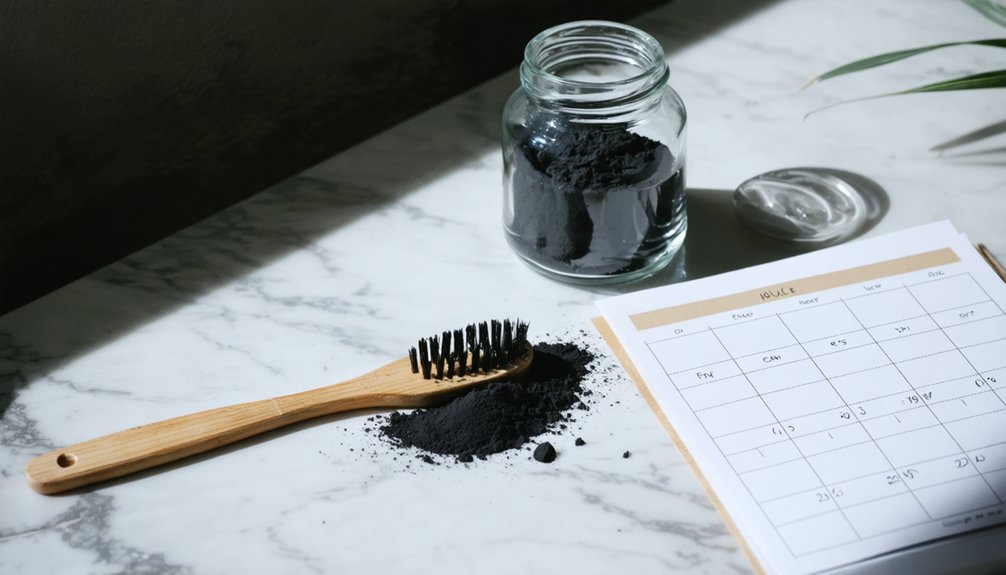
Because activated charcoal’s abrasive texture can gradually wear down enamel, you should limit use to once or twice weekly at most. Enamel preservation depends heavily on controlling usage frequency. Follow these guidelines:
Activated charcoal’s abrasive texture wears down enamel—limit use to once or twice weekly to preserve your smile.
- Wait 3–4 days between applications to allow enamel recovery time.
- Limit sessions to 2–3 minutes to reduce cumulative abrasive exposure.
- Take a 2-week break periodically to prevent progressive enamel erosion.
- Restrict use to surface stains only—charcoal won’t address deep discoloration regardless of frequency.
Overuse won’t accelerate whitening; it’ll accelerate enamel damage. Thinning enamel paradoxically causes yellowing by exposing the darker dentin underneath.
If you’re relying on charcoal more than twice weekly, you’re risking long-term discoloration rather than preventing it.
Better Alternatives When Activated Charcoal Isn’t Enough
When activated charcoal falls short—which, given its limited evidence base, it often will—you’ve got more reliable options backed by clinical data.
For effective dental stain removal, choose toothpastes carrying the ADA Seal of Acceptance with a relative dentin abrasivity under 250. These products balance cleaning power with enamel erosion prevention better than charcoal ever manages.
Peroxide-based whiteners offer an actual bleaching effect that charcoal physically can’t replicate. Baking soda pastes and diluted hydrogen peroxide rinses also provide evidence-supported surface whitening without unpredictable abrasivity.
Behaviorally, reduce staining beverages like coffee, red wine, and cola. When you do drink them, use a straw and rinse immediately after.
Brush twice daily for two minutes and floss consistently—these habits outperform charcoal every time.
Frequently Asked Questions
Can Activated Charcoal Whiten Teeth That Have Deep Internal Staining?
No, activated charcoal can’t address internal staining. Its whitening effectiveness is limited strictly to surface stains. You should consult your dentist for proven treatments targeting deep discoloration, as no clinical evidence supports charcoal’s ability to bleach intrinsic stains.
Is Activated Charcoal Safe to Use on Dental Crowns or Veneers?
Ironically, you’d risk damaging your dental durability by using activated charcoal on crowns or veneers. Its surface abrasion can scratch and degrade these restorations. You should avoid it entirely and consult your dentist for safer alternatives.
Can Children Safely Use Activated Charcoal Products for Teeth Whitening?
You shouldn’t use activated charcoal products for children’s oral health. There’s no evidence supporting safety or efficacy in kids. Instead, you should pursue natural whitening methods like proper brushing, flossing, and reducing staining beverages for safer results.
Does Activated Charcoal Interact Negatively With Prescription Medications You Take?
Yes, activated charcoal can compromise drug interactions and medication safety—it absorbs substances indiscriminately, binding to prescriptions you’ve taken and reducing their effectiveness. Consult your doctor before use to protect your health.
Can Activated Charcoal Cause Permanent Damage After Just One Use?
One use likely won’t cause permanent damage, but you’re still risking tooth enamel wear and increased oral sensitivity. You should monitor your teeth closely and discontinue use immediately if you notice any roughness or discomfort.
References
- https://www.webmd.com/oral-health/what-to-know-about-activated-charcoal-whitening
- https://www.rejuv-health.com/cosmetic-dentistry/charcoal-for-teeth-whitening/
- https://www.sciencedirect.com/science/article/abs/pii/S0300571224000472
- https://www.evolutiondental.ca/myths-vs-facts-activated-charcoal-baking-soda-and-more-for-teeth-whitening/
- https://www.123dentist.com/blog/whitening-teeth-activated-charcoal/
- https://www.wikihow.com/Use-Activated-Charcoal-for-Teeth-Whitening
- https://www.youtube.com/watch?v=pfmchTOSxe4
- https://wellnessmama.com/beauty/whiten-teeth-naturally/
- https://www.youtube.com/watch?v=UN6JWmDmwlM
- https://www.healthline.com/health/activated-charcoal-teeth-whitening