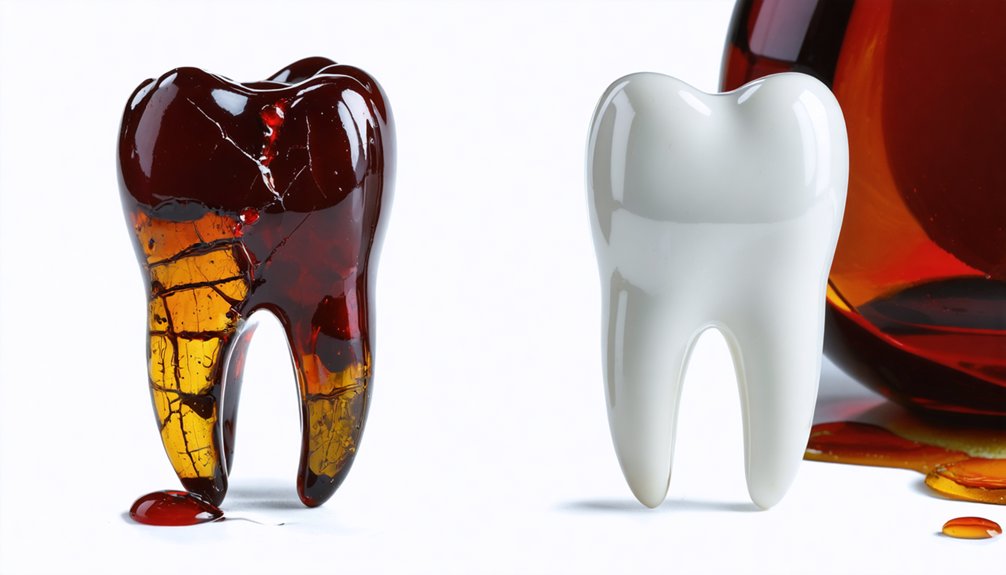
Certain foods stain your teeth through three key mechanisms: chromogens bind directly to enamel, tannins act as molecular bridges that increase pigment adhesion, and acids erode enamel to create microscopic pores that trap discoloration deep within the tooth structure. You can remove surface stains by rinsing immediately after eating, using whitening toothpaste, and waiting 30–60 minutes before brushing after acidic foods. Persistent stains may require professional intervention, and there’s much more you can do to protect your teeth long-term.
Key Takeaways
- Chromogens, tannins, and acids in foods like coffee, wine, and citrus bind to or erode enamel, causing discoloration.
- Acidic foods temporarily soften enamel, increasing porosity and allowing pigment molecules to penetrate deeper, making stains more persistent.
- Rinsing with water immediately after consuming staining foods helps dislodge pigments and reduce discoloration effectively.
- Brushing twice daily with whitening fluoride toothpaste and waiting 30–60 minutes after acidic foods helps remove surface stains.
- Stubborn intrinsic stains may require professional treatments like laser whitening, dental veneers, or routine professional cleanings.
Why Do Certain Foods Stain Your Teeth?
Certain foods stain your teeth because of three key chemical compounds: chromogens, tannins, and acids. Chromogens are potent pigments that bind directly to your enamel.
Three compounds stain your teeth: chromogens, tannins, and acids — each attacking enamel through a distinct, damaging mechanism.
Tannins, found heavily in coffee and tea, attach to enamel proteins, creating anchor points for dark pigments.
Acids erode and roughen enamel’s surface, increasing its porosity and making it considerably more receptive to staining compounds.
Your enamel, though hard, develops microscopic cracks under repeated acid exposure, trapping color deep within its structure. These intrinsic deposits resist standard brushing, often requiring tooth whitening interventions to address effectively.
Consistent dental flossing also removes pigment-laden plaque from interproximal surfaces before stains solidify.
Understanding these three mechanisms gives you precise, actionable control over what damages your enamel and how to counter it strategically.
The Science Behind Tooth Staining
Understanding why foods stain your teeth starts with recognizing how enamel interacts with the compounds you consume daily. Enamel is porous, and its microscopic surface openings allow pigment molecules to penetrate and settle beneath the outer layer.
Two primary mechanisms drive this process. First, chromogen binding occurs when strong pigment compounds attach directly to enamel’s surface proteins, creating visible discoloration.
Second, tannins—plant-based compounds found in tea, coffee, and wine—increase enamel’s receptivity to those chromogens by acting as a molecular bridge.
Acids accelerate the problem by increasing enamel porosity. When acidic foods and drinks soften enamel, the surface becomes rougher and more susceptible to trapping color.
Controlling your exposure to these compounds directly reduces how aggressively stains develop over time.
Worst Foods and Drinks for Tooth Staining
Now that you understand the chemistry driving tooth staining, which specific foods and drinks cause the most damage? Several key staining agents consistently compromise tooth enamel across clinical observations.
Coffee and tea deliver concentrated tannins, with black tea outpacing coffee in staining intensity. Red wine combines acidity with deep chromogens, accelerating discoloration. Dark berries—blueberries, blackberries, cherries, and pomegranates—carry high chromogen loads that bind aggressively to enamel.
Soy, tomato, curry, and balsamic sauces deposit persistent pigments that resist easy removal. Sodas and energy drinks deliver a damaging combination: acid erosion that roughens tooth enamel, followed by chromogen penetration into those weakened surfaces.
Recognizing these specific culprits lets you make precise dietary decisions, controlling your exposure rather than reacting to staining after it’s already occurred.
How Acidic Foods Destroy Enamel and Worsen Stains
When you consume acidic foods and drinks, the acid temporarily softens your enamel, making it more porous and vulnerable to pigment absorption. This weakened surface develops microscopic cracks where chromogens and tannins embed more deeply, intensifying stain formation.
Your staining risk compounds considerably when you consume acidic and pigment-rich foods together, as the acid primes your enamel to retain color more aggressively.
Acid Weakens Enamel
Acidic foods and drinks don’t just stain your teeth—they actively compromise the enamel that protects them. Acid exposure softens enamel, creating microscopic roughness where pigments embed deeply. Without intervention, repeated acid contact accelerates structural breakdown beyond simple discoloration.
Three critical mechanisms explain acid-driven enamel damage:
- Softening effect – Acids temporarily demineralize enamel, reducing its hardness and increasing porosity for chromogen absorption.
- Microscopic crack formation – Roughened surfaces trap pigments from coffee, wine, and dark sauces at a structural level.
- Delayed enamel regeneration – Brushing immediately after acid exposure worsens erosion; waiting 30–60 minutes allows saliva stimulation to initiate natural remineralization.
You control damage frequency by limiting acidic food portions and rinsing with water immediately after consumption.
Staining Risks Increase
Repeated acid exposure doesn’t just weaken enamel—it compounds your staining risk by creating increasingly porous surfaces that trap chromogens more aggressively over time. Enamel erosion progressively deepens microscopic channels where pigments from coffee, wine, and dark berries embed permanently. Each acidic episode leaves your enamel softer and rougher than before, accelerating pigment retention with every subsequent meal.
Plaque buildup intensifies this cycle. Plaque’s biofilm creates an additional adhesive layer that bonds chromogens and tannins directly to compromised enamel surfaces. You’re not dealing with isolated staining events—you’re experiencing cumulative structural degradation.
Without intervention, each stain-causing food you consume causes disproportionately greater discoloration than it would on intact enamel. Controlling acid exposure frequency is essential to interrupting this escalating damage pattern.
Simple Daily Habits That Stop Stains Before They Set
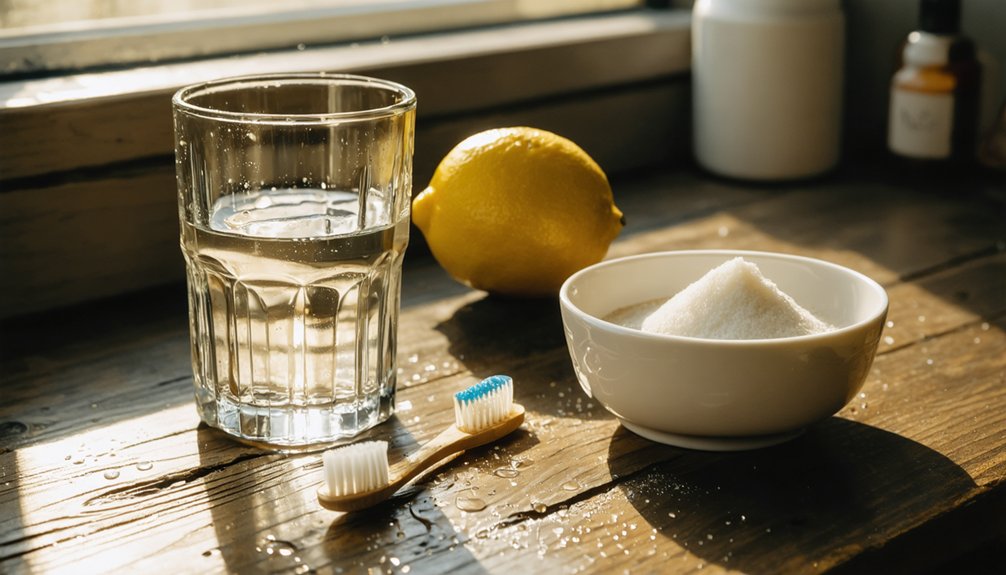
Stopping stains before they set is far easier than removing them after they’ve bonded to enamel. Incorporating natural remedies and home techniques into your daily routine gives you direct control over stain prevention.
Preventing stains is simpler than reversing them — small daily habits keep your enamel naturally clear.
Follow these three evidence-backed habits consistently:
- Rinse immediately — Swish water around your mouth after consuming coffee, tea, or dark sauces to dislodge chromogens before they adhere to enamel.
- Use a straw — Drinking cola, juice, or iced tea through a straw minimizes direct contact with front tooth surfaces.
- Chew xylitol gum — Stimulating saliva production neutralizes acids and mechanically clears residual pigments from enamel surfaces.
Each habit interrupts the staining process at a different point, reducing cumulative pigment buildup without requiring professional intervention.
Foods and Drinks to Choose Instead of Stain-Causing Ones
When you want to protect your enamel without sacrificing variety, swapping dark berries for paler fruits like white grapes or melons considerably cuts your chromogen exposure.
You can also replace stain-heavy beverages like black tea, red wine, and dark sodas with water, milk, or lighter herbal teas that carry fewer tannins and pigments.
Choosing creamy or light-colored sauces over soy, tomato, or curry-based options further reduces the volume of deep pigments contacting your enamel each day.
Lighter Food Alternatives
Choosing lighter-colored foods and drinks over darker alternatives is one of the most straightforward ways to reduce chromogen and tannin exposure. Swapping high-pigment options for paler substitutes directly limits the compounds that adhere to enamel.
Consider these evidence-backed substitutions:
- Replace dark berries with white grapes or melons — they contain fewer chromogens while still delivering nutritional value.
- Choose herbal or white tea over black tea or coffee — significantly lower tannin concentrations mean less enamel binding.
- Opt for creamy or light-colored sauces instead of soy, tomato, or curry — reducing pigment contact minimizes extrinsic staining.
When stains do develop, natural remedies like increased water rinsing combined with whitening toothpaste help you maintain control over discoloration effectively.
Stain-Safe Drink Choices
Food choices extend beyond solid meals — what you drink throughout the day plays an equally important role in enamel staining. Selecting beverage alternatives that minimize chromogen and acid exposure gives you direct control over discoloration risk.
Water remains the most effective stain resistant drink, rinsing pigments and neutralizing acids immediately after consumption.
Milk reduces tannin activity, making it a practical addition to coffee or tea.
Herbal teas with lighter pigmentation, such as chamomile or white tea, produce noticeably less staining than black tea or coffee.
When consuming cold beverages like juice or iced tea, using a straw limits direct contact with enamel surfaces.
Prioritizing these substitutions consistently reduces cumulative pigment exposure without requiring complete dietary elimination of enjoyable drinks.
How to Remove Existing Tooth Stains at Home
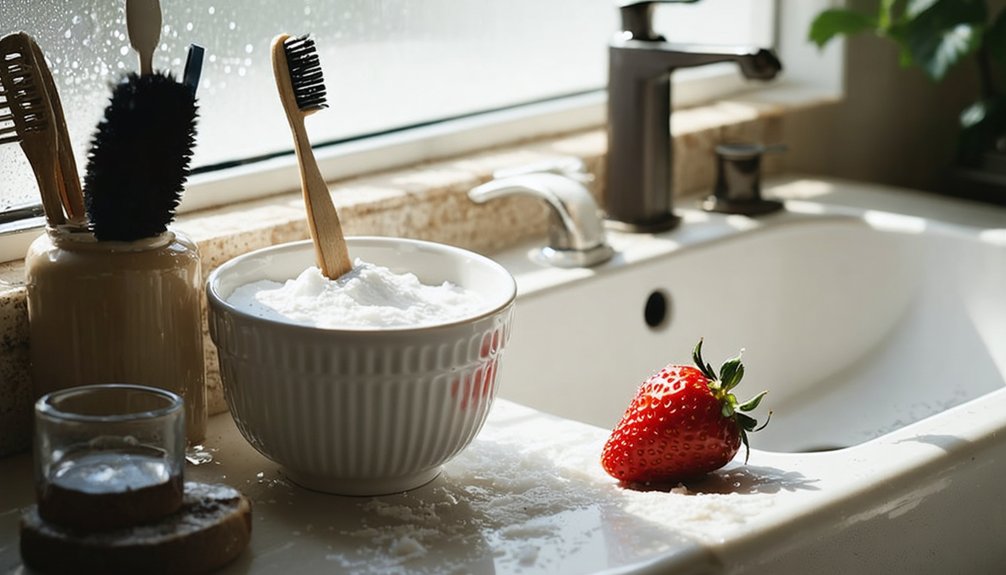
Although tooth stains can seem stubborn, you can effectively manage most extrinsic discoloration at home with consistent, targeted habits. Maintaining strong oral hygiene directly controls plaque buildup, which traps pigments and accelerates surface discoloration.
Follow these three evidence-based strategies:
- Brush twice daily with whitening fluoride toothpaste to lift chromogens deposited by coffee, tea, or dark sauces from enamel surfaces.
- Wait 30–60 minutes after consuming acidic foods before brushing, preventing softened enamel from sustaining additional abrasive damage.
- Rinse immediately with water after stain-causing foods or drinks to flush residual pigments before they adhere.
Applying these methods consistently interrupts the staining cycle at its earliest stage, preserving enamel integrity and maintaining noticeably cleaner teeth over time.
When Tooth Stains Require Professional Treatment
When home remedies fail to reverse persistent discoloration, you’ll need professional intervention to restore enamel clarity. Dentists assess stain depth and origin before recommending targeted treatments.
For deeply embedded chromogens or tannin-based staining unresponsive to whitening toothpaste, laser whitening delivers concentrated energy that breaks apart pigment molecules within enamel pores, producing measurable results in a single session.
When structural discoloration or severe enamel erosion compromises both appearance and function, dental veneers offer a precise restorative solution. These thin porcelain shells bond directly to your tooth surface, masking intrinsic stains that bleaching can’t correct.
You should also schedule routine professional cleanings, which smooth microscopic enamel cracks where pigments accumulate. Early intervention prevents staining from progressing into conditions requiring more invasive and costly restorative procedures.
Long-Term Dietary Changes That Keep Teeth White

Sustained dietary modifications protect enamel integrity and reduce chromogen exposure more effectively than reactive treatments. You control stain accumulation by adjusting what, when, and how you eat — consistently.
- Replace dark sauces and berries with lighter alternatives like melon or creamy dressings to cut chromogen load directly at the source.
- Incorporate natural remedies like crunchy vegetables — apples, celery, carrots — which mechanically cleanse enamel surfaces while stimulating protective saliva production.
- Evaluate dietary supplements such as xylitol gum, which research supports for saliva stimulation and enamel defense against pigment adhesion.
Combining dairy with stain-risk foods neutralizes tannins effectively.
Limiting acidic beverage frequency, rather than volume alone, reduces cumulative enamel erosion.
These structured adjustments deliver measurable, long-term whiteness without depending solely on corrective dental intervention.
Frequently Asked Questions
Can Certain Medications Make Teeth More Vulnerable to Food Staining?
Yes, certain medications’ side effects directly impact your oral health impact by reducing saliva flow, softening enamel, or altering pH levels—making your teeth considerably more vulnerable to absorbing pigments from staining foods and drinks.
Does Teeth Whitening Treatment Affect How Easily Teeth Stain Afterward?
Yes, whitening treatments can temporarily increase staining susceptibility. They open enamel pores, and combined with dietary acids, you’ll accelerate enamel erosion. You should avoid chromogenic foods and acids for 48 hours post-treatment to maintain results effectively.
Are Some People Genetically More Prone to Severe Tooth Staining?
Yes, you can inherit thinner enamel strength or higher porosity through genetic predisposition, making your teeth stain faster. While others resist pigments naturally, you may require stricter prevention strategies and more frequent professional cleanings to maintain results.
Can Fluoride Treatments Help Protect Teeth From Food-Related Staining?
Fluoride treatments strengthen your enamel, reducing enamel erosion caused by dietary acids. They won’t remove existing stains, but they’ll harden the enamel surface, making it less porous and less susceptible to pigment penetration from staining foods.
Does Saliva Composition Affect How Quickly Teeth Stain From Food?
Yes, your saliva pH and enzyme activity directly influence staining speed. Higher pH neutralizes acids, slowing enamel erosion, while active enzymes break down chromogens. You’ll stain faster if your saliva composition’s compromised by dehydration or poor diet.
References
- https://www.bupa.co.uk/newsroom/ourviews/teeth-staining-foods
- https://www.healthline.com/health/foods-that-stain-teeth
- https://www.webmd.com/oral-health/ss/slideshow-foods-stain-teeth
- https://www.lwdentist.com/20-foods-and-drinks-that-cause-stains-on-teeth/
- https://www.goodrx.com/conditions/dental-care/foods-that-stain-your-teeth
- https://www.premierorthodontics.com/top-6-foods-that-can-stain-teeth-and-what-to-do-about-it/
- https://www.webmd.com/oral-health/features/foods-stain-teeth-feature
- https://www.colgate.com/en-sa/oral-health/teeth-whitening/what-foods-stain-your-teeth
- https://southeasterndentalcenter.com/foods-that-cause-teeth-stains/
- https://www.bbc.co.uk/food/articles/c4glpdle5dlo