If your teeth have lost their shine, organic whitening products can restore brightness without damaging your enamel. Top picks include Hello Antiplaque + Whitening Toothpaste, Schmidt’s Activated Charcoal toothpaste, and Lumineux Peroxide-Free Whitening Strips, which use natural essential oils instead of harsh chemicals. Organic mouthwashes like Terra & Co. complement these products by reducing bacteria and stain buildup. Pair these with smart dietary choices to protect your results long-term—and there’s much more to uncover ahead.
Key Takeaways
- Hello Antiplaque + Whitening toothpaste is fluoride- and peroxide-free, supporting enamel repair while removing surface stains naturally.
- Schmidt’s Activated Charcoal with Wondermint toothpaste effectively adsorbs surface stains without harsh chemical ingredients.
- Lumineux Whitening Strips use essential oils like lemon peel, coconut, and sage as a gentle, peroxide-free alternative.
- Terra & Co. organic mouthwash combines MCT oil, coconut oil, activated charcoal, and peppermint to control stain buildup.
- Coconut oil pulling—swishing one tablespoon for 15–20 minutes—reduces bacteria and plaque while gently supporting whitening efforts.
Why Teeth Turn Yellow and What Organic Care Actually Does About It
Because your teeth are constantly exposed to pigment-rich foods and drinks like coffee, red wine, and dark berries, surface stains build up faster than most people realize. Dental plaque compounds this problem by trapping pigments against enamel, making discoloration harder to reverse over time.
Enamel erosion adds another layer of complexity. Once acids from soda, citrus, or poor diet wear down your enamel, teeth appear darker because the yellowish dentin underneath becomes more visible.
Organic care addresses both issues strategically. Ingredients like baking soda gently lift surface stains, activated charcoal adsorbs impurities, and coconut oil reduces bacteria that feed plaque formation. These aren’t just trends—studies support their efficacy.
You’re not just masking discoloration; you’re targeting its root causes naturally.
Best Organic Whitening Toothpastes for Discolored Teeth
When it comes to fighting discoloration without harsh chemicals, your toothpaste choice matters more than most people think. Two standout options give you real control over your whitening routine.
Hello Antiplaque + Whitening leads as the best fluoride-free choice, supporting enamel repair while skipping peroxide entirely. It’s ideal if sensitivity is a concern.
Schmidt’s Activated Charcoal with Wondermint delivers adsorption-based stain removal, pulling impurities from your tooth surface effectively.
Pair either toothpaste with consistent dental floss use to clear plaque from areas your brush misses. Without flossing, surface staining along the gumline persists regardless of which toothpaste you choose.
Both formulations reflect a holistic approach — targeting discoloration at the surface while supporting overall oral health rather than compromising it with aggressive bleaching agents.
Top Peroxide-Free Whitening Strips That Deliver Real Results
If you’re ready to step away from harsh chemicals, Lumineux Teeth Whitening Strips offer a peroxide-free formula that replaces standard bleaching agents with essential oils like lemon peel, coconut, and sage.
You simply apply the strips using a clean, straightforward method that lets the active botanicals work without irritating sensitive enamel.
This approach gives you real whitening results while keeping your routine aligned with a natural, holistic philosophy.
Lumineux Strips Key Benefits
Lumineux Teeth Whitening Strips skip the peroxide entirely, relying instead on a blend of essential oils — lemon peel, coconut, and sage — to lift stains without the chemical harshness that often triggers sensitivity. This formula targets dental plaque without compromising your enamel’s integrity, making it a smart choice if you’ve experienced enamel erosion from aggressive whitening agents in the past.
You’re getting a strip that works gently but purposefully. The coconut oil base helps break down surface buildup, while sage and lemon peel contribute natural antimicrobial and brightening properties. Because there’s no peroxide, you won’t face the burning or heightened sensitivity that standard strips often cause.
If you want measurable whitening results while keeping your routine clean and ingredient-conscious, Lumineux gives you that control without compromise.
Peroxide-Free Application Methods
Applying peroxide-free whitening strips correctly makes the difference between consistent results and wasted effort. You’re choosing a gentler path that protects enamel while still targeting discoloration effectively.
Follow these steps to maximize your results:
- Clean your teeth first — Remove dental plaque by brushing before application so the strip’s active ingredients contact your enamel directly, not bacterial buildup.
- Apply to dry teeth — Pat teeth dry with a cloth or tissue to help strips adhere properly and deliver consistent contact across the surface.
- Respect the timing — Wear strips for the recommended duration only; overuse won’t accelerate whitening but may increase enamel erosion risk over time.
Lumineux strips use essential oils like lemon peel and coconut oil, making this routine both evidence-backed and holistically sound.
Organic Mouthwashes That Actually Fight Stains
When it comes to fighting stains naturally, a few organic mouthwashes stand out for their evidence-backed ingredients. Terra & Co. combines MCT oil, coconut oil, peppermint, vitamin E, and activated charcoal — a formula that targets discoloration while supporting detoxification.
Activated charcoal’s adsorbing properties make it one of the more reliable natural remedies for lifting surface stains without harsh chemicals.
Poofy Organics Organic Mouthwash earns a top recommendation for both whitening and gingivitis prevention, giving you dual benefits in one routine step.
When evaluating any mouthwash, ingredient safety matters — you’ll want to confirm formulas are free from artificial additives and unnecessary fillers.
Using these mouthwashes consistently alongside regular brushing gives you real control over stain buildup before it becomes a deeper cosmetic concern.
Organic Whitening Options Gentle Enough for Sensitive Teeth
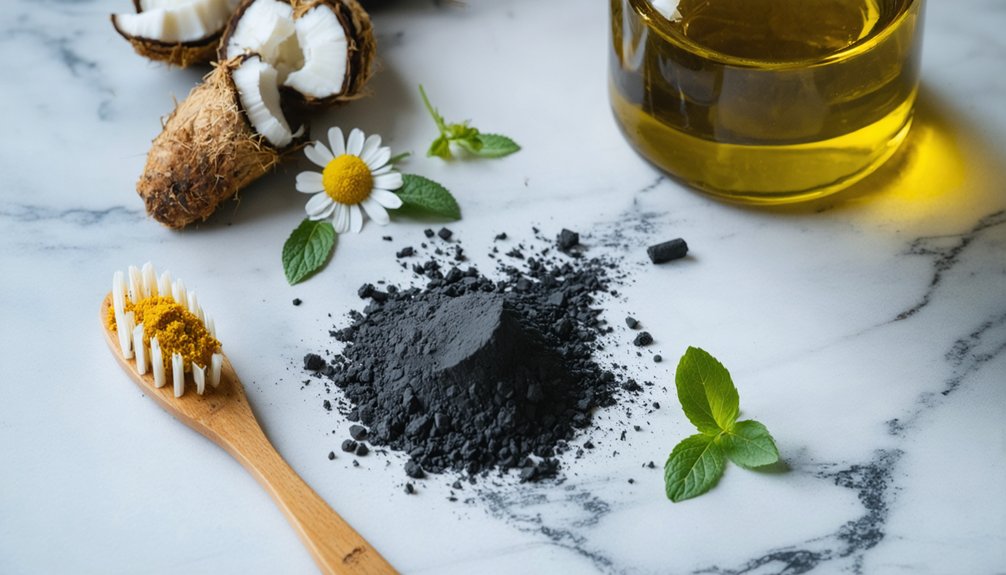
Sensitive teeth don’t have to mean skipping whitening altogether — you’ve got gentler organic options that still deliver results. By choosing ingredients that prioritize enamel protection, you stay in control of brightening your smile without triggering discomfort.
Consider these three effective options:
- Hydroxyapatite toothpaste — a newer, less harsh alternative to peroxide that remineralizes while whitening, making it ideal for sensitivity.
- Baking soda paste — a mild natural abrasive that removes surface stains gently; mix 1 teaspoon with 2 teaspoons of water and brush a few times weekly.
- Lumineux Whitening Strips — peroxide-free strips using lemon peel, coconut, and sage oils that whiten without chemical irritation.
These choices respect your enamel while still delivering measurable, visible results.
Natural Ingredients That Whiten Teeth at Home
If you’re looking to whiten teeth with pantry staples, baking soda and coconut oil are two of the most research-supported natural options available.
You can mix 1 teaspoon of baking soda with 2 teaspoons of water to create a gentle paste that rubs out surface stains when applied a few times per week.
For oil pulling, you’ll swish 1 tablespoon of coconut oil through your teeth for 15 to 20 minutes, reducing bacteria and buildup that contribute to discoloration.
Baking Soda Whitening Benefits
Baking soda stands out as one of the most accessible and research-backed natural whitening agents you can use at home. It gently abrades surface stains without triggering significant enamel erosion, making it a safer daily option than acidic alternatives.
To use it effectively, follow these steps:
- Mix the paste – Combine 1 teaspoon of baking soda with 2 teaspoons of water until smooth.
- Brush carefully – Apply the paste a few times per week to reduce dental plaque buildup without over-abrading enamel.
- Rinse thoroughly – Clear all residue to prevent prolonged alkaline exposure.
Studies confirm baking soda produces statistically significant whitening results, giving you a proven, low-cost method to reclaim control over your oral health naturally.
Oil Pulling With Coconut
Another powerful natural option worth adding to your whitening routine is oil pulling with coconut oil. You’ll simply swish one tablespoon of coconut oil through your teeth for 15 to 20 minutes, allowing it to adsorb bacteria and reduce dental plaque that contributes to surface discoloration.
Unlike acidic approaches that risk enamel erosion, coconut oil remains gentle on tooth structure while delivering antimicrobial benefits. It melts naturally in your mouth, making the process straightforward and mess-free. You can incorporate it into your morning routine before brushing for maximum effectiveness.
Consistency matters most here. Practicing oil pulling several times weekly gives your mouth a cleaner baseline, supporting your other whitening efforts without introducing harsh chemicals or compromising your commitment to holistic oral care.
How to Apply Organic Whitening Products for Maximum Effect
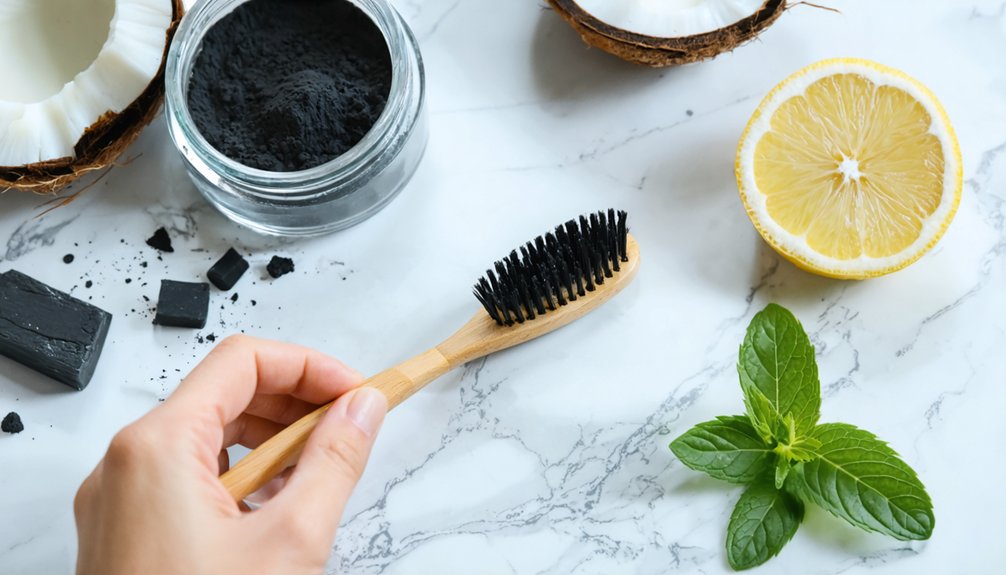
Getting the most out of organic whitening products starts with understanding how each ingredient works and applying it correctly. Each method targets dental plaque and staining differently, so precision matters.
Precision matters—every organic whitening ingredient works differently, and applying each one correctly is what delivers real results.
- Baking soda paste: Mix 1 teaspoon with 2 teaspoons of water and brush a few times per week—never daily, as overuse risks enamel erosion.
- Oil pulling: Push and pull 1 tablespoon of coconut oil through your teeth for 15–20 minutes to reduce bacteria and loosen plaque effectively.
- Whitening strips: Apply gel-side directly to teeth, letting it sit for one minute before self-dissolving for clean, straightforward results.
Pair these methods with limiting staining beverages and brushing consistently to reinforce lasting whiteness from the inside out.
Dietary Habits That Protect and Extend Your Whitening Results
Applying organic whitening products correctly gets you results—but what you eat and drink daily determines how long those results last. Coffee, red wine, soda, and dark berries accelerate discoloration and feed dental plaque formation, which undermines your whitening progress. Use a straw when drinking staining beverages to minimize direct contact with enamel.
Add calcium-rich foods like cheese, milk, and broccoli to your diet—they protect enamel and support lasting whiteness. Limiting sugar reduces bacterial buildup that triggers both dental plaque and tooth sensitivity, keeping your results stable longer.
Regular brushing, flossing, and professional cleanings reinforce everything you’re doing at home. You control what enters your mouth, and those daily choices either protect your investment or quietly erase it.
Frequently Asked Questions
Can Organic Whitening Products Interact With Dental Crowns or Veneers?
Carefully consider crown compatibility before whitening—organic products don’t alter dental crown compatibility or veneer color matching, but they can whiten surrounding teeth unevenly, creating visible contrasts. You’ll want to consult your dentist first.
How Long Do Organic Whitening Results Typically Last Before Retreatment Is Needed?
Your organic whitening results’ duration longevity typically spans two to six months before retreatment frequency kicks in. You’ll extend results by avoiding staining foods, brushing regularly, and maintaining consistent oil pulling or baking soda routines.
Are Organic Whitening Products Safe to Use During Pregnancy or Breastfeeding?
Like steering through uncharted waters, pregnancy safety demands extra caution. You’ll want to avoid peroxide-based products during breastfeeding considerations. Stick to hydroxyapatite or baking soda options, but always consult your healthcare provider first.
Can Children or Teenagers Safely Use Organic Teeth Whitening Products?
You should exercise caution with children’s safety and follow teenagers’ precautions when considering organic whitening products. Consult a dentist first, as developing enamel is vulnerable, and gentler options like hydroxyapatite-based formulas offer safer, evidence-backed alternatives.
Do Organic Whitening Products Require a Dentist’s Approval Before Starting Use?
Like a compass guiding your journey, you don’t always need dentist approval, but you should research natural ingredients and certification standards carefully, especially if you’ve got sensitivity or existing dental concerns affecting your holistic oral health.
References
- https://www.forbes.com/sites/forbes-personal-shopper/article/best-teeth-whitening-kit/
- https://www.health.com/condition/oral-health/teeth-whitening-kits
- https://www.healthline.com/nutrition/whiten-teeth-naturally
- https://pmc.ncbi.nlm.nih.gov/articles/PMC10024105/
- https://www.mindbodygreen.com/articles/the-best-natural-and-nontoxic-teeth-brightening-products
- https://www.prettyorganicgirl.com/teeth-whitening
- https://www.womenshealthmag.com/beauty/g26031480/best-natural-toothpastes/
- https://www.healthline.com/health/dental-and-oral-health/natural-organic-toothpastes