The best whitening toothpaste for yellow teeth depends on what’s causing the discoloration. For surface stains from coffee, tea, or tobacco, you’ll want a formula containing hydrogen peroxide (1.5%–3%) or hydrated silica to chemically and physically break down buildup. Look for the ADA Seal and an RDA below 150 to guarantee safety. Most people see noticeable results within two to six weeks of consistent twice-daily brushing. The right formula for your specific situation makes all the difference.
Key Takeaways
- Whitening toothpastes with hydrogen peroxide (1.5%–3%) are most effective for yellow teeth, chemically oxidizing stains for deeper removal.
- Look for the ADA Seal and an RDA below 150 to ensure safety while effectively targeting surface stains.
- Formulas containing blue covarine provide instant brightness by neutralizing yellow tones optically, even before stains are fully removed.
- Abrasive agents like hydrated silica and sodium bicarbonate physically lift surface stains caused by coffee, tea, and tobacco.
- Consistent twice-daily use for 4–6 weeks delivers maximum results; no improvement after six weeks warrants professional consultation.
What Causes Yellow Teeth and How Whitening Toothpaste Addresses It
Yellow teeth stem from two distinct mechanisms: extrinsic staining on the enamel surface and intrinsic discoloration within the tooth structure. Your dietary habits—coffee, tea, red wine, and tobacco—deposit chromogens onto enamel, creating surface stains whitening toothpaste can effectively target.
Extrinsic staining from coffee, tea, and tobacco deposits chromogens onto enamel—the surface stains whitening toothpaste can actually target.
Intrinsic discoloration, however, originates deeper within dentin and resists topical treatment.
Whitening toothpastes address extrinsic staining through two primary mechanisms: chemical agents like hydrogen peroxide break down stain compounds, while abrasives like hydrated silica physically lift deposits.
Natural remedies such as baking soda operate similarly through mild abrasion and pH neutralization.
You should understand that these products remove surface stains and prevent new accumulation—they don’t alter your tooth’s natural shade. Intrinsic discoloration requires professional intervention beyond what any toothpaste can deliver.
The Ingredients That Actually Break Down Yellow Stains
When choosing a whitening toothpaste, you’ll get the best results by understanding which active ingredients actually target yellow discoloration at its source.
Hydrogen peroxide, typically at concentrations between 1.5% and 3%, chemically breaks down stain compounds.
While abrasives like hydrated silica and sodium bicarbonate physically lift surface deposits without eroding enamel.
If you need an immediate visual boost, look for blue covarine, an optical brightener that neutralizes yellow tones on contact, producing a brighter appearance before the chemical agents complete their work.
Hydrogen Peroxide’s Whitening Power
Two primary peroxide compounds drive the chemical whitening action in toothpaste: hydrogen peroxide and carbamide peroxide.
At concentrations between 1.5%–3%, hydrogen peroxide oxidizes chromogenic molecules responsible for yellow discoloration, enabling deeper stain penetration than abrasives alone. Understanding these agents helps you select formulations that deliver measurable results while controlling enamel erosion risk.
Key clinical distinctions include:
- Hydrogen peroxide (1.5%–3%): Directly oxidizes and breaks down yellow stain compounds
- Carbamide peroxide: Releases hydrogen peroxide gradually, extending whitening action
- Concentration matters: Higher peroxide levels increase efficacy but elevate sensitivity risk
- Enamel erosion threshold: Formulations must balance oxidizing strength against structural integrity
- ADA-accepted products: Confirm safe peroxide levels for daily unsupervised use
Selecting a peroxide-based formula within recommended concentrations maximizes stain removal while preserving enamel health.
Abrasives That Lift Stains
While peroxide compounds chemically oxidize stain molecules, abrasive ingredients physically dislodge and polish away yellow discoloration from enamel surfaces. Two primary abrasives dominate evidence-based formulations: hydrated silica and sodium bicarbonate.
Hydrated silica provides controlled mechanical polishing without triggering enamel erosion, making it suitable for daily use. Professional-grade options like Opalescence use this ingredient precisely because it removes surface stains while preserving structural integrity.
Sodium bicarbonate works through mild abrasion combined with pH neutralization, making it particularly effective for heavy stain accumulation. Arm & Hammer’s formulation targets smokers and coffee drinkers effectively.
Your critical benchmark is the RDA rating. Any product exceeding 150 risks enamel erosion and heightened oral sensitivity. Staying below that threshold lets you whiten aggressively without compromising long-term dental health.
Optical Brighteners Neutralize Yellow
Blue covarine works differently than abrasives or peroxides—it doesn’t remove stains but instead deposits a thin optical layer on enamel that neutralizes yellow tones instantly. This mechanism of stain neutralization delivers immediate visible brightness without waiting weeks for chemical action.
Optical brighteners like blue covarine offer specific, measurable advantages:
- Instant effect — visible yellow reduction after a single brushing session
- Non-abrasive action — no enamel wear associated with mechanical stain removal
- Complementary function — works alongside peroxides and silica for layered efficacy
- Perceptual shift — counteracts yellow wavelengths through optical interference, not chemistry
- Sensitivity-safe — suitable for those avoiding high-abrasivity or high-peroxide formulas
You gain immediate confidence while longer-acting ingredients work beneath the surface over your full treatment window.
Which Whitening Formula Matches Your Specific Tooth Problem
Matching the right whitening formula to your specific tooth problem determines whether you’ll see meaningful results or waste weeks on an ineffective product.
Surface stains from lifestyle habits like coffee, tea, or smoking respond well to sodium bicarbonate formulas like Arm & Hammer or peroxide-based options like Colgate Optic White Renewal.
For sensitivity, Sensodyne Extra Whitening delivers gentle abrasion with potassium nitrate to calm nerve response.
If you’re pursuing natural remedies alongside clinical solutions, hydrated silica-based formulas like Opalescence offer enamel-safe mechanical removal.
Deep intrinsic staining won’t respond to any toothpaste alone—you’ll need professional intervention.
Match your formula to your stain type, confirm an RDA under 150, verify ADA acceptance, and guarantee fluoride is included for enamel protection during treatment.
Best Whitening Toothpastes for Yellow Teeth Ranked
Choosing the right whitening toothpaste from dozens of competing products requires a clear, evidence-based ranking built on active ingredients, RDA ratings, and clinical claims. Unlike natural remedies or invasive cosmetic procedures, these formulas deliver measurable results through proven chemistry:
- Supersmile – Best overall; Calprox formula targets surface stains effectively
- Colgate Optic White Renewal – Removes up to 10 years of yellow stains in four weeks
- Crest 3D White Deep Stain Remover – Targets deeper discoloration beyond surface level
- Sensodyne Extra Whitening – Potassium nitrate manages sensitivity without sacrificing efficacy
- Arm & Hammer Advance White – Sodium bicarbonate offers superior value for heavy stain accumulation
You should prioritize ADA-accepted options with fluoride inclusion and RDA ratings under 150 to protect enamel while achieving consistent, clinically supported whitening outcomes.
Best Whitening Toothpaste for Sensitive Teeth
While the rankings above highlight broad efficacy, not every high-performance formula is appropriate for every user—particularly if you experience tooth sensitivity. If your enamel health is compromised, high-peroxide or high-abrasivity formulas can intensify nerve discomfort and accelerate enamel erosion.
Not every high-performance whitening formula suits every user—especially those with sensitivity or compromised enamel health.
Sensodyne Extra Whitening is the clinically supported choice for sensitive users. It combines potassium nitrate to calm nerve sensitivity with sodium fluoride to reinforce enamel integrity. Its lower abrasivity rating keeps it within the safe daily-use threshold below RDA 150.
Unlike natural remedies—such as oil pulling or baking soda pastes—Sensodyne delivers measurable, evidence-backed results without compromising structural tooth integrity.
You’ll typically notice improvement within two to six weeks of consistent twice-daily use, making it both a protective and effective whitening solution.
How Long Before Whitening Toothpaste Shows Real Results?
You can typically expect to see noticeable whitening results after 2–6 weeks of consistent twice-daily use, though some formulas like Colgate Optic White Renewal claim visible improvement in as little as four weeks.
Your results will vary based on stain severity, the active ingredients in your chosen formula, and how consistently you follow proper brushing protocols.
Deep or longstanding yellow stains respond more slowly than recent surface discoloration, meaning heavily stained teeth may require the full six-week treatment period before significant changes become apparent.
Typical Whitening Timeline
When using whitening toothpaste consistently, you’ll typically notice initial improvements within two to four weeks, though significant yellow stain removal often requires up to six weeks of twice-daily brushing. Natural remedies and lifestyle habits directly influence your results.
Key timeline factors to control:
- Weeks 1–2: Surface stains begin lifting with active ingredients like hydrogen peroxide or hydrated silica.
- Weeks 2–4: Noticeable brightness emerges with consistent twice-daily, two-minute brushing sessions.
- Weeks 4–6: Maximum yellow stain removal achieved with compliant use.
- Ongoing: Stain prevention requires continued application to counteract dietary and behavioral triggers.
- Accelerators: Avoiding staining foods, tobacco, and coffee speeds measurable progress.
Products like Colgate Optic White Renewal claim visible results within four weeks under consistent, protocol-driven use.
Factors Affecting Results Speed
That six-week timeline isn’t fixed—several variables determine whether you’ll see results sooner or need longer. Your baseline dental health plays a significant role; active gum disease, enamel erosion, or exposed roots slow progress and limit which formulas you can safely use.
Stain depth matters equally—surface discoloration responds faster than intrinsic yellowing embedded within enamel. The active ingredients and their concentrations directly influence speed; hydrogen peroxide at 1.5%–3% works faster than sodium bicarbonate alone.
Ingredient safety constrains how aggressively a formula can act, particularly for sensitive users. Brushing consistency, technique, and dietary habits—like coffee or tobacco use—either accelerate or delay visible changes.
Controlling these variables gives you the most predictable whitening outcome.
Are Whitening Toothpastes Safe for Daily Use?
Most whitening toothpastes are safe for daily use, provided they carry an ADA Seal of Acceptance and maintain an RDA rating below 150. Unlike natural remedies or professional treatments, daily-use formulas balance efficacy with enamel preservation. You’ll want to verify these safety markers before committing to any product.
Most whitening toothpastes are safe daily — just confirm that ADA Seal and RDA rating before committing.
Key safety considerations include:
- RDA below 150 prevents cumulative enamel erosion with consistent use
- Fluoride inclusion protects against cavity formation during whitening
- Potassium nitrate manages nerve sensitivity in vulnerable teeth
- Hydrogen peroxide concentration should remain between 1.5%–3% for safe daily application
- Avoid high-abrasivity formulas if you have exposed roots, gum disease, or cavities
Pregnant individuals and children under 12 should avoid strong whitening agents entirely.
Brushing Habits and Routines That Boost Whitening Results
To maximize whitening results, you should brush twice daily for two minutes using gentle circular motions.
Aggressive scrubbing accelerates enamel erosion without improving stain removal.
Timing matters as well—avoid rinsing for 30–60 seconds after brushing to allow fluoride to bond with enamel and reinforce its protective effects.
Consistency is non-negotiable; most whitening toothpastes require 2–6 weeks of uninterrupted use before you’ll see measurable reduction in yellow discoloration.
Optimal Brushing Technique
Brushing technique directly influences how effectively whitening toothpaste removes yellow surface stains. Proper method prevents enamel erosion while maximizing dental plaque disruption across all tooth surfaces.
Apply these protocol-driven habits to optimize results:
- Hold your brush at a 45-degree angle toward the gumline to target plaque accumulation at the margin.
- Use gentle, circular strokes rather than aggressive horizontal scrubbing to protect enamel integrity.
- Brush for a full two minutes, allocating 30 seconds per quadrant systematically.
- Apply light pressure only—excessive force accelerates enamel erosion without improving stain removal.
- Wait 30–60 seconds before rinsing to allow active whitening agents direct contact time with stained surfaces.
Controlling these variables ensures the whitening formula works as intended rather than being undermined by counterproductive application habits.
Timing Maximizes Whitening
When you brush matters as much as how you brush. Brush twice daily—morning and night—at consistent intervals to maintain the peroxide or baking soda contact your enamel needs for progressive stain removal.
At night, brush after your final meal to prevent stain compounds from sitting on enamel overnight. In the morning, brush before consuming staining beverages like coffee or tea.
After brushing, don’t rinse immediately. Waiting 30–60 seconds lets fluoride bond to enamel surfaces, reinforcing enamel health while the active whitening agents finish working. Rinsing too soon reduces efficacy and weakens protection.
Results typically appear within 2–6 weeks of twice-daily use. Consistency drives outcomes—skipping sessions resets progress and prolongs the timeline for visible yellow stain reduction.
Consistency Drives Results
Achieving measurable whitening results depends less on any single brushing session and more on the cumulative effect of an unbroken daily routine. You’ll see meaningful change only when consistent application compounds over two to six weeks. Natural remedies and dietary influences can either accelerate or undermine your progress.
Protect your results by committing to these evidence-backed habits:
- Brush twice daily for two full minutes using gentle circular strokes
- Avoid staining dietary influences like coffee, red wine, and tobacco within 30 minutes of brushing
- Skip immediate rinsing to maximize fluoride contact time
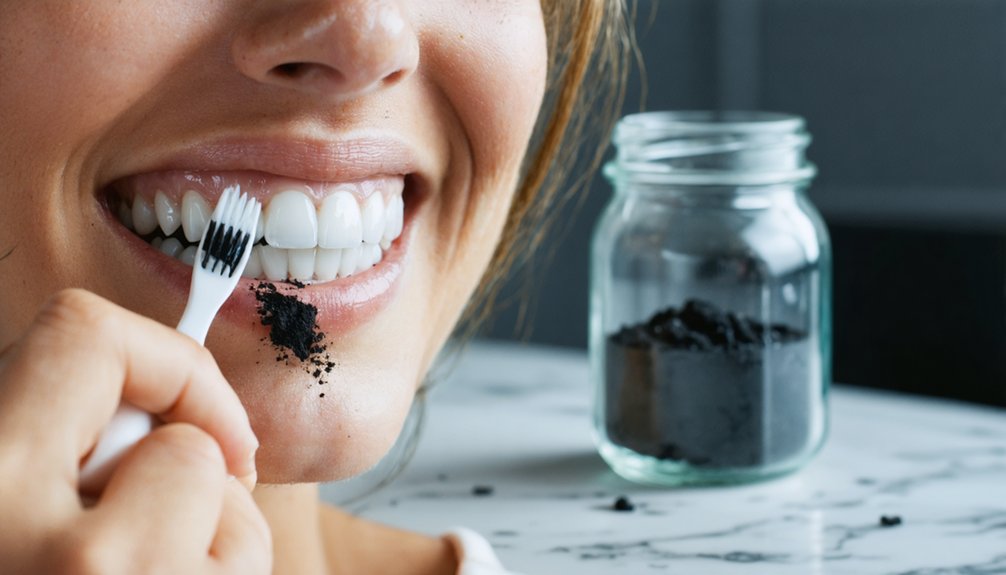
- Discard natural remedies such as charcoal that compromise enamel integrity
- Track your routine weekly to identify and eliminate consistency gaps
Discipline in execution—not product selection alone—determines your whitening outcome.
When Whitening Toothpaste Won’t Fix Yellow Teeth
Whitening toothpaste has clear limits, and understanding them prevents wasted effort and expense. It removes surface stains but doesn’t alter your tooth’s intrinsic color or penetrate enamel to address deep discoloration. If your yellowing stems from aging, tetracycline use, trauma, or genetics, no toothpaste will correct it.
Natural remedies like oil pulling or activated charcoal carry no clinical evidence supporting meaningful whitening and may damage enamel over time. For intrinsic staining, professional treatments are your most effective option. In-office bleaching, custom tray whitening, or veneers target discoloration at the structural level.
If you’ve brushed consistently for six weeks without visible improvement, consult your dentist. That’s not a product failure—it’s diagnostic information telling you the problem requires clinical intervention, not a toothpaste upgrade.
What to Use Instead When Toothpaste Isn’t Enough
If toothpaste hasn’t produced visible results after six weeks of consistent use, you’ll need to escalate to treatments that act below the enamel surface. Natural remedies lack clinical evidence and won’t address intrinsic discoloration.
Instead, consider these evidence-backed alternatives:
Instead, pivot to evidence-backed alternatives proven to address discoloration beyond what surface-level products can achieve.
- Whitening strips containing 6%–10% hydrogen peroxide penetrate enamel to lift deep stains
- Custom tray bleaching via your dentist delivers carbamide peroxide directly against tooth surfaces
- In-office laser whitening produces measurable results in a single session
- Prescription-strength gels offer controlled peroxide concentrations unavailable over the counter
- Professional cleaning removes calcified tartar that blocks whitening agents from reaching enamel
Each option targets intrinsic staining that surface-level products can’t reach.
Consult your dentist to determine which intervention matches your discoloration type and sensitivity threshold.
Frequently Asked Questions
Can Whitening Toothpaste Remove Yellow Stains Caused by Medications?
Like fighting shadows on a wall, medication stains resist standard stain removal effectiveness. Whitening toothpaste can’t fully remove them, as they’re intrinsic. You’ll need professional treatments for meaningful results beyond surface-level improvement.
Does Whitening Toothpaste Expire and Lose Its Stain-Fighting Effectiveness?
Yes, whitening toothpaste expires. Toothpaste ingredients like hydrogen peroxide and fluoride degrade over time, weakening the whitening gel formulation’s stain-fighting potency. You’ll get best results by checking expiration dates and replacing products every 12–18 months.
Can Children Under 12 Safely Use Any Whitening Toothpaste at All?
Like a double-edged sword, whitening toothpaste poses real risks for young users. Pediatric safety guidelines and toothpaste regulations advise you to avoid strong whitening agents for children under 12, as they can damage developing enamel irreversibly.
Is It Safe to Use Whitening Toothpaste With Dental Crowns or Veneers?
You can use whitening toothpaste with restorations, but you’ll see no color change—dental crown safety and veneer considerations matter here, as abrasive agents won’t whiten prosthetics and may cause surface degradation over time.
Can Whitening Toothpaste Be Used Safely During Pregnancy?
Like Hippocrates’ oath to “do no harm,” you should avoid whitening toothpastes during pregnancy. Strong toothpaste ingredients like peroxide pose pregnancy safety risks. You’ll want to consult your dentist before use.
References
- https://www.health.com/best-whitening-toothpaste-11909626
- https://nhdentistrybeverlyhills.com/press/the-5-best-whitening-toothpastes-according-to-a-cosmetic-dentist/
- https://www.youtube.com/watch?v=HvpjIR-qrsc
- https://www.kirklanddentalexcellence.com/blog/health/best-toothpaste-for-teeth-whitening/
- https://www.goodhousekeeping.com/health-products/g70866685/best-whitening-toothpaste/
- https://enameldentistry.com/What-Is-the-Best-Toothpaste-for-Whitening-teeth-in-2025/
- https://www.youtube.com/watch?v=aZJ79BxlddI