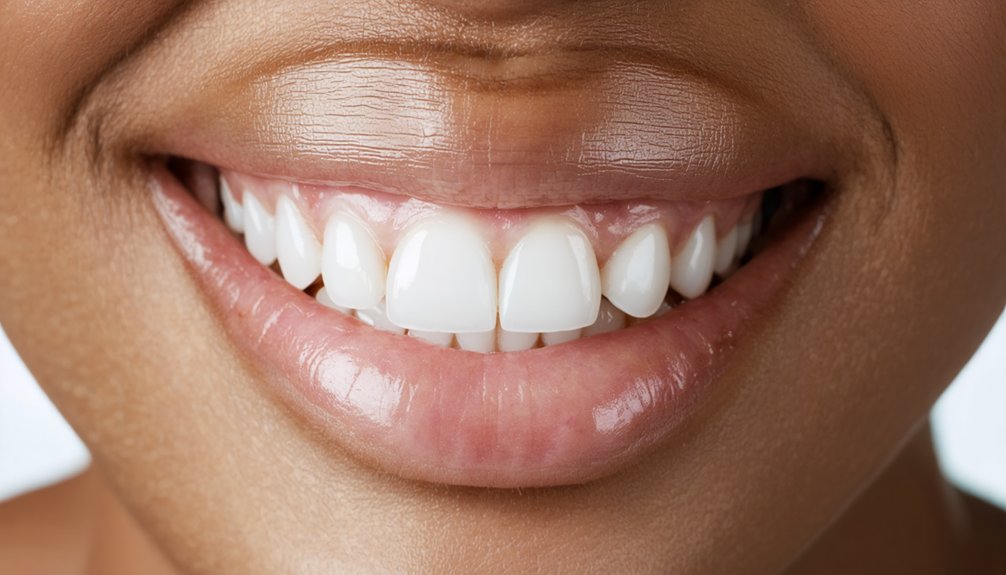
For coffee stains that resist over-the-counter treatments, in-office whitening with 25–40% hydrogen peroxide is your most effective option. It targets tannins embedded deep within enamel’s porous hydroxyapatite structure, delivering 3–5 shade improvements in a single 60-minute session. Standard at-home products simply can’t match that concentration. Results typically last 12–24 months with proper maintenance. Whether you need immediate results or gradual correction, the right approach depends on factors worth exploring further.
Key Takeaways
- In-office whitening uses 25–40% hydrogen peroxide to break deep tannin bonds that standard at-home products cannot effectively reach.
- A single 60-minute professional session typically improves tooth shade by 3–5 levels.
- Laser whitening delivers immediate results in one session, while custom trays offer gradual improvement over 2–4 weeks.
- Professional results last 12–24 months when maintained with fluoride rinses and biannual cleanings.
- Severe coffee staining requires professional intervention, as repeated exposure reintroduces tannins faster than at-home treatments can neutralize.
Why Coffee Stains Resist Whitening Products
Coffee stains resist whitening products because tannins—polyphenolic compounds found in coffee—bind chemically to enamel proteins, forming pigmented deposits that penetrate below the tooth’s surface layer.
Tannins in coffee chemically bond to enamel proteins, driving pigmented deposits beneath the tooth’s surface layer.
Understanding coffee chemistry explains why standard stain removal methods fall short. Tannins cross-link with salivary proteins, creating stubborn chromogens that embed within enamel’s porous hydroxyapatite structure.
Surface-level whitening agents can’t fully reach these deep deposits without sufficient peroxide concentration or activation time. Over-the-counter products typically contain 6–10% hydrogen peroxide—too diluted to break down deeply embedded tannin bonds effectively.
Additionally, repeated coffee exposure continuously reintroduces tannins faster than at-home treatments can neutralize them. You need professional-grade interventions that deliver higher peroxide concentrations, penetrating enamel at the molecular level to systematically disrupt and eliminate these chemically bonded pigments.
In-Office Whitening Treatments That Remove Coffee Stains
When tannin deposits penetrate enamel at the molecular level, only high-concentration peroxide systems deliver the chemical force needed to break those bonds effectively. Coffee acidity compounds the problem by increasing enamel porosity, allowing chromogens to embed deeper into the tooth structure over time.
In-office laser or LED-accelerated bleaching systems use 25–40% hydrogen peroxide to target these deep deposits directly. A single 60-minute session typically produces 3–5 shade improvements for habitual coffee drinkers.
Protective resin barriers shield your gum tissue, while desensitizing agents reduce post-treatment sensitivity by 60–70%.
Results last 12–24 months when you maintain nightly fluoride rinses and limit staining beverages. For severe tannin accumulation driven by chronic coffee acidity and elevated enamel porosity, in-office treatment remains the most clinically reliable option available.
Custom Tray Whitening vs. Laser: Which Works Faster?
Speed depends on your timeline and how much coffee staining you’re dealing with. Laser whitening delivers 3–5 shade improvements in a single 60-minute session, making it the faster clinical option. If you need immediate results, it’s the clear choice.
Custom tray whitening takes 2–4 weeks but gives you greater control over color matching techniques, allowing gradual, predictable shade progression. Tray filling precision ensures the carbamide peroxide gel contacts every stained surface consistently, reducing uneven results.
Laser works faster upfront. Trays work more systematically over time. Your decision should factor in stain severity, sensitivity concerns, and how precisely you want to manage the outcome.
Both methods are clinically validated—your timeline determines which protocol fits your situation.
How Long Do Professional Whitening Results Last?
Once you’ve chosen between laser and tray whitening based on your timeline, the next practical question is how long those results will actually hold. In-office laser treatments typically last 12–24 months, while custom tray protocols offer comparable longevity with consistent maintenance.
Stain reoccurrence accelerates if you continue daily coffee consumption without protective strategies like straw use or post-drink rinsing.
To extend your results, apply a nightly 0.5% fluoride rinse, which reduces re-staining by 50% over six months. Biannual professional cleanings remove 80–90% of accumulated surface stains before they become entrenched.
If dental sensitivity emerges during maintenance whitening, potassium nitrate-based formulations help manage it without compromising your regimen. You control longevity through behavioral compliance, not just the treatment you initially select.
Best At-Home Kits for Coffee Stains
If in-office treatments aren’t accessible or practical, over-the-counter whitening kits offer a clinically supported alternative for managing coffee stains at home. Strips containing 6–10% hydrogen peroxide reduce surface stains by 50–70% within 10 days, delivering 3–4 shade improvements after two weeks of twice-daily use. You’ll notice visible results within 3–4 days when you follow the full treatment cycle consistently.
Pair your whitening regimen with dietary adjustments—reducing coffee frequency and adding milk to lower tannin concentration—to extend results. Unlike unproven natural remedies, these peroxide-based systems have measurable clinical outcomes.
Rotate with fluoride toothpaste to prevent enamel micro-erosion from repeated peroxide exposure. Wax-coated strips ensure even gel distribution, minimizing gum irritation while maximizing controlled, predictable stain removal on your schedule.
When Coffee Stains Won’t Budge: Veneers and Bonding Options
When bleaching and at-home systems fail to correct severe or intrinsic coffee staining, porcelain veneers and bonded composite restorations become clinically viable solutions. Both options give you precise, lasting control over discoloration that standard coffee stain removal protocols can’t address.
- Porcelain veneers offer 100% stain resistance against future coffee exposure.
- Veneer bonding covers permanent discoloration unresponsive to peroxide-based treatments.
- Composite bonding provides cost-effective anterior coverage for 2–3 mm of stained enamel.
- Internal bleaching with calcium hydroxide restores color in darkened, non-vital teeth.
- Enamel microabrasion removes 0.1–0.3 mm of surface enamel to eliminate superficial stains.
Your dentist will determine which restoration suits your stain depth, tooth structure, and long-term maintenance capacity before proceeding.
Daily Habits That Stop Coffee Stains From Returning
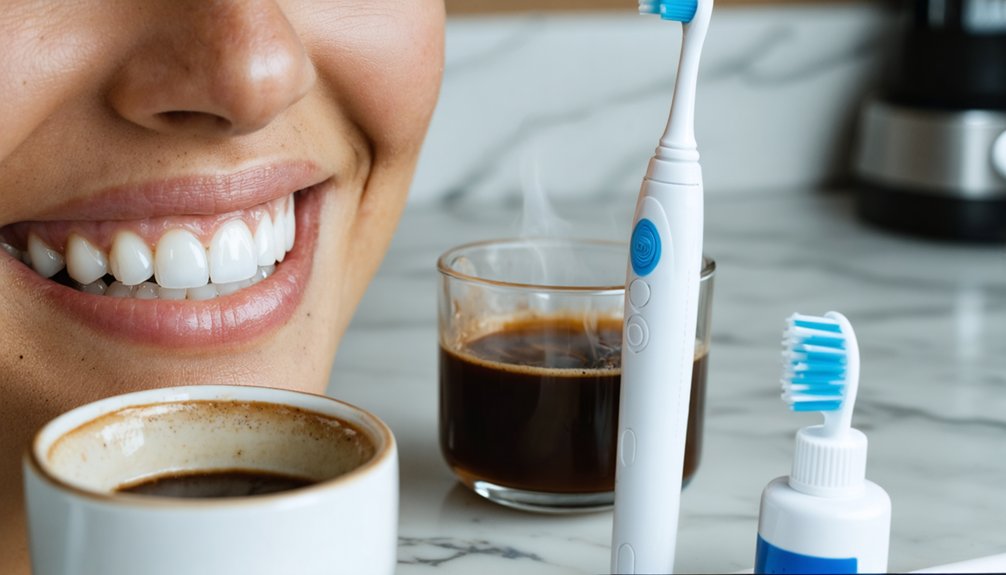
Maintaining your whitening results long-term depends on consistent daily habits that interrupt tannin adhesion before it becomes permanent discoloration. Coffee avoidance isn’t always realistic, but stain prevention is.
Drink coffee through a straw to reduce enamel contact by up to 40%, then rinse immediately with water to remove 60–70% of residual tannins.
Sip coffee through a straw, then rinse with water — two small steps that dramatically cut tannin buildup.
Chewing sugar-free gum afterward increases saliva flow, neutralizing acids and reducing tannin adhesion by 30–50%.
Adding milk lowers tannin concentration by approximately 25%.
Nightly use of a 0.5% fluoride rinse reduces re-staining by 50% over six months.
Biannual professional cleanings remove 80–90% of accumulated surface stains.
Switching to hydroxyapatite toothpaste supports enamel repair, reducing yellowing by 30–40% within three months.
You control the outcome through protocol adherence.
Frequently Asked Questions
Can Whitening Treatments Damage Existing Dental Crowns or Fillings?
Whitening treatments won’t cause dental crown damage, but they can trigger filling discoloration by leaving restorations unaffected while natural teeth lighten. You’ll notice color mismatches post-treatment, so consult your dentist before beginning any whitening protocol.
Is Professional Whitening Safe During Pregnancy or Breastfeeding?
“Better safe than sorry” — you shouldn’t pursue professional whitening during pregnancy or breastfeeding. Pregnancy safety concerns and breastfeeding considerations mean insufficient evidence exists to confirm peroxide exposure is risk-free, so postpone treatment until after nursing.
Does Teeth Whitening Work on Enamel Hypoplasia or Fluorosis Stains?
Whitening doesn’t effectively treat enamel hypoplasia or fluorosis stains since they’re structural, not surface-based. For compromised enamel health, veneers or microabrasion offer better stain removal outcomes. You’ll need a professional assessment to determine your best restorative option.
How Much Does Professional Teeth Whitening Typically Cost Without Insurance?
You’ll typically spend $300–$1,000 for in-office whitening, with cost considerations varying by treatment duration and provider. Custom trays run $200–$400, offering a controlled, evidence-based alternative when you’re managing long-term coffee stain removal effectively.
At What Age Can Teenagers Safely Undergo Professional Whitening Treatments?
Teeth whitening guidelines are crystal clear — you shouldn’t pursue professional treatments until age 14–16. Teen oral health experts confirm that whitening age guidelines require fully erupted permanent teeth and completed enamel development before you begin any professional protocol.
References
- https://teethcare360.co.uk/best-whitening-for-coffee-stains-uk/
- https://teethcare360.co.uk/best-toothpaste-coffee-stains-uk/
- https://www.reviewatlas.co/best/whitening-toothpastes-for-coffee-stains
- https://www.youtube.com/watch?v=qN_Kpcj3fwk
- https://thecommonmom.com/best-teeth-whitening-for-coffee-stains/
- https://pearlysmiledentalstudio.com/teeth-whitening-options-for-coffee-and-tea-drinkers/
- https://www.alibaba.com/product-insights/top-10-best-toothpaste-to-remove-coffee-stains-that-really-work.html
- https://crest.com/en-us/oral-care-tips/teeth-stains/tea-coffee-teeth-stains-how-to-avoid-remove-them
- https://www.amazon.com/Coffee-Stain-Remover-Teeth/s?k=Coffee+Stain+Remover+for+Teeth
- https://www.goodrx.com/conditions/dental-care/remove-coffee-stains-teeth