To whiten dark teeth spots effectively, you’ll need to identify the stain type first. Surface stains from coffee or tobacco respond well to baking soda pastes, whitening strips, and ADA-approved toothpastes containing hydrogen peroxide. Intrinsic stains from fluorosis or decay often require professional intervention like veneers or composite fillings. Maintaining consistent oral hygiene and limiting stain-causing foods prevents recurrence. Keep exploring to discover which targeted treatments best match your specific discoloration.
Key Takeaways
- Use baking soda mixed with hydrogen peroxide paste up to three times weekly to neutralize acid-based stains effectively.
- Apply whitening strips containing carbamide peroxide consistently for visible results within one to two weeks.
- Practice oil pulling with coconut oil daily to reduce bacterial plaque contributing to dark spots.
- Brush twice daily, floss, and rinse after meals to prevent new stains from forming.
- Consult a dentist for persistent spots, as professional treatments like veneers or scaling offer stronger results.
What Causes Dark Spots on Teeth?
Dark spots on teeth can stem from several distinct causes, each requiring a different approach to treatment. Understanding the common causes of dental discoloration gives you the ability to target the problem effectively.
Surface stains typically result from consuming coffee, tea, red wine, and dark-pigmented foods. Tobacco use accelerates deep discoloration that’s difficult to reverse without professional intervention.
Coffee, tea, red wine, and tobacco are among the most common culprits behind stubborn tooth discoloration.
Beyond lifestyle factors, dental discoloration can originate internally. Fluorosis, childhood antibiotic exposure, tooth decay, and celiac disease create intrinsic stains that penetrate enamel structure.
Tartar and plaque buildup produce visible darkening when oral hygiene is inconsistent. Trauma to a tooth can also trigger internal discoloration as the pulp deteriorates.
Identifying your specific cause determines whether you’ll need home remedies, over-the-counter products, or professional dental treatment.
Home Remedies That Actually Lighten Dark Spots on Teeth
Once you’ve identified what’s causing your dark spots, you can match the right remedy to the problem.
Baking soda benefits stem from its alkaline chemistry, which neutralizes acid-based stains from coffee and tea while providing mild abrasive action against surface discoloration. Apply a baking soda and hydrogen peroxide paste for one to two minutes, limiting use to three times weekly to protect enamel integrity.
Oil pulling with coconut or sesame oil targets bacterial plaque contributing to surface staining. Swish for 15–20 minutes daily to reduce microbial buildup systematically.
For stubborn surface stains, a strawberry and baking soda scrub delivers malic acid directly onto discolored enamel.
Each remedy addresses specific stain mechanisms, so selecting the correct one based on your stain’s origin maximizes results.
Best Over-the-Counter Products for Dark Spots on Teeth
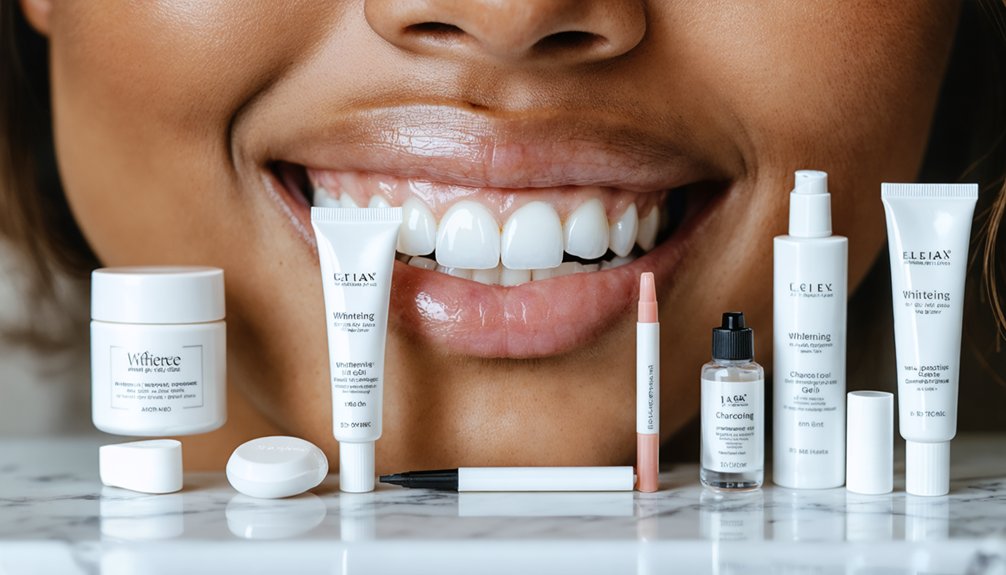
When home remedies don’t deliver sufficient results, over-the-counter whitening products offer a stronger, more structured approach to eliminating dark spots.
Whitening strip effectiveness depends on consistent daily application — typically 30 to 60 minutes — using carbamide peroxide to penetrate enamel and break apart discolored molecular compounds. Visible results appear within one to two weeks, lasting up to four months.
For daily maintenance, evaluate toothpaste ingredients carefully. ADA-approved formulas containing sodium hypochlorite or polishing agents actively prevent new stain formation on enamel surfaces.
Whitening mouthwashes with hydrogen peroxide complement this routine by gradually reducing discoloration between brushing sessions.
Tray whitening systems provide an additional tier of at-home bleaching, though custom-fitted professional trays contain higher peroxide concentrations, accelerating results beyond standard consumer options.
Daily Habits That Prevent Dark Spots From Returning
Whitening products remove existing dark spots, but keeping them away requires consistent daily habits that address the root causes of staining and enamel breakdown.
Your oral hygiene routine should include twice-daily brushing with fluoride toothpaste, daily flossing, and post-meal rinsing to eliminate residue before it bonds to enamel.
Hydration and sugar-free gum stimulate saliva, which naturally neutralizes acids and clears bacteria.
Your dietary choices carry equal weight—limit coffee, tea, red wine, and dark sauces, as chromogens in these substances accumulate rapidly.
Reduce acidic citrus intake to protect enamel integrity, and prioritize fiber-rich foods that mechanically scrub plaque from tooth surfaces.
Eliminating sugary foods cuts acid production that accelerates both staining and structural erosion, giving you sustained control over long-term discoloration.
When to See a Dentist for Dark Teeth Spots?
Home remedies and over-the-counter products address surface stains effectively, but certain dark spots signal underlying conditions that require professional intervention. Schedule a dental appointment when spots persist after consistent whitening attempts, appear suddenly, or accompany pain, sensitivity, or texture changes.
These symptoms suggest decay, fluorosis, or celiac-related enamel damage rather than surface discoloration.
A dentist performs thorough dark spot diagnosis using visual examination, X-rays, and patient history to distinguish extrinsic staining from intrinsic discoloration. Your treatment options expand notably under professional care—scaling removes stubborn tartar buildup, while composite fillings, veneers, and crowns address permanent structural discoloration.
Professional-grade bleaching agents containing higher peroxide concentrations deliver faster results than anything available over the counter. Don’t delay evaluation; early intervention prevents minor discoloration from progressing into complex restorative problems.
Frequently Asked Questions
Can Whitening Treatments Effectively Remove Dark Spots Caused by Fluorosis?
Whitening treatments can’t fully reverse fluorosis treatment needs, as standard bleaching won’t eliminate intrinsic discoloration. You’ll need veneers, composite fillings, or crowns, which address enamel sensitivity concerns while delivering lasting, controlled cosmetic correction.
How Does the Oxidation Process in Bleaching Agents Work Chemically?
Bright results, dark stains—oxidation agents like hydrogen peroxide penetrate your enamel’s pores, triggering chemical reactions that break apart discolored molecular compounds. You’re fundamentally dissolving stain-causing molecules from within, achieving results surface brushing can’t reach.
Do Professional Whitening Systems Include Additives to Protect Enamel During Treatment?
Yes, professional whitening systems include enamel protection additives. You’ll find potassium nitrate reduces sensitivity while fluoride strengthens your enamel during treatment, ensuring professional whitening effectively targets discoloration without compromising your tooth structure’s integrity.
How Long Do Over-The-Counter Whitening Strip Results Typically Last?
Hark, your whitening strips can last up to four months! With daily 30-minute applications, you’ll see results within one to two weeks. Balance home remedies and whitening frequency to maintain your bright, confident smile effectively.
Can Dietary Fiber Naturally Help Scrub Plaque and Bacteria From Teeth?
Yes, you’ll find that fiber sources like raw vegetables and fruits act as natural remedies, actively scrubbing plaque and bacteria from your teeth through their roughage, supporting cleaner enamel and reduced discoloration risk.
References
- https://smilelabny.com/remove-brown-stains-teeth-naturally/
- https://www.mydentaloffice.com/10-home-remedies-for-whiter-teeth-that-actually-work/
- https://www.medicalnewstoday.com/articles/321480
- https://lindsayfamilydental.com/blog/how-teeth-whitening-targets-discoloration-and-stain/
- https://www.waterpik.com/edu/whitening/best-way-to-whiten-teeth/
- https://www.youtube.com/watch?v=Wd-5CZQEeCE
- https://www.aarp.org/health/conditions-treatments/teeth-whitening/
- https://www.dentalone-md.com/blog/4-tooth-whitening-tips-recommended-by-your-dentist
- https://www.opnwide.com/teeth-discoloration-survival-guide/