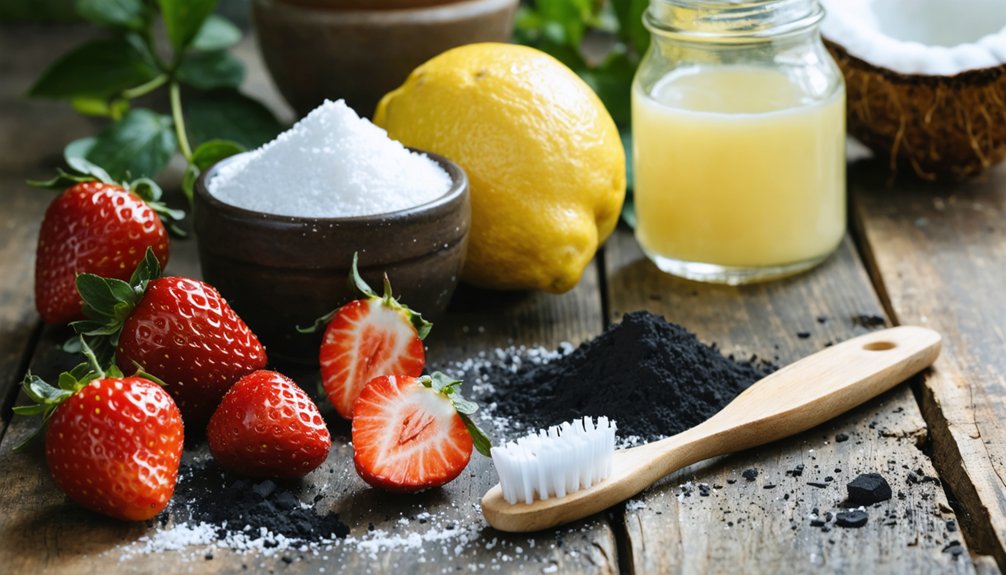
For smokers, the best DIY whitening methods combine baking soda and hydrogen peroxide to oxidize embedded tar, activated charcoal for surface residue removal, and coconut oil pulling for gentle, chemical-free maintenance. Each method targets different stain layers, but none works effectively in isolation. You’ll need a consistent daily routine to see real results. Keep in mind that nicotine and tar bond deeply into enamel, and there’s much more to understand about tackling that effectively.
Key Takeaways
- Mixing 2 parts baking soda with 1 part hydrogen peroxide creates a paste that scrubs enamel and oxidizes embedded tar molecules.
- Activated charcoal paste applied weekly removes surface tobacco residues through adsorption but cannot penetrate deeper enamel stains.
- Daily coconut oil pulling for 10–20 minutes lifts mild stains through emulsification while providing antimicrobial benefits.
- Brushing immediately after smoking disrupts fresh nicotine and tar deposits before they chemically bond to enamel surfaces.
- Combining multiple methods—oil pulling, baking soda paste, and hydrogen peroxide rinse—within a consistent daily routine maximizes whitening results.
Why Nicotine and Tar Stain Teeth So Deeply
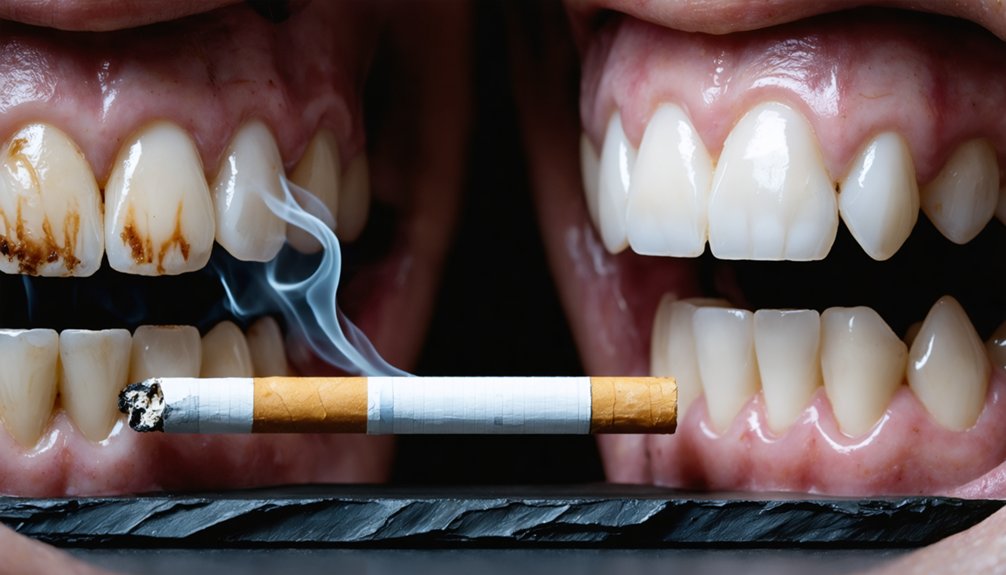
When you smoke, nicotine and tar don’t just coat your teeth’s surface — they penetrate the microscopic pores of your enamel, binding to the tooth’s structure at a molecular level.
Nicotine effects extend beyond yellowing; nicotine oxidizes upon air exposure, producing brown compounds that embed deeply into enamel.
Tar composition makes this worse — tar contains thousands of sticky chemical byproducts that physically adhere to enamel pores, creating layers of discoloration that standard brushing can’t reverse.
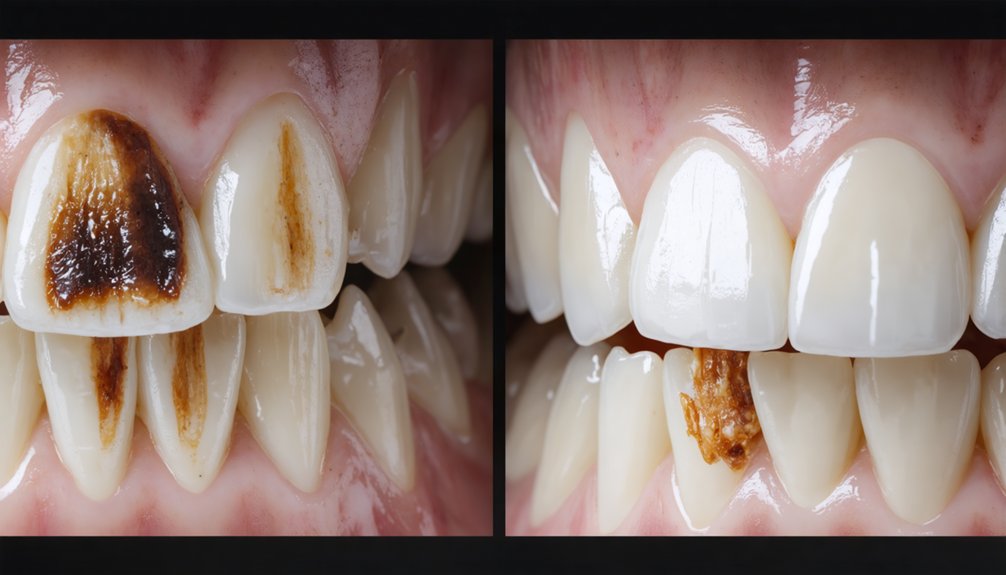
Over time, these deposits accumulate beneath the enamel’s surface, making stains increasingly resistant to removal.
You’re not dealing with simple surface-level discoloration — you’re managing chemically bonded pigmentation.
Understanding this distinction helps you choose whitening methods with enough penetrating power to actually address the damage smoking causes.
How to Use Baking Soda and Hydrogen Peroxide to Whiten Smoker Teeth
Baking soda and hydrogen peroxide target smoker stains through two complementary mechanisms — mild abrasion and chemical oxidation — making them one of the more effective DIY combinations for breaking down nicotine and tar deposits.
Baking soda and hydrogen peroxide work together — abrading surface stains while oxidizing the tar compounds smoking leaves behind.
Baking soda benefits include gentle enamel scrubbing without harsh chemicals, while hydrogen peroxide oxidizes embedded tar molecules. Combine 2 parts baking soda with 1 part hydrogen peroxide, load the mixture into a fitted mouth guard, and wear it for 10 minutes daily over two weeks.
Understand the hydrogen peroxide risks before starting:
- Gum irritation increases markedly without a properly fitted guard
- Avoid application near exposed roots or sensitive gum lines
- Overuse accelerates enamel erosion rather than restoration
Pair this method with fluoride toothpaste to rebuild enamel while you whiten.
Does Activated Charcoal Actually Work for Tobacco Stains?
Activated charcoal sits at the other end of the DIY whitening spectrum from baking soda and peroxide — it works through adsorption rather than abrasion or oxidation, binding surface tobacco residues to its porous structure before you rinse them away.
Its activated charcoal effectiveness is limited to superficial staining; it won’t penetrate enamel to address deep nicotine discoloration.
For tobacco stain removal, apply a wet charcoal paste weekly rather than daily — its coarse texture risks enamel erosion with overuse. Alternate it with gentler methods like oil pulling to balance results against wear.
Current evidence doesn’t strongly support charcoal as a primary whitening agent, so treat it as a supplemental tool within a broader routine, not a standalone solution for heavy smoker staining.
Can Coconut Oil Pulling Whiten Smoker Teeth Naturally?
Oil pulling with coconut oil offers a gentle, chemical-free approach to reducing surface tobacco stains, but it’s important to understand what it can and can’t realistically achieve.
Oil pulling with coconut oil gently reduces surface tobacco stains, though its limitations are worth understanding before expecting results.
Coconut oil benefits include antimicrobial properties and mild stain-lifting through emulsification. However, oil pulling effectiveness remains limited for deep nicotine discoloration.
To use it correctly:
- Swish one tablespoon of coconut oil for 10–20 minutes daily before brushing
- Spit into a trash can to avoid clogging drains, then brush normally
- Combine with turmeric paste weekly for enhanced surface scrubbing
You shouldn’t expect dramatic results from oil pulling alone. It works best as a preventive maintenance step, reducing new stain buildup rather than reversing existing tobacco damage.
Pair it with stronger DIY methods for measurable improvement.
Why Turmeric Paste Can Whiten Tobacco-Stained Teeth
Turmeric’s appeal as a natural whitening agent stems from its mild abrasive texture and curcumin content, which research suggests carries anti-inflammatory and antimicrobial properties. Among natural abrasives, turmeric works by gently lifting tobacco surface stains without the harshness of chemical bleaches.
You can combine it with coconut oil to create a paste targeting smoker discoloration, applying it weekly alongside your regular brushing routine for gradual results.
However, you should approach turmeric benefits cautiously. Evidence confirming its efficacy against deep nicotine stains remains limited, and its yellow pigment can temporarily discolor soft tissues.
Use it sparingly, rinse thoroughly afterward, and pair it with proven methods like baking soda or hydrogen peroxide treatments. It’s a complementary tool, not a standalone solution for heavy tobacco staining.
A Step-by-Step Daily Whitening Routine for Smokers
Building an effective daily whitening routine requires consistency across three key phases: morning treatment, post-smoking care, and nightly maintenance.
You’ll get the best results by pairing DIY methods like baking soda or activated charcoal in the morning with immediate brushing after each cigarette to prevent fresh nicotine from setting into enamel.
At night, incorporating a hydrogen peroxide mouth guard or oil pulling helps break down residual tar deposits before they compound existing stains.
Morning Whitening Routine Steps
Starting your morning with a structured whitening routine can make a measurable difference in managing tobacco stains before they set.
Consistency with the right whitening products determines whether your efforts actually hold.
Follow these morning routine steps:
- Oil pull first — Swish coconut oil for 10–20 minutes before brushing to lift overnight residue without abrading enamel.
- Brush with baking soda paste — Mix baking soda with coconut oil and brush for two minutes to mildly scrub surface nicotine deposits.
- Rinse with diluted hydrogen peroxide — A low-concentration rinse after brushing helps break down remaining tar compounds.
Avoid eating or drinking staining beverages immediately after.
Your morning sets the tone — skipping steps compounds stain buildup faster than most smokers realize.
Post-Smoking Care Habits
Every cigarette you smoke deposits a fresh layer of tar and nicotine onto your enamel, so acting quickly after each session is what separates manageable staining from deeply embedded discoloration.
Strong post smoking hygiene starts with brushing within minutes of finishing, using a whitening toothpaste to physically disrupt fresh deposits before they bond. Rinse thoroughly with an antibacterial mouthwash to clear residual particles your brush misses.
If brushing isn’t immediately possible, swish water vigorously as a temporary measure. Your oral care routine should also include avoiding coffee or tea directly after smoking, since combining staining agents accelerates discoloration dramatically.
Drink through straws when consuming dark beverages. Consistent, timely action after every cigarette is your most effective defense against cumulative, treatment-resistant tobacco stains.
Nightly Maintenance Techniques
Nighttime is when your whitening efforts matter most, because saliva production drops during sleep, leaving teeth more vulnerable to residual staining compounds that weren’t fully cleared during the day.
Establish nightly brushing with toothpaste alternatives like baking soda-coconut application blends to reinforce stain prevention before bed. Rinsing techniques using diluted hydrogen peroxide post-brushing help neutralize lingering tobacco residues.
Prioritize hydration habits throughout the evening to support natural saliva buffering.
Strengthen your nightly routine with these targeted steps:
- Perform oil pulling with coconut oil for 10 minutes before brushing
- Apply fluoride-based toothpaste last to maximize enamel protection overnight
- Avoid eating or drinking after brushing to prevent reintroducing staining compounds
Consistency determines your results—every skipped night extends your whitening timeline considerably.
How Smokers Can Stop Stains Coming Back After Whitening
Keeping stains from returning after whitening requires consistent habits, especially if you continue smoking. Stain prevention starts with brushing immediately after smoking to stop nicotine and tar from bonding to enamel.
Incorporate whitening maintenance by using whitening toothpaste and antibacterial mouthwash daily to clear surface deposits before they set. Drink staining beverages like coffee and tea through straws to minimize tooth contact.
Strong oral hygiene practices, including flossing and regular professional cleanings, remove plaque that traps discoloration. Consider smoking alternatives like nicotine patches or gums to reduce tobacco exposure and extend your whitening results considerably.
Reducing smoking frequency directly lowers stain recurrence risk. Without these protective steps, whitening treatments lose effectiveness quickly, leaving you repeating the process more often than necessary.
Frequently Asked Questions
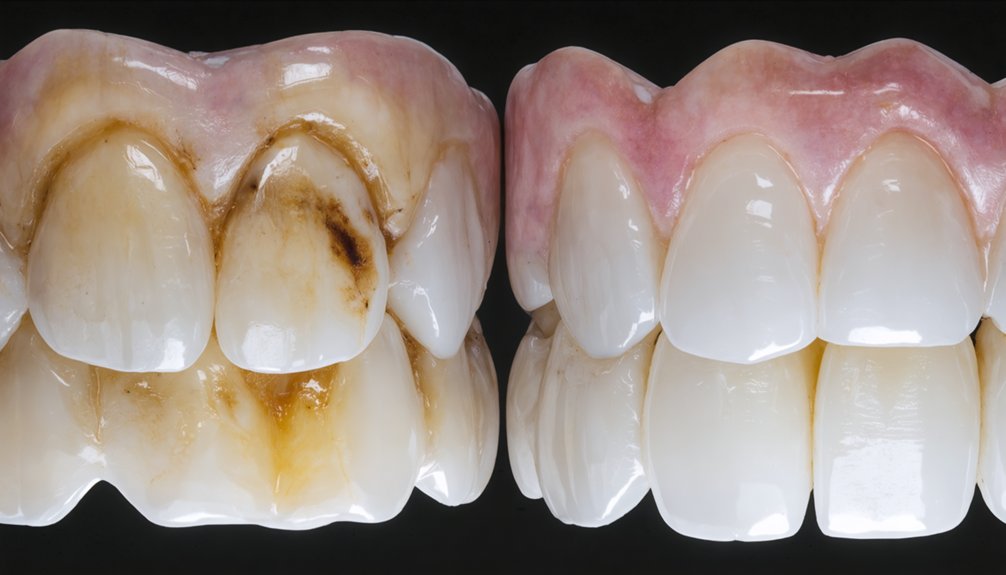
Can DIY Whitening Methods Damage Dental Crowns or Veneers for Smokers?
Yes, DIY whitening methods can damage your crowns or veneers. You’ll risk teeth sensitivity and reduce crown longevity by using abrasives like charcoal or peroxides. Consult your dentist before applying any smoker-targeted whitening treatments.
How Long Before a Big Event Should Smokers Start Whitening Treatments?
Studies show smokers need 2x longer for whitening results. Start your whitening timeline at least 4 weeks before event preparation begins. You’ll want daily baking soda or hydrogen peroxide treatments consistently applied to overcome stubborn nicotine stains effectively.
Are DIY Whitening Methods Safe for Smokers With Sensitive Teeth or Gums?
DIY whitening can irritate your sensitive teeth and gums, so you’ll need careful sensitivity management. Prioritize gum care by avoiding hydrogen peroxide on exposed roots and alternating baking soda with gentler coconut oil methods.
Can Smokers Combine Multiple DIY Whitening Methods Simultaneously for Faster Results?
Sure, pile them all on—what could go wrong? You can combine techniques, but it won’t guarantee whitening effectiveness. Overusing methods simultaneously risks enamel damage, so alternate them carefully and consult your dentist first.
Do Electric Toothbrushes Improve DIY Whitening Results for Heavy Smokers?
Yes, electric toothbrush effectiveness enhances your DIY whitening results by removing more surface nicotine buildup. Follow whitening frequency tips carefully—you’ll maximize stain removal, but don’t overuse abrasive methods, as enamel damage remains a real risk.
References
- https://friedmandentalgroup.com/dental-related/teeth-whitening-for-smokers-solutions-to-remove-tobacco-stains/
- https://parkwaysmiles.com/teeth-whitening-for-smokers/
- https://whitehorsedental.com.au/ultimate-guide-smokers-teeth-whitening-journey/
- https://www.dawsondental.ca/site/blog/2025/08/26/how-to-whiten-teeth-smokers-vapers
- https://tysondental.com/teeth-whitening-for-smokers-strategies-and-recommendations/
- https://crest.com/en-us/oral-care-tips/teeth-stains/how-to-remove-nicotine-stains-from-teeth
- https://www.urmc.rochester.edu/news/publications/health-matters/diy-teeth-whitening-too-good-to-be-true
- https://bellaviadental.com/blog/how-to-keep-teeth-white-while-smoking/
- https://www.healthline.com/nutrition/whiten-teeth-naturally