For enamel-safe whitening, you’ll want products with verified peroxide concentrations and low abrasivity scores. Top options include Crest 3D White Glamorous White Whitestrips, Zimba Whitening Strips for value-driven stain removal, and Burst Whitening Strips, which deliver roughly 2.6 shades of improvement over 19 days. Sensitive teeth respond better to Rembrandt 1 Week Whitening Kit or Crest 3D Whitestrips Sensitive. Stick to ADA-approved formulas with ≤10% carbamide peroxide. The full breakdown ahead covers everything you need to choose correctly.
Key Takeaways
- Crest 3D White Glamorous White Whitestrips deliver clinically comparable whitening results while maintaining enamel safety with proper use.
- Zimba Teeth Whitening Strips offer verified stain removal at the best value among enamel-safe whitening options.
- Burst Whitening Strips achieve two shades of whitening in one week with no reported gum inflammation.
- Low-abrasive formulas containing baking soda or silica minimize mechanical enamel wear during stain removal.
- ADA-approved products with peroxide concentrations of 10% carbamide or 3% hydrogen peroxide balance effectiveness and enamel safety.
What Makes a Whitening Product Truly Enamel-Safe?
When evaluating a whitening product’s enamel safety, you’ll want to focus on three core criteria: abrasivity level, peroxide concentration, and ADA approval status. Low-abrasive formulations using baking soda or silica minimize mechanical wear, while peroxide concentrations at 10% carbamide or 3% hydrogen peroxide effectively break down stains without compromising structural integrity.
Low-abrasive formulas and optimal peroxide levels are the foundation of effective, enamel-safe whitening.
Dispelling whitening myths is equally critical. Many consumers assume aggressive formulations accelerate results, but higher concentrations often cause irreversible sensitivity and enamel degradation. ADA-approved gels, strips, and toothpastes undergo rigorous safety validation, making them your most reliable baseline.
Regarding enamel restoration, fluoride-infused products actively support remineralization post-treatment. Avoid products containing hydrated silica, which carries documented enamel damage potential.
Prioritizing these evidence-based criteria puts you in control of both safety and outcome.
Which Ingredients Remove Stains Without Damaging Enamel?
Knowing which ingredients actually do the heavy lifting separates effective whitening from enamel-damaging overreach. Hydrogen peroxide and carbamide peroxide remain the gold standard for stain removal, penetrating enamel to oxidize discoloration at its source.
For natural alternatives, baking soda functions as a low-abrasive mechanical agent, physically lifting surface stains without compromising enamel integrity. Fluoride complements both approaches by reinforcing enamel structure and reducing post-treatment sensitivity.
You should actively avoid hydrated silica, as its abrasive profile increases erosion risk with repeated use. Peroxide concentrations at 3% hydrogen peroxide or 10% carbamide peroxide deliver effective stain removal while remaining appropriate for sensitive enamel.
Prioritizing these clinically validated ingredients gives you precise control over whitening outcomes without sacrificing long-term enamel health.
Which Enamel-Safe Whitening Products Work Best on Stains?
When selecting an enamel-safe whitening product, you’ll find that top-rated options like Crest 3D White Glamorous White Whitestrips and Zimba Teeth Whitening Strips consistently outperform competitors in clinical stain removal.
You should prioritize products formulated with hydrogen peroxide or carbamide peroxide, as these active agents break down intrinsic and extrinsic stains without compromising enamel integrity.
Evidence indicates that tested products whitened teeth an average of 2.6 shades over 19 days, confirming that ingredient quality and consistent application directly determine stain-removal efficacy.
Top Stain-Removing Products
Several enamel-safe whitening products stand out for their stain-removing effectiveness, each backed by measurable performance data.
When evaluating stain removal through product comparisons, three options consistently lead:
- Crest 3D White Glamorous White Whitestrips – Named best whitening strips, delivering clinically comparable results when you follow instructions precisely.
- Zimba Teeth Whitening Strips – Best value option with verified surface stain removal confirmed in lab testing.
- Burst Whitening Strips – Achieved two shades of whitening within one week, with 100% of testers reporting zero gum inflammation.
Average results across top-performing products show 2.6 shades of whitening over 19 days.
You’ll maximize outcomes by keeping strips properly positioned and avoiding overuse, which risks counterproductive enamel stress.
Key Whitening Ingredients
Understanding what drives those stain-removal results means looking at the active ingredients behind them. Hydrogen peroxide and carbamide peroxide are your primary bleaching agents, breaking down intrinsic and extrinsic stains at the molecular level.
Whitening efficacy depends directly on peroxide concentration — 3% hydrogen peroxide or 10% carbamide peroxide balances results with ingredient safety, particularly for sensitive enamel. Fluoride is frequently added to counteract demineralization and reduce post-treatment sensitivity.
Gentle abrasives like baking soda mechanically lift surface stains without compromising enamel integrity. You’ll want to avoid hydrated silica, which carries documented enamel damage potential.
Peroxide-based toothpastes work gradually, making them better suited for stain prevention than active correction. Matching the right ingredient profile to your sensitivity level optimizes both safety and outcome.
Which Whitening Products Are Best for Sensitive Teeth?
If you have sensitive teeth, you’ll find that several products are specifically formulated to minimize discomfort while still delivering measurable whitening results.
The Rembrandt 1 Week Whitening Kit eliminated stains without triggering sensitivity in 100% of testers, and the Crest 3D Whitestrips Sensitive line scored high for producing no sensitivity during use.
You should prioritize low-peroxide options—those at or below 10% carbamide or 3% hydrogen peroxide—as clinical evidence supports their effectiveness in reducing sensitivity risks without compromising whitening outcomes.
Sensitive Teeth Product Picks
Choosing the right whitening product when you have sensitive teeth requires balancing effectiveness with enamel and nerve safety.
Sensitive teeth challenges demand products with lower peroxide concentrations and clinically validated formulations for effective sensitivity management.
Evidence-backed options you can rely on include:
- Rembrandt 1 Week Whitening Kit – eliminated stains without sensitivity in 100% of tested users.
- Crest 3D Whitestrips Sensitive – delivers measurable whitening while scoring high for zero sensitivity responses.
- Burst Whitening Strips – achieved two shades of whitening within one week with no reported gum inflammation.
Lower peroxide concentrations, specifically 10% carbamide peroxide or 3% hydrogen peroxide, reduce nerve irritation without sacrificing results.
Follow manufacturer instructions precisely to control outcomes and protect enamel integrity throughout your whitening regimen.
Low Peroxide Whitening Options
Low peroxide formulations represent the practical next step once you’ve identified sensitivity as your primary concern.
Products containing 10% carbamide peroxide or 3% hydrogen peroxide deliver measurable low peroxide benefits without compromising enamel integrity. These concentrations minimize nerve irritation while still breaking down surface stains effectively.
When applying safe whitening techniques, you’ll want to follow manufacturer instructions precisely—overuse negates the protective advantage of lower concentrations.
Whitening strips designed for sensitive teeth, such as Crest 3D Whitestrips Sensitive, demonstrate that reduced peroxide levels still yield clinical results. Burst whitening strips achieved two shades of whitening within one week, with zero reported gum inflammation.
Selecting lower peroxide options gives you direct control over both the whitening process and your long-term enamel health.
How Often Can You Safely Use Whitening Strips?
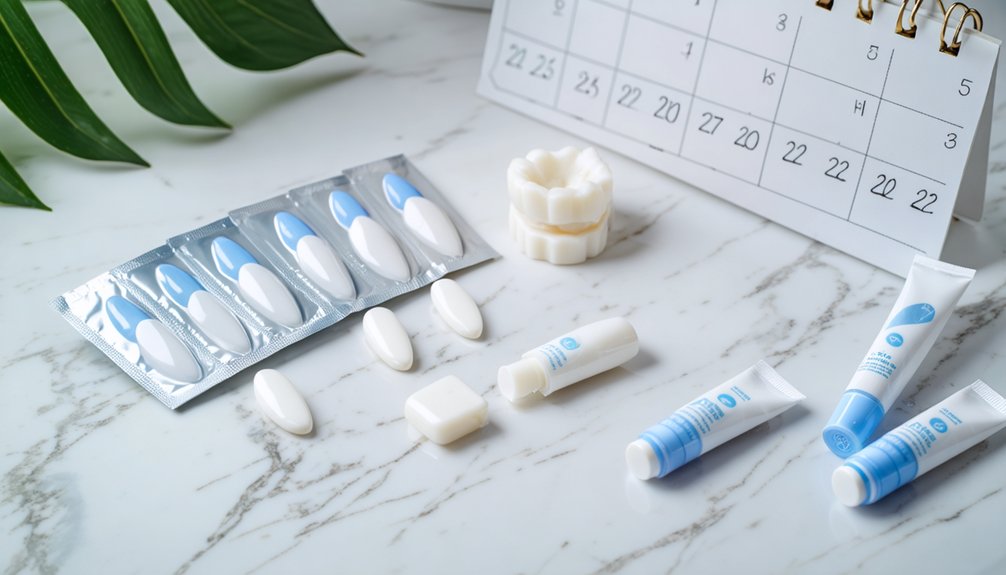
How often you use whitening strips directly affects both your results and your enamel’s long-term health. Adhering to strip guidelines prevents overexposure to peroxide, which can erode enamel and trigger sensitivity.
Controlling your whitening frequency means following evidence-based protocols precisely.
Follow these clinically supported usage parameters:
- Limit sessions to once daily for the manufacturer-specified duration, typically 7–14 consecutive days.
- Allow recovery intervals of at least 3–6 months between full whitening cycles to protect enamel integrity.
- Monitor sensitivity signals—if discomfort develops, reduce application frequency or switch to a lower-peroxide formulation.
Always follow manufacturer instructions as your primary protocol. Exceeding recommended whitening frequency accelerates enamel wear without producing proportionally better results.
Precision and restraint in application yield safer, more sustainable outcomes.
When Are Professional Whitening Treatments Worth It?
While at-home whitening strips work well for mild-to-moderate surface stains within controlled usage cycles, they don’t address every whitening need.
Professional whitening delivers superior treatment benefits when intrinsic discoloration, tetracycline staining, or significant enamel translucency is involved. Custom trays and in-office procedures rank as the safest options for enamel integrity, allowing precise peroxide concentration control beyond over-the-counter limits.
You’ll benefit most from professional whitening if previous at-home regimens produced inconsistent results, caused persistent sensitivity, or failed to achieve your target shade.
Dentists also assess underlying conditions that disqualify standard bleaching protocols entirely. When you require predictable, measurable outcomes—particularly multiple shades of correction within a compressed timeframe—professional intervention provides the clinical precision that consumer-grade products structurally can’t replicate.
Frequently Asked Questions
Can Whitening Products Remove Stains Caused by Medications or Aging?
Like lifting fog from glass, whitening products can tackle aging impacts, but medication effects—like tetracycline stains—resist over-the-counter solutions. You’ll need professional-grade peroxide treatments or custom trays for deeper, intrinsic discoloration control.
How Long Do Teeth Whitening Results Typically Last After Treatment?
Your whitening results typically last six months to two years, depending on your habits. You’ll maintain brightness longer by controlling treatment duration and adjusting whitening frequency based on dietary choices and your dentist’s evidence-based recommendations.
Are Whitening Products Safe to Use With Dental Crowns or Veneers?
whitening products won’t alter crowns or veneers. You’ll find whitening product compatibility limited, as peroxide only affects natural enamel. Prioritize crown veneer maintenance by consulting your dentist before starting any whitening regimen.
Can Children or Teenagers Safely Use Enamel-Safe Whitening Products?
You shouldn’t use enamel-safe whitening products on children without consulting a dentist first. Age recommendations typically exclude those under 18 due to sensitivity concerns, as developing enamel remains vulnerable to peroxide-based formulations causing potential long-term damage.
Do Whitening Products Work Differently on Natural Teeth Versus Restorations?
Like comparing apples to steel, whitening products penetrate natural teeth’s porous enamel but can’t alter restoration materials. You’ll notice peroxide effectively bleaches your natural teeth, leaving crowns, veneers, or fillings unchanged in shade.
References
- https://www.healthline.com/health/dental-and-oral-health/best-teeth-whitening
- https://www.goodhousekeeping.com/health-products/g28723133/best-at-home-teeth-whitening-products/
- https://www.youtube.com/watch?v=HvpjIR-qrsc
- https://www.goodrx.com/conditions/dental-care/is-teeth-whitening-safe
- https://nhdentistrybeverlyhills.com/press/6-of-the-best-teeth-whitening-kits-in-the-drugstore/
- https://www.target.com/c/best-teeth-whitening/enamel-safe/-/N-bxg5wZ7v4ay