To remove wine stains from teeth, rinse with water immediately after drinking, then wait 30 minutes before brushing to protect softened enamel. Use whitening toothpaste daily, baking soda paste two to three times weekly, and peroxide-based whitening strips for deeper discoloration. Pair wine with cheese and fibrous vegetables to reduce pigment bonding. For stubborn stains, professional cleaning reaches what home methods can’t. There’s much more to uncover about protecting your smile long-term.
Key Takeaways
- Rinse your mouth with water immediately after drinking wine to dilute pigments and loosen tannins before they bond to enamel.
- Wait 30 minutes before brushing after wine, as acidity temporarily softens enamel, making it vulnerable to abrasion.
- Use baking soda paste gently 2-3 times weekly to remove surface stains without excessive enamel wear.
- Whitening strips with peroxide target deeper discoloration more effectively than toothpaste alone for stubborn wine stains.
- Schedule professional cleanings every six months, as persistent stains with sensitivity signal limits of home treatment methods.
Why Does Wine Stain Teeth in the First Place?
Wine stains teeth through a combination of chromogens, tannins, and acidity working against your enamel simultaneously. Understanding wine chemistry helps you take precise action rather than reactive damage control.
Chromogens are intensely pigmented compounds that bind aggressively to tooth surfaces. Tannins act as adhesives, helping those pigments grip enamel with greater persistence. Meanwhile, wine’s acidity initiates enamel erosion, temporarily softening the surface and making it more porous and vulnerable to pigment absorption.
Red wine delivers all three mechanisms at once. White wine lacks chromogens but contributes enough acidity to weaken enamel, leaving teeth primed for staining from other foods consumed afterward.
Recognizing this layered process lets you intervene at the right moments, targeting each staining mechanism with the appropriate method rather than guessing.
What To Do Right After Drinking Wine
As soon as you finish your last sip, rinse your mouth thoroughly with water to dilute residual pigments and loosen tannins before they bind further to enamel.
However, you shouldn’t reach for your toothbrush right away — wine’s acidity temporarily softens enamel, making it more vulnerable to abrasion.
Wait at least 30 minutes before brushing to let your saliva neutralize the acid and your enamel reharden.
Rinse With Water Immediately
After your last sip of wine, rinsing your mouth with water is one of the simplest and most effective steps you can take to minimize staining. Water immediately dilutes pigment-rich tannins and anthocyanins before they bond to enamel surfaces.
Swish gently rather than aggressively — wine’s acidity temporarily softens enamel, making it vulnerable to abrasion and disrupting enamel remineralization. A thorough but controlled rinse removes residue without mechanical damage.
If you prefer added protection, choose an alcohol-free fluoride mouthwash; the mouthwash benefits include neutralizing acidity and supporting enamel remineralization to restore surface integrity faster.
Avoid brushing for at least 30 minutes post-rinse, allowing your enamel to reharden fully. This single, disciplined habit meaningfully reduces pigment accumulation before any deeper stain-removal strategy becomes necessary.
Wait Before Brushing
Rinsing with water buys you time, but what you do in the next 30 minutes matters just as much.
Wine’s acidity temporarily softens enamel, making immediate brushing a risk for accelerating surface wear and increasing tooth sensitivity. Waiting roughly 30 minutes allows your saliva to neutralize acidity and reharden enamel before any abrasive contact occurs.
During that window, consider mouthwash alternatives like diluted hydrogen peroxide or a fluoride rinse to gently displace residual pigment without mechanical abrasion. Both options support enamel recovery while targeting surface staining compounds.
Avoid vigorous swishing, which can irritate temporarily weakened enamel.
Once the 30-minute window passes, brush with a soft-bristled toothbrush using controlled, gentle strokes. That patience-driven approach protects your enamel while keeping your whitening results intact.
The Best At-Home Methods To Remove Wine Stains
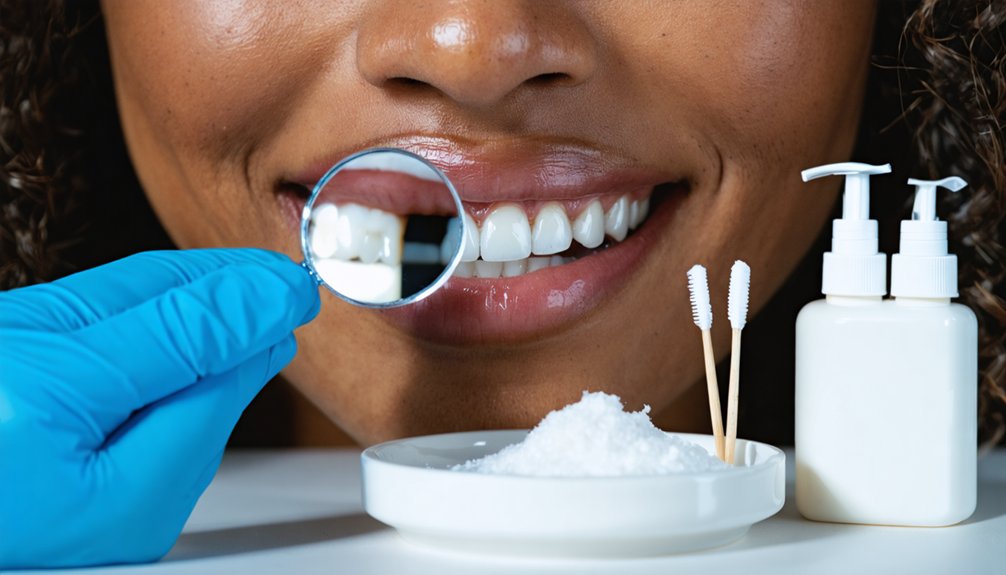
For surface-level wine stains that linger after rinsing, a baking soda paste offers a reliable first option—gently brush a small amount onto your teeth for about two minutes, two to three times per week, letting its mild abrasive action lift pigment without stripping enamel.
If staining persists beyond what baking soda can address, whitening strips or at-home kits can target deeper discoloration more effectively. Choose your kit carefully, since overly harsh formulas risk enamel damage with repeated use.
Baking Soda Paste Method
Baking soda paste is one of the most accessible and effective at-home solutions for lifting wine stains from tooth surfaces. Its mild abrasive properties reflect historical trends in oral care, where sodium bicarbonate served as a foundational cleaning agent long before commercial whitening products emerged.
Cultural influences around wine consumption have made stain management a recurring cosmetic priority, elevating baking soda’s relevance in modern dental routines.
To apply, combine a small amount of baking soda with water to form a paste, then brush gently for approximately two minutes. Limit use to two or three times per week to avoid enamel erosion from overuse.
This controlled, measured approach targets surface pigmentation without compromising structural integrity, giving you a reliable method for maintaining tooth clarity between professional cleanings.
Whitening Strips And Kits
When surface stains resist baking soda and routine brushing, whitening strips and home kits offer a stronger step up in treatment. Despite teeth whitening myths suggesting these products damage teeth universally, most well-formulated strips are safe when you follow directions precisely. Enamel preservation depends entirely on how you use them.
- Choose peroxide-based strips with clearly listed concentrations — lower peroxide levels reduce sensitivity risk without sacrificing effectiveness.
- Limit application frequency to manufacturer guidelines; overuse accelerates enamel erosion rather than improving results.
- Select kits with custom trays for even product distribution, minimizing uneven whitening and unnecessary gum exposure.
For persistent wine discoloration that home remedies can’t resolve, upgrade to professional-grade kits or consult your dentist before increasing treatment intensity independently.
How Often Should You Use Each Stain-Removal Method?
Getting the frequency right for each stain-removal method is just as important as choosing the right one. Your dental hygiene routine directly influences stain visibility, so precision matters.
Use whitening toothpaste daily as your baseline.
Reserve baking soda paste for two to three times per week — overuse accelerates enamel wear.
Limit hydrogen peroxide treatments to once or twice weekly to avoid sensitivity and tissue irritation.
Whitening strips vary by product, so follow manufacturer guidelines strictly, typically spanning one to two weeks per cycle.
Professional cleanings should occur every six months to address buildup home care can’t fully resolve.
Rinsing with water after every glass of wine remains your most frequent, lowest-risk tool — deploy it without restriction.
Can Whitening Strips Actually Remove Wine Stains From Teeth?
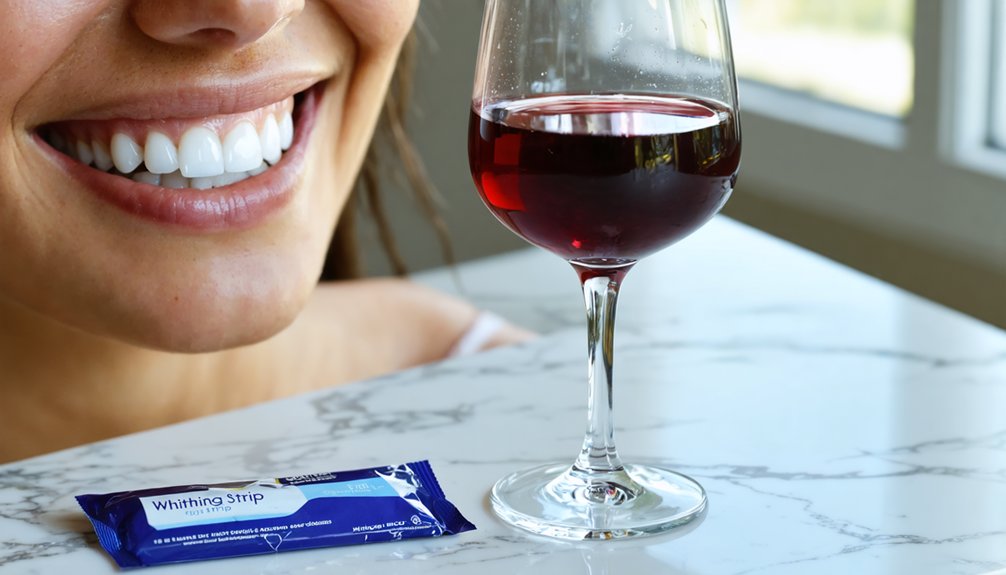
Whitening strips can genuinely reduce wine stains, but their effectiveness depends on whether the discoloration is surface-level or has penetrated deeper enamel layers. Wine color compounds bond progressively, so early intervention gives strips a measurable advantage.
Three factors determine your results:
- Stain depth — Surface stains respond well; intrinsic discoloration requires professional-grade treatment.
- Enamel sensitivity — Prolonged or frequent strip use can heighten sensitivity, so follow recommended application intervals precisely.
- Strip concentration — Higher peroxide percentages accelerate wine color removal but increase enamel sensitivity risk if misused.
Use strips strategically rather than reactively. Apply them after your regular brushing window, never immediately post-wine when enamel is temporarily softened.
For stubborn or recurring discoloration, whitening strips serve as maintenance, not a replacement for professional intervention.
When To See a Dentist About Wine Stains
Strips and home kits handle surface discoloration well, but there’s a clear threshold where self-treatment stops being practical. If staining persists after consistent home maintenance, professional cleaning removes deeper pigment that abrasives simply can’t reach.
Home kits have limits — persistent staining calls for professional cleaning that reaches what abrasives can’t.
You should also schedule an evaluation when you notice enamel hypersensitivity — sharp sensitivity to temperature signals that your enamel’s integrity may already be compromised. Continuing aggressive home treatments at that point accelerates damage rather than correcting it.
Dental erosion is another red flag. If your teeth look duller, feel thinner, or show visible surface changes beyond normal discoloration, a dentist can assess structural damage and recommend whitening protocols that won’t worsen it.
Persistent staining combined with sensitivity or visible enamel changes isn’t a cosmetic inconvenience — it’s a clinical matter.
Smart Habits That Prevent Wine Stains While You Drink

Prevention starts before your first pour. Brushing beforehand eliminates plaque that acts like a staining net for pigments. During the session, you can actively manage exposure by controlling what contacts your enamel and for how long. Higher alcohol content accelerates pigment penetration, so pacing matters more than you might think — treat your enamel like colorfast fabrics that require careful handling to preserve their finish.
Three habits that give you real control:
- Alternate every glass with water to continuously rinse tannins before they bond to enamel.
- Eat cheese or fibrous vegetables to stimulate saliva and physically clear residue.
- Use a straw for chilled wines to minimize direct front-to-tooth contact.
Small, consistent choices during drinking dramatically reduce how much correction you’ll need afterward.
Foods That Help Prevent Wine Stains During a Meal
What you eat alongside wine can meaningfully reduce staining before it starts. The tannins and pigments produced during wine fermentation bind most aggressively to plaque-coated or dry enamel, so strategic food choices disrupt that process.
Cheese increases saliva flow and creates a mild protective film over enamel surfaces, limiting direct pigment contact. High-fiber vegetables like broccoli, cauliflower, and spinach act as natural scrubbers, clearing residue with each bite.
Cheese coats enamel while fiber-rich vegetables scrub away pigment, giving your teeth passive protection with every bite.
Hard cheeses also help neutralize acidity, reducing the enamel erosion risk that makes surfaces more porous and stain-prone. Avoid starchy snacks that cling to teeth and give pigments additional surfaces to grip.
Pairing wine intentionally with these foods gives you active control over staining without interrupting the experience.
Frequently Asked Questions
Does Drinking White Wine Also Cause Noticeable Staining on Teeth?
White wine causes less visible tooth discoloration than red, but its high acidity erodes enamel, making your teeth more porous and vulnerable to staining from other pigment-rich foods and beverages you consume.
Are Wine Wipes Safe to Use Directly on Tooth Enamel?
Wine wipes are generally safe for on-the-go use, but you’ll want to monitor enamel integrity closely. Prioritize dental safety by avoiding aggressive rubbing, ensuring your technique stays gentle and controlled for best surface protection.
Can Drinking Wine Through a Straw Actually Prevent Tooth Staining?
a straw can’t fully protect you. For alcohol consumption and dental health, it’ll reduce front-tooth contact, but wine still reaches your back teeth—so you’re never completely shielded.
Does Cheese Really Help Protect Teeth From Wine Stains?
Yes, cheese actively supports enamel protection by boosting saliva flow, which neutralizes wine’s acidity and clears pigment residue. It’s a smart, proactive strategy that complements your dental whitening routine and keeps staining compounds from binding deeply.
Is Red Wine More Damaging to Teeth Than Coffee or Tea?
Red wine’s combination of wine acidity, deep tannins, and chromogens makes it particularly aggressive toward tooth enamel compared to coffee or tea, though all three can stain your teeth considerably over time.
References
- https://www.mydentaloffice.com/natural-whitening-remedies-for-coffee-and-wine/
- https://crest.com/en-us/oral-care-tips/how-to-prevent-and-get-rid-of-red-wine-teeth-stains
- https://www.youtube.com/watch?v=5MgJOEzxsxg
- https://thepsdentalstudio.com/how-to-remove-coffee-and-wine-stains-from-teeth/
- https://drpostel.com/8-tricks-to-enjoy-wine-without-staining-your-teeth/
- https://mypenndentist.org/dental-tips/2024/02/13/how-to-remove-stains-from-teeth/
- https://www.youtube.com/watch?v=OLMu8rHRAKA
- https://riahealth.com/blog/how-to-remove-wine-stains-from-your-teeth/
- https://mysagedental.com/tricks-to-keep-red-wine-from-staining-teeth/
- https://www.foreveryoungdentistry.com/blog/?p=108