To remove wine stains from your teeth, rinse with water immediately after drinking and wait 20–30 minutes before brushing to let your enamel reharden. Use fluoride toothpaste twice daily, and try baking soda paste or diluted hydrogen peroxide for surface stains. Eating cheese or high-fiber vegetables while drinking helps neutralize acids and reduce pigment buildup. For stubborn discoloration, professional whitening delivers faster results. There’s much more you can do to protect your smile.
Key Takeaways
- Rinse your mouth with water immediately after drinking wine to dilute pigments and acids before they penetrate enamel.
- Wait 20–30 minutes after drinking before brushing, allowing softened enamel to reharden and preventing further damage.
- Use a baking soda paste to gently scrub surface stains, brushing for two minutes to lift deposits effectively.
- Swish a diluted 3% hydrogen peroxide solution post-drinking to break down chromogens and reduce visible discoloration.
- For stubborn or deeply embedded stains, consult a dentist about professional bleaching, remineralization therapy, or porcelain veneers.
Why Wine Stains Teeth in the First Place
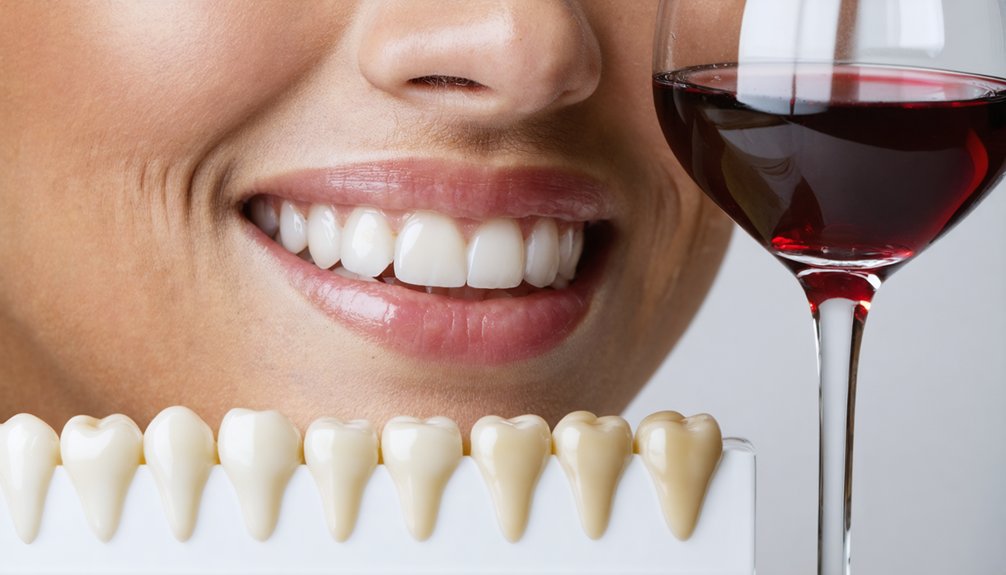
Wine stains teeth because of its unique combination of chromogens, tannins, and acids. Understanding wine composition helps you take control of discoloration before it becomes permanent.
Chromogens are intensely pigmented compounds that bind directly to your enamel’s surface. Tannins act as adhesives, locking those pigments deeper into microscopic enamel pores.
Chromogens stain your enamel’s surface while tannins drive those pigments deeper, making discoloration increasingly difficult to reverse.
Meanwhile, wine’s natural acidity accelerates enamel erosion, weakening your enamel’s protective layer and making it increasingly porous. That porosity allows staining compounds to penetrate more aggressively with each sip.
White wine, though colorless, still contributes to enamel erosion through acidity, leaving your teeth more vulnerable to subsequent staining.
Red wine delivers the most visible discoloration because it combines all three staining mechanisms simultaneously. Knowing this empowers you to intervene strategically and effectively.
What to Do Immediately After Drinking Wine
Once you’ve finished your last glass, your next moves in the following 30 minutes can meaningfully reduce how much wine pigment embeds into your enamel. Start by rinsing your mouth with water immediately after setting down your wine glass. Swish thoroughly for several seconds to dilute pigments and acidity before they settle.
If you want to go further, gently wipe your teeth with damp gauze to lift surface stains without abrasion. Don’t brush yet.
Wine’s acidity temporarily softens enamel, and brushing too soon causes enamel erosion by driving acid deeper into weakened surfaces.
Wait 20 to 30 minutes before brushing. This window allows your enamel to recalcitrate and reharden, making it far more resistant to mechanical damage and markedly more effective at accepting fluoride toothpaste’s protective benefits.
Smart Habits That Prevent Stains While You Drink
You can considerably reduce wine’s staining impact by sipping water between glasses to rinse pigments and tannins from your enamel before they embed. Sparkling water works especially well, as its effervescence helps loosen stain-causing compounds from tooth surfaces.
Pairing your wine with high-fiber foods like broccoli or cheese also protects your teeth—fiber stimulates saliva production that naturally scrubs enamel, while cheese neutralizes acidity and delivers calcium that reinforces enamel integrity.
Sipping Strategies During Drinking
Drinking wine doesn’t have to mean sacrificing your smile, and the habits you maintain *during* consumption can make a significant difference in how much staining occurs. Strategic sipping minimizes tannin effects and reduces prolonged pigment contact with enamel.
Alternate each sip of wine with water to dilute residual acids and rinse away chromogens before they embed. Sparkling water works particularly well, as effervescence helps loosen surface pigments between glasses.
When drinking white wine, consider using a straw to limit direct contact with your wine glassware against your teeth.
Eating high-fiber vegetables like broccoli or spinach stimulates saliva production, which naturally scrubs enamel.
These deliberate, in-session strategies give you measurable control over discoloration without interrupting your enjoyment.
Food Choices That Protect
What you eat alongside your wine plays an equally protective role as your sipping habits. Cheese pairing before your first sip neutralizes acids and delivers calcium directly to your enamel, strengthening its resistance against tannin penetration. Choose hard cheeses like cheddar or gouda for maximum protective effect.
High-fiber vegetables such as broccoli and spinach stimulate saliva production, which naturally scrubs pigments from your enamel surface as you chew. That increased saliva flow acts as a continuous cleansing mechanism throughout the evening.
Don’t overlook lip balm application before drinking. A thin barrier on your lips reduces incidental wine contact near your gum line.
Combined with strategic food choices, you’re actively controlling your enamel’s exposure to staining compounds rather than simply reacting to damage afterward.
Natural Remedies That Remove Wine Stains at Home
While professional treatments exist, several natural remedies can effectively lift wine stains from your teeth at home. Wine acidity accelerates stain penetration, so acting quickly with the right remedy matters.
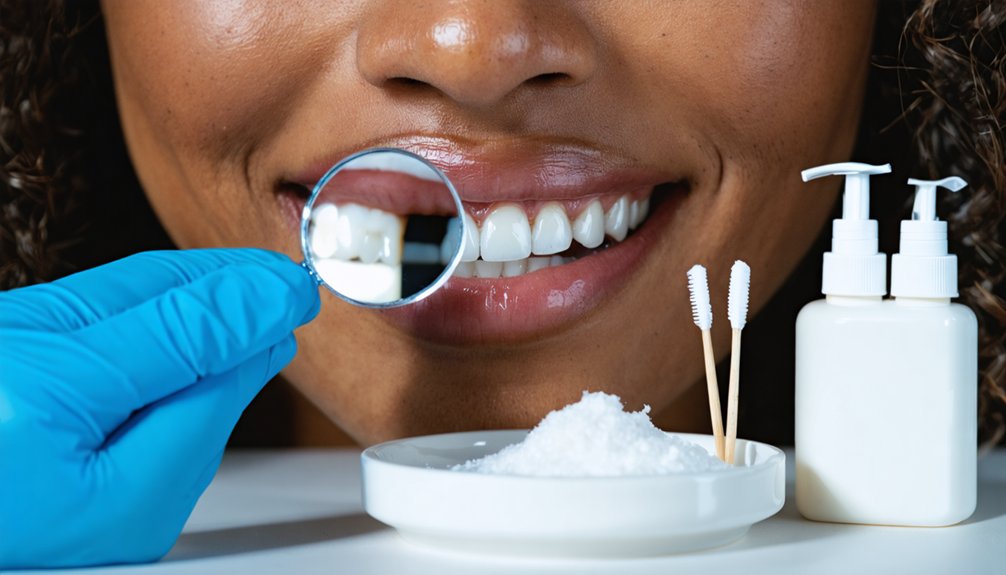
Mix baking soda with water to form a paste, then brush gently for two minutes to break down surface discoloration. Alternatively, swish one to two tablespoons of coconut oil for 15 to 20 minutes to draw out embedded pigments.
Baking soda paste breaks down surface discoloration, while coconut oil pulling draws out deeply embedded wine pigments.
Apply mashed strawberries directly to your teeth for five minutes, allowing their natural acids to work without harsh abrasion. Activated charcoal powder on a wet toothbrush also lifts stubborn tannin deposits effectively.
Always rinse thoroughly after each remedy and wait 30 minutes before standard brushing to protect softened enamel from further damage.
Does Baking Soda Really Remove Wine Stains From Teeth?
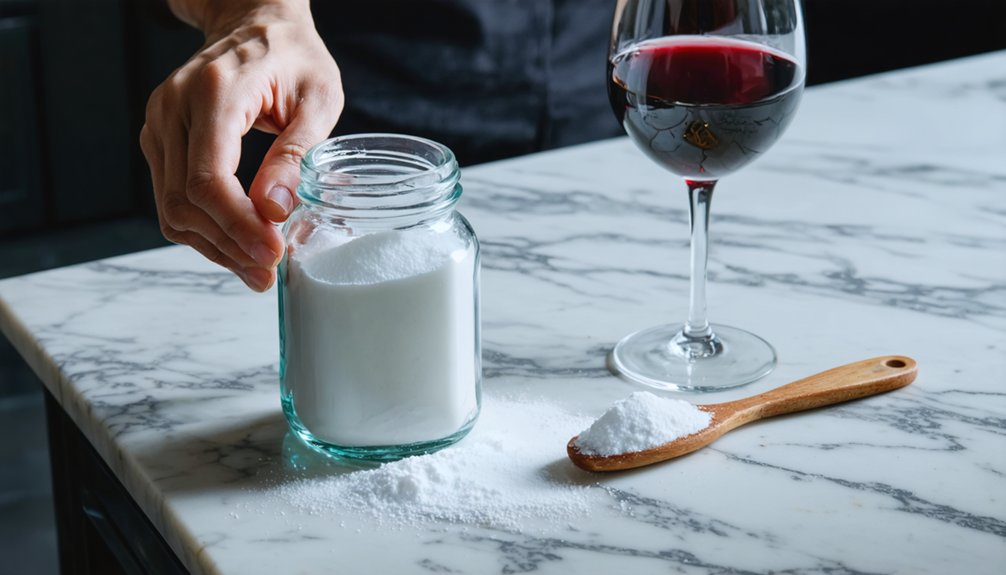
Baking soda works as a mild abrasive that physically scrubs surface pigments left by wine’s tannins and chromogens, making it a scientifically supported option for stain removal.
To use it safely, you’ll mix it with water to form a paste and brush gently for two minutes, avoiding excessive pressure that can wear enamel over time.
While it won’t reverse deep discoloration, it’s genuinely effective against fresh wine stains when you apply it consistently as part of your oral hygiene routine.
Baking Soda’s Whitening Mechanism
When wine stains settle onto your teeth, baking soda’s mild abrasive properties go to work by physically scrubbing chromogens—the pigment compounds responsible for discoloration—off the enamel’s surface.
Its alkaline pH also neutralizes acidic residue left by wine, reducing the environment that allows stains to bond more deeply.
For effective stain removal, mix baking soda with water to form a paste and brush gently for two minutes.
You’re not relying on harsh chemicals—you’re using controlled mechanical action to lift surface pigments before they penetrate enamel pores.
It’s worth noting that baking soda addresses surface-level discoloration, not intrinsic staining.
Used consistently but moderately—no more than two to three times weekly—it preserves enamel integrity while keeping wine-related discoloration visibly manageable.
Safe Application Techniques
Though baking soda can lift wine stains effectively, how you apply it determines whether it protects or damages your enamel. Mix one part baking soda with two parts water to create a controlled paste. Apply it gently using a soft-bristled toothbrush, brushing for no longer than two minutes.
Limit use to two or three times weekly — overuse disrupts your oral pH balance, stripping protective minerals your enamel depends on.
After brushing, rinse thoroughly with water, then follow with fluoride toothpaste to support enamel strengthening and remineralization.
Avoid applying baking soda directly without dilution, as undiluted abrasion accelerates enamel wear.
Wait 20 to 30 minutes after drinking wine before beginning any brushing routine to prevent acid from penetrating softened enamel pores during application.
Effectiveness Against Wine Stains
Applying baking soda correctly matters, but so does knowing whether it actually works against wine stains in the first place. Wine’s tannin effects bind chromogens directly to enamel, creating discoloration that resists ordinary brushing.
Baking soda’s mild abrasiveness physically lifts these surface deposits without requiring harsh chemicals. Research confirms it reduces extrinsic staining effectively when used consistently.
Think of vineyard preservation principles — protecting what matters requires proactive, targeted intervention, not passive hope. Baking soda addresses fresh and moderate stains well, but deeply embedded tannin effects from years of wine consumption may exceed its capability.
For stubborn discoloration, you’ll need professional-grade bleaching treatments.
Used within 30 minutes post-consumption, baking soda delivers measurable results, giving you real control over your teeth’s long-term appearance.
How Does Hydrogen Peroxide Remove Wine Stains From Teeth?
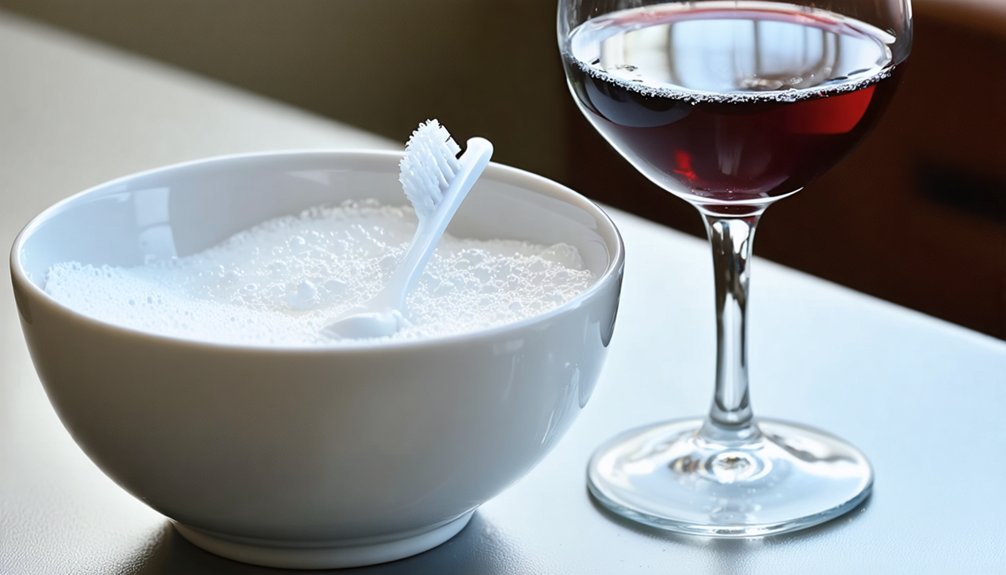
Hydrogen peroxide works as a bleaching agent by releasing oxygen molecules that break down the chromogens responsible for wine stains on your enamel. When you mix 3% hydrogen peroxide with water in a 1:1 ratio, you’re creating a solution strong enough to lift surface discoloration without unnecessary damage.
Hydrogen peroxide releases oxygen molecules that break down wine stains, lifting discoloration without unnecessary damage to your enamel.
Apply it with a cotton ball directly to affected areas, then wait before brushing.
You’ll want to take into account wine acidity as a complicating factor. Acid temporarily softens enamel, making it more vulnerable to enamel erosion if you apply peroxide too aggressively or too soon after drinking.
Wait at least 20–30 minutes post-consumption before using this treatment.
Consistent, controlled application keeps your whitening efforts effective while protecting the structural integrity of your teeth long-term.
Foods That Protect Your Teeth at Wine Events
Eating the right foods before and during a wine event gives your teeth a natural line of defense against staining and acid erosion. Start with cheese before your first glass — it neutralizes acids and delivers calcium that strengthens enamel against wine’s tannin content.
High-fiber vegetables like broccoli and spinach stimulate saliva production, which continuously rinses pigments from your enamel surface. Saliva also buffers the acidity that intensifies as you experience each wine aroma throughout the evening.
Chewing fibrous foods fundamentally scrubs your teeth between sips. Additionally, incorporating nuts and whole grains creates a protective film over enamel.
These strategic food choices don’t just complement the tasting experience — they actively reduce stain absorption, keeping your teeth cleaner without interrupting the event.
Professional Treatments When Home Remedies Fail
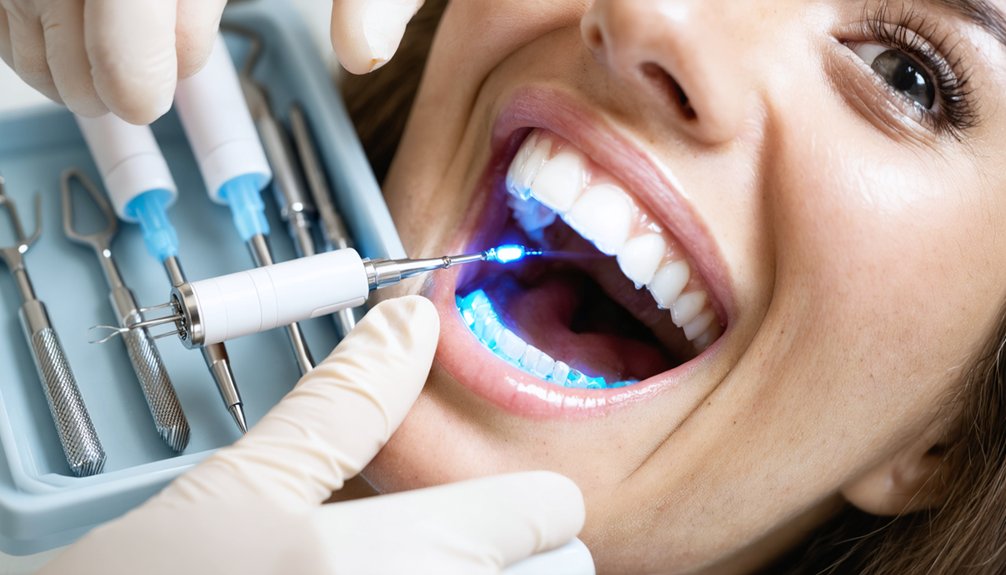
When home remedies fall short, professional dental treatments offer clinically proven solutions for stubborn wine stains. Your dentist can assess whether wine acidity has caused enamel erosion before recommending the appropriate intervention.
Professional dental treatments provide clinically proven solutions when home remedies fail to eliminate stubborn wine stains.
In-office bleaching uses high-concentration peroxide gels activated by specialized light, delivering faster, more controlled results than any home approach. If enamel erosion has progressed, your dentist may recommend remineralization therapy to strengthen compromised surfaces before whitening begins.
Professional cleaning removes deeply embedded tannins that brushing can’t reach. For severe discoloration, porcelain veneers or bonding provide lasting cosmetic correction.
You’ll gain a precise treatment plan tailored to your enamel’s condition, giving you full control over your results. Schedule a dental consultation whenever home methods consistently fail to restore your teeth’s natural brightness.
The Daily Habits That Keep Wine Stains Away
Professional treatments correct existing damage, but your daily habits determine whether wine stains take hold in the first place. You control your oral health habits, and consistency separates stained teeth from bright ones.
Brush twice daily with fluoride toothpaste using a soft-bristled toothbrush to protect enamel while clearing tannin buildup. Floss daily to eliminate plaque that absorbs pigments. Rinse with mouthwash after drinking wine to neutralize lingering acids before they penetrate enamel.
Never brush immediately after wine consumption. Wait 20 to 30 minutes to let softened enamel reharden, preventing stains from embedding deeper.
These oral health habits directly support long-term teeth whitening outcomes. Small, deliberate choices compounded daily create a protective environment where wine stains struggle to establish themselves permanently.
How Long Until Wine Stains Actually Fade?
Surface wine stains on your teeth can begin fading within 48 hours when you consistently rinse, brush with fluoride toothpaste, and apply mild whitening agents like baking soda paste.
Deep stains embedded in enamel pores, however, require sustained treatment over two to six weeks using hydrogen peroxide solutions or professional dental intervention.
Your timeline depends directly on how quickly you act after consumption and how diligently you maintain your daily oral hygiene routine.
Surface Stain Fading Timeline
Many wine lovers wonder how long it’ll take for surface stains to fade after a night of indulging, and the timeline varies considerably depending on your oral hygiene habits and the type of wine consumed.
Consistent dental hygiene accelerates teeth whitening and reduces discoloration faster than passive waiting.
- 24–48 hours: Light stains fade with proper brushing and rinsing
- 1–2 weeks: Moderate stains diminish through daily fluoride toothpaste use
- 3–4 weeks: Stubborn tannin deposits respond to baking soda or hydrogen peroxide treatments
- 6+ weeks: Deep, embedded stains may require professional dental intervention
You control this timeline by acting immediately after consumption, maintaining rigorous brushing habits, and using evidence-based remedies consistently.
Delaying action embeds pigments deeper into enamel pores, extending the fading process considerably.
Deep Stain Removal Duration
When wine stains penetrate beyond the enamel surface and embed into deeper porous layers, you’re dealing with a removal timeline that extends far beyond a simple overnight fix.
Stain penetration at this level typically requires consistent intervention over two to six weeks before visible fading occurs.
Enamel recovery depends heavily on your commitment to daily fluoride use, professional-grade whitening treatments, and eliminating repeat staining behaviors.
A 3% hydrogen peroxide solution applied consistently can accelerate the process, but deep discoloration often demands professional dental treatment for complete removal.
You’ll need to track progress weekly rather than daily.
Skipping steps or inconsistent application resets your timeline considerably.
Control the outcome by treating deep stains as a structured, multi-week protocol rather than a single corrective action.
Frequently Asked Questions
Can Wine Stains on Teeth Become Permanent if Left Untreated?
Like rust on metal, staining permanence grows with neglect. Yes, untreated wine stains can become permanent. Treatment urgency matters—you must act quickly, rinsing, brushing, and using whitening remedies before stains embed deeply into your enamel.
Are Certain Wine Glass Shapes More Likely to Cause Tooth Staining?
Glass design doesn’t considerably impact tooth staining—your drinking habits do. However, stem shape affects how you hold your glass, influencing sip frequency. You’ll reduce staining by sipping slowly and rinsing with water between glasses.
Does Drinking Wine Temperature Affect How Badly Teeth Stain?
Wine’s temperature impact matters—warmer wine opens your enamel’s pores wider, intensifying wine acidity absorption and staining. You’ll experience deeper discoloration with warm wine, so you’re better off drinking it chilled to minimize tooth staining risk.
Can Dental Veneers or Crowns Actually Stain From Wine Consumption?
Studies show 42% of veneer users notice Crown discoloration over time. Yes, wine can stain your veneers’ edges and cement lines. Prioritize Veneer maintenance by rinsing immediately after drinking to keep discoloration under your control.
Is Teeth Staining From Wine Linked to Any Underlying Health Conditions?
Wine acidity can worsen staining if you’ve got enamel erosion, dry mouth, or gum disease. These oral health conditions make your teeth more porous, so you’ll absorb pigments faster and experience deeper, harder-to-remove discoloration.
References
- https://www.mydentaloffice.com/natural-whitening-remedies-for-coffee-and-wine/
- https://skydentalaz.com/how-to-remove-red-wine-and-coffee-stains-from-your-teeth-or-clothes/
- https://www.youtube.com/watch?v=OLMu8rHRAKA
- https://www.redman.com.au/how-to-remove-red-wine-stains/
- https://www.polarisdental.ca/remove-wine-stains-from-your-teeth/
- https://drpostel.com/8-tricks-to-enjoy-wine-without-staining-your-teeth/
- https://www.rd.com/article/red-wine-stains-teeth/
- https://smilepointdental.ca/teeth-whitening-for-wine-lovers/