To safely whiten and strengthen enamel, you’ll need to match your peroxide concentration to your enamel’s current condition. Use 3% hydrogen peroxide or 10% carbamide peroxide to minimize demineralization risk. After every whitening session, apply nano hydroxyapatite or fluoride toothpaste to actively restore mineral density. Avoid high-abrasion products like charcoal-based formulas, and always choose ADA-approved treatments. The right combination of whitening strategy and remineralization protocol makes all the difference—and there’s more to uncover ahead.
Key Takeaways
- Use ADA-approved whitening products with 3% hydrogen peroxide or 10% carbamide peroxide to effectively whiten while minimizing enamel demineralization risk.
- Apply nano hydroxyapatite or fluoride toothpaste after whitening sessions to restore enamel minerals and reduce post-treatment sensitivity.
- Avoid charcoal-based whitening products and limit whitening toothpaste to once weekly to prevent abrasive enamel erosion.
- Consume calcium-rich foods like cheese and milk regularly to support enamel strength and long-term whitening results.
- Use potassium nitrate or stannous fluoride toothpaste before and after treatments to manage sensitivity and protect enamel integrity.
Why Teeth Yellow and What It Means for Whitening
Tooth discoloration develops through two distinct pathways that directly determine which whitening strategies will actually work for you. Extrinsic stains accumulate on your enamel’s surface from coffee, tea, red wine, and tobacco — these respond well to abrasive or peroxide-based treatments.
Not all tooth stains are equal — your discoloration type determines which whitening treatments will actually deliver results.
Intrinsic discoloration originates within the dentin layer, requiring peroxide agents that penetrate dental hard tissues to oxidize embedded chromogens.
Your enamel health considerably influences treatment selection and safety. Compromised enamel — thinned through erosion or aggressive abrasion — increases sensitivity risk and limits your whitening options. Concentrations above 10% hydrogen peroxide accelerate demineralization in already-vulnerable enamel.
Identifying your discoloration type before beginning any whitening protocol isn’t optional — it’s strategic. Mismatched treatments waste time, damage structure, and deliver inferior results.
Teeth Whitening Ingredients That Actually Deliver Results
When it comes to actually moving the needle on discoloration, two ingredients dominate the evidence base: hydrogen peroxide and carbamide peroxide. Both permeate dental hard tissues, targeting extrinsic and intrinsic stains at the molecular level.
Note that neither agent whitens dental restorations—crowns, veneers, or bonding retain their original shade. Additionally, peroxide use can temporarily affect mouth odor during treatment cycles.
- Hydrogen peroxide (3%): Fast-acting, suitable for shorter application windows
- Carbamide peroxide (10%): Breaks down into hydrogen peroxide slowly, ideal for overnight trays
- Concentrations above 10% hydrogen peroxide: Risk enamel demineralization with prolonged use
- ADA-accepted formulations: Verified for both safety and efficacy
- Strict adherence to manufacturer protocols: Non-negotiable for minimizing sensitivity and structural damage
Which Peroxide Concentration Matches Your Sensitivity Level?
If you experience sensitivity, you should start with 10% carbamide peroxide or 3% hydrogen peroxide, as these lower concentrations minimize nerve irritation while still breaking down stains.
As you increase peroxide concentration beyond 10% hydrogen peroxide, you raise your risk of enamel demineralization and prolonged sensitivity.
Matching your concentration to your sensitivity threshold isn’t optional—it’s the clinical standard for protecting your dental structure throughout the whitening process.
Low Concentration For Sensitivity
Sensitivity levels vary widely among individuals, so matching peroxide concentration to your specific tolerance is essential for safe whitening outcomes.
For reactive teeth, low-concentration formulas protect enamel strength while still delivering measurable stain removal.
- Start with 10% carbamide peroxide or 3% hydrogen peroxide to minimize nerve irritation
- Use sensitive-relief toothpaste before and after treatment to buffer peroxide exposure
- Apply natural remedies like nano hydroxyapatite toothpaste between sessions to actively remineralize
- Limit wear time strictly per manufacturer instructions to prevent demineralization
- Monitor for gingival inflammation or heightened sensitivity and discontinue use immediately if symptoms escalate
Low concentrations require longer treatment durations but considerably reduce adverse effects.
You’re trading speed for structural safety—a clinically sound compromise when enamel preservation is your primary objective.
Higher Peroxide, Higher Risk
Higher peroxide concentrations deliver faster results, but they introduce measurable risks that low-concentration formulas don’t.
When you use products exceeding 10% hydrogen peroxide for extended periods, you’re accelerating enamel erosion rather than simply lifting tooth staining. The peroxide penetrates dental hard tissues aggressively, compromising mineral integrity with repeated exposure.
You need to weigh speed against structural cost. Higher concentrations increase sensitivity episodes, trigger gingival inflammation, and can demineralize enamel permanently if you ignore manufacturer protocols.
Unlike professional supervision, unsupervised high-concentration use leaves you without early adverse-effect monitoring.
If you’re managing existing sensitivity, stronger isn’t smarter. Controlling concentration means controlling outcome.
Stay within clinically validated ranges, follow treatment intervals precisely, and implement remineralization strategies between sessions to protect what you’re working to improve.
Professional vs. At-Home Teeth Whitening Options
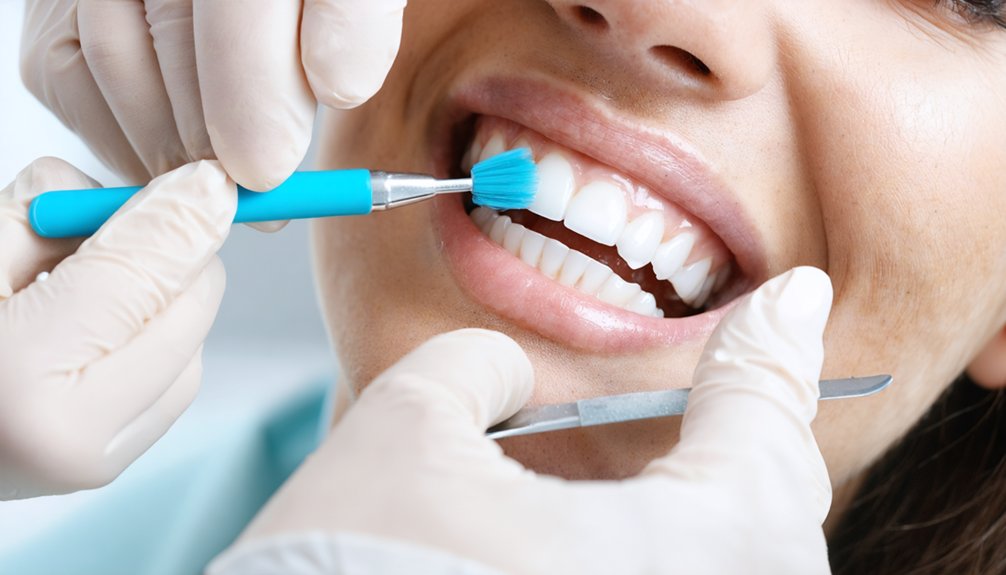
When you choose professional in-office bleaching, you benefit from clinically controlled peroxide concentrations and direct oversight that minimizes adverse effects while maximizing efficacy.
If you prefer at-home treatment, dentist-supplied custom-fitted trays deliver a safer, more precise fit than generic alternatives, reducing gingival exposure and improving outcomes.
For over-the-counter use, you should select only ADA Seal of Acceptance-bearing toothpastes, gels, or strips, as these products have undergone standardized testing to confirm both their safety and whitening effectiveness.
Professional Whitening Treatment Benefits
Professional whitening treatments offer two distinct pathways: in-office bleaching performed by dental professionals and custom-fitted tray systems supplied by your dentist for at-home use. Both leverage advanced dental technology to deliver controlled, evidence-based results while dismantling common whitening myths about safety and efficacy.
- In-office bleaching ensures clinically supervised peroxide application for best outcomes.
- Custom-fitted trays minimize gingival exposure and maximize enamel contact.
- Professional oversight reduces risks associated with incorrect concentrations.
- Dentists identify contraindications before treatment begins, protecting your enamel.
- Supervised protocols allow early intervention if sensitivity or inflammation develops.
Choosing professional pathways gives you measurable control over your whitening outcomes. You’re not guessing—you’re following a structured, clinically validated protocol designed to whiten effectively while preserving enamel integrity.
At-Home Whitening Safe Options
At-home whitening options span a wide range of efficacy and safety profiles, so selecting the right product requires understanding both active ingredients and application methods. ADA-approved strips, gels, and trays containing 10% carbamide peroxide or 3% hydrogen peroxide deliver measurable results while minimizing enamel demineralization risk. You should follow manufacturer instructions precisely to avoid sensitivity and gingival inflammation.
Complement chemical whitening with evidence-supported natural remedies: baking soda used once or twice weekly removes surface stains without aggressive abrasion, and oil pulling offers a low-risk adjunct.
Integrate dietary tips by increasing calcium-rich foods like cheese and milk, which reinforce enamel integrity. Incorporate crunchy vegetables to mechanically disrupt surface deposits.
Together, these strategies give you systematic, controlled whitening without compromising structural enamel health.
ADA-Approved Product Choices
Choosing between professional and at-home whitening products becomes straightforward once you understand what ADA approval actually certifies. The ADA Seal confirms tested safety and effectiveness, giving you measurable confidence in your selection. Pair any whitening protocol with daily dental flossing and enamel remineralization strategies to protect structural integrity.
- ADA-approved strips, gels, and toothpastes deliver verified results without guesswork.
- Professional custom trays offer superior fit and controlled peroxide delivery.
- In-office bleaching maximizes efficacy under clinical supervision.
- ADA Seal products undergo independent safety and performance testing.
- Over-the-counter ADA options provide accessible, cost-effective alternatives to clinical procedures.
You control outcomes by selecting verified products, maintaining consistent remineralization support, and integrating dental flossing daily.
Unverified products introduce unnecessary risk with no performance guarantee.
How to Whiten Teeth Without Eroding Your Enamel
Whitening your teeth without eroding enamel requires selecting low-abrasive, peroxide-based products at safe concentrations—specifically 10% carbamide peroxide or 3% hydrogen peroxide for sensitive teeth. Avoid charcoal-based products entirely; their high abrasivity mechanically damages enamel and accelerates structural degradation. Limit whitening toothpaste to once weekly to prevent erosion-driven yellowing.
Control dental plaque buildup through consistent brushing and flossing before whitening sessions, as plaque interferes with peroxide penetration and treatment efficacy. After each whitening session, prioritize tooth remineralization using nano hydroxyapatite toothpaste or fluoride formulations to restore enamel mineral density.
Overuse of whitening strips causes permanent enamel erosion, so strictly follow manufacturer-specified treatment durations. Concentrations exceeding 10% hydrogen peroxide used long-term demineralize enamel and heighten sensitivity—stay within evidence-supported thresholds to preserve structural integrity.
How to Handle Sensitivity From Teeth Whitening
Tooth sensitivity is the most common adverse effect of essential tooth whitening, but you can manage it effectively with targeted strategies. Peroxide agents temporarily increase dentinal tubule permeability, triggering discomfort. Controlling dental plaque buildup before sessions reduces gingival inflammation and compound sensitivity risks.
Prioritizing tooth remineralization between treatments restores mineral density and stabilizes enamel structure.
- Use sensitive relief toothpaste containing potassium nitrate or stannous fluoride before and after whitening sessions
- Apply nano hydroxyapatite toothpaste to accelerate tooth remineralization post-treatment
- Reduce whitening session frequency if sensitivity persists beyond 48 hours
- Eliminate dental plaque thoroughly before each session to minimize gingival irritation
- Select low-concentration formulations (10% carbamide peroxide or 3% hydrogen peroxide) to reduce tubule hyperstimulation
What to Eat and Avoid to Protect Whitening Results
Managing sensitivity gets you through the whitening process, but what you consume afterward determines how long your results last. Avoid coffee, tea, red wine, and dark berries immediately following treatment—these compounds penetrate freshly opened enamel tubules and accelerate discoloration.
Dental plaque accumulation compounds staining, so eliminating fermentable sugars and processed carbohydrates reduces bacterial adhesion to treated surfaces.
Prioritize calcium-rich foods like milk, cheese, and broccoli to reinforce enamel mineralization post-treatment.
Crunchy vegetables such as carrots and apples mechanically disrupt surface deposits without abrasive damage.
Maintain oral hydration consistently—water neutralizes acids, dilutes chromogenic compounds, and supports salivary flow, which is your primary natural defense against stain redeposition.
Use a straw when consuming acidic or pigmented beverages to minimize direct enamel contact.
Daily Habits That Make Teeth Whitening Results Last
Sustaining your whitening results depends on consistent daily practices that limit recontamination and support enamel health. Teeth discoloration accelerates when protective habits break down, so you’ll need disciplined routines to preserve your investment.
- Brush twice daily for two minutes using a soft-bristled brush and fluoride toothpaste.
- Floss daily to eliminate plaque buildup between contact points.
- Rinse immediately with water after consuming coffee, tea, red wine, or dark berries.
- Use a straw when drinking staining beverages to minimize direct enamel exposure.
- Incorporate calcium-rich foods like cheese and broccoli to reinforce enamel integrity.
These targeted behaviors collectively reduce extrinsic stain accumulation and structural degradation. You’re not maintaining aesthetics passively—you’re actively controlling the biological and dietary variables that drive recontamination and enamel compromise.
Frequently Asked Questions
Can Teeth Whitening Treatments Affect Dental Crowns or Veneers?
Whitening treatments don’t alter dental crown discoloration or change veneer material compatibility—they only work on natural enamel. You’ll notice uneven results, so consult your dentist before starting any bleaching regimen to manage shade mismatches effectively.
Is Teeth Whitening Safe During Pregnancy or While Breastfeeding?
Why risk it? You shouldn’t pursue whitening during pregnancy or breastfeeding. Pregnancy safety demands caution, as peroxide absorption remains unstudied in fetuses. Breastfeeding considerations equally apply—you’ll want to postpone treatments until after this critical period ends.
How Long Do Professional Teeth Whitening Results Typically Last?
Your professional whitening results typically last six months to two years. You’ll extend longevity by avoiding stain-causing foods, using natural remedies like oil pulling, and exploring alternative treatments such as nano hydroxyapatite toothpaste for ongoing enamel maintenance.
Can Children or Teenagers Safely Use Teeth Whitening Products?
Hark—child safety demands caution here. You should avoid whitening products for developing teeth. Teenage usage isn’t recommended until growth completes, as peroxide concentrations risk enamel demineralization. Consult your dentist before proceeding.
Does Teeth Whitening Work on Teeth With Fluorosis or Tetracycline Stains?
Whitening’s less effective on fluorosis discoloration and tetracycline stains since peroxide targets extrinsic staining better than intrinsic. You’ll likely need professional interventions like veneers or bonding for significant results with these stubborn, deep-set discolorations.
References
- https://www.goodrx.com/conditions/dental-care/is-teeth-whitening-safe
- https://newsnetwork.mayoclinic.org/discussion/mayo-clinic-q-and-a-many-safe-choices-available-to-help-whiten-teeth/
- https://www.ada.org/resources/ada-library/oral-health-topics/whitening
- https://www.reddit.com/r/DentalHygiene/comments/i7ea31/how_to_whiten_teeth_without_damaging_enamel/
- https://pmc.ncbi.nlm.nih.gov/articles/PMC4058574/
- https://www.healthline.com/nutrition/whiten-teeth-naturally
- https://www.nirvanadental.com/blog/how-to-whiten-your-teeth-without-damaging-them
- https://www.youtube.com/watch?v=d98KAyxTGwo
- https://www.insmyledental.com/how-to-whiten-teeth-without-damaging-enamel/