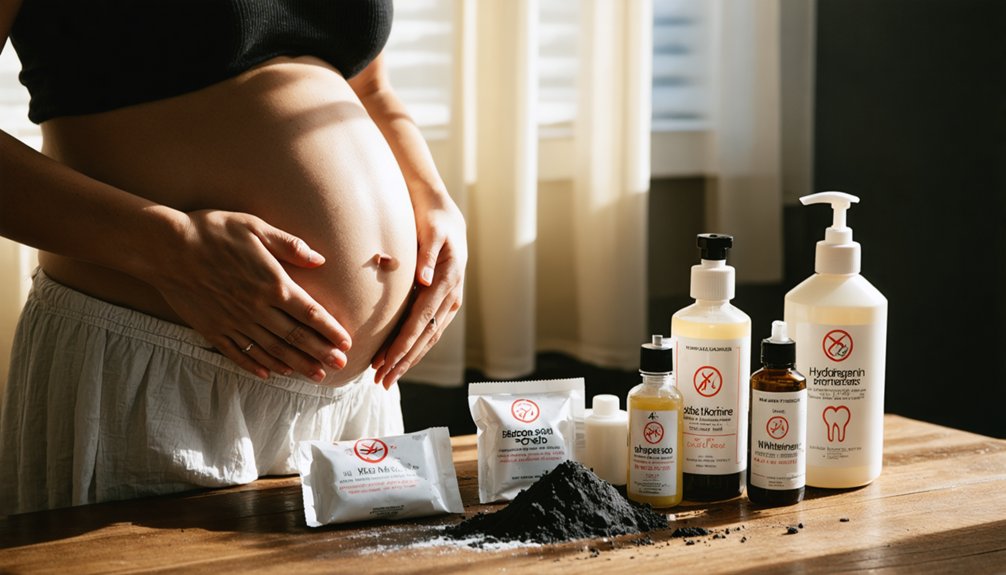
You should avoid LED teeth whitening during pregnancy. Most dentists and obstetricians recommend postponing all bleaching treatments until after delivery due to insufficient safety data on peroxide-based chemicals. Hydrogen peroxide can absorb through gum tissue and enter your bloodstream, raising concerns about fetal exposure. Pregnancy also heightens gum sensitivity, making whitening agents riskier than usual. If you’re wondering about alternatives, timing, or what happens during breastfeeding, there’s much more to uncover below.
Key Takeaways
- Most dentists recommend postponing LED teeth whitening during pregnancy due to limited research on the safety of bleaching chemicals.
- Hydrogen peroxide can absorb through gum tissue, entering the bloodstream, raising concerns about systemic exposure during pregnancy.
- Pregnancy increases gum sensitivity and inflammation, making teeth and gums more vulnerable to irritation from whitening agents.
- Blue LED light cannot penetrate beyond the oral cavity, posing minimal direct risk to fetal development.
- Safer alternatives include ADA-approved whitening toothpastes, baking soda toothpastes, and oil pulling, which avoid bleaching chemicals entirely.
Is LED Teeth Whitening Safe During Pregnancy?
When considering LED teeth whitening during pregnancy, most dentists and obstetricians recommend postponing the procedure until after delivery and breastfeeding are complete.
LED whitening uses high concentrations of hydrogen peroxide, which can absorb through your gums. Although research hasn’t confirmed definitive harm, it also hasn’t confirmed safety—making this cosmetic procedure an unnecessary risk during pregnancy.
The safety of LED whitening during pregnancy remains unproven—making it an unnecessary risk not worth taking.
Your dental hygiene priorities should shift toward proven, pregnancy-safe practices. Elevated estrogen levels already make your gums more sensitive, and whitening agents can worsen that irritation.
The bleaching chemicals in these cosmetic procedures aren’t well-studied in pregnant or breastfeeding women, so most professionals advise caution.
If you’re committed to maintaining your smile, whitening toothpastes bearing the ADA seal offer a safer alternative without exposing you or your baby to unstudied chemicals.
What Is LED Teeth Whitening and How Does It Work?
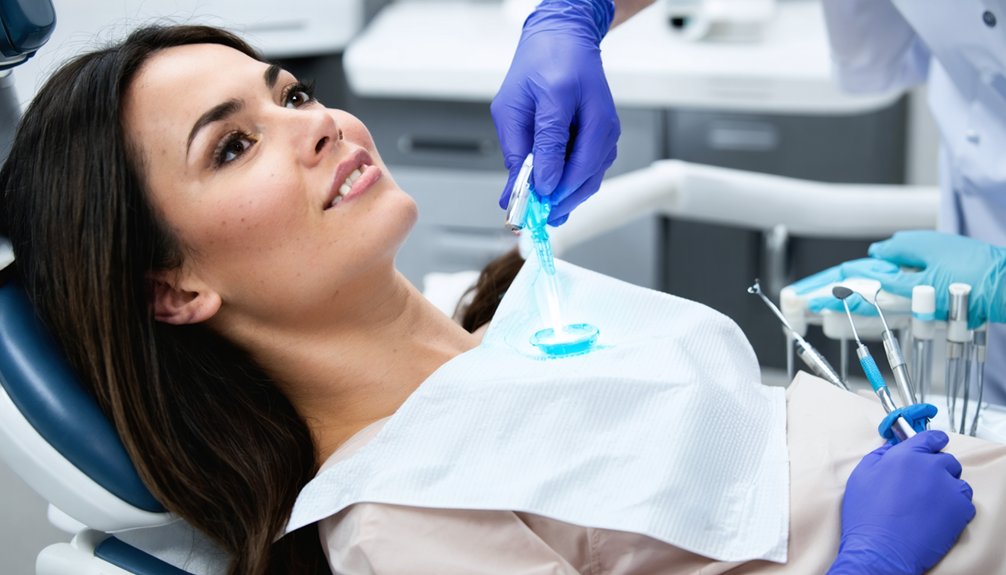
LED teeth whitening combines a bleaching agent—typically hydrogen peroxide or carbamide peroxide—with concentrated blue light to accelerate the chemical breakdown of tooth stains.
The light activates the peroxide, targeting dental pigmentation embedded in enamel and dentin. This process can increase enamel sensitivity, particularly with repeated use or higher peroxide concentrations.
Key components of LED whitening include:
- Bleaching agent: Hydrogen peroxide (typically 15–40% concentration in professional settings)
- LED light source: Blue light wavelengths (440–490 nm) that activate the peroxide
- Application method: Gel applied directly to teeth, with light exposure lasting 15–30 minutes
- Mechanism: Oxidation breaks down pigment molecules, lightening tooth color
Understanding this process helps you make informed decisions about timing and safety during pregnancy.
What Do Dentists Recommend About Whitening During Pregnancy?
If you’re pregnant and considering LED teeth whitening, most dentists and obstetricians recommend postponing elective whitening treatments until after pregnancy and breastfeeding are complete.
Dental professionals base this caution on limited research into the safety of bleaching chemicals during pregnancy, not on confirmed evidence of harm.
Until more definitive studies exist, you’re better off waiting rather than risking exposure to agents whose effects on fetal development remain poorly understood.
Dentist Recommendations on Whitening
Most dentists and obstetricians recommend postponing elective teeth whitening until after pregnancy and breastfeeding are complete. Pregnancy increases oral sensitivity and may already compromise teeth enamel, making whitening treatments riskier. Without confirmed safety data, most professionals advise caution.
- The ADA and FDA haven’t established specific safety guidelines for whitening during pregnancy.
- Bleaching agents can absorb through gums, raising chemical exposure concerns.
- High-concentration professional treatments aren’t recommended due to strong bleaching agents involved.
- Over-the-counter strips are also discouraged until after delivery.
You’re making an informed choice by consulting your dentist before proceeding. Until research confirms safety, delaying whitening protects both you and your baby. Whitening toothpastes with the ADA seal remain your safest option during this period.
Postponing Treatment Until Postpartum
Given the lack of confirmed safety data and professional caution around whitening during pregnancy, postponing treatment until after delivery is the most widely supported recommendation.
Most dentists and obstetricians advise waiting until you’ve finished breastfeeding before pursuing any bleaching procedure, including LED whitening.
Pregnancy already increases tooth sensitivity and alters your oral environment due to hormonal shifts, making whitening treatments more likely to cause discomfort or irritation.
Maintaining strong dental hygiene through brushing, flossing, and routine cleanings lets you protect your smile without introducing untested chemical exposure.
Once you’re postpartum and done breastfeeding, you can pursue LED whitening with fewer concerns.
Timing treatment strategically gives you full control over both your oral health outcomes and your baby’s safety during a critical developmental window.
Is the Blue LED Light Harmful to Your Baby?
When considering LED teeth whitening during pregnancy, you may wonder whether the blue light itself poses a direct risk to your baby.
Visible blue light, which typically falls within the 440–490 nm range, can’t penetrate beyond your oral cavity, meaning it won’t reach your uterus or fetus.
Unlike X-rays or ultraviolet radiation, this light lacks the tissue-penetrating capacity to cross the multiple tissue layers separating your mouth from your developing baby.
Blue Light Penetration Limits
Although the LED light used in teeth whitening treatments emits visible blue light in the 440–490 nm range, it can’t penetrate beyond your oral cavity to reach your baby. Unlike X-rays or UV radiation, blue light lacks the depth of light penetration needed to pass through multiple tissue layers separating your mouth from your uterus.
Key facts about blue light penetration limits:
- Visible blue light stays confined to your oral cavity during treatment
- It can’t travel through tissue layers to affect your fetus
- Dental enamel absorbs and scatters light, limiting deeper penetration
- Studies show no link between dental curing lights and adverse pregnancy outcomes
The light itself poses minimal risk, but the bleaching chemicals activated by it remain the primary concern during pregnancy.
Fetal Exposure Risk Assessment
While blue light’s physical limitations prevent it from reaching your fetus, understanding what that actually means for your baby’s safety requires a closer look at fetal exposure risk.
Studies show no correlation between routine dental hygiene procedures involving curing lights and adverse pregnancy outcomes. The light itself isn’t expected to increase birth defect risk.
However, the bleaching agents activated by that light present a separate concern entirely. Cosmetic procedures involving hydrogen peroxide carry absorption risks through your gums, and research confirming their fetal safety simply doesn’t exist.
No major studies prove harm, but none confirm safety either. Given this evidence gap, most dental professionals recommend postponing LED whitening until after delivery, prioritizing caution over convenience.
Can Whitening Chemicals Actually Enter Your Bloodstream?
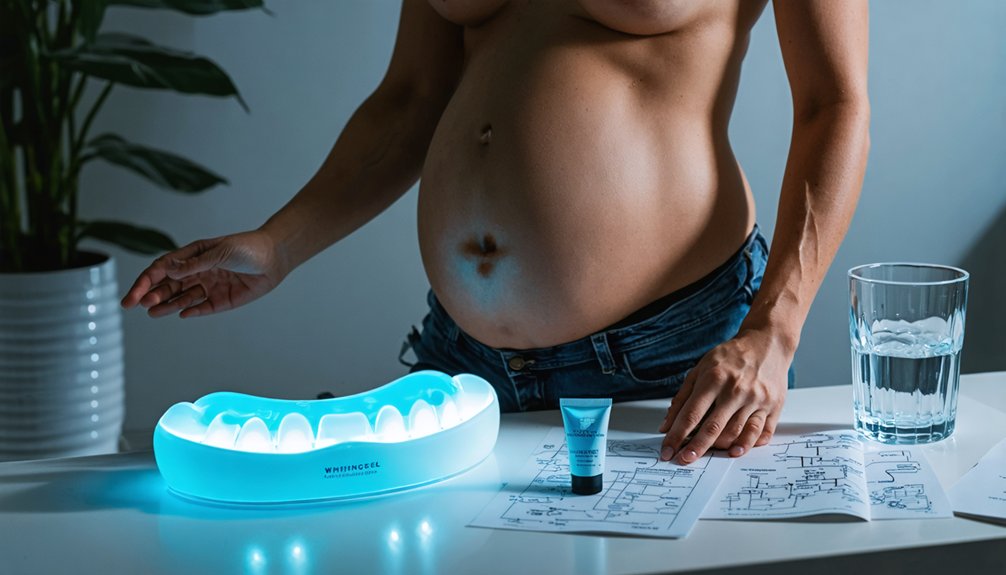
One of the most pressing concerns about teeth whitening during pregnancy is whether bleaching chemicals can enter your bloodstream. Research confirms that hydrogen peroxide can absorb through your gums, creating a potential exposure pathway.
Bleaching chemicals in whitening treatments can absorb through gum tissue, entering your bloodstream and posing potential risks.
Since most dental insurance doesn’t cover cosmetic procedures like whitening, you’re assuming both financial and health risks voluntarily.
Key absorption facts to evaluate:
- Hydrogen peroxide penetrates gum tissue, allowing limited systemic absorption
- Small amounts of whitening agents can be inadvertently swallowed during treatment
- Most whitening ingredients lack sufficient pregnancy or lactation safety studies
- Pregnancy-related gum sensitivity may accelerate chemical absorption rates
While absorption levels remain relatively low, the absence of definitive safety data means you can’t confirm zero risk. Most dental professionals recommend postponing whitening treatments precisely because that uncertainty exists.
Why Pregnancy Makes Teeth Whitening Riskier Than Usual
Beyond chemical absorption, pregnancy itself creates physiological changes that amplify the risks of teeth whitening. Elevated estrogen levels can loosen your teeth, making your dental health more vulnerable during cosmetic procedures. Your gums are already more sensitive and prone to irritation, so bleaching agents can worsen existing discomfort markedly.
LED whitening compounds may also dehydrate your teeth more aggressively, increasing the risk of enamel damage at a time when your oral tissues are already compromised.
Pregnancy-related gum inflammation means your tissues absorb chemicals more readily, raising exposure concerns further.
Since you’re already managing significant physiological changes, adding elective cosmetic procedures introduces unnecessary variables. Most dental professionals advise postponing whitening treatments precisely because these compounding factors create unpredictable risks that simply aren’t worth taking during pregnancy.
Safe Teeth Whitening Options to Use Instead During Pregnancy

Although professional whitening treatments are off the table during pregnancy, you’ve got safer alternatives that can help maintain your smile without exposing you to unverified chemical risks. Prioritizing dental hygiene over cosmetic procedures keeps both you and your baby protected.
Skipping professional whitening during pregnancy isn’t a setback — it’s a smart, protective choice for you and your baby.
- Whitening toothpastes with the ADA seal use mild abrasives instead of bleaching chemicals, making them a clinically safer choice.
- Oil pulling offers a gentle, chemical-free method to reduce surface staining.
- Baking soda toothpaste provides mild abrasive cleaning without harsh bleaching agents.
- Consistent brushing and flossing remains your most evidence-backed tool for maintaining brightness and overall oral health.
These options let you stay in control of your smile care while avoiding cosmetic procedures that carry unconfirmed risks during pregnancy.
Can You Use LED Whitening While Breastfeeding?
Once your baby arrives, you might wonder whether LED whitening becomes a safer option during breastfeeding. The evidence here is more reassuring. Bleaching chemicals don’t meaningfully transfer into breast milk, so the direct risk to your infant appears minimal. Many dental professionals consider LED whitening cosmetic procedures acceptable once you’ve delivered.
However, caution still applies. Your dental hygiene needs may have shifted postpartum — hormonal changes can leave gums sensitive and teeth temporarily vulnerable. Applying strong bleaching agents combined with LED light may increase enamel dehydration or gum irritation during this period.
Most dentists recommend waiting until breastfeeding concludes before pursuing professional treatments. If you choose to proceed sooner, consult both your dentist and obstetrician to make an informed, controlled decision tailored to your current oral health status.
When Can You Safely Start LED Whitening Again?
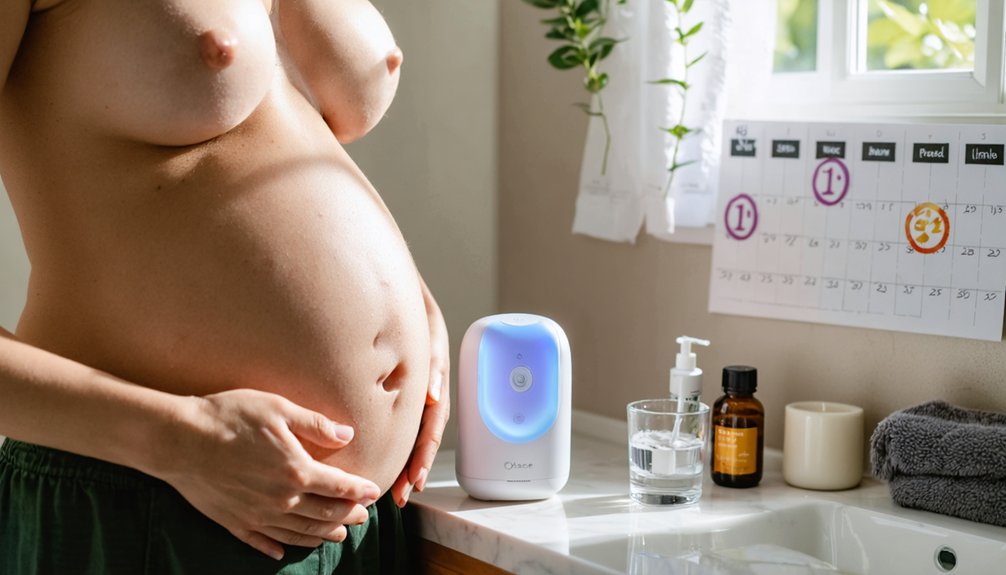
Timing your return to LED whitening depends on your individual recovery and whether you’re breastfeeding. Most dentists recommend waiting until you’ve completely finished breastfeeding before resuming treatments.
Once cleared, assess your oral health carefully before proceeding.
- Confirm breastfeeding is complete — bleaching chemicals are best avoided until then
- Evaluate teeth sensitivity — pregnancy can leave enamel temporarily compromised, requiring recovery time
- Check for gum irritation — hormonal changes may persist postpartum, making gums more reactive
- Schedule a dental consultation — let your dentist assess your oral baseline before starting
You’re in control of this decision, but professional guidance ensures you’re resuming whitening at the right time. Don’t rush; your oral tissue needs adequate recovery before tolerating bleaching agents effectively.
Frequently Asked Questions
Does Teeth Whitening Affect Pregnancy Test Accuracy or Hormone Levels?
Teeth whitening doesn’t affect your pregnancy test accuracy or hormone levels. However, you should approach these cosmetic procedures cautiously, as dental health chemicals may absorb through gums, and limited evidence confirms their complete safety during pregnancy.
Can Pregnancy Hormones Permanently Change the Natural Color of Your Teeth?
Pregnancy’s hormonal fluctuations don’t permanently change your dental enamel color. However, they can temporarily increase staining susceptibility and gum sensitivity. Once hormones stabilize postpartum, you’ll likely notice your teeth returning toward their natural shade.
Are There Specific Pregnancy Trimesters When Whitening Risks Are Highest?
Research doesn’t pinpoint specific trimesters, but you’d face heightened dental sensitivity and gum irritation throughout pregnancy. Your risks remain consistent across all stages, so you should postpone whitening treatments entirely until after delivery.
Do Whitening Side Effects Differ Between First-Time and Subsequent Pregnancies?
Picture each pregnancy as uncharted territory — dental safety data doesn’t distinguish between first or subsequent pregnancies. You’ll find no evidence that whitening side effects or cosmetic concerns differ, so cautious postponement remains the consistent clinical recommendation regardless.
Can a Dentist Legally Refuse to Perform Whitening on Pregnant Patients?
Yes, your dentist can legally refuse whitening during pregnancy. Dental licensing boards support clinical judgment, and without sufficient evidence confirming safety, they’re protecting you. Patient consent doesn’t override a provider’s professional, evidence-based duty to minimize potential harm.
References
- https://www.mdsgdentistry.com/can-you-use-teeth-whitening-strips-while-pregnant/
- https://mouth.co.uk/debunking-common-myths-about-teeth-whitening-during-pregnancy
- https://www.estrellamountaindentistry.com/blogs/is-teeth-bleaching-safe-during-pregnancy/
- https://www.thebump.com/a/whiten-teeth-pregnancy
- https://nvdentists.com/pregnancy-safe-teeth-whitening/
- https://www.regencysquaredental.com/is-teeth-whitening-safe-for-pregnant-women/
- https://mothertobaby.org/baby-blog/whitening-teeth-during-pregnancy-or-breastfeeding-lets-bite-into-the-subject/
- https://www.hagerdent.com/article/are-dental-curing-lights-safe-during-pregnancy.html