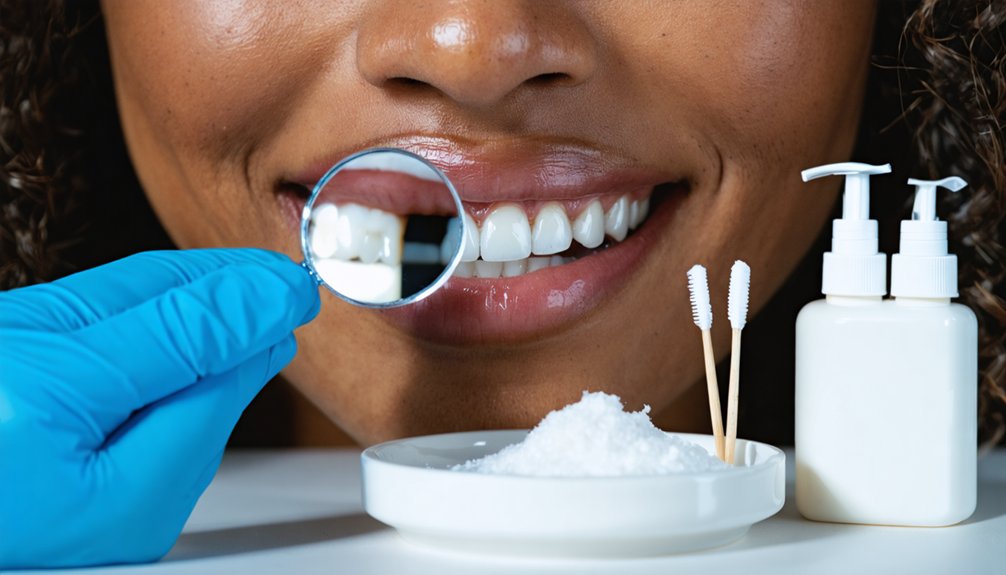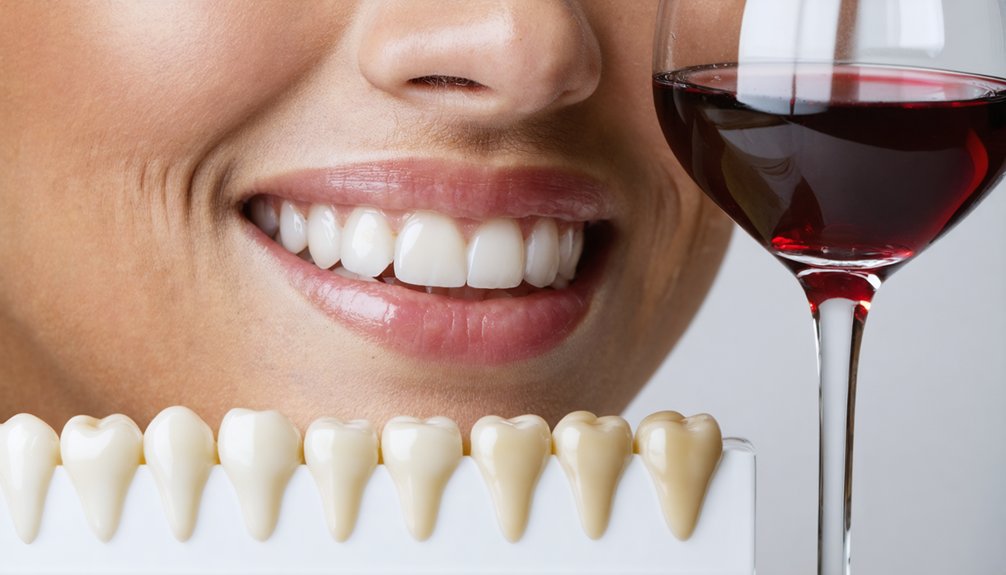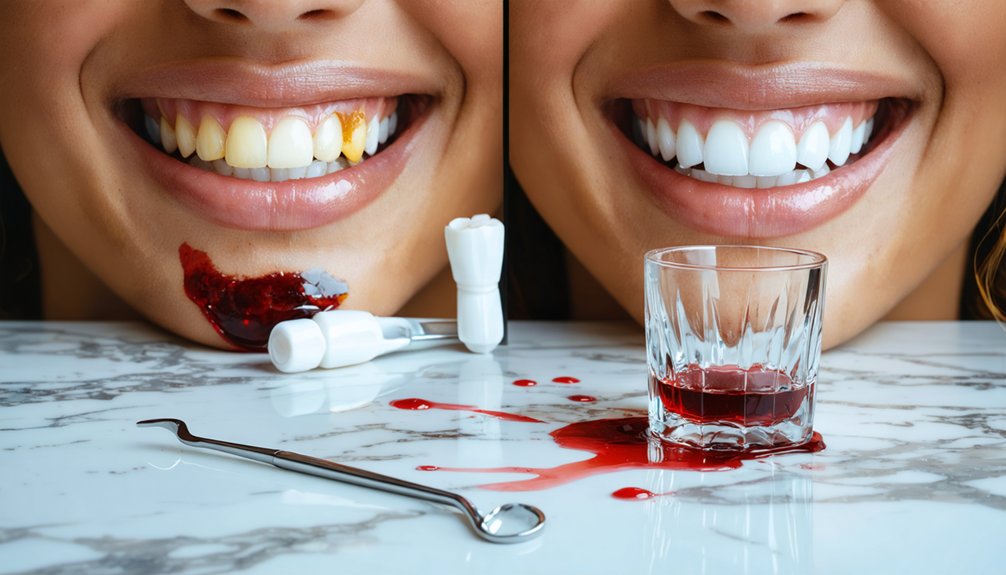
Professional whitening treatments work best for wine stains because red wine’s chromogens and tannins embed deep into enamel’s microscopic channels, where over-the-counter products can’t reach. Low-concentration peroxide formulas simply lack the potency to oxidize these deeply embedded pigments. Dentists use higher-concentration hydrogen or carbamide peroxide with custom protocols calibrated to your stain depth and enamel condition, producing up to eight shade improvements. If you drink wine regularly, there’s much more you should know.
Key Takeaways
- Professional whitening uses high-potency peroxide that penetrates deep enamel channels where wine chromogens and tannins become embedded over time.
- Dentists assess stain depth before treatment, creating custom protocols that target uneven, stubborn wine stain distribution more effectively.
- OTC products lack the concentration needed to oxidize deeply embedded pigments, producing minimal and often unsatisfactory results.
- Professional sessions last 60-90 minutes and can achieve up to 8 shade improvements, far exceeding home whitening capabilities.
- Structured professional plans include maintenance scheduling and touch-up guidance, protecting results against gradual re-staining from continued wine consumption.
Why Wine Stains Are Harder to Remove Than You Think
Wine stains can seem manageable at first, but they’re often more resistant to removal than most people expect. Red wine contains chromogens and tannins that bond to enamel porosity—microscopic surface channels that trap pigment over time. The longer exposure continues, the more embedded the discoloration becomes.
Stain localization also affects how you should approach treatment. Wine stains tend to concentrate unevenly across the outer enamel layer, making generic over-the-counter products unreliable. These products lack the potency to address accumulated discoloration consistently across the tooth surface.
Without professional evaluation, you’re likely to underestimate both stain depth and distribution. Understanding where and how wine pigment settles into your enamel is the first step toward choosing a treatment that actually delivers results.
Why Over-the-Counter Products Can’t Touch Deep Wine Stains
Once you understand how wine pigment embeds into enamel, the next logical question is whether store-bought whitening products can address it. The short answer is: not reliably.
Over-the-counter strips and gels use low-concentration peroxide formulas regulated for consumer safety, which limits their ability to penetrate stain molecules embedded beyond the surface layer. Cost considerations may make them appealing initially, but repeated purchases add up when results stay minimal.
OTC whitening products seem affordable—until repeated purchases with minimal results reveal the real cost.
Home remedy effectiveness is similarly limited—baking soda and oil pulling don’t oxidize deep chromogens.
Clinical evidence shows professional whitening achieves 5–8 shade improvements, while OTC products consistently underperform on stubborn, accumulated staining.
If you want predictable, measurable results, you need higher-potency, dentist-supervised formulas that actually reach where wine discoloration lives.
What Happens During Professional Whitening for Wine Stains
Here’s what actually happens when you sit down for a professional whitening session targeting wine stains. Your dentist evaluates stain depth and enamel condition before selecting a protocol—this isn’t a generic approach. Custom application means the concentration, placement, and exposure time are calibrated to your specific discoloration pattern.
For wine stains concentrated in the outer enamel, higher-potency hydrogen peroxide or carbamide peroxide is applied directly, oxidizing pigment molecules embedded in tooth structure. Stain targeting allows your dentist to address uneven or stubborn accumulation that over-the-counter products can’t reach consistently.
Most in-office sessions take roughly 60 to 90 minutes and can produce up to 8 shade improvements. You’re not guessing—you’re working with a controlled, evidence-based process designed to deliver measurable results.
When to Schedule Professional Whitening If You Drink Wine Regularly
Knowing what happens during a professional whitening session is useful, but timing those sessions around your wine habits determines how well results hold. Schedule treatment at least 24 to 72 hours before any planned wine consumption, since research confirms early post-bleaching exposure accelerates reversal.
Lifestyle habits like frequent red wine consumption shorten whitening longevity, so build timing considerations into your planning rather than treating them as secondary. If you drink wine regularly, coordinate appointments before periods of reduced intake, such as before a health-focused month or a planned break.
Follow each in-office session with monthly home-based touch-ups to counteract gradual restaining. Professional guidance helps you structure this schedule based on your specific staining pattern, enamel condition, and consumption frequency for more controlled, predictable outcomes.
How Long Professional Whitening Results Last After Wine Stain Treatment
Professional whitening results don’t last indefinitely, but with proper maintenance, you can expect them to hold for up to 12 to 18 months. Treatment longevity depends heavily on how frequently you consume red wine and whether you follow post-treatment care protocols.
Research confirms that wine exposure within 24 to 72 hours after bleaching accelerates result reversal, so timing matters. To maximize cost effectiveness, pair your in-office treatment with monthly at-home touch-ups using over-the-counter products—this combination has the strongest evidence for sustaining results.
Without maintenance, regular wine consumption reduces whitening persistence considerably. Professional supervision gives you a structured plan that protects your investment, reduces re-staining risk, and extends the interval between full retreatments, making professional care the more economical long-term choice.
Frequently Asked Questions
Can Professional Whitening Damage Enamel if Wine Stains Are Severe?
Like a double-edged sword, professional whitening offers treatment efficacy without sacrificing enamel safety—even for severe wine stains. When you follow dentist-supervised protocols, you’ll protect your enamel while achieving predictable, clinically sound results.
Are Whitening Results Different for Red Wine Versus White Wine Stains?
Yes, your results can differ. Red wine creates deeper, more pigmented stains requiring stronger peroxide formulas, while white wine’s acidity weakens enamel, worsening discoloration. Professional treatment lets you target each stain type with precision.
Should I Avoid Wine Completely Before My Whitening Appointment?
You don’t need to avoid wine completely, but timing considerations matter. Reduce consumption in the days before your appointment. Your dentist can provide personalized diet restrictions to optimize your whitening outcome and protect enamel integrity.
Does Professional Whitening Work on Dental Restorations Stained by Wine?
Ironically, professional whitening won’t whiten your dental veneer — restorations don’t respond to bleach. You’ll need replacement instead. Managing tooth sensitivity during surrounding enamel treatment remains your dentist’s priority for predictable, controlled outcomes.
How Many Shades Brighter Can Teeth Get After One Professional Session?
You can achieve up to 10 shades brighter in one session. Compared to alternative whitening methods, the cost comparison favors professional treatment when you factor in speed, precision, and clinically predictable, evidence-based results you control.
References
- https://pmc.ncbi.nlm.nih.gov/articles/PMC4058574/
- https://www.roundlakedentistry.com/can-teeth-whitening-help-remove-wine-stains/
- https://www.aspendental.com/dental-services/cosmetic-dentistry/teeth-whitening/
- https://www.gilbertarizonadental.com/whitening-remove-stubborn-coffee-and-wine-stains/
- https://yourchicagodentist.com/blog/teeth-whitening-remove-coffee-wine-stains/
- https://pubmed.ncbi.nlm.nih.gov/41359870/
- https://smilepointdental.ca/teeth-whitening-for-wine-lovers/
- https://pmc.ncbi.nlm.nih.gov/articles/PMC6825736/