For red wine stains, your best at-home options are ADA-approved whitening strips with hydrogen peroxide used daily for two weeks, paired with a silica-based whitening toothpaste for surface maintenance. A baking soda and hydrogen peroxide paste applied twice weekly can also lift moderate staining. For deeper, persistent discoloration, professional in-office bleaching or custom whitening trays with clinical-strength gels deliver more targeted results. The right treatment depends on how deep the stain actually goes—and that’s where the details matter.
Key Takeaways
- ADA-approved whitening strips with hydrogen peroxide applied daily for two weeks effectively reduce moderate red wine stains through chemical penetration.
- Baking soda paste combined with hydrogen peroxide gently lifts surface stains when applied twice weekly with a soft-bristled toothbrush.
- Whitening toothpastes containing silica or calcium carbonate polish away surface stains and work best for daily maintenance.
- Persistent stains after two weeks of at-home treatment signal the need for professional in-office bleaching or laser whitening.
- Custom whitening trays using KöR or Opalescence gels provide controlled, professional-grade results between dental visits for stubborn discoloration.
Why Red Wine Stains Teeth So Stubbornly
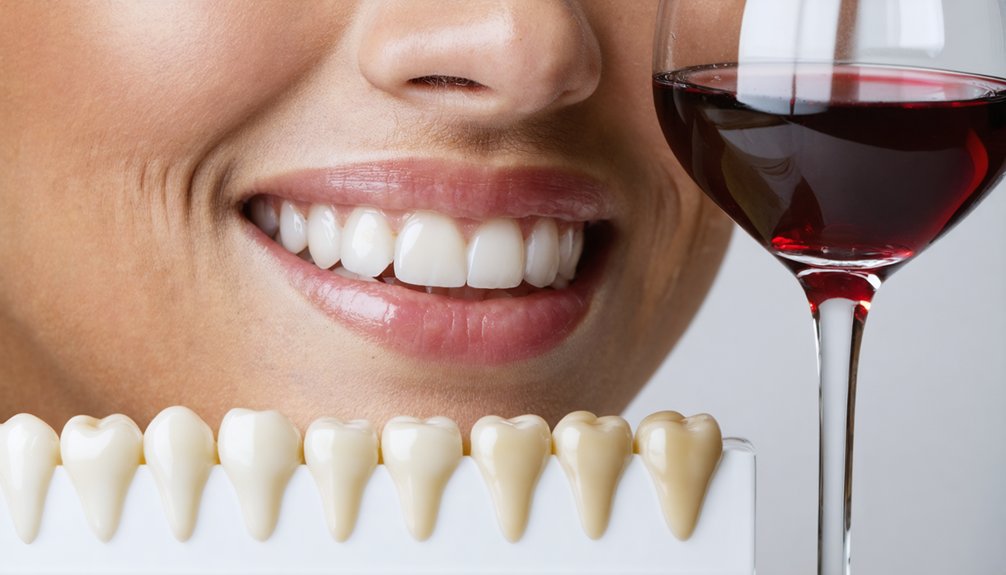
Red wine stains teeth so stubbornly because its tannins bind directly to enamel surfaces, creating a grip that ordinary brushing struggles to break.
Tannins in red wine grip enamel so tenaciously that ordinary brushing barely makes a dent.
Red wine composition includes chromogens, tannins, and acids that work together to compromise your enamel’s defenses. The acids initiate enamel erosion, softening the outer surface and opening microscopic pores.
Once your enamel is weakened, pigments penetrate deeper, anchoring themselves beyond the reach of standard cleaning. Acidity also accelerates this process when you consume white wine beforehand, compounding the damage.
You’re not dealing with a simple surface deposit — you’re dealing with pigments embedded within a chemically altered structure.
Understanding this mechanism gives you the strategic advantage to select treatments that address the stain at its actual depth, not just its surface.
How to Prevent Red Wine Stains While You Drink
Protecting your enamel before the first sip gives you a measurable advantage against staining. Brush before reaching for your wine glass to eliminate plaque that accelerates tannin interaction with enamel surfaces. Plaque creates a sticky matrix that binds pigments more aggressively, so removing it first reduces adhesion considerably.
Between pours, sip water to flush residual pigments and dilute acidity before it softens enamel further. Eat high-fiber vegetables like broccoli or spinach alongside your wine, as chewing stimulates saliva production, which neutralizes acids naturally.
Avoid drinking white wine before red — white wine’s acidity erodes enamel, making it more vulnerable to red wine pigments. Each of these strategies directly interrupts the staining process at its earliest, most controllable stage.
Best At-Home Treatments for Red Wine Tooth Stains
If you’re looking to tackle red wine stains at home, two clinically supported options are baking soda paste and whitening strips.
You can apply a baking soda and hydrogen peroxide paste twice weekly to gently scrub surface stains without damaging enamel.
For more gradual, consistent results, you’ll want to use ADA-approved whitening strips daily for up to two weeks.
Baking Soda Paste Treatment
Baking soda paste is one of the most accessible and clinically supported at-home remedies for reducing surface stains left by red wine. Wine oxidation accelerates pigment bonding to enamel, making timely treatment essential.
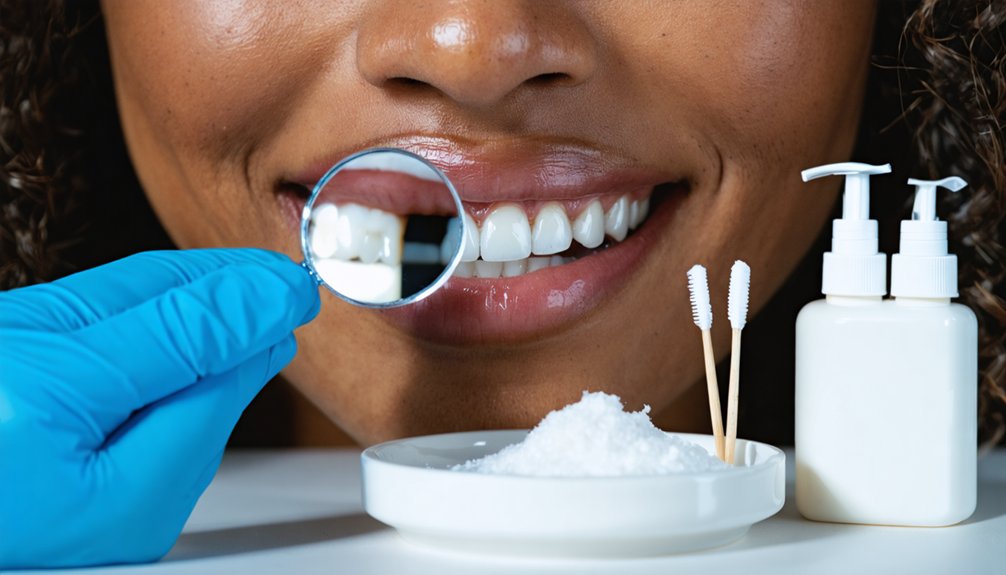
Mixing baking soda with hydrogen peroxide creates a mildly abrasive, alkaline paste that mechanically lifts tannin-based discoloration without harsh chemical exposure. Apply it twice weekly using a soft-bristled toothbrush, using gentle circular motions for two minutes. Rinse thoroughly afterward.
This controlled approach supports enamel remineralization by neutralizing residual acidity left by wine, helping restore surface integrity over time. Avoid daily use, as excessive abrasion can gradually wear enamel.
Pair this treatment with ADA-approved whitening toothpaste for consistent maintenance between applications, and you’ll manage staining progression effectively on your own terms.
Whitening Strips Application
While baking soda paste addresses surface stains through mechanical abrasion, whitening strips offer a complementary chemical approach by delivering peroxide directly against enamel over an extended contact period.
Apply ADA-approved strips for 30 minutes daily across two weeks for measurable stain reduction. Consistency determines your results.
Time your strip application strategically. Avoid using them immediately after wine pairing sessions, since wine’s residual acidity temporarily softens enamel, increasing sensitivity risk. Rinse thoroughly and wait at least 30 minutes before applying strips.
Prioritize enamel remineralization alongside your whitening protocol. Use a fluoride or hydroxyapatite toothpaste after strip removal to replenish minerals that peroxide exposure may deplete.
This dual approach preserves structural integrity while progressively eliminating red wine pigments embedded within your enamel surface.
Which Whitening Strips and Toothpastes Actually Work?
When selecting a whitening product, you’ll find that ADA-approved strips containing hydrogen peroxide—such as Crest 3DWhite or Oral-B Glamorous White—deliver measurable stain reduction over a two-week daily application period.
For toothpastes, you should choose formulas with active abrasives like silica or calcium carbonate, which physically scrub surface pigments without eroding enamel.
Strips penetrate deeper than toothpaste, making them more effective for moderate wine stains, while whitening toothpastes work best as a daily maintenance tool to prevent new staining from taking hold.
Best Whitening Strips Options
Whitening strips and toothpastes offer two of the most accessible at-home options for reducing surface stains caused by red wine, coffee, and other pigment-heavy beverages.
Strips containing hydrogen peroxide work by penetrating enamel to break down pigment adhesion at the molecular level, reversing color penetration from tannins and chromogens.
Apply ADA-approved strips for 30 minutes daily over two weeks for measurable stain reduction.
Crest 3D Whitestrips Professional Effects and comparable hydrogen peroxide-based formulas deliver consistent results when used as directed.
Consistency matters more than concentration — daily application over the full treatment cycle produces more reliable outcomes than sporadic use.
You’ll see the most significant improvement when strips are combined with a structured post-drinking oral hygiene routine that prevents new pigment adhesion from forming.
Top Whitening Toothpastes
Toothpastes earn their whitening claims through two primary mechanisms: physical abrasion using particles like silica or calcium carbonate, and chemical action via low-concentration hydrogen peroxide or enzymes that break down surface pigments.
After wine pairing dinners, ADA-approved whitening toothpastes offer targeted stain control when used consistently.
Select formulas that deliver:
- Silica-based abrasives — gently polish tannin deposits without compromising enamel remineralization pathways.
- Low-concentration hydrogen peroxide — chemically disrupts pigment bonds embedded in enamel after repeated red wine exposure.
- Fluoride or calcium phosphate compounds — actively support enamel remineralization, counteracting acidity introduced during wine consumption.
Brush twice daily for two minutes.
Consistency determines outcomes. Without it, even clinically validated formulas won’t reverse progressive discoloration caused by habitual red wine intake.
Strips Versus Toothpaste
Strips and whitening toothpastes target surface stains through different mechanisms, and understanding that distinction helps you choose the right tool. Toothpastes use mild abrasives like silica to polish enamel during your twice-daily routine, delivering incremental results.
Strips deploy peroxide directly against enamel for 30 minutes daily, penetrating deeper pigments left by tannins. If you’re pairing wine with flavor pairing strategies—cheese, apples, or carrots—strips amplify those protective efforts by addressing residual staining afterward.
Consider your glass types, too; wider-bowled glasses increase lip and tooth contact with red wine, intensifying stain exposure and making strips the stronger intervention. For maintenance between strip cycles, ADA-approved whitening toothpaste sustains results.
Use both strategically rather than treating them as interchangeable options.
When to See a Dentist About Stubborn Wine Stains
While at-home whitening treatments effectively address surface stains, stubborn wine discoloration that persists after two weeks of consistent use signals it’s time to consult a dental professional. Dental sensitivity or compromised gum health during whitening also warrants professional evaluation before continuing treatment.
A dentist provides targeted interventions you can’t replicate at home:
- In-office bleaching or laser whitening breaks down deep pigments embedded in enamel using clinical-strength agents.
- Custom-fitted whitening trays with KöR or Opalescence gel deliver controlled, precise results between professional visits.
- Fluoride treatments strengthen enamel and protect gum health against future staining and erosion.
Schedule cleanings every six months to remove tartar and surface stains before they compound.
Professional oversight keeps your whitening strategy precise, safe, and effective.
Daily Habits That Prevent Red Wine Stains From Returning
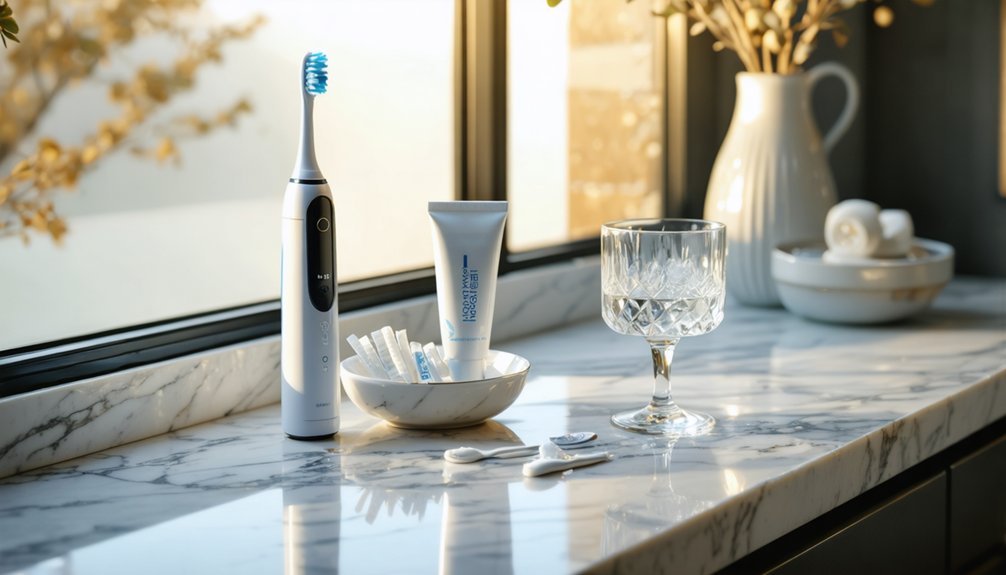
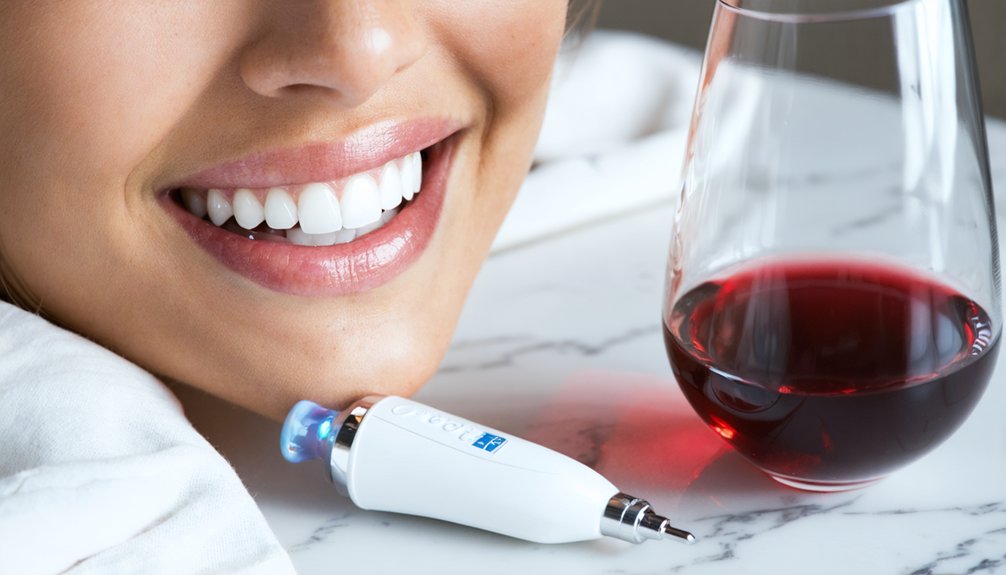
Maintaining your whitening results depends less on periodic intervention and more on consistent daily habits that limit stain accumulation before it compounds. Brush twice daily with ADA-approved whitening toothpaste, and switch to an electric toothbrush with a whitening mode for superior surface polishing. Floss daily to eliminate pigment-trapping plaque between teeth.
Prioritize oral hydration by sipping water throughout the day and between wine glasses to continuously flush staining agents from enamel surfaces. For enamel strengthening, chew xylitol gum after drinking and use fluoride mouthwash nightly to rebuild mineral density.
Limit dark beverage intake overall, and always wait 30 minutes before brushing after acidic exposure. These targeted, repeatable behaviors preserve your whitening investment far more effectively than reactive treatment alone.
Frequently Asked Questions
Can Red Wine Stains Affect Dental Veneers or Crowns Differently Than Enamel?
Yes, red wine affects veneers and crowns differently than enamel. You’ll notice veneer discoloration along margins, while crown staining susceptibility varies by material—porcelain resists pigments better, but composite restorations absorb tannins more readily.
Does Drinking Red Wine Through a Straw Actually Help Prevent Tooth Staining?
Yes, using a straw reduces red wine acidity’s contact with your teeth, minimizes enamel erosion, and limits pigment adhesion. You’re bypassing direct exposure, protecting enamel, and actively controlling staining risk with every sip.
Are Certain Red Wine Varieties Less Likely to Cause Tooth Staining?
Yes, lighter reds like Pinot Noir contain fewer tannins than Cabernet. The wine fermentation process and red wine antioxidants influence pigment concentration, so you’ll experience less staining by choosing lower-tannin varieties.
How Long Does Professional Whitening Treatment Typically Last After Wine Staining?
Professional whitening longevity typically lasts one to three years. You’ll maintain results longer by combining stain removal techniques with six-month cleanings, daily whitening toothpaste, and limiting red wine intake to prevent pigment re-accumulation on enamel.
Can Chewing Xylitol Gum After Wine Drinking Reduce Staining Effectively?
Yes, you can reduce staining effectively by chewing xylitol gum for 10–15 minutes post-wine. Xylitol benefits include restoring enamel strength, while gum effectiveness lies in clearing residual pigments and neutralizing acids promptly.
References
- https://crest.com/en-us/oral-care-tips/how-to-prevent-and-get-rid-of-red-wine-teeth-stains
- https://sportingsmiles.com/does-red-wine-stain-teeth/
- https://thepsdentalstudio.com/how-to-remove-coffee-and-wine-stains-from-teeth/
- https://www.mydentaloffice.com/natural-whitening-remedies-for-coffee-and-wine/
- https://www.trysnow.com/blogs/news/whitening-routine-for-daily-coffee-and-red-wine-drinkers
- https://smilepointdental.ca/teeth-whitening-for-wine-lovers/
- https://www.foreveryoungdentistry.com/blog/?p=108
- https://dental.drjamesd.com/teeth-whitening-options-for-wine-stains/