For professional wine stain removal, you’ll want to act within the first 30 seconds by blotting firmly and diluting with cold water. Products like Wine B’Gone Ultra, OxiClean Powder, and Shout Triple-Acting deliver reliable results when applied correctly. Fabric type matters too, since cotton, wool, and silk each require different treatment chemistry. Matching the right method to your specific situation is what separates a complete removal from a permanent stain.
Key Takeaways
- Act within 30 seconds by blotting firmly with a clean white cloth, then diluting with cold water to minimize stain penetration.
- Wine B’Gone Ultra and OxiClean Powder are highly effective commercial removers, with OxiClean targeting dried, set-in wine stains specifically.
- Shout Triple-Acting applied overnight works best for stubborn, set-in stains, while Shout Advanced Gel Brush offers precise application.
- Match treatments to fabric type: hydrogen peroxide with dish soap for cotton; vinegar solution for delicate wool and silk.
- Allow treatment mixtures to dwell 20–60 minutes, then blot with a white towel; never apply heat before confirming complete removal.
Act Fast: What to Do the Moment Wine Spills
When wine hits fabric, your first 30 seconds determine whether you’re dealing with a temporary inconvenience or a permanent stain. Your immediate response dictates the outcome.
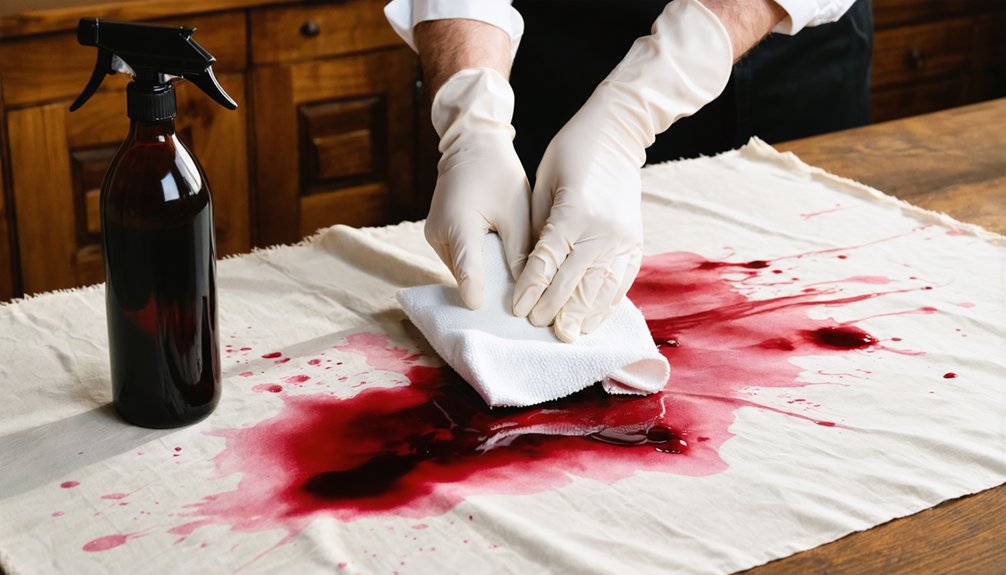
Don’t rub. Blot firmly with a clean white cloth, working inward from the stain’s edges to prevent spreading. Dilute immediately using cold water, then dab away the excess liquid.
Your essential tools at this stage are simple: table salt, club soda, and cold water. Apply salt directly to fresh spills on tablecloths to absorb moisture before treatment begins.
Club soda works as a reliable standby for breaking down fresh stains quickly.
Never apply heat. Avoid warm water, and keep the stained item away from dryers until the stain is completely eliminated.
Why Red Wine Stains Are So Hard to Lift
Red wine contains tannins, anthocyanins, and chromogens that bond aggressively to fabric fibers on contact, making the stain chemically resistant from the start.
Once absorbed, the pigment molecules penetrate deep into individual fibers, spreading beyond the visible surface of the stain.
If you don’t act quickly, oxidation sets the stain further, breaking down the wine’s compounds into increasingly stable bonds that resist standard cleaning agents.
Wine’s Complex Chemical Composition
Because red wine contains a complex cocktail of chromogens, tannins, and anthocyanins, it bonds to fabric fibers at a molecular level, making it one of the most stubborn stains you’ll encounter.
Understanding stain chemistry gives you a decisive advantage. Anthocyanins carry a natural charge that attracts them to polar fiber surfaces, while tannins cross-link with proteins, deepening penetration.
These chemical interactions accelerate once heat or air exposure sets the stain permanently into the fabric matrix.
You’re fundamentally fighting a dye process. The longer red wine sits, the more completely it mimics intentional fabric coloring.
Chromogens oxidize rapidly upon air contact, shifting from removable pigments to fixed compounds. Acting fast, before oxidation completes, remains your single most critical variable in successful removal.
Deep Fabric Fiber Penetration
That molecular bonding doesn’t just sit on the surface — it actively pulls wine deeper into fabric structure. Every second you delay stain treatment, fiber absorption accelerates.
Here’s what’s happening beneath the surface:
- Chromogens bind to protein fibers within seconds of contact.
- Tannins cross-link with fabric polymers, anchoring the stain structurally.
- Capillary action draws liquid deeper through each fiber layer.
- Heat or friction permanently sets those chemical bonds.
You’re fundamentally racing against chemistry.
Cotton, linen, and wool fibers are porous — they don’t resist wine, they invite it inward. Understanding this process isn’t academic; it’s tactical.
Recognizing how deeply fiber absorption occurs tells you exactly why fast, precise stain treatment determines whether you win or lose this fight.
Stain Sets With Time
Once wine contacts fabric, a chemical countdown begins that compounds with every passing minute. Red wine’s chromogens—natural pigment compounds—bond progressively deeper into fiber structures as time passes.
Tannins accelerate this binding, creating increasingly resistant molecular attachments that standard cleaning can’t reverse.
You’re fighting a narrowing window. Within minutes, chromogens migrate past surface fibers into the substrate.
Within hours, oxidation locks those pigments permanently into the fabric matrix—producing long term effects that even professional-grade treatments struggle to reverse.
Your stain prevention strategies must prioritize speed: act within the first two minutes for maximum removal success.
Every delay allows further polymerization of anthocyanin pigments—wine’s primary colorants.
Once fully oxidized and set, you’re no longer removing a stain; you’re attempting to chemically undo a permanent dye process.
The Best Commercial Wine Stain Removers
When tackling wine stains, commercial removers often outperform household remedies in both speed and reliability.
Cleaning professionals consistently rely on targeted formulations that deliver measurable results. Here are four products worth having in your arsenal:
- Wine B’Gone Ultra – Fast-acting on wine, coffee, and fruit stains; trusted by cleaning professionals worldwide.
- Shout Advanced Ultra Concentrated Gel Brush – Precision applicator targets tough wine stains directly on fabric fibers.
- Shout Triple-Acting – Engineered for set-in stains; apply overnight for maximum penetration.
- OxiClean Powder – Sodium percarbonate formula breaks down dried wine stains effectively across multiple fabric types.
You’ll want these wine stain removers accessible immediately after a spill occurs.
Delayed application reduces product effectiveness, costing you the outcome you need.
Which Fabric You Have Changes Everything
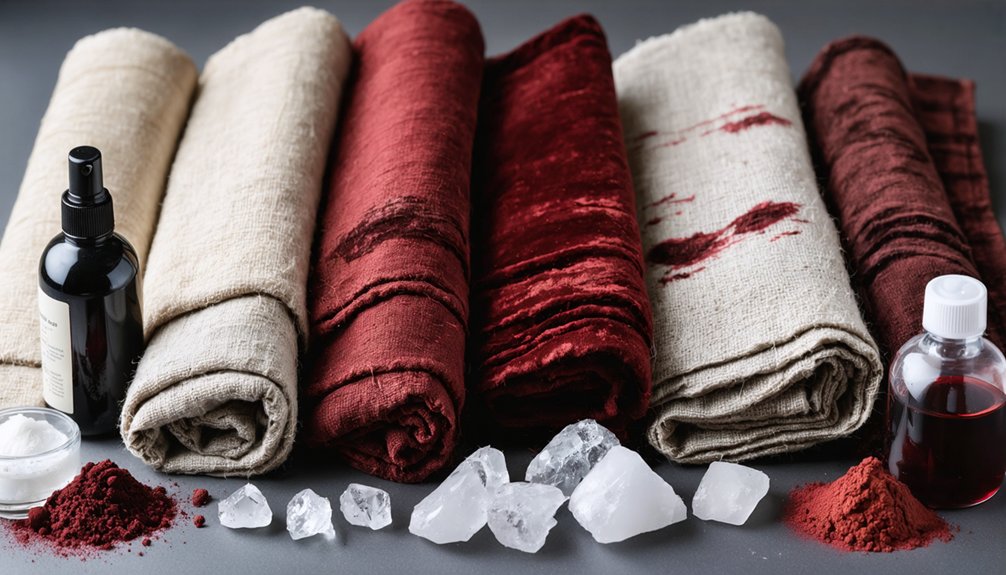
Not every fabric responds to wine stain treatment the same way, and applying the wrong method can permanently damage the material or set the stain deeper.
Knowing your fabric types before you act is non-negotiable.
For cotton and linen, use equal parts hydrogen peroxide and dish soap directly on the stain.
These plant-based fabrics tolerate oxidizing agents well.
For wool and silk, switch to a gentler mixture of white vinegar, dish soap, and cold water—never use hydrogen peroxide on delicate fibers.
For upholstery, deploy a handheld upholstery machine on stubborn spots.
For bleachable garments, apply bleach only after pretreatment fails.
Always avoid heat during stain treatment.
A dryer permanently sets wine into any fabric type before you’ve finished the job.
Hydrogen Peroxide and Dish Soap for Stubborn Stains
For stubborn wine stains, mix hydrogen peroxide and dish soap at a 3-to-1 ratio. Apply directly to the stain, and let it sit for 20 to 60 minutes before blotting.
If you’re working with a 2-to-1 ratio instead, the shorter dwell time of 15 minutes still lifts color effectively when you flush the area thoroughly afterward.
Restrict hydrogen peroxide solutions to plant-based fabrics like cotton and linen, since synthetic or protein-based fibers such as wool and silk require a gentler approach to avoid damage.
Mixing Ratios For Effectiveness
Getting the mixing ratio right makes all the difference when you’re tackling stubborn wine stains with hydrogen peroxide and dish soap. These ideal combinations give you precise control over stain removal outcomes.
Proven Mixing Ratios:
- 2:1 ratio — Two parts hydrogen peroxide to one part dish soap; blot directly onto the stain immediately.
- 3:1 ratio — Three parts hydrogen peroxide to one part dish soap; let it sit 20–60 minutes before blotting.
- 1:1 ratio — Equal parts work best on plant-based fabrics like cotton and linen.
- Straight hydrogen peroxide — Apply undiluted for 15 minutes on persistent marks, then flush thoroughly.
Selecting the wrong mixing ratios wastes time and risks fabric damage. Match the ratio to your fabric type and stain severity.
Application And Dwell Time
Once you’ve mixed your solution, applying it correctly determines whether the stain lifts cleanly or lingers. Pour your hydrogen peroxide and dish soap mixture directly onto the stain, saturating the fibers completely.
Use a clean cloth to blot—never rub—working from the outer edge inward to prevent spreading.
Application techniques matter: pressing firmly allows the solution to penetrate deeper into the fabric structure. Let the mixture sit undisturbed for 20 to 60 minutes, depending on stain severity. This dwell time activates the hydrogen peroxide’s oxidizing properties, breaking down the wine’s chromogens at a molecular level.
After the dwell period, blot with a white towel to extract the loosened pigment. Avoid heat exposure until you’ve confirmed complete removal—heat permanently sets residual staining.
Fabric Compatibility Considerations
Hydrogen peroxide’s oxidizing power works effectively on plant-based fabrics like cotton and linen, but it can degrade protein-based fibers. Matching treatment methods to fabric types prevents irreversible damage.
Follow this protocol precisely:
- Cotton/Linen – Apply equal parts hydrogen peroxide and dish soap directly; these fabrics tolerate oxidization without fiber breakdown.
- Wool/Silk – Never use hydrogen peroxide; substitute white vinegar, dish soap, and cold water to protect protein-based structures.
- Synthetics – Test hydrogen peroxide on a hidden area first; some blends react unpredictably to oxidizing agents.
- Upholstery – Confirm fabric coding (W, S, W/S) before applying any solution; wrong treatment methods permanently set stains.
You control the outcome by respecting each fabric’s chemistry.
How to Remove Dried Wine Stains With Oxiclean
Dried wine stains require a more aggressive approach than fresh spills, and OxiClean’s sodium percarbonate formula delivers the oxidizing power needed to break down set-in pigments.
OxiClean effectiveness stems from its release of hydrogen peroxide upon contact with water, directly targeting discoloration at the molecular level.
Apply these stain removal techniques precisely: mix OxiClean powder with water to form a thick paste, then dab it sparingly onto the stained area.
Let it sit for 20 minutes to one hour — don’t rush this dwell time. Blot with a clean white towel rather than rubbing, which spreads pigment further.
Rinse thoroughly and repeat if necessary. Never let the product dry completely on the fabric.
Mistakes That Set Wine Stains for Good
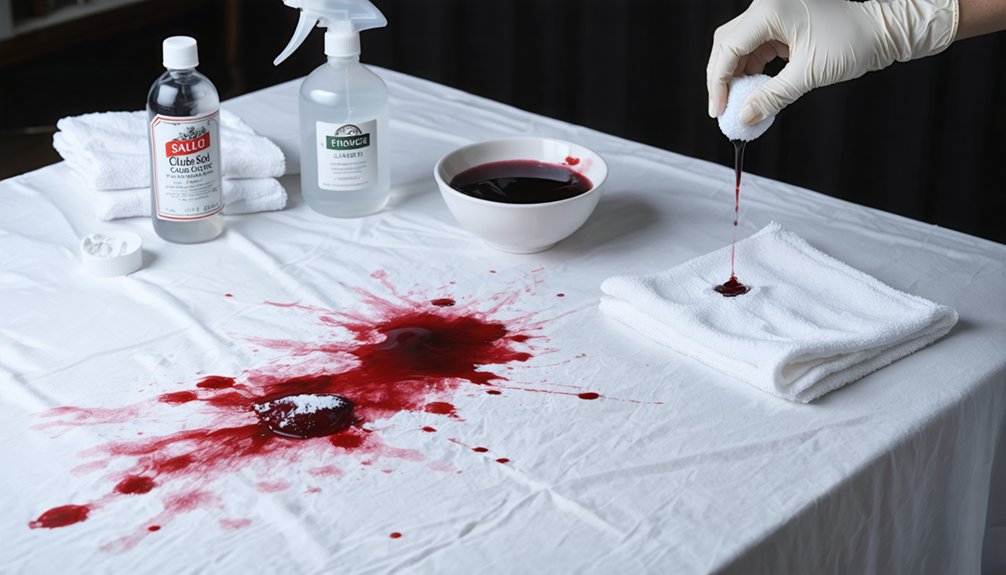
Certain instinctive reactions to a wine spill actually lock the stain in permanently, so knowing what not to do matters as much as knowing the right technique.
These stain prevention failures permanently compromise even professional cleaning techniques.
Avoid these four critical mistakes:
- Rubbing the stain — friction drives wine deeper into fabric fibers, bonding it structurally.
- Applying heat — machine drying or hot water before full removal chemically sets the pigment permanently.
- Using chlorine bleach on colored fabrics — destroys fibers while leaving discoloration behind.
- Delaying treatment — wine oxidizes rapidly; every minute without cold water dilution reduces recovery odds considerably.
You control the outcome only when you act deliberately, coldly, and immediately.
Hesitation or wrong instincts eliminate your options entirely.
Frequently Asked Questions
Can White Vinegar Remove Wine Stains From Wool or Silk Fabrics?
Yes, you can use white vinegar on wool or silk. Mix it with dish soap and cold water, alternating applications to maximize vinegar effectiveness while ensuring fabric compatibility with these delicate, protein-based fibers.
Is Denatured Alcohol Safe to Use on Wine-Stained Clothing?
Over 60% of fabric damage stems from improper solvents. You’ll want to test denatured alcohol’s fabric compatibility on a hidden area first—it’s effective post-rinse, but denatured alcohol precautions demand you avoid delicate fibers entirely.
Does Table Salt Really Absorb Fresh Wine Spills on Tablecloths?
Yes, table salt’s effectiveness is real—you’ll want to pour it generously onto fresh spills immediately. It absorbs wine before it sets, giving you control over tablecloth care until you’re ready for full treatment.
Can Enzyme Detergents Like Persil Remove Persistent Wine Fabric Stains?
Yes, you can rely on Persil’s enzyme effectiveness for persistent wine stains. Apply it directly, let it penetrate the fibers, and activate the enzymatic stain removal process before laundering for controlled, thorough results.
Should You Use a Handheld Upholstery Machine for Stubborn Wine Stains?
Like a surgeon’s scalpel, precision matters—you should use handheld machines for stubborn wine stains on upholstery care surfaces. They’ll agitate treatment solutions deeply into fibers, extracting residue effectively where manual blotting simply can’t reach.
References
- https://learn.wineenthusiast.com/home/how-to-remove-red-wine-stains-an-expert-guide
- https://www.apartmenttherapy.com/martha-stewart-red-wine-stain-removal-36686633
- https://shoutitout.com/en-us/stain-guides/wine
- https://www.lacrema.com/remove-red-wine-stains.html
- http://eastcoastwinegeeks.com/wine-101-how-to-remove-wine-stains