DIY whitening methods work because they target the chemical and physical properties of extrinsic stains sitting on or near your enamel’s surface. Mild abrasives like baking soda mechanically scrub away surface deposits, while hydrogen peroxide oxidizes discolored organic molecules through a bleaching reaction. Natural acids can lift superficial staining but carry erosion risks. These methods won’t penetrate intrinsic stains deep in your dentin—understanding which stain type you have determines everything about your results.
Key Takeaways
- DIY whitening methods primarily work on extrinsic stains caused by coffee, tea, and red wine, which are surface-level and easier to treat.
- Baking soda acts as a mild abrasive, physically scrubbing surface stains while neutralizing acid-based discoloration on enamel.
- Hydrogen peroxide penetrates enamel and oxidizes discolored organic molecules, effectively bleaching stains from within the tooth surface.
- Mechanical actions like chewing raw vegetables or using whitening toothpaste gradually polish and lighten stains through consistent physical abrasion.
- DIY methods are ineffective against intrinsic stains from aging or trauma, which penetrate deeper into dentin and require professional treatment.
What Makes Tooth Stains Respond to Home Whitening?
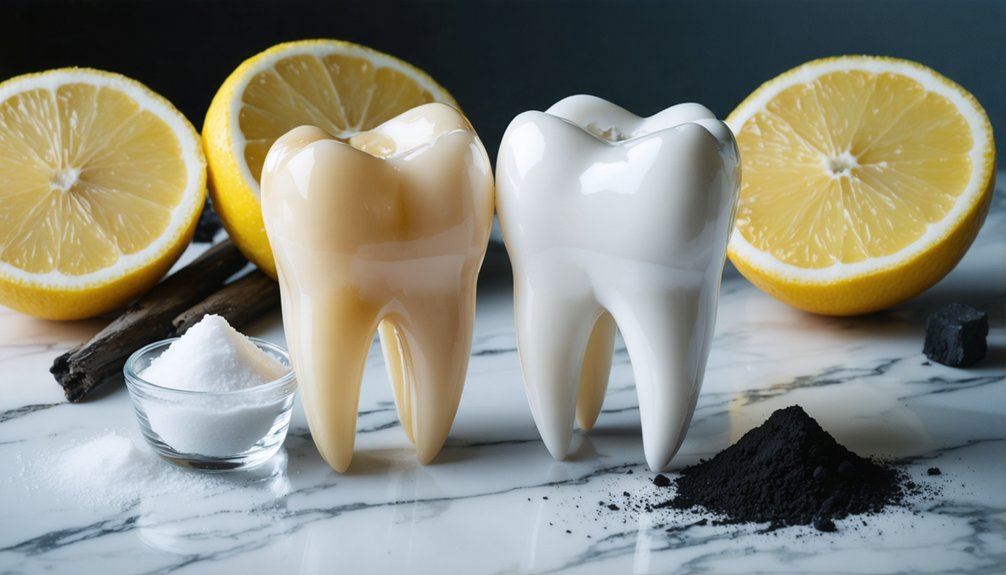
Tooth stains fall into two distinct categories—extrinsic and intrinsic—and understanding this difference determines which home whitening methods will actually work for you.
Extrinsic stains sit on your enamel’s surface, caused by coffee, tea, and red wine. Their stain composition responds well to mild abrasives and alkaline agents like baking soda, or bleaching agents like hydrogen peroxide.
Surface stains from coffee, tea, and wine respond well to baking soda or hydrogen peroxide treatments.
Intrinsic stains, however, penetrate deeper into dentin, making DIY solutions largely ineffective against them.
Your whitening frequency matters greatly here. Overusing acidic or abrasive agents damages enamel, exposing you to greater sensitivity and long-term erosion.
You’ll get measurable results only when you match the method to the stain type—applying the right agent at controlled intervals. Knowing your stain composition first gives you real control over your outcomes.
Which Tooth Stains Will Actually Respond to DIY Whitening?
Your teeth’s response to DIY whitening depends largely on whether your stains are extrinsic or intrinsic.
Surface stains from coffee, tea, and red wine respond well to abrasive and alkaline agents like baking soda, while acidic solutions can lift minor discoloration from enamel.
Deep or intrinsic stains—caused by aging, trauma, or certain medications—won’t respond to home methods and typically require professional intervention.
Surface Stain Responsiveness
Not all tooth stains respond equally to DIY whitening methods, and understanding the distinction between extrinsic and intrinsic discoloration helps you set realistic expectations.
Extrinsic stain types, caused by coffee, tea, and wine, sit on enamel surfaces where whitening ingredients can reach them effectively.
Three surface stain types that respond best to DIY treatment:
- Food and beverage stains — baking soda’s mild abrasion lifts acid-based deposits directly from enamel.
- Tobacco residue — hydrogen peroxide penetrates surface layers, breaking down oxidized compounds.
- Plaque-related discoloration — mechanical methods like whitening toothpaste and raw vegetables physically remove buildup.
Intrinsic stains embedded within dentin don’t respond to these approaches.
You’ll achieve measurable results only when targeting extrinsic discoloration with consistent, correctly applied whitening ingredients.
Deep Stain Limitations
While surface stains yield to DIY whitening ingredients, deep or intrinsic discoloration embedded within dentin sits beyond the reach of baking soda, hydrogen peroxide, or any abrasive agent you’ll find in a home remedy.
Stains from tetracycline, fluorosis, or trauma originate beneath enamel, where topical agents simply can’t penetrate effectively.
Deep stain prevention requires addressing causative factors early — limiting staining agents and maintaining consistent oral hygiene before discoloration advances structurally.
Once intrinsic staining sets in, professional whitening becomes your only reliable option. Dentist-administered treatments use higher-concentration peroxide formulations with controlled application, reaching layers that over-the-counter products can’t access.
Continuing DIY methods on deep stains risks enamel damage without producing meaningful results.
Recognizing this boundary lets you make informed, evidence-based decisions about your whitening approach.
The Science Behind Baking Soda’s Teeth-Whitening Power
When you brush with baking soda, its mildly abrasive particles mechanically scrub surface stains from your enamel without causing significant damage.
Its alkaline chemistry also neutralizes and lifts acid-based stains from coffee, tea, and red wine.
Research published in the *Journal of the American Dental Association* confirms baking soda’s efficacy as a stain-removal agent, making it a clinically supported option for addressing extrinsic discoloration.
Mild Abrasive Stain Removal
Baking soda works through two distinct mechanisms to reduce tooth discoloration. As an abrasive material, it physically polishes your enamel surface, targeting specific stain types effectively:
- Surface stains from coffee, tea, and tobacco respond directly to baking soda’s micro-abrasive particles.
- Acid-based stains from wine and citrus dissolve under baking soda’s alkaline chemistry.
- Plaque accumulation loosens and lifts when you brush consistently with a baking soda paste.
You’ll achieve ideal results by combining equal parts baking soda and water, brushing for two minutes.
The Journal of the American Dental Association confirms its stain removal efficacy. However, baking soda lacks fluoride, so you shouldn’t use it as your sole toothpaste—rotate it strategically within your oral care routine.
Alkaline Properties Lighten Stains
The alkaline chemistry of baking soda—sodium bicarbonate—directly neutralizes acidic compounds responsible for staining your enamel.
Understanding stain chemistry helps you target discoloration strategically. Coffee, tea, and red wine leave acid-based chromogens that bond to enamel surfaces.
Baking soda’s alkaline benefits counter these acidic stains by raising the pH environment in your mouth, disrupting the chemical bonds that lock discoloration in place.
When you apply a paste of equal parts baking soda and water, you’re actively altering the mouth’s chemistry rather than simply scrubbing stains away.
This dual mechanism—chemical neutralization plus mild abrasion—makes baking soda particularly effective against acid-driven surface stains.
Research published in the *Journal of the American Dental Association* confirms its stain removal efficacy, validating its role in evidence-based whitening protocols.
How Does Hydrogen Peroxide Bleach Teeth From the Inside Out?
Hydrogen peroxide works as a bleaching agent by penetrating the enamel and reaching the dentin layer beneath, where it oxidizes discolored organic molecules responsible for deep staining. This enamel penetration process distinguishes hydrogen peroxide from surface-only methods.
To use it effectively, you’ll want to follow these protocols:
- Apply low-concentration gels (3–10%) using custom-fitted trays for controlled, even exposure.
- Limit application sessions to prevent unnecessary enamel wear and gum irritation.
- Combine hydrogen peroxide with baking soda to create a fizzing paste that enhances mild whitening.
Unlike acidic or abrasive alternatives, hydrogen peroxide targets intrinsic staining chemically rather than mechanically.
Unlike harsh scrubs or acidic rinses, hydrogen peroxide dissolves deep stains chemically—targeting discoloration at its source.
You’re addressing discoloration at its source, not just polishing the surface—making it one of the more clinically validated home whitening options available.
Natural Acids That Lift Surface Stains From Teeth
While hydrogen peroxide targets stains chemically from within, natural acids like citric acid and acetic acid work exclusively on the tooth’s surface.
Lemon juice delivers citric acid alongside salt’s abrasive action, breaking down surface discoloration effectively. Apple cider vinegar’s acetic acid works similarly as a diluted rinse, dissolving stain compounds without penetrating enamel. Orange peel contributes both vitamin C and citric acid for surface stain removal.
However, you must understand the trade-off: these natural acids risk enamel erosion with repeated use. Thorough rinsing after each application is non-negotiable.
Natural acids achieve meaningful stain removal only for superficial discoloration—they won’t address deep or intrinsic staining. Used judiciously and infrequently, they’re practical tools within a controlled, evidence-informed whitening approach.
Does Oil Pulling Really Whiten Stained Teeth?
Oil pulling involves swishing coconut or olive oil in your mouth for 10–15 minutes daily to reduce plaque and surface discoloration.
While proponents claim it whitens teeth, no clinical studies currently confirm coconut oil alone produces measurable whitening effects, though combining it with baking soda may enhance results.
You should recognize it as a low-risk supplementary practice for minor stains rather than a reliable standalone whitening treatment.
Oil Pulling Basics
Among traditional dental hygiene practices, oil pulling has gained modern attention as a potential tooth-whitening remedy. This ancient oral hygiene technique involves swishing oil around your mouth to reduce bacterial buildup and surface discoloration. Coconut benefits include antimicrobial properties that support overall oral health.
Here’s what you need to know about natural remedies like oil pulling:
- Swish coconut oil for 10–15 minutes daily to target minor surface stains gradually.
- No clinical studies confirm direct whitening effects from oil pulling alone.
- Combining oil pulling with baking soda may enhance stain removal results.
You’re managing a subtle, complementary practice rather than a primary whitening solution. Consistent application yields modest improvements, making it most effective for minor discoloration alongside proven oral hygiene strategies.
Stain Removal Potential
Although oil pulling has deep roots in traditional medicine, you’ll find the scientific evidence for its tooth-whitening claims remarkably thin. No peer-reviewed studies confirm that coconut or olive oil directly lifts stains from enamel. Its primary benefit remains bacterial reduction, not whitening.
For stain persistence caused by coffee, tea, or wine, oil pulling alone won’t meet your whitening expectations. The mechanism simply lacks the chemical potency to break down chromogens embedded in enamel.
Adding baking soda to your coconut oil may improve surface-level results marginally, but effects remain subtle. You should approach oil pulling as a supplementary oral hygiene practice rather than a primary whitening strategy.
For visible stain reduction, combining it with evidence-backed methods like baking soda or hydrogen peroxide delivers more measurable outcomes.
Risks And Limitations
When considering oil pulling as a whitening method, you must weigh its limitations carefully against the risks of neglecting more effective treatments. No clinical evidence confirms coconut oil whitens teeth independently, making it unreliable for controlling visible staining outcomes.
Key risks you should recognize include:
- Enamel erosion accelerates when acidic agents combine with abrasive techniques during the same routine.
- Sensitivity concerns intensify if oil pulling replaces proven fluoride-based care, weakening enamel protection.
- Delayed treatment allows intrinsic stains to deepen, reducing responsiveness to professional intervention later.
Oil pulling may support bacterial reduction, but its whitening capacity remains anecdotal.
You’ll achieve more predictable results by reserving it as a supplementary practice rather than treating it as a primary whitening strategy.
Can Scrubbing With the Right Foods and Pastes Whiten Teeth?
What you eat and how you brush can work together to physically lift surface stains from your teeth. Scrubbing techniques using the right pastes and food abrasives deliver mechanical action that polishing agents alone can’t always match.
Raw vegetables like carrots, celery, and broccoli act as natural scrubbers, removing plaque and surface buildup as you chew.
Whitening toothpastes with polishing agents gradually lighten stains through consistent, soft-bristled brushing. Aloe vera gel containing glycerin offers another targeted option for mild surface stain removal.
These methods work best on extrinsic stains caused by food and beverages. They won’t correct intrinsic discoloration.
Used consistently and correctly, mechanical abrasion methods give you measurable, affordable control over minor staining without requiring professional intervention.
How to Choose the Right DIY Whitening Method for Your Teeth
Choosing the right DIY whitening method depends on the type and severity of your staining. Home remedy effectiveness varies greatly, so matching the method to your condition maximizes results.
- Surface stains from coffee or tea: Use baking soda paste or hydrogen peroxide combinations, which target acid-based discoloration efficiently.
- Minor plaque buildup: Mechanical abrasion through whitening toothpaste or raw vegetables removes debris without chemical exposure.
- Gradual discoloration: Oil pulling with coconut oil offers subtle, consistent improvement for mild cases.
Personalized whitening options require honest assessment of your enamel sensitivity and stain depth.
If you’ve experienced gum irritation or enamel wear, avoid acidic agents like lemon juice or apple cider vinegar.
For intrinsic staining, consult a dental professional, as DIY methods won’t penetrate below enamel effectively.
How Often Can You Safely Use DIY Whitening Methods?
Once you’ve matched a whitening method to your stain type, frequency of use becomes the next variable that determines both safety and effectiveness.
Baking soda paste is safe frequency-wise at two to three times weekly; daily use risks enamel wear due to its abrasive nature.
Hydrogen peroxide treatments should be limited to once or twice weekly to prevent sensitivity and gum irritation.
Oil pulling tolerates daily use without significant risk, though results remain subtle.
Acidic agents like lemon juice or apple cider vinegar should appear in your whitening routine no more than once weekly, given their erosive potential.
Overuse of any method accelerates enamel degradation rather than improving outcomes.
Structured intervals, not aggressive repetition, protect enamel integrity while producing measurable, controlled whitening progress.
When DIY Whitening Isn’t Enough for Stained Teeth
Even with consistent application and proper technique, DIY whitening methods carry a hard ceiling on what they can realistically achieve. Home remedies address surface and acid-based stains, but their whitening effectiveness stops at intrinsic discoloration. You’re not going to reverse deep staining through abrasion or mild bleaching alone.
Recognize when professional intervention is necessary:
- Intrinsic stains from tetracycline, fluorosis, or trauma require clinical-grade treatment.
- Enamel erosion or root exposure makes DIY agents harmful rather than helpful.
- No measurable improvement after 4–6 weeks signals a need for professional evaluation.
Pushing harder with home remedies won’t accelerate results—it’ll accelerate damage. At that point, a dentist-supervised approach isn’t optional; it’s the only evidence-supported path forward.
Frequently Asked Questions
Can DIY Whitening Methods Affect Dental Fillings or Crowns?
DIY whitening methods won’t change your filling durability or whiten crowns, as these materials don’t respond to bleaching agents. You may notice crown sensitivity with peroxide-based treatments, so consult your dentist before proceeding.
Do Genetics Influence How Well Teeth Respond to Whitening?
Yes, genetic factors influence your whitening results. Your enamel composition, inherited genetically, determines thickness and porosity, affecting how well whitening agents penetrate. You’ll achieve better outcomes understanding your unique dental biology before attempting DIY treatments.
Is Teeth Whitening Safe During Pregnancy or Breastfeeding?
You shouldn’t use whitening ingredients during pregnancy or while breastfeeding. Pregnancy safety and breastfeeding considerations demand caution, as absorption risks remain unstudied. Prioritize your dental health by consulting your dentist before pursuing any whitening treatments.
Can Children or Teenagers Safely Use DIY Whitening Methods?
Like pruning a young tree risks permanent damage, DIY whitening harms developing enamel. You shouldn’t use these methods due to age considerations and sensitivity concerns — professional supervision’s essential for children and teenagers.
Does Drinking Water After Whitening Treatments Improve Their Effectiveness?
Drinking water after whitening treatments doesn’t directly boost whitening timing results, but it’s beneficial. You’ll rinse away residue, support hydration benefits for gum health, and reduce acid exposure, minimizing enamel erosion risks from DIY methods.
References
- https://pinnaclepeakdentist.com/effective-solutions-for-brightening-a-single-stained-tooth/
- https://www.norcofamilydental.com/blog/homemade-teeth-whitening-hacks-work/50924
- https://www.urmc.rochester.edu/news/publications/health-matters/diy-teeth-whitening-too-good-to-be-true
- https://kesslerdental.net/blog/ways-to-whiten-teeth-naturally-at-home/
- https://www.armandhammer.com/en/articles/how-to-whiten-teeth-with-baking-soda
- https://www.aarp.org/health/conditions-treatments/teeth-whitening/
- https://mypenndentist.org/dental-tips/2024/02/29/safe-ways-to-whiten-teeth-naturally/
- https://pmc.ncbi.nlm.nih.gov/articles/PMC10024105/
- https://www.youtube.com/watch?v=Wd-5CZQEeCE