To reduce sensitivity from yellow teeth whitening strips, choose formulas with lower hydrogen peroxide concentrations (10–15%) and look for products containing potassium nitrate, which is clinically supported for calming nerve irritation. Start using a desensitizing toothpaste one to two weeks before treatment and avoid acidic or temperature-extreme foods during whitening. Sensitivity typically resolves within one to two days. The strategies, product comparisons, and preparation techniques covered ahead can help you whiten more comfortably.
Key Takeaways
- Choose whitening strips with lower hydrogen peroxide concentrations (10–15%) to minimize sensitivity while still effectively whitening yellow teeth.
- Look for strips containing potassium nitrate, a clinically supported ingredient that reduces nerve sensitivity during whitening.
- Use a desensitizing or fluoride toothpaste for 1–2 weeks before starting your whitening treatment.
- Apply strips carefully to avoid gum contact, and follow recommended wear times to prevent unnecessary irritation.
- Avoid cold, hot, and acidic foods during treatment, as dehydrated enamel increases reactivity to these triggers.
Why Yellow Teeth Whitening Strips Cause Tooth Sensitivity
Whitening strips work by delivering peroxide-based agents — typically hydrogen peroxide or carbamide peroxide — directly to the tooth surface, and it’s this chemical action that drives sensitivity. Peroxide penetrates enamel and temporarily irritates the pulp, triggering mild pain, tingling, or zapping sensations.
Peroxide penetrates enamel, irritates the pulp, and triggers the tingling or zapping sensations you feel during whitening.
Teeth also dehydrate during treatment, making them more reactive to triggers common in your dietary habits — hot foods, cold drinks, acidic or sweet items. When gel migrates onto gum tissue, redness and soft-tissue irritation follow.
Higher peroxide concentrations and longer wear times amplify these effects. Your oral hygiene practices matter too — aggressive brushing after treatment worsens mechanical irritation on already-sensitized enamel.
Understanding these mechanisms lets you make precise adjustments to your whitening routine before discomfort becomes a barrier to treatment.
How Long Whitening Strip Sensitivity Lasts and What to Expect
Once you understand why sensitivity develops, the next practical question is how long it actually lasts. For most people, discomfort resolves within one to two days after finishing a whitening session.
You’ll typically notice tingling, mild aching, or sharp responses to cold and heat during that window.
Managing this period is straightforward with targeted home remedies and diet adjustments. Avoid triggering foods—cold drinks, acidic items, and hot foods—until sensitivity subsides.
Use a potassium nitrate-based sensitive toothpaste to calm nerve response during recovery.
If sensitivity extends beyond two days or intensifies rather than fades, that pattern falls outside normal expectations and warrants a dental evaluation.
Persistent or severe pain isn’t typical and may signal something beyond standard post-whitening irritation requiring professional assessment.
Which Whitening Strips Are Least Likely to Cause Sensitivity
If you’re prone to sensitivity, choosing strips with a lower hydrogen peroxide concentration meaningfully reduces your risk of discomfort.
Some formulations also incorporate desensitizing agents like potassium nitrate, and research supports that a 3% hydrogen peroxide strip combined with 1.5% potassium nitrate can reduce dentin hypersensitivity without compromising whitening results.
Looking for strips marketed specifically for sensitive teeth is a practical starting point, as these products typically combine reduced peroxide levels with added protective ingredients.
Lower Peroxide Concentration Strips
Choosing strips with lower peroxide concentrations is one of the most straightforward ways to reduce whitening-related sensitivity. Higher peroxide levels accelerate enamel dehydration and pulp irritation, so selecting a 10–15% carbamide peroxide or low-percentage hydrogen peroxide formula gives you meaningful control over your risk.
You’ll progress more gradually, but you reduce the likelihood of sharp, triggered discomfort from dietary triggers like cold drinks or acidic foods. Maintaining consistent oral hygiene with a desensitizing toothpaste before and during treatment further supports your tolerance.
Strips labeled for sensitive teeth often contain reduced peroxide concentrations or added potassium nitrate, which clinical evidence supports for lowering dentin hypersensitivity without sacrificing whitening outcomes. Reviewing the active ingredient percentage before purchasing lets you make a precise, informed decision.
Added Desensitizing Ingredients
Beyond concentration alone, the specific ingredients manufacturers add to whitening strips play a significant role in how your teeth and gums respond during treatment. Potassium nitrate is the most clinically supported desensitizing additive; a randomized controlled trial confirmed that strips combining 3% hydrogen peroxide with 1.5% potassium nitrate reduced dentin hypersensitivity without compromising whitening outcomes.
Fluoride is another common additive that reinforces enamel during peroxide exposure. When evaluating your options, prioritize strips that list these compounds explicitly.
While alternative natural remedies like aloe vera appear in some formulations, their clinical evidence remains limited compared to potassium nitrate. Pairing desensitizing strips with lifestyle habits such as using sensitive-formula toothpaste before treatment gives you measurable, evidence-backed control over your whitening experience.
How to Prepare Sensitive Teeth Before Using Whitening Strips
Preparing sensitive teeth before whitening can meaningfully reduce discomfort and lower your risk of side effects. Start using a desensitizing or fluoride toothpaste at least one to two weeks before your first session. This strengthens enamel and calms nerve activity within the dentin.
Review your dietary habits during this preparation phase — acidic foods and beverages temporarily weaken enamel, increasing vulnerability to peroxide irritation. Prioritize oral hydration, since well-hydrated oral tissues respond less aggressively to whitening agents.
Avoid whitening if active sensitivity is already present; address the underlying cause with your dentist first. A soft-bristled toothbrush reduces pre-existing mechanical irritation before treatment begins.
These preparatory steps give you measurable control over your whitening experience before the first strip is ever applied.
How to Use Whitening Strips Without Making Sensitivity Worse
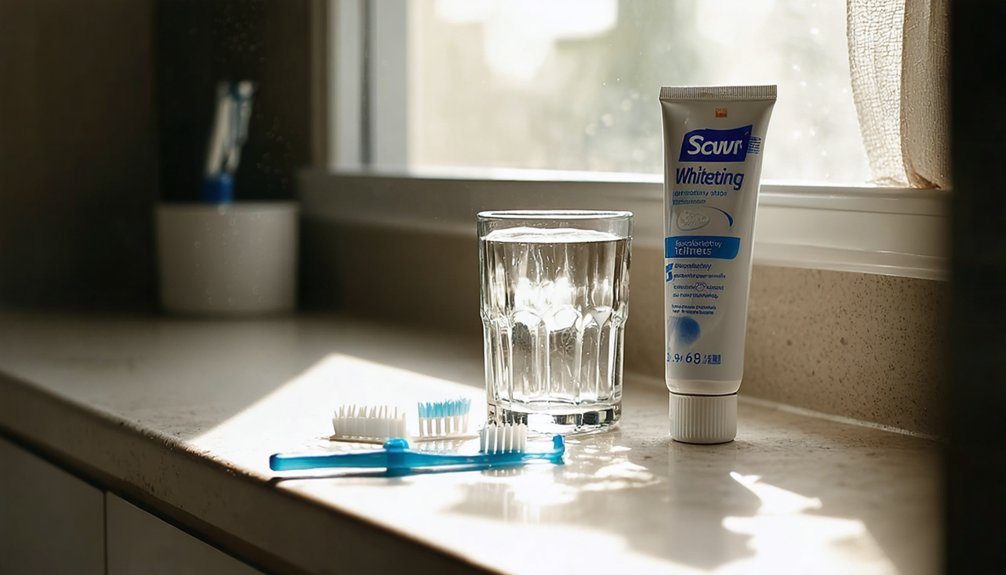
Once you begin a whitening session, how you apply the strips matters as much as which product you choose. Ignoring application technique is one of the most persistent whitening myths that leads to avoidable sensitivity.
Apply strips precisely and manage exposure with these evidence-based steps:
- Align strips to teeth only, avoiding direct gum contact
- Follow manufacturer wear-time instructions without extending sessions
- Use strips every other day if sensitivity develops between sessions
- Pause treatment when discomfort becomes noticeable rather than pushing through
- Make diet modifications by avoiding cold, acidic, and sweet foods for several hours post-treatment
Controlling these variables reduces peroxide-related pulp irritation and gingival exposure. You’re not sacrificing results—you’re protecting tissue while maintaining whitening effectiveness through disciplined, precise application habits.
When Whitening Strip Sensitivity Requires a Dentist
Most sensitivity from whitening strips resolves within one to two days, but certain symptoms signal that self-managed care is no longer appropriate. If you experience persistent gum burning, peeling tissue, chemical-burn-like irritation, or severe tooth pain that extends beyond a few days, stop treatment and contact a dentist promptly.
A dental evaluation lets you identify underlying issues, such as compromised enamel or existing pulp sensitivity, that make standard strips unsuitable. Your dentist can also discuss cost considerations tied to professionally supervised whitening and recommend alternative whitening methods calibrated to your sensitivity threshold.
Supervised options often use lower concentrations with controlled application, reducing adverse effects while maintaining efficacy. Acting on warning signs early prevents minor irritation from becoming a more complex and costly problem to manage.
Frequently Asked Questions
Can I Use Whitening Strips if I Already Have Dental Crowns?
You can use whitening strips with crowns, but they won’t whiten artificial surfaces. Dental crown compatibility is limited, so explore whitening strip options carefully and consult your dentist to manage uneven color results effectively.
Does Drinking Water During Whitening Sessions Reduce Sensitivity or Irritation?
Over 60% of whitening users report sensitivity. Drinking water doesn’t directly offer hydration benefits or sensitivity prevention during sessions, but you can rinse afterward to remove residual gel, reducing gum irritation effectively.
Are Whitening Strips Safe to Use While Pregnant or Breastfeeding?
You should avoid whitening strips during pregnancy and breastfeeding. Pregnancy safety concerns exist because peroxide absorption risks aren’t fully studied. Breastfeeding considerations similarly warrant caution. Consult your dentist before resuming any whitening treatment postpartum.
Can Sensitivity Toothpaste Be Applied Directly Onto Whitening Strips?
You can apply sensitivity toothpaste directly onto whitening strips for sensitivity management, though evidence remains limited. Toothpaste application before or after use typically offers stronger, more reliable desensitizing benefits by delivering potassium nitrate or fluoride effectively to exposed dentin.
Do Whitening Strips Cause More Sensitivity Than Professional In-Office Treatments?
Coincidentally, you’d expect professional treatments to cause more sensitivity, but they often do. Higher peroxide concentrations used in-office typically trigger greater discomfort than strips. Home remedies and natural alternatives aside, you’ll find strips generally produce milder, more manageable sensitivity overall.
References
- https://www.goodrx.com/conditions/dental-care/sensitive-teeth-after-whitening
- https://www.keep28.com/why-do-your-teeth-look-more-yellow-after-the-whitening-strips/
- https://www.sensodyne.com/en-us/oral-health-tips/whitening-sensitive-teeth/can-you-use-whitening-strips-on-sensitive-teeth/
- https://crest.com/en-us/oral-care-tips/teeth-whitening/gum-irritation-sensitive-teeth-whitestrips
- https://www.drbobsdentalcare.com/are-whitening-strips-bad-for-your-teeth/
- https://www.reddit.com/r/beauty/comments/fehulf/whitening_strips_and_sensitive_teeth/
- https://805dentist.com/blog/whitening-strips-woes-understanding-the-cause-of-tooth-sensitivity/
- https://pubmed.ncbi.nlm.nih.gov/41359866/
- https://www.sensodyne.com/en-us/oral-health-tips/whitening-sensitive-teeth/how-to-whiten-yellow-teeth/
- https://cambridge-dental.com/blog/are-teeth-whitening-strips-safe/