If you have sensitive teeth, your best options are Crest 3D Whitestrips Sensitive, Elims Teeth Whitening Strips, and Spotlight Oral Care Dental Whitening Strips, which use lower peroxide concentrations alongside protective ingredients like potassium nitrate and vitamin E. For a peroxide-free alternative, Lumineux Oral Essentials targets surface stains with natural extracts. Choosing the right formula is only part of the equation — proper application technique and aftercare matter just as much for minimizing discomfort.
Key Takeaways
- Crest 3D Whitestrips Sensitive and Elims Teeth Whitening Strips are top-recommended options specifically formulated for sensitive teeth.
- Look for strips with 5.25%–6% hydrogen peroxide, as this range balances effective whitening while minimizing sensitivity.
- Ingredients like potassium nitrate and nano-hydroxyapatite help block pain signals and remineralize enamel during whitening.
- Lumineux Oral Essentials offers a peroxide-free alternative using natural ingredients, ideal for those with significant sensitivity concerns.
- Spotlight Oral Care Dental Whitening Strips include vitamin E, which helps protect and soothe gum tissue during treatment.
The Best Whitening Strips for Sensitive Teeth, Ranked
When choosing whitening strips for sensitive teeth, the formulation matters as much as the results. Teeth sensitivity varies by individual, so matching concentration levels to your tolerance is essential for maintaining whitening effectiveness without causing harm.
Formulation matters as much as results—match concentration levels to your sensitivity for effective whitening without harm.
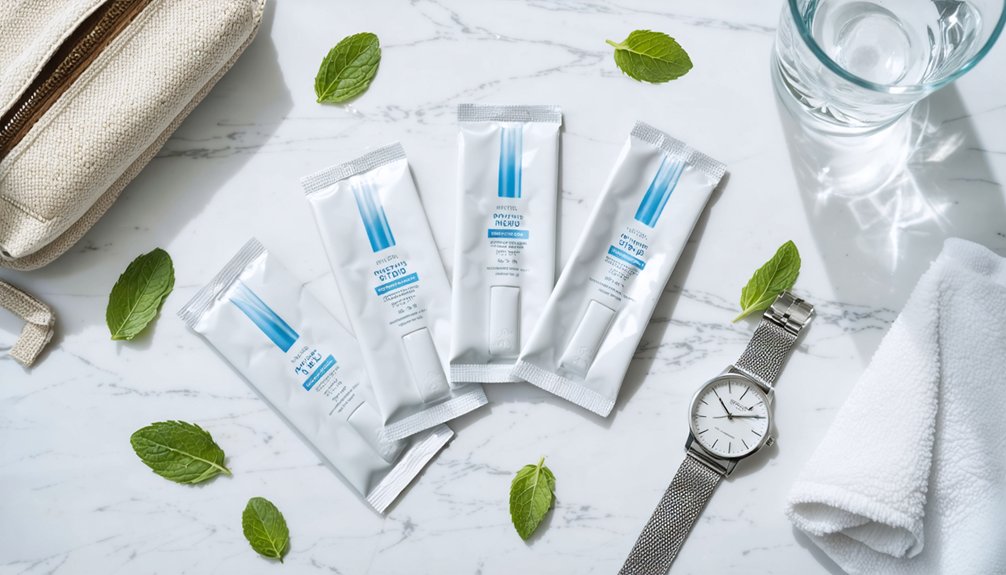
Crest 3D Whitestrips Sensitive leads the category, delivering 5.25% hydrogen peroxide—roughly half the standard concentration. Elims Teeth Whitening Strips are expert-identified as the top choice specifically targeting sensitive teeth.
Crest 3D White Whitestrips Gentle Routine offers the same 5.25% concentration with reduced irritation risk. Spotlight Oral Care Dental Whitening Strips, dentist-formulated at 6.5% hydrogen peroxide, incorporate vitamin E for gum protection.
Lumineux Oral Essentials provides a peroxide-free alternative for those requiring complete avoidance of hydrogen peroxide.
Each option gives you measurable control over both comfort and outcome.
What Ingredients Make Whitening Strips Safe for Sensitive Teeth?
Ingredient concentration determines how safely a whitening strip performs on sensitive teeth. You’ll want to look for hydrogen peroxide levels around 5.25%–6%, which whiten effectively without overwhelming enamel protection. Carbamide peroxide at approximately 18% offers a comparable alternative with a slower release rate, reducing irritation risk.
Ingredient safety also depends on what’s added beyond the active bleaching agent. Potassium nitrate and nano-hydroxyapatite (nHAp) actively block pain signals and support enamel remineralization during treatment. Vitamin E helps soothe gum tissue, while coconut oil and lemon peel oil gently lift stains without chemical aggression.
If you’re avoiding peroxide entirely, certified peroxide-free formulas still deliver measurable results. Evaluating both active and supporting ingredients lets you make a precise, informed choice for your sensitivity level.
Does Higher Peroxide Mean More Sensitivity?
Higher peroxide concentrations do correlate with increased sensitivity risk, but the relationship isn’t absolute. Your dental sensitivity depends on multiple variables beyond peroxide levels alone. Understanding these factors lets you make informed, controlled decisions.
Three key considerations when evaluating peroxide concentration:
- Baseline enamel condition — Compromised or thin enamel amplifies sensitivity regardless of formula strength.
- Exposure duration — Longer contact time intensifies peroxide penetration, increasing nerve irritation even at lower concentrations.
- Application frequency — Daily use of moderate-peroxide strips can exceed the sensitivity impact of less frequent high-concentration treatments.
Products containing 5.25%–6% hydrogen peroxide, like Crest 3D Whitestrips Sensitive and Zimba, demonstrate that controlled peroxide levels effectively whiten while minimizing dental sensitivity. You don’t need high concentrations to achieve measurable results.
Are Peroxide-Free Whitening Strips Worth It?
If you want to avoid peroxide altogether, peroxide-free strips like Lumineux Oral Essentials use natural alternatives—such as coconut oil and lemon peel oil—to gently lift stains without triggering nerve sensitivity.
These formulas work by targeting surface discoloration rather than penetrating enamel, making them a clinically safer choice if you have pronounced sensitivity.
While they may whiten more gradually than peroxide-based options, they’re worth considering if standard formulas consistently cause you discomfort.
Peroxide-Free Formulas Explained
For people with heightened tooth sensitivity, peroxide-free whitening strips like Lumineux Oral Essentials offer an alternative that sidesteps hydrogen peroxide entirely. These formulas rely on gentler chemical reactions using plant-derived extracts—such as coconut oil and lemon peel oil—to lift surface stains while prioritizing enamel protection.
Consider these distinguishing factors:
- Mechanism: Natural extracts dissolve stains without oxidizing enamel structure, reducing nerve irritation risk.
- Efficacy: Results are typically subtler than peroxide-based options, making them suitable for mild-to-moderate discoloration.
- Safety profile: Absence of hydrogen peroxide eliminates concentration-related sensitivity concerns entirely.
You’re trading whitening speed for reduced discomfort. If your sensitivity is severe or you prefer avoiding peroxide-based chemistry altogether, peroxide-free strips give you measurable control over both your comfort and your results.
Natural Alternatives That Work
Peroxide-free whitening strips earn their place in the market, but understanding their trade-offs helps you decide whether they’re worth the investment. These products rely on natural remedies and alternative ingredients—such as coconut oil, lemon peel oil, and nano-hydroxyapatite (nHAp)—to lift surface stains without chemical oxidation.
Lumineux Oral Essentials Whitening Strips exemplify this approach, delivering measurable results while eliminating peroxide-related sensitivity entirely. The mechanism differs fundamentally: rather than penetrating enamel to break down intrinsic stains, these formulas target extrinsic discoloration through gentler enzymatic or oil-based action.
You’ll likely see slower, more modest results compared to peroxide-based options. However, if sensitivity has previously forced you to abandon whitening altogether, peroxide-free alternatives give you consistent, controlled progress without compromising comfort.
How Do You Apply Whitening Strips Without Irritating Sensitive Teeth?
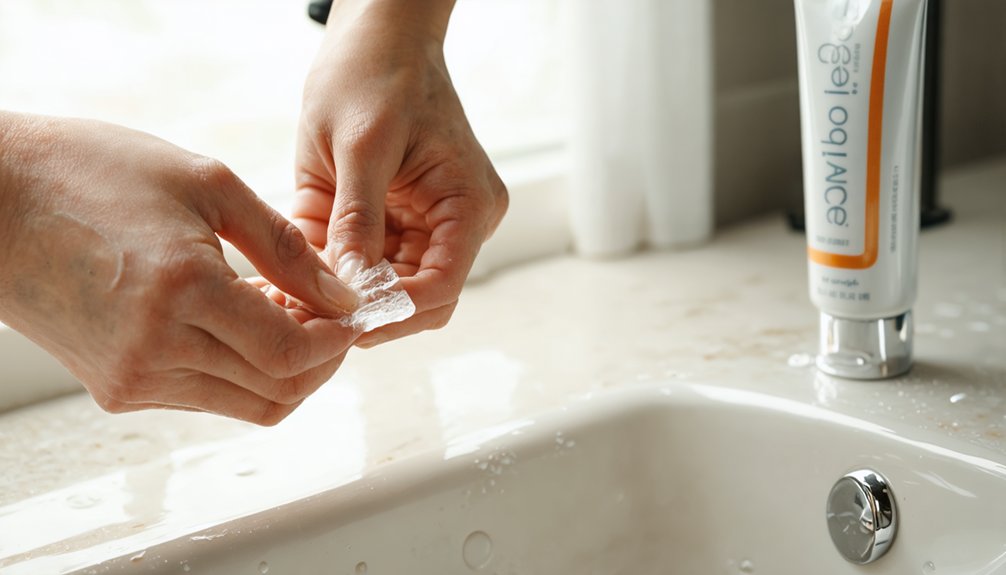
To minimize irritation, brush your teeth 30 to 60 minutes before applying strips, giving enamel time to settle and allowing active ingredients to penetrate effectively.
You’ll reduce cumulative sensitivity by applying strips every other day rather than daily, and by starting with shorter sessions of 5 to 10 minutes until your teeth adjust.
Position strips carefully so they contact only tooth surfaces, keeping edges away from gum tissue to prevent localized irritation during treatment.
Prep Teeth Beforehand
Prepping your teeth beforehand considerably reduces irritation risk when using whitening strips. Dental flossing removes interproximal debris, allowing strips to contact enamel surfaces uniformly. Oral hydration keeps mucosal tissues resilient, minimizing gum sensitivity during treatment. Follow these preparation steps:
- Floss thoroughly before application to clear debris between teeth, ensuring consistent strip adhesion and active ingredient penetration.
- Brush 30–60 minutes prior—not immediately before—to remove surface buildup without leaving enamel temporarily vulnerable from fresh brushing.
- Apply desensitizing toothpaste containing potassium nitrate or nano-hydroxyapatite for at least two weeks beforehand to block pain signals proactively.
These steps give you measurable control over sensitivity outcomes, making your whitening experience both safer and more effective.
Timing Your Applications
Once your teeth are prepped, how you schedule applications determines whether you get results without unnecessary discomfort. Start with 5–10 minute sessions every other day rather than daily use, allowing enamel to acclimate before extending duration. Unlike laser whitening, which delivers immediate intensity, strips let you control exposure incrementally.
Avoid applying strips within two hours of brushing, since residual fluoride interferes with peroxide absorption. For six hours post-application, avoid beverages colder than 50°F to markedly reduce sensitivity responses.
While charcoal benefits surface stain removal, combining charcoal products with peroxide strips on the same day risks compounding irritation—keep them separate. Strict adherence to manufacturer-recommended intervals prevents overuse, which delivers no additional whitening benefit and increases the likelihood of enamel sensitivity.
Minimize Gum Contact
Proper strip placement directly determines how much gum tissue contacts the peroxide formula, making precise application one of the most effective ways to prevent irritation. Controlling gum irritation requires deliberate application techniques executed consistently.
Follow these placement steps:
- Align the strip’s edge flush with your gumline without overlapping onto soft tissue.
- Press the strip firmly against tooth surfaces only, folding excess material behind teeth rather than upward toward gums.
- Cut strips in half if rear teeth cause unnecessary gum contact or discomfort.
Gum irritation escalates when peroxide saturates soft tissue rather than enamel. Repositioning immediately if you feel burning reduces cumulative tissue exposure.
Precise application techniques eliminate a primary sensitivity variable entirely within your control.
What to Avoid Eating and Drinking After Whitening Strips
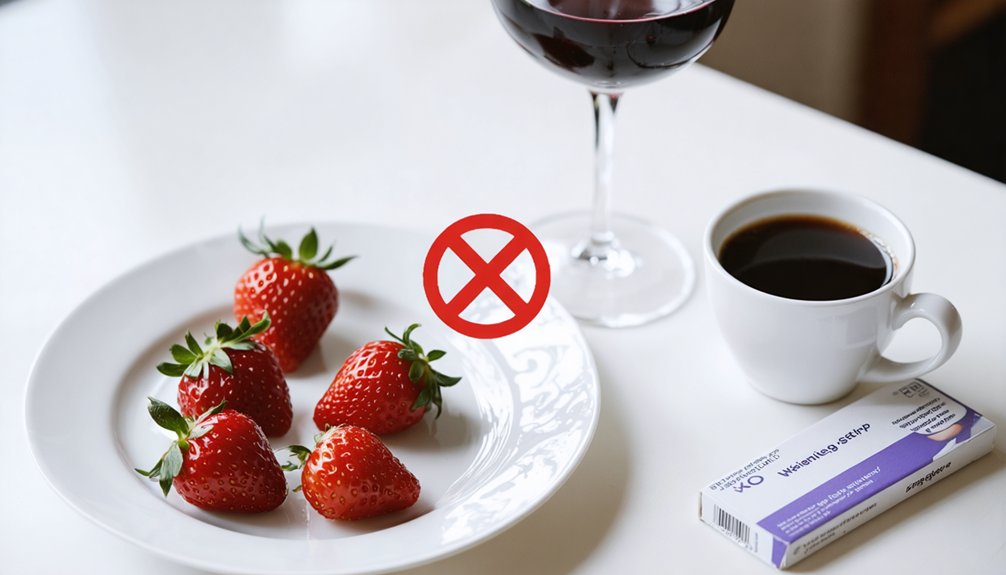
After applying whitening strips, what you eat and drink plays a direct role in your sensitivity levels and treatment outcome. Avoid consuming anything colder than 50 degrees Fahrenheit for at least six hours post-application, as cold exposure markedly increases nerve sensitivity during this vulnerable window.
After whitening strips, avoid anything below 50°F for six hours — cold dramatically increases nerve sensitivity during recovery.
Contrary to common dental myths, it’s not just deeply pigmented foods you need to avoid. Whitening myths often minimize the impact of cold beverages, but temperature is equally disruptive to post-treatment comfort. Skip iced drinks, cold dairy, and refrigerated foods during this period.
Additionally, acidic beverages like citrus juice and carbonated drinks weaken enamel temporarily, amplifying sensitivity risk.
You control your results by making deliberate dietary choices immediately following each treatment session.
Does Desensitizing Toothpaste Actually Help?
Desensitizing toothpaste genuinely reduces whitening-related discomfort when used correctly. It works by blocking neural pain signals before enamel erosion or post-treatment irritation intensifies.
For maximum efficacy, follow this protocol:
- Use a toothpaste containing potassium nitrate or nano-hydroxyapatite for at least two weeks before beginning treatment.
- Continue applying it throughout your whitening regimen to maintain consistent nerve protection.
- Sustain use for several weeks post-treatment, as saliva production alone won’t fully remineralize vulnerable enamel quickly enough.
These steps create a protective baseline that meaningfully lowers sensitivity risk.
Skipping pre-treatment use reduces its effectiveness considerably. You’re not just managing discomfort reactively—you’re preventing it proactively.
Selecting the right formula and committing to consistent application gives you measurable control over your whitening experience.
Common Whitening Strip Mistakes That Worsen Sensitivity
Even with the right product, specific application errors consistently amplify sensitivity and undermine results. Brushing immediately before applying strips exposes enamel and heightens nerve response—wait 30 to 60 minutes instead.
Applying strips daily rather than every other day prevents enamel protection and prolongs irritation unnecessarily. Leaving strips on longer than directed doesn’t accelerate whitening; it increases damage risk.
Allowing strips to contact gum tissue directly compromises soft tissue integrity and worsens discomfort. Consuming cold foods or beverages within six hours post-application triggers avoidable sensitivity reactions.
Neglecting dental hygiene routines that incorporate desensitizing toothpaste before and during treatment removes a critical protective buffer. Each of these errors is preventable—strict protocol adherence gives you measurable results without compounding sensitivity.
How Long Does It Take to See Results With Gentle Strips?
Correcting application mistakes sets the stage for realistic expectations about results timelines. With gentle strips at 5.25%–6% hydrogen peroxide, stain removal progresses more gradually than standard formulas. You’re trading speed for comfort, which requires patience and consistency.
Gentle strips trade speed for comfort—results come gradually, but patience and consistency make the difference.
Expect results according to this structured timeline:
- Days 3–5: Initial color matching reveals subtle brightness as surface stains begin lifting.
- Week 2–3: Noticeable stain removal becomes apparent, particularly on front teeth, when strips are applied every other day.
- Week 4–6: Ideal whitening is achieved following three weekly applications of lower-concentration strips.
Tracking your progress against a shade guide helps you maintain control over outcomes. Consistent adherence to manufacturer guidelines ensures you reach your whitening goal without compromising enamel integrity.
Frequently Asked Questions
Can Whitening Strips Be Used With Braces or Dental Work?
You shouldn’t use whitening strips with braces due to uneven results and braces compatibility issues. For dental work considerations, consult your dentist first, as strips may not whiten crowns, veneers, or bonding effectively.
How Do Whitening Strips Compare to Professional Dental Whitening Treatments?
Professional treatments deliver faster, longer-lasting results, but you’ll pay considerably more. Whitening strips offer lower cost comparison and convenience, though longevity of results is shorter, requiring consistent touch-ups to maintain your desired shade effectively.
Are Whitening Strips Safe to Use During Pregnancy or Breastfeeding?
Pregnancy safety precautions prevail — you shouldn’t use whitening strips while pregnant or breastfeeding. Breastfeeding considerations equally apply, as peroxide absorption risks remain unstudied. Consult your doctor before attempting any whitening treatment during these critical periods.
How Should Whitening Strips Be Stored to Maintain Their Effectiveness?
Store your whitening strips in a cool, dry place away from direct sunlight to maximize effectiveness maintenance. Follow these storage tips: keep them sealed, avoid humidity, and don’t refrigerate unless manufacturers specifically recommend it.
Can Children or Teenagers Safely Use Whitening Strips for Sensitive Teeth?
Before pursuing “smile enhancement,” you shouldn’t let children use whitening strips. Teenager usage requires dental supervision, as developing enamel’s vulnerability increases Children safety risks. Consult your dentist to establish a clinically appropriate whitening timeline.
References
- https://www.forbes.com/sites/forbes-personal-shopper/article/best-whitening-product-for-sensitive-teeth/
- https://www.reddit.com/r/beauty/comments/1s2uujg/best_teeth_whitening_strips_that_dont_wreck_your/
- https://www.vogue.com/article/best-teeth-whitening-strips
- https://crest.com/en-us/oral-care-tips/teeth-whitening/teeth-whitening-sensitive-teeth
- https://www.nbcnews.com/select/shopping/best-teeth-whitening-strips-rcna201114
- https://www.valleydentalplainfield.com/blog/best-whitening-strips-for-sensitive-teeth-revealed/
- https://www.forbes.com/sites/forbes-personal-shopper/article/best-whitening-products-for-sensitive-teeth/