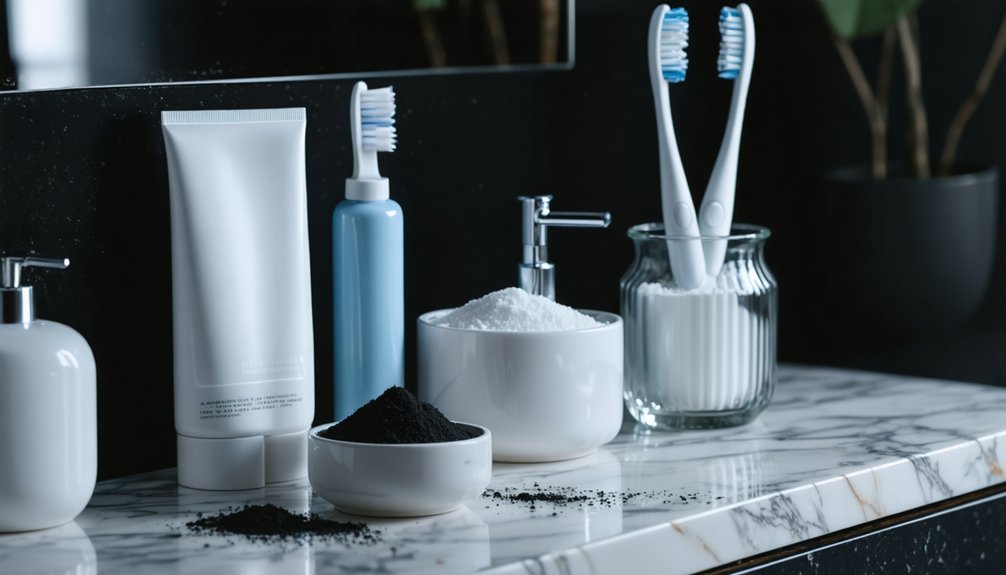
You can fade mild fluoride stains overnight using techniques like hydrogen peroxide whitening strips, baking soda paste, remineralizing agents, activated charcoal, and oil pulling — but your results depend entirely on your stain’s severity. White spots respond far better than deep brown discoloration, which often requires professional intervention. Combining consistent home care with the right product selection makes the biggest difference. The ranked breakdown ahead will help you choose the most effective approach for your specific case.
Key Takeaways
- Baking soda mixed with hydrogen peroxide applied for two minutes can visibly reduce mild fluoride stains overnight when used twice weekly.
- Whitening strips containing 10–14% hydrogen peroxide, applied nightly for 2–4 weeks, gradually lighten surface fluoride stains effectively.
- Oil pulling with coconut oil for 15–20 minutes nightly lifts surface stains and supports enamel remineralization.
- Activated charcoal, used weekly with gentle circular brushing, adsorbs surface fluoride stains but risks enamel thinning with overuse.
- Overnight remedies work best on mild white fluoride spots; brown or deeply embedded stains typically require professional dental treatment.
What Causes Fluoride Stains on Teeth?
Fluorosis develops when excessive fluoride disrupts enamel formation during tooth development, leaving behind white spots, streaks, or brown stains that affect both aesthetics and confidence.
Excessive fluoride during tooth development leaves permanent white spots and brown stains that undermine both your smile and confidence.
During childhood, overexposure to fluoride — through water, supplements, or swallowed toothpaste — interferes with enamel strength, creating porous, discolored patches that persist into adulthood.
Your dietary habits also play a significant role. High-fluoride foods and beverages, combined with naturally fluoridated water sources, compound the problem before you even recognize it.
Once enamel mineralizes incorrectly, those stains become structural rather than surface-level, making standard cleaning ineffective.
Understanding the root cause gives you control over your treatment approach. Identifying your fluoride exposure sources — water supply, diet, and dental products — is the essential first step toward targeted, effective stain removal.
How Bad Are Your Fluoride Stains? (What’s Actually Treatable Overnight)
Your fluoride stains fall somewhere on a spectrum, ranging from mild white spots to severe brown discoloration. Where you land determines what’s actually achievable overnight.
Mild white stains respond well to short-term treatments like remineralizing pastes or whitening strips. While deeper brown stains typically require professional intervention beyond any single night’s effort.
Setting realistic expectations upfront saves you frustration — overnight techniques can visibly reduce mild fluorosis, but they won’t erase moderate-to-severe cases that have penetrated deeper enamel layers.
Identifying Fluorosis Severity Levels
There are five distinct severity levels of fluorosis, and knowing exactly where your stains fall determines what’s realistically treatable overnight versus what requires professional intervention. Severity ranges from questionable (faint white flecks) to severe (pitting, brown discoloration, structural damage).
Levels 1–2 present as subtle white spots or streaks — these respond well to overnight whitening strips, remineralizing pastes, and fluoride alternatives like hydroxyapatite toothpaste.
Levels 3–4 display visible opacity and light brown staining, requiring consistent treatment beyond a single night.
Level 5 involves severe brown pitting that no overnight remedy can correct — professional microabrasion or veneers become necessary.
Your dietary restrictions also matter; acidic foods worsen mid-to-severe staining.
Accurately self-assessing your level prevents wasted effort and sets realistic expectations for overnight results.
White Versus Brown Stains
Once you’ve placed your stains on the severity scale, the next distinction worth making is color — because white and brown fluoride stains don’t just look different, they behave differently under treatment.
White spots indicate mineral disruption near the enamel surface. They’re more responsive to overnight intervention — remineralizing pastes, whitening strips, and resin infiltration can visibly reduce them within short treatment windows. Your dental hygiene routine directly influences how quickly these lighter stains fade.
Brown stains run deeper, signaling structural enamel damage from prolonged fluoride overexposure. Overnight solutions won’t erase them. Stain prevention becomes less relevant here — professional procedures like microabrasion or veneers are typically necessary.
Knowing your stain color tells you what’s actually achievable overnight versus what requires a clinical conversation.
Overnight Treatment Realistic Expectations
Setting realistic expectations is what separates productive overnight treatment from wasted effort. Overnight techniques work best on mild, extrinsic fluorosis — those faint white spots sitting on your enamel’s surface.
If your stains are brown, deeply embedded, or covering large tooth surfaces, you’re looking at professional intervention, not a one-night fix.
Your dietary habits and oral health routines directly influence what’s achievable. Heavy coffee, tea, or tobacco use compounds fluorosis discoloration, making overnight results harder to sustain. Consistent home care amplifies treatment effectiveness.
Here’s what overnight methods realistically address:
- Mild white spot reduction through remineralizing agents
- Surface stain lightening via baking soda or oil pulling
- Enamel preparation for follow-up whitening
Severe fluorosis requires microabrasion, veneers, or professional bleaching — no overnight remedy changes that.
Baking Soda and Hydrogen Peroxide Paste for Fluoride Stains
Combining two simple pantry staples creates one of the most effective at-home solutions for minimizing fluoride stains overnight. Baking soda’s mild abrasiveness lifts surface discoloration, while hydrogen peroxide penetrates deeper staining. Together, they deliver measurable results without compromising gum health or dental sealants.
Two pantry staples — baking soda and hydrogen peroxide — work together to visibly reduce fluoride stains without harming gum health.
To maximize effectiveness, follow this precise protocol:
- Mix one tablespoon of baking soda with enough hydrogen peroxide to form a thick, workable paste.
- Apply the paste using circular motions, brushing gently for two minutes to avoid enamel erosion.
- Rinse thoroughly and avoid eating or drinking afterward to allow overnight absorption.
Limit this treatment to twice weekly. Overuse weakens enamel and disrupts gum health.
Consistency within controlled application yields the most visible, lasting reduction in fluoride stain intensity.
Activated Charcoal to Reduce Fluoride Stains Fast
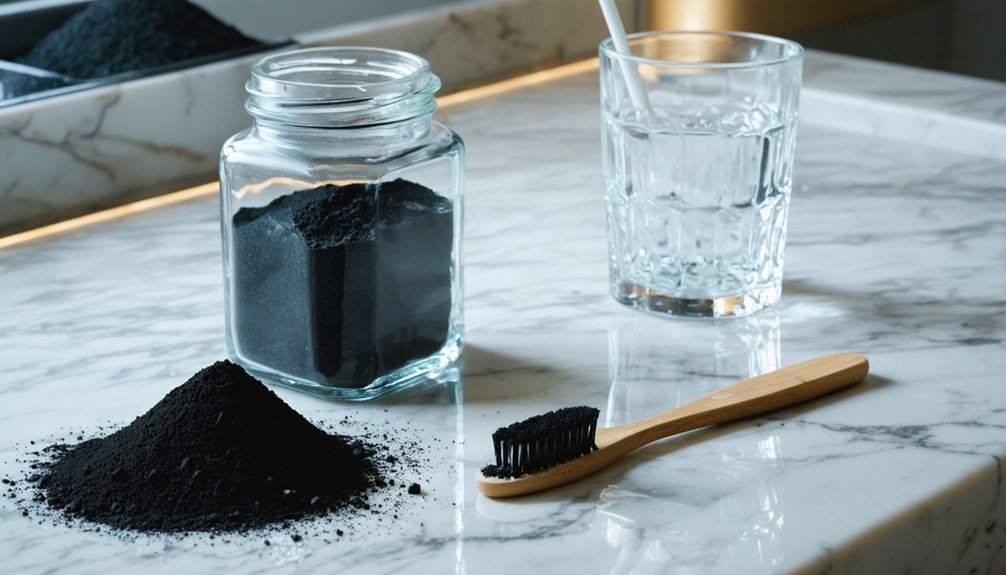
To use activated charcoal for fluoride stain reduction, dip a damp toothbrush into charcoal powder and brush gently in small circular motions for two minutes before rinsing thoroughly.
You’ll want to limit this treatment to once weekly, as overuse can erode enamel and cause heightened tooth sensitivity.
Keep in mind that charcoal’s abrasive nature demands careful application—press too hard, and you risk damaging the very surface you’re trying to restore.
Activated Charcoal Application Method
Activated charcoal offers one of the most efficient ways to reduce fluoride stains fast, working through its highly porous surface to adsorb discoloration from your enamel. Its mechanism targets surface-level fluoride absorption residue without harsh chemical interference, preserving your dental enamel integrity overnight.
Follow this precise application method:
- Dip a clean, soft-bristled toothbrush into activated charcoal powder, tapping off excess to control application density.
- Brush gently using circular motions for two minutes, focusing on stained zones without aggressive pressure.
- Rinse thoroughly with water until no charcoal residue remains, then follow with your standard oral hygiene routine.
Limit this treatment to once weekly. Overuse compromises dental enamel over time, undermining the very results you’re strategically working to achieve.
Weekly Usage and Precautions
Keeping your weekly charcoal sessions disciplined separates meaningful stain reduction from enamel damage. Limit activated charcoal applications to once weekly — overuse accelerates enamel erosion, undermining your fluoride health goals entirely.
Before incorporating charcoal into your routine, assess your water source. Elevated fluoride levels in unfiltered tap water continue depositing stains internally, so water filtration becomes non-negotiable alongside topical treatments.
When applying, use a soft-bristled brush with minimal pressure, working in gentle circular motions for no longer than two minutes. Rinse thoroughly afterward, ensuring no residue remains between teeth.
Avoid charcoal if your enamel shows visible sensitivity or thinning — consult a dentist first. Pair this method with consistent brushing and flossing to maintain the surface clarity charcoal temporarily achieves.
Oil Pulling to Lift Fluoride Surface Stains Overnight
Oil pulling is an ancient Ayurvedic practice that can help lift fluoride surface stains overnight by drawing out bacteria and reducing discoloration at the enamel level.
Oil pulling, rooted in Ayurvedic tradition, draws out bacteria and lifts fluoride surface stains at the enamel level.
By incorporating this technique strategically, you’ll actively manage fluoride absorption while supporting enamel remineralization.
Follow this precise protocol for ideal results:
- Swish one tablespoon of coconut or sesame oil vigorously for 15–20 minutes, ensuring full oral coverage.
- Spit the oil into a trash bin—never the sink—to avoid pipe buildup from solidified residue.
- Rinse thoroughly with warm water, then brush immediately to maximize surface stain removal.
Consistency is critical. Performing oil pulling nightly targets accumulated surface stains systematically, giving you measurable control over fluorosis discoloration without compromising your enamel’s structural integrity.
Lemon and Orange Peel Rubs on Fluoride-Stained Teeth

You’ll want to rinse thoroughly with water immediately after each application to neutralize residual acidity and protect your enamel from prolonged exposure.
Don’t exceed nightly use, as overexposure to citric acid can erode enamel over time.
Consistent application over several nights produces measurably lighter staining, making this method a practical, low-cost entry point into your overnight fluorosis removal routine.
Whitening Strips Applied at Night for Fluoride Stains
When selecting whitening strips for overnight use, you’ll want to choose strips specifically formulated with hydrogen peroxide, as these effectively target extrinsic fluoride stains through controlled abrasion.
Apply the strips snugly against your teeth before bed, ensuring full contact with stained surfaces while avoiding gum overlap to prevent irritation.
With consistent nightly use over two to four weeks, you can expect a gradual blending of fluoride stains into your tooth’s overall color, producing a more uniform, aesthetically refined smile.
Choosing the Right Strips
Choosing the right whitening strips for overnight fluoride stain removal requires careful attention to formulation and concentration. Your dental hygiene goals and the severity of your fluoride stains should guide your selection. Consider these three critical factors:
- Hydrogen peroxide concentration — Select strips containing 10–14% hydrogen peroxide for effective overnight penetration without excessive sensitivity.
- Adhesion quality — Choose strips with strong grip technology to prevent slippage during extended wear.
- Fluoride sources awareness — Avoid strips containing added fluoride, as compounding exposure may worsen existing staining over time.
You’ll want to prioritize strips specifically formulated for sensitive enamel, particularly if fluorosis has compromised your enamel’s structural integrity.
Always verify ingredient labels and consult your dentist before committing to an overnight whitening regimen.
Overnight Application Tips
Applying whitening strips at night maximizes contact time with your enamel while minimizing interference from eating, drinking, and speaking. Position strips precisely along your gumline, ensuring full surface coverage without overlapping soft tissue. Misalignment reduces efficacy and risks unnecessary irritation.
If you have dental sealants, confirm strip compatibility with your dentist beforehand, as hydrogen peroxide can compromise sealant adhesion over repeated applications. Wear strips for the manufacturer’s recommended duration—never overnight unless explicitly labeled safe—to prevent enamel erosion from prolonged peroxide exposure.
After removal, rinse thoroughly with water and avoid acidic foods or beverages for at least one hour.
Consistency across two to four weeks produces measurable stain reduction, systematically blending fluorosis discoloration into your tooth’s natural shade.
Expected Whitening Results
Most users notice gradual lightening within two to four weeks of consistent nightly application, though fluorosis stains respond more slowly than surface discoloration from coffee or tea. Your oral health routine and dietary habits directly influence the pace and depth of results.
Manage your expectations with these benchmarks:
- Weeks 1–2: Subtle brightness emerges as hydrogen peroxide begins penetrating deeper enamel layers.
- Weeks 3–4: Noticeable blending occurs, with white spots becoming less contrasted against surrounding enamel.
- Month 2+: Maximum results surface, particularly when you’ve limited staining dietary habits like coffee and tea consumption.
Fluorosis stains rarely vanish entirely through strips alone. Severe cases may require professional microabrasion or veneers to achieve the uniform, refined aesthetic you’re targeting.
Remineralizing Paste for Chalky White Fluorosis Spots
Remineralizing paste offers one of the most targeted solutions for chalky white fluorosis spots, working at a mineral level to restore what enamel has lost. Unlike conventional whitening agents, these pastes deliver calcium and phosphate directly into compromised enamel, triggering enamel remineralization that visibly reduces opacity over time.
Apply the paste nightly after brushing, pressing it gently against affected surfaces for maximum fluoride absorption and mineral penetration. You’ll want to leave it undisturbed overnight, avoiding food or water afterward to maintain contact time.
Consistent overnight application gradually blends white spots into surrounding enamel, creating a more uniform appearance. Look for formulas containing nano-hydroxyapatite or CPP-ACP technology, as these compounds deliver the most measurable structural repair to fluorosis-affected enamel.
Do Whitening Trays Actually Work on Fluoride Stains?
Whitening trays deliver mixed results on fluoride stains, and understanding why helps you set realistic expectations before investing in them. Fluoride absorption during dental enamel development creates intrinsic discoloration—stains embedded within the tooth structure, not sitting on its surface. Trays work best on extrinsic staining, so your results depend heavily on fluorosis severity.
Here’s how tray options compare:
- Semi-custom trays offer mid-range effectiveness, conforming better to your teeth than one-size options.
- Professional take-home trays deliver stronger peroxide concentrations, penetrating deeper into dental enamel.
- In-office whitening trays provide the fastest results, completing treatment within one hour.
For mild fluorosis, trays can blend staining effectively. For severe cases, you’ll need microabrasion or veneers to achieve meaningful correction.
Fastest Overnight Fix for Fluoride Stains: Ranked
Although no treatment eliminates fluoride stains completely overnight, some methods work faster than others—and knowing the difference saves you time, money, and disappointment.
Here’s how the fastest fixes rank:
- In-office professional bleaching – delivers visible results within one hour by targeting intrinsic discoloration directly.
- Whitening strips – applied before bed, they penetrate enamel surfaces effectively without causing significant enamel erosion when used correctly.
- Baking soda and hydrogen peroxide paste – brushing twice weekly accelerates surface stain removal noticeably.
- Remineralizing paste – restores calcium and phosphate overnight, reducing white spot visibility.
- Activated charcoal – lifts surface stains within a single session.
Pair any method with dental flossing beforehand—clean interdental spaces allow whitening agents deeper, more uniform contact, maximizing every treatment’s overnight potential.
Frequently Asked Questions
Can Fluoride Stains on Teeth Affect Children Differently Than Adults?
Yes, fluoride stains affect children differently—pediatric enamel is still developing, making it more vulnerable to permanent damage. In adults, you’re managing established adult discoloration, which responds better to targeted whitening treatments you can control.
Are Fluoride Stains Reversible With Consistent Long-Term Dietary Changes Alone?
Like chipping away at stone, dietary adjustments alone can’t fully reverse fluoride stains. You’ll need consistent oral hygiene practices alongside consuming malic acid-rich foods like strawberries and natural cleansers to meaningfully reduce their appearance over time.
Does Drinking Fluoridated Water Worsen Existing Fluoride Stains Over Time?
Yes, drinking fluoridated water can worsen existing fluoride stains through continued fluoride accumulation, accelerating stain progression over time. You’ll want to check your water’s fluoride levels and switch to filtered alternatives to maintain control over discoloration.
Can Porcelain Veneers Permanently Resolve Severe Fluoride Staining Issues?
Yes, porcelain veneers can permanently resolve your severe fluoride staining through effective stain masking. They’re placed directly over affected teeth, giving you complete aesthetic control and a flawless, long-lasting solution tailored to your smile’s appearance.
Should Fluoride Toothpaste Be Completely Avoided When Treating Fluorosis Stains?
Just as two paths cross unexpectedly, fluoride toothpaste and fluorosis treatment collide poorly. You should avoid fluoride toothpaste during stain removal, opting for whitening alternatives to enhance dental aesthetics and maintain precise control over your fluorosis treatment results.
References
- https://alignedonpearl.com/what-is-the-best-way-to-remove-stains-from-teeth/
- https://auraglow.com/blogs/articles/teeth-stain-removal
- https://www.youtube.com/watch?v=Wd-5CZQEeCE
- https://www.trysnow.com/blogs/news/how-to-get-rid-of-fluoride-stains-on-teeth
- https://www.hazendentistry.com/blog/3-ways-you-can-treat-fluoride-stains-on-your-teeth.php
- https://dentiste-enfant.com/en/remove-stain-fluor-teeth/
- https://clubwhitesmile.com/how-to-remove-fluoride-stains-from-teeth/
- https://www.youtube.com/watch?v=Zwrx4d7blyQ