Your teeth turn brown or gray due to either extrinsic or intrinsic discoloration mechanisms. Brown staining typically develops from surface pigments in coffee, tobacco, and wine bonding to enamel, while gray discoloration usually signals internal damage—pulp necrosis, tetracycline exposure, or metallic leaching from amalgam fillings. Systemic diseases, genetic disorders, and trauma can also alter tooth color from within. Understanding which mechanism is affecting your teeth determines whether treatment can actually work—and that distinction matters more than most people realize.
Key Takeaways
- Surface stains from coffee, tea, tobacco, and red wine cause brown discoloration by depositing pigments onto enamel.
- Tetracycline antibiotics bond to developing dentin, causing permanent gray or blue intrinsic stains resistant to whitening.
- Trauma can cause pulp necrosis, where hemoglobin breakdown produces iron sulfide, darkening the tooth gray.
- Silver amalgam fillings leach metallic ions into surrounding dentin, creating gray-black discoloration beneath the enamel.
- Genetic conditions like dentinogenesis imperfecta and systemic diseases impair enamel mineralization, causing intrinsic discoloration.
Brown vs. Gray Teeth: What the Color Difference Means
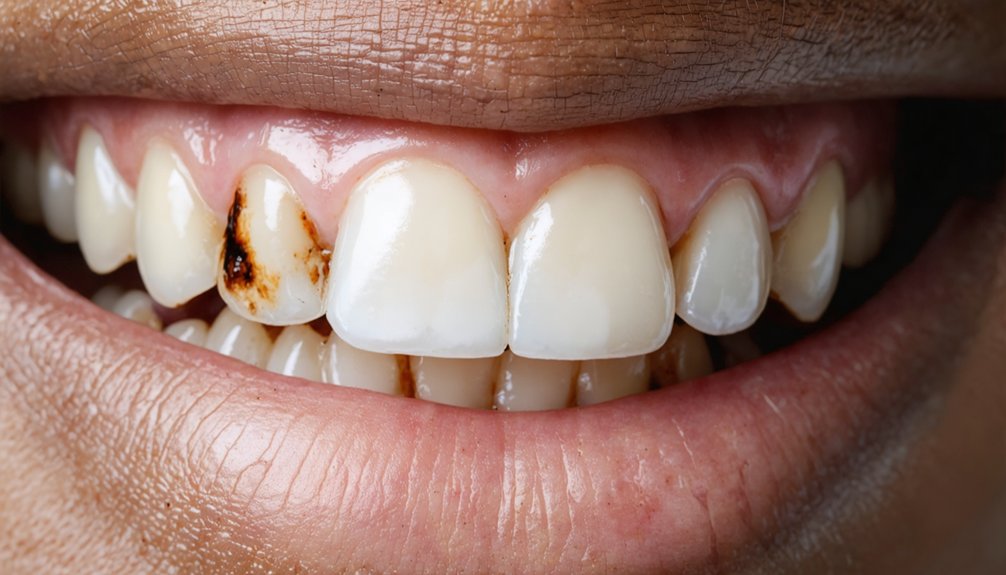
The color of your teeth can reveal a great deal about the underlying cause of discoloration. Brown staining typically signals extrinsic factors—substances like coffee, tobacco, or plaque buildup that deposit pigments onto your enamel surface.
Gray discoloration, however, usually indicates internal damage, such as pulp necrosis, trauma, or tetracycline exposure during development.
Your enamel thickness directly influences how discoloration presents. Thinner enamel allows underlying dentin to show through more prominently, intensifying both brown and gray tones.
Genetic traits also shape your baseline tooth color, translucency, and how susceptible your enamel is to staining agents.
Distinguishing between the two colors matters clinically. Brown stains often respond to whitening treatments, while gray discoloration—rooted in structural or internal causes—frequently requires restorative or endodontic intervention to address effectively.
Daily Habits That Stain Teeth Brown
Among the most preventable causes of brown tooth discoloration are daily lifestyle habits that repeatedly expose enamel to chromogenic compounds. Your dietary habits directly determine your staining risk. Coffee, tea, red wine, and cola contain tannins and chromogens that penetrate enamel and bind to its surface.
Tobacco use deposits tar and nicotine, producing yellow-brown to black stains concentrated near the gumline. Starchy and sugary foods accelerate plaque accumulation, creating adhesive surfaces where pigments cling more effectively.
Poor oral hygiene compounds these effects by allowing chromogenic bacteria and food pigments to accumulate undisturbed. Consistent brushing and flossing disrupt this process before stains integrate into enamel.
You retain significant control over extrinsic discoloration by modifying consumption patterns and maintaining disciplined oral hygiene protocols.
How Dental Trauma and Pulp Death Turn Teeth Gray
When a tooth sustains trauma—whether from a fall, collision, or blunt impact—it can sever the blood vessels supplying the pulp, triggering a cascade of internal breakdown. Once blood flow stops, the dental pulp begins to necrose.
Hemoglobin from ruptured vessels degrades into iron sulfide compounds that infiltrate the surrounding dentin tubules, producing a gray or dark discoloration that becomes visible through the enamel weeks or months after tooth trauma occurs.
You won’t see this change immediately—it develops gradually as tissue decomposition progresses. The discoloration originates deep within the tooth structure, making external whitening ineffective.
Addressing a traumatized tooth promptly with clinical evaluation, pulp vitality testing, and, if necessary, root canal therapy gives you the best chance of halting gray discoloration before it becomes permanent.
Medications That Discolor Teeth From the Inside
If you took tetracycline antibiotics before age 8—or if your mother took them during pregnancy—the drug bonded to calcium ions in your developing dentin, permanently embedding gray or bluish discoloration into your tooth structure.
Unlike surface stains, this intrinsic discoloration can’t be scrubbed away because it’s chemically integrated into the tooth itself.
Silver amalgam fillings create a similar problem by leaching metallic compounds into surrounding tooth structure, casting a gray-black shadow that darkens the visible enamel near restoration margins.
Tetracycline and Developing Teeth
Tetracycline antibiotics cause intrinsic gray or bluish discoloration by binding to calcium ions in developing dentin and enamel, forming permanent tetracycline-calcium orthophosphate complexes within the tooth structure. Exposure during childhood under age eight, or prenatal exposure through a pregnant mother taking the drug, permanently incorporates pigments into mineralizing teeth.
The resulting discoloration ranges from yellow-gray to dark blue-gray depending on dosage and duration.
You can’t reverse this discoloration through dietary changes or standard teeth whitening protocols alone, as the staining is intrinsic and embedded within the dentin layer. Effective management typically requires veneers, bonding, or specialized bleaching regimens under clinical supervision.
If you’re a parent, avoiding tetracycline prescriptions for young children remains the most reliable preventive measure against this irreversible developmental staining.
Amalgam Fillings Cause Discoloration
Silver amalgam fillings don’t just restore tooth function—they actively alter the optical properties of surrounding tooth structure over time. The metal compounds within amalgam leach into adjacent dentin and enamel, casting a gray-black shadow that no amount of dental hygiene can reverse.
This metallic migration occurs beneath the tooth enamel surface, making it an intrinsic discoloration rather than an extrinsic stain you can polish away.
The discoloration typically radiates outward from restoration margins, gradually darkening the visible tooth structure. Even when the filling itself remains structurally intact, the surrounding tooth absorbs metallic pigments through microscopic tubules in the dentin.
If you have older amalgam restorations showing grayish halos around their edges, replacement with composite or ceramic alternatives eliminates the source of ongoing discoloration.
Why Metal Fillings Make Teeth Look Gray
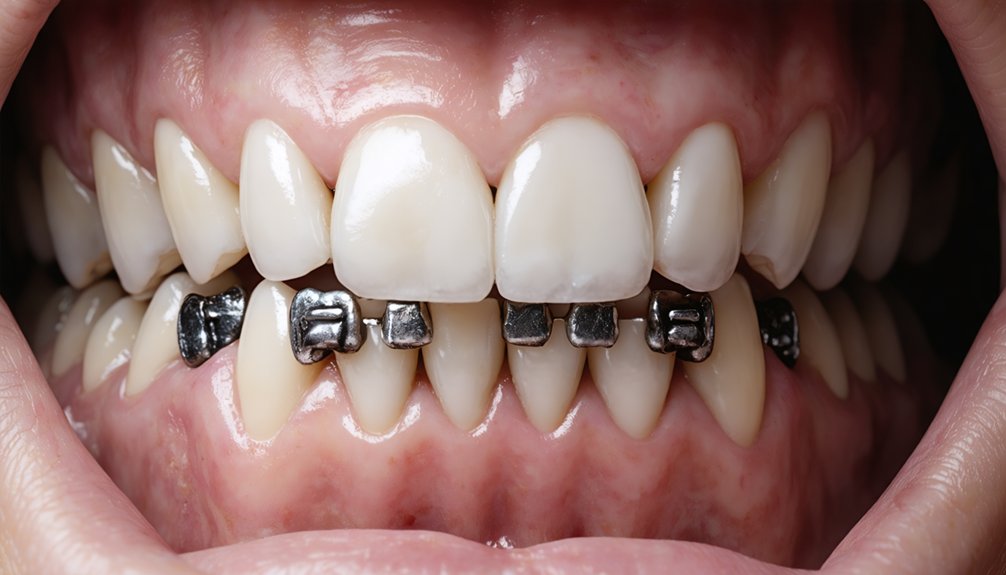
When you have silver amalgam fillings, the metal casts a gray-black shadow through the surrounding enamel, altering the tooth’s visible color even without direct exposure of the filling material.
Over time, metallic ions leach from the restoration margins into the adjacent dentin and enamel, causing a permanent gray discoloration that extends beyond the filling’s boundaries.
You’ll notice this shadowing effect most prominently in teeth with large or aging amalgam restorations, where the metal’s optical influence on enamel translucency becomes increasingly apparent.
Amalgam Shadowing Through Enamel
Many patients don’t realize that silver amalgam fillings can discolor an entire tooth, not just the filled area. When amalgam corrodes over time, metallic ions leach outward through microscopic pathways in the dentin and diffuse into surrounding dental enamel.
This process creates a gray or blue-black shadow visible through the tooth’s translucent outer layer—even if your enamel remains structurally intact.
The discoloration originates beneath the surface, making staining prevention through brushing or whitening ineffective. External products can’t reach intrinsic metallic pigmentation embedded in dentin.
Your only reliable options are replacing the amalgam with tooth-colored composite resin or ceramic restorations, or covering the affected tooth with a porcelain veneer or crown to mask the underlying gray cast entirely.
Metal Leakage Near Margins
At the margins where metal fillings meet tooth structure, microscopic gaps develop as amalgam expands and contracts through repeated temperature cycles. Metal ions migrate through these gaps, penetrating surrounding dentin and enamel, producing permanent gray-black discoloration you can’t reverse with whitening.
- Enamel erosion accelerates ion migration by thinning the barrier between amalgam and dentin.
- Older restorations carry higher leakage risk as marginal integrity deteriorates over time.
- Cosmetic veneers can mask margin discoloration when the underlying tooth structure remains sound.
- Replacing amalgam with composite or ceramic restorations stops further ion migration immediately.
You control the outcome by monitoring restoration age and acting before discoloration spreads deeper into dentin. Early intervention preserves more natural tooth structure and expands your restorative options significantly.
Diseases That Cause Brown or Gray Teeth
Certain systemic diseases disrupt enamel development or mineralization at the cellular level, producing brown or gray tooth discoloration that no amount of brushing will resolve.
Some systemic diseases disrupt enamel at the cellular level, producing discoloration no amount of brushing will ever resolve.
Liver disease and celiac disease interfere with nutrient absorption critical to proper enamel development, leaving teeth structurally compromised and visibly discolored.
Calcium deficiencies and metabolic disorders interrupt mineralization during tooth formation, embedding brown discoloration directly into the enamel matrix.
Eating disorders accelerate this process through chronic nutritional depletion.
Chemotherapy and radiation targeting head and neck cancers alter cellular activity within developing or existing tooth structure, producing brown or gray tones intrinsically.
Genetic inheritance also determines your baseline tooth composition and translucency, meaning some discoloration originates before birth.
These conditions require clinical intervention, not cosmetic solutions.
How Fluoride and Chromogenic Bacteria Stain Teeth
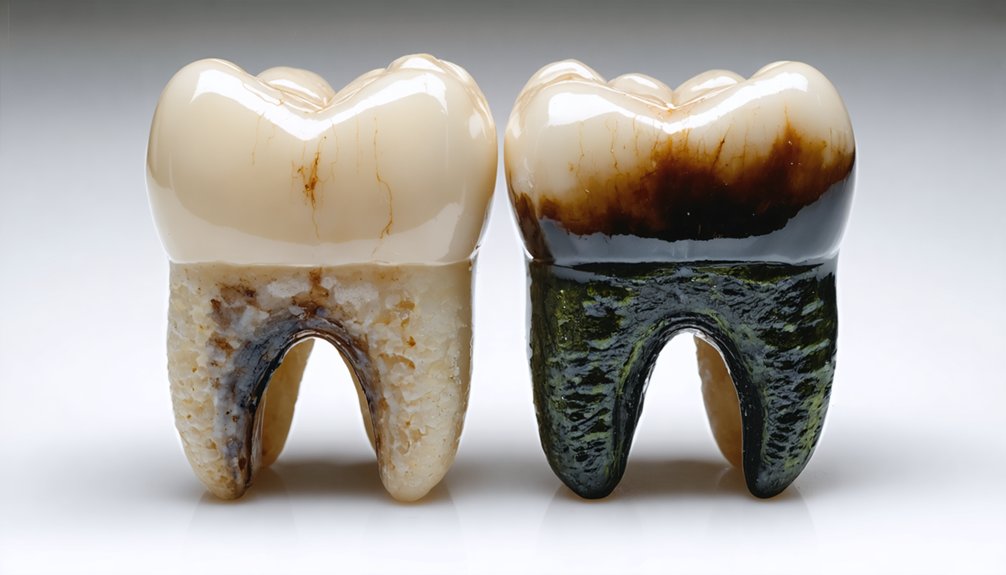
Here’s what you need to recognize:
- Fluorosis creates intrinsic discoloration that whitening can’t fully reverse.
- Enamel erosion from dietary acids worsens fluorotic staining over time.
- Chromogenic bacteria produce gray, brown, or black pigments within plaque biofilm.
- Calculus formation traps bacterial pigments, making stains permanent without professional removal.
Identifying the mechanism determines your treatment strategy.
Rare Genetic Disorders That Cause Gray Teeth
While most tooth discoloration stems from external habits or environmental exposure, some cases originate at the genetic level, making them impossible to prevent through oral hygiene alone.
Genetic mutations disrupting dentin formation cause dentinogenesis imperfecta, a hereditary condition that renders both primary and permanent teeth blue-gray and structurally compromised. You inherit this disorder regardless of your habits or environment.
Dentinogenesis imperfecta is inherited, not earned — no habit or hygiene routine can prevent its characteristic blue-gray discoloration.
Developmental anomalies affecting enamel formation, such as those linked to fluorosis or rare chromosomal conditions, can also produce intrinsic gray discoloration that no whitening protocol will fully correct.
Your natural tooth color, brightness, and translucency are genetically determined, meaning some individuals simply present with duller or grayer teeth.
Identifying these disorders early allows you to pursue targeted cosmetic or restorative interventions rather than ineffective surface treatments.
Can Brown or Gray Teeth Actually Be Whitened?
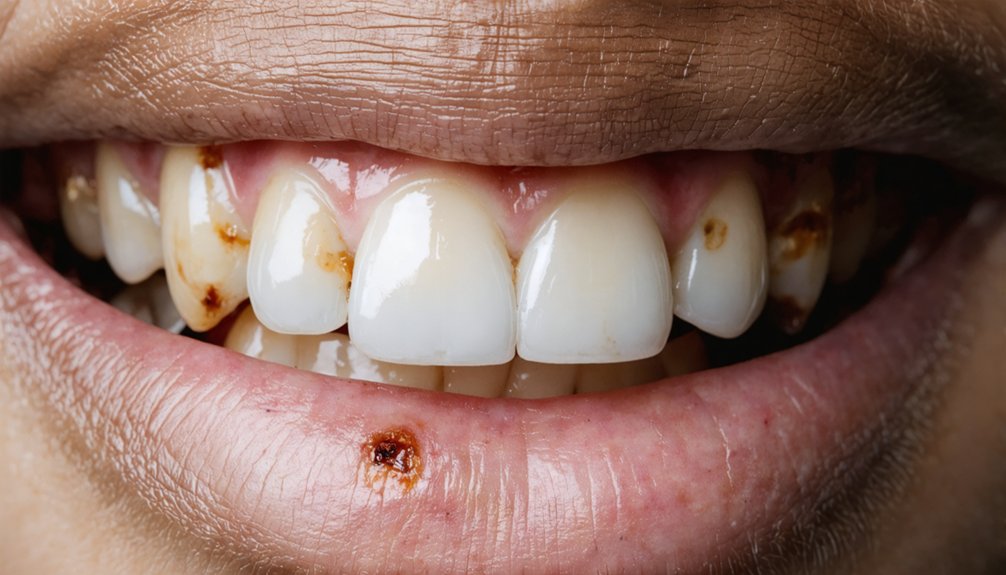
Whether brown or gray teeth can be whitened depends entirely on the underlying cause of the discoloration. Extrinsic stains respond well to dental whitening, while intrinsic discoloration requires more aggressive intervention.
- Extrinsic brown stains from coffee, tea, or tobacco respond to professional stain removal, bleaching agents, or abrasive polishing.
- Tetracycline-induced gray discoloration resists conventional whitening; veneers or crowns typically produce better outcomes.
- Trauma-related gray teeth require internal bleaching performed by a dentist, not surface-level whitening products.
- Fluorosis stains may respond partially to microabrasion combined with dental whitening, depending on severity.
You must identify the stain’s origin before selecting treatment. Applying whitening products to intrinsically discolored teeth without professional diagnosis wastes time and potentially worsens the condition.
Frequently Asked Questions
Can Children Develop Brown or Gray Teeth From Secondhand Smoke Exposure?
Yes, secondhand smoke can cause brown or gray teeth in children. Though they’re not smoking, childhood habits like passive exposure deposit tar and nicotine compounds, staining developing enamel and accelerating discoloration you can’t easily reverse.
Does Teeth Grinding Directly Cause Gray Discoloration Over Time?
Yes, teeth grinding wears down your tooth enamel over time, exposing the darker dentin beneath—one of the key discoloration causes you’ll notice as a progressively grayer appearance in affected teeth.
Are Brown or Gray Teeth More Common in Certain Age Groups?
Like clockwork, tooth discoloration follows predictable age-related changes: you’ll notice brown stains accumulating in adulthood from lifestyle habits, while gray discoloration typically affects children exposed to tetracycline or trauma, and older adults experiencing enamel thinning.
Can a Gray Tooth Become Reinfected After a Root Canal?
Yes, you can experience root canal complications, including reinfection, if bacteria re-enter the treated tooth. This may worsen tooth discoloration, deepening the gray tone as pulp tissue breaks down further inside the dentin.
Does Drinking Fluoridated Tap Water Increase the Risk of Fluorosis?
Like a double-edged sword, fluoride both protects and harms. You risk dental fluorosis only if you’re already experiencing fluoride overdose from multiple sources—fluoridated tap water alone rarely causes it during tooth development.
References
- https://my.clevelandclinic.org/health/symptoms/10958-tooth-discoloration
- https://www.healthline.com/health/dental-and-oral-health/grey-teeth
- https://www.colleencaindmd.com/blog/2022/05/16/gray-teeth-causes-and-solutions/
- https://www.cambridgesquaredental.com/blog/causes-of-gray-teeth-and-what-to-do-about-it/
- https://www.renfrodental.com/blog/grey-tooth/
- https://www.webmd.com/oral-health/tooth-discoloration
- https://en.wikipedia.org/wiki/Tooth_discoloration
- https://brightchoicefamilydental.com/blog/why-are-my-teeth-turning-brown-at-the-gum-line-suddenly/
- https://www.medicalnewstoday.com/articles/321480