If your teeth are genetically stained, over-the-counter products won’t cut it. You’ll need professional-grade treatments that penetrate intrinsic discoloration. Your best options include laser whitening, Zoom, Opalescence Boost, custom whitening trays, KöR Whitening, BriteSmile, and veneers or microabrasion for severe cases. Each targets stain depth differently, and choosing the right one depends on how resistant your discoloration is. Keep going to find out exactly which treatment matches your specific situation.
Key Takeaways
- Laser whitening can improve genetically stained teeth by up to eight shades in a single 30–60 minute session.
- Zoom whitening shifts teeth 7–8 shades lighter in 45–60 minutes, with results lasting up to one year.
- KöR Whitening combines in-office sessions with refrigerated take-home gel trays for persistent genetic staining.
- Opalescence Boost delivers approximately four shade improvements per session while minimizing sensitivity risks.
- Veneers offer a permanent cosmetic solution when genetic staining is too deep for whitening treatments.
Laser Whitening: The Fastest Fix for Genetic Tooth Stains
Laser whitening stands out as one of the fastest in-office solutions for genetically stained teeth, with a single session typically running 30–60 minutes.
Using advanced laser technology, your dentist activates a professional-grade peroxide gel applied directly to your enamel, accelerating the bleaching process with precision. Some systems report up to eight shade improvements in a single appointment—a result that’s difficult to achieve through take-home options alone.
Advanced laser technology activates professional-grade peroxide gel, delivering up to eight shade improvements in a single appointment.
You’ll also benefit from controlled application, which reduces the guesswork associated with over-the-counter products.
Dentist supervision means your soft tissues are protected throughout the procedure, supporting patient comfort while maintaining treatment accuracy.
If you’re managing intrinsic discoloration before a specific deadline or event, laser whitening delivers measurable, rapid results within a structured clinical environment.
Zoom Whitening: How Many Shades It Moves on Genetic Stains
If you’re dealing with genetic tooth stains, Zoom whitening can move your teeth approximately 7–8 shades lighter in a single 45–60 minute in-office session.
The treatment uses professional-grade bleaching agents that penetrate intrinsic discoloration more effectively than over-the-counter alternatives.
Results can last up to one year with proper maintenance, making Zoom a clinically reliable option for stubborn, genetically rooted staining.
Shade Improvement Results
When dealing with genetically stained teeth, Zoom Whitening consistently ranks among the most effective in-office options for measurable shade improvement.
Clinical efficacy data supports results of approximately 7–8 shades lighter in a single 45–60-minute session. That’s a significant shift, particularly for intrinsic discoloration that resists over-the-counter products.
Patient satisfaction rates remain high because results are immediate and visible. You’re not waiting weeks for gradual change—you leave the appointment with a measurable outcome you can assess the same day.
Results can last up to one year with proper maintenance, giving you a predictable timeline for touch-ups. For genetically stained teeth, Zoom offers a controlled, professionally supervised process that delivers consistent shade movement without the guesswork of consumer-grade alternatives.
Genetic Stain Effectiveness
Shade improvement numbers tell part of the story, but what matters for your specific case is how Zoom performs against genetically driven discoloration rather than surface staining.
Genetic factors produce intrinsic discoloration embedded within the dentin layer, making it structurally different from extrinsic stain types caused by diet or lifestyle.
Zoom’s hydrogen peroxide formulation penetrates enamel to reach dentin, which is precisely where genetically influenced pigmentation originates.
Clinical summaries report average results of seven to eight shades lighter, though intrinsic stain types typically respond more gradually than surface deposits.
Your outcome depends on discoloration depth, enamel thickness, and baseline tooth color.
Dentist supervision during Zoom treatment allows real-time assessment, letting your provider adjust exposure time based on how your specific genetic staining responds throughout the session.
Opalescence Boost: A Strong In-Office Option for Deep Genetic Stains
If you’re dealing with deep genetic stains, Opalescence Boost offers a strong in-office solution through its professional-grade peroxide gel, which works faster than consumer alternatives.
You can expect noticeable results within a single appointment, making it a practical option when time or convenience matters.
Clinical summaries report an average improvement of about four shades, giving you a predictable and supervised outcome.
Rapid Deep Stain Removal
For patients dealing with deep genetic stains that don’t respond to over-the-counter products, Opalescence Boost offers a clinically supervised, peroxide-based solution that delivers immediate, noticeable results in a single appointment.
Unlike home remedies or standard dental hygiene products, it uses a professional-grade whitening gel applied under controlled conditions, giving you predictable outcomes rather than guesswork.
In a single session, Opalescence Boost can lighten teeth by approximately four shades.
Your dentist manages concentration levels and application time, reducing the risk of sensitivity or uneven results. This level of oversight is what separates it from consumer alternatives.
If your genetic staining is moderate to severe, this treatment gives you a structured, evidence-backed starting point—one where you control the timing and your provider controls the precision.
Single Appointment Results
What makes Opalescence Boost a compelling choice for genetic staining is its capacity to deliver measurable results within a single appointment.
Unlike take-home whitening techniques that require days of consistent application, Opalescence Boost uses a professional-grade peroxide gel applied directly in-office, giving you immediate, visible improvement.
Clinical data positions it at approximately four shades lighter per session—a meaningful outcome when treatment comparisons often show over-the-counter products falling well short of that benchmark.
You’re not relying on gradual accumulation; you’re getting a controlled, supervised application with predictable delivery.
If your schedule doesn’t allow for multi-session protocols, or if you need to assess your baseline response before committing to more intensive options, a single Opalescence Boost appointment gives you actionable data and visible progress simultaneously.
Custom Whitening Trays: The Best Take-Home Option for Genetic Stains
Custom whitening trays made by your dentist offer a reliable take-home solution when genetic or intrinsic staining requires more than a standard over-the-counter product.
The custom tray benefits stem directly from personalized whitening design — your trays fit precisely, maximizing gel contact and minimizing waste or gum irritation.
Your dentist-supervised regimen typically includes:
- Tailored tray fabrication based on your dental impressions for an accurate fit
- Professional-grade peroxide gel — stronger than retail alternatives
- Structured daily wear lasting 7–10 days, adjusted to your staining severity
- Ongoing professional oversight to monitor sensitivity and results
This approach gives you flexibility without sacrificing clinical precision.
You control the schedule while your dentist controls the protocol — a measurable advantage over generic products.
KöR Whitening: When Genetic Stains Have Resisted Every Other Treatment
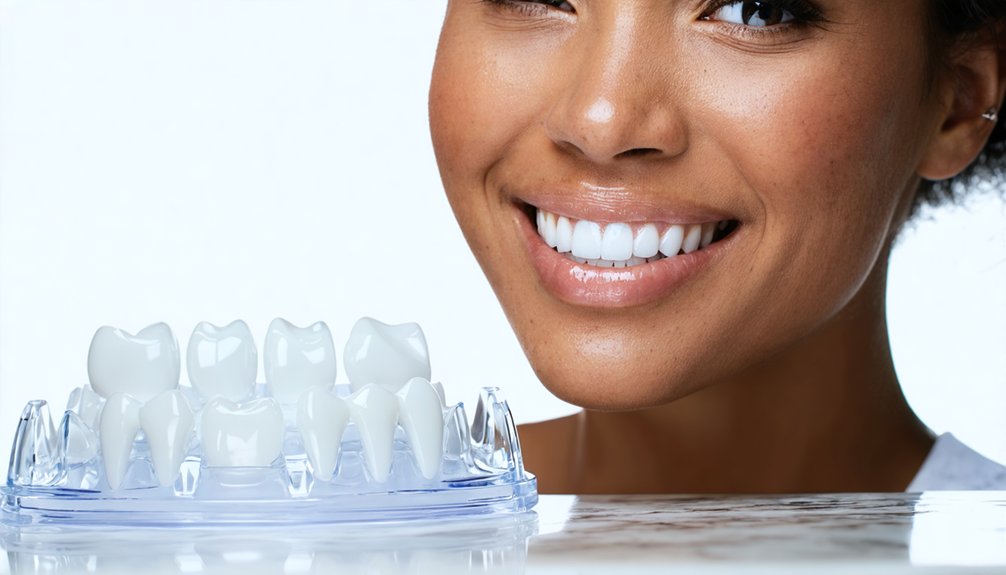
When standard bleaching protocols haven’t produced results, KöR Whitening is typically the next clinical recommendation for persistent genetic or intrinsic staining.
KöR effectiveness stems from its refrigerated gel storage system, which preserves peroxide potency from production to application — a factor most consumer and standard professional products can’t match.
KöR’s refrigerated storage keeps peroxide potency intact — something most whitening products simply can’t deliver.
For patients managing genetic discoloration, this matters. Intrinsic stains resist treatment partly because degraded whitening agents never reach full penetrating strength. KöR’s controlled delivery addresses that directly.
The system combines in-office sessions with custom take-home trays, extending active whitening beyond a single appointment. It’s also associated with minimal sensitivity, which makes sustained treatment more manageable.
If you’ve exhausted conventional options, KöR represents a clinically grounded escalation — not a cosmetic gamble.
BriteSmile: A Reliable In-Office Choice for Genetic Discoloration
BriteSmile is a reputable in-office whitening system with a strong clinical track record for addressing genetic and intrinsic discoloration.
If you’ve struggled with stains that resist standard treatments, BriteSmile benefits include a controlled, professionally supervised environment that reduces risk while maximizing outcomes.
The BriteSmile process follows a structured protocol:
- Pre-treatment assessment — your dentist evaluates stain depth and shade baseline
- Gel application — a professional-grade peroxide gel is precisely applied to natural teeth
- Light activation — a specialized light source accelerates the bleaching reaction
- Post-treatment evaluation — results are measured against your initial shade
This sequence gives you predictable, documented outcomes.
BriteSmile positions itself as a dependable option when genetic discoloration requires more than consumer-grade solutions can deliver.
Veneers and Microabrasion: Permanent Fixes When Whitening Isn’t Enough
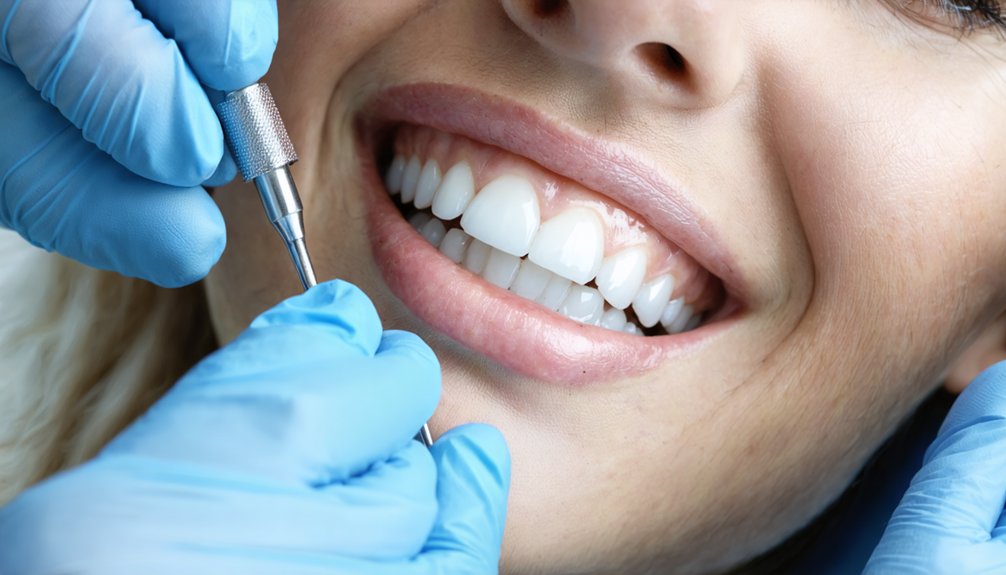
Sometimes whitening simply isn’t enough — particularly when staining stems from structural enamel defects, severe fluorosis, or deep intrinsic discoloration that bleaching agents can’t fully correct. In these cases, your dentist may recommend a permanent restorative approach.
Porcelain veneers mask severe discoloration entirely, bonding directly to your tooth’s surface. Veneer longevity ranges from 10–25 years with proper care, making them a durable, high-control solution for cases where aesthetics can’t be achieved through chemistry alone.
For surface-level fluorosis or enamel opacities, microabrasion offers a more conservative intervention. Studies report a microabrasion success rate of approximately 90.6%, making it a clinically validated first step before committing to irreversible restorative work.
Your dentist determines which option aligns with your specific defect depth and cosmetic goals.
Frequently Asked Questions
Can Genetically Stained Teeth Ever Be Whitened With At-Home Products?
At-home kits are virtually powerless against genetic stains. They offer limited whitening effectiveness for intrinsic discoloration. You’ll achieve far better results with professional-grade peroxide treatments supervised by your dentist for controlled, predictable outcomes.
Are Whitening Treatments Safe for Children With Genetic Tooth Discoloration?
Most dentists don’t recommend whitening for children due to child dental safety concerns and whitening age guidelines suggesting you wait until adulthood. You should consult your child’s dentist to explore safer, age-appropriate alternatives for genetic discoloration.
Does Dental Insurance Ever Cover Whitening for Genetically Stained Teeth?
Just when you need it most, coverage options often fall short. Most dental insurance won’t cover whitening for genetic stains due to treatment limitations, as it’s classified cosmetic—but you should verify your specific plan directly.
How Do Dentists Diagnose Whether Tooth Staining Is Genetic or Lifestyle-Related?
Your dentist identifies tooth staining causes through your medical history, dietary habits, and visual examination. These diagnostic methods help distinguish intrinsic, genetic discoloration from extrinsic, lifestyle-related staining, giving you a clear, evidence-based treatment path.
Can Genetic Tooth Stains Return After Successful Professional Whitening Treatment?
Yes, genetic factors mean your stains can return over time, affecting whitening longevity. You’ll need maintenance sessions—whether take-home trays or periodic in-office treatments—to sustain results, as intrinsic discoloration isn’t permanently eliminated by a single whitening procedure.
References
- https://clubwhitesmile.com/whitening-treatments-for-genetically-stained-teeth/
- https://www.healthline.com/health/dental-and-oral-health/best-teeth-whitening
- https://www.aspendental.com/dental-services/cosmetic-dentistry/teeth-whitening/
- https://hydrocarbures-anticosti.com/professional-teeth-whitening-for-stubborn-stains/
- https://www.ada.org/resources/ada-library/oral-health-topics/whitening
- https://www.womenshealthmag.com/beauty/g19965831/effective-teeth-whitening-treatments/
- https://www.drpeterhazim.com/teeth-whitening-options/
- https://www.dentaly.org/us/teeth-whitening/professional-teeth-whitening/
- https://www.forbes.com/sites/forbes-personal-shopper/article/best-teeth-whitening-kit/
- https://pmc.ncbi.nlm.nih.gov/articles/PMC4058574/