To keep your teeth white long-term, you’ll need more than just a single whitening session. Brush twice daily with whitening toothpaste, avoid staining foods like coffee and red wine, and rinse with water after consuming them. Follow a white diet for two to three days post-treatment, stay hydrated, and schedule professional touch-ups every three to six months. The tips ahead break down exactly how to make your results last.
Key Takeaways
- Brush twice daily with whitening toothpaste, floss regularly, and rinse with water after consuming staining foods or beverages.
- Avoid coffee, tea, red wine, and tobacco, as these rapidly reverse whitening results and weaken enamel.
- Follow a white diet for two to three days post-whitening, focusing on yogurt, pasta, and rice.
- Use straws when drinking staining beverages and chew sugar-free gum to stimulate saliva and neutralize acids.
- Schedule professional touch-ups every three to six months for deeper correction and personalized maintenance recommendations.
Why Whitening Results Fade Faster Than You Think?
Teeth whitening delivers immediate results, but the effects fade faster than most people expect—often within weeks of treatment.
Your enamel’s porous structure absorbs pigments from coffee, tea, red wine, and dark berries almost immediately after whitening.
Your enamel acts like a sponge after whitening, eagerly soaking up pigments from your favorite foods and drinks.
Acidic foods and beverages erode enamel care efforts by weakening the surface and increasing stain absorption.
Tobacco compounds penetrate deeply, reversing results regardless of treatment strength.
One of the most persistent whitening myths is that a single session provides permanent protection—it doesn’t.
Without dietary adjustments and consistent oral hygiene, discoloration returns quickly.
Your daily habits determine how long results last, not just the whitening method you choose.
Understanding these mechanisms gives you the control needed to make informed decisions that actively preserve your whitening investment.
Foods and Drinks That Stain Teeth the Most
Knowing what fades your results is only half the battle—you also need to identify the specific culprits behind recurring stains.
Coffee, tea, and red wine rank among the most damaging staining beverages, leaving pigment on enamel with every sip. Dark berries, tomato-based sauces, soy sauce, and vinegar compound the problem by introducing concentrated pigments directly onto tooth surfaces.
Red wine and grape juice accelerate enamel erosion through their high acid content, making teeth more porous and vulnerable to discoloration. Sugary candies and vibrant sauces further accelerate surface stain buildup.
You’re not powerless here—limiting these foods and beverages gives you direct control over how long your whitening results actually last. Awareness drives better daily decisions.
Follow a White Diet Right After Teeth Whitening
After teeth whitening, you’ll want to follow a white diet for two to three days to protect your newly brightened enamel.
Stick to foods like yogurt, cottage cheese, white bread, pasta, rice, and cauliflower, all of which minimize pigment exposure during this sensitive period.
Keep yourself well-hydrated with plain water throughout the day, as it reduces stain adhesion and helps prevent the dry mouth that makes teeth more vulnerable to discoloration.
White Diet Food Choices
What you eat in the first 48 to 72 hours after whitening directly determines how long your results last. Your enamel remains porous and highly vulnerable to pigment absorption during this window.
Strategic meal planning around white food options gives you full control over your outcome.
Prioritize these protective choices:
- Dairy: yogurt, milk, and cottage cheese neutralize acidity and support enamel recovery
- Grains: white bread, pasta, rice, and semolina provide safe, non-staining fuel
- Vegetables: cauliflower, celery, and white potatoes deliver nutrients without pigment risk
- Hydration: plain water prevents dry mouth and actively reduces stain adhesion
Avoid acidic fruits, colored sauces, and fruit juices entirely.
Every meal decision you make during this period either protects or compromises your whitening investment.
Hydration After Whitening
Hydration plays a direct role in how well your whitening results hold during the post-treatment window. Your enamel remains porous and vulnerable for 48–72 hours after treatment, making hydration timing critical.
Drinking plain water immediately after eating flushes residual pigments before they bond to exposed enamel surfaces. It also neutralizes mild acidity from food, reducing erosion risk during this sensitive phase.
The hydration benefits extend beyond stain prevention. Consistent water intake stimulates saliva production, which remineralizes enamel and creates a natural protective barrier against discoloration.
Avoid fruit juices, sodas, and acidic beverages during this window, as they counteract your whitening investment. Keep a water bottle accessible throughout the day to sustain consistent intake and support enamel recovery without interrupting your post-whitening protocol.
Daily Habits That Keep Your Whitening Results From Fading
Maintaining your whitening results long-term comes down to the daily habits you build around eating, drinking, and oral care. Ignoring these habits accelerates enamel erosion and triggers tooth sensitivity, undoing professional treatment faster than most whitening myths suggest.
You’re in control of how long your results last.
Build these non-negotiable daily habits:
- Brush twice daily for two minutes using a soft-bristled brush and occasional whitening toothpaste
- Floss once daily to eliminate pigment-trapping debris between teeth
- Rinse with water immediately after consuming staining foods or beverages
- Drink coffee, tea, or wine through a straw to reduce direct enamel contact
Consistency in your oral care routine determines whether your whitening investment holds or fades within weeks.
How Smoking and Tobacco Ruin Your Teeth Whitening Results
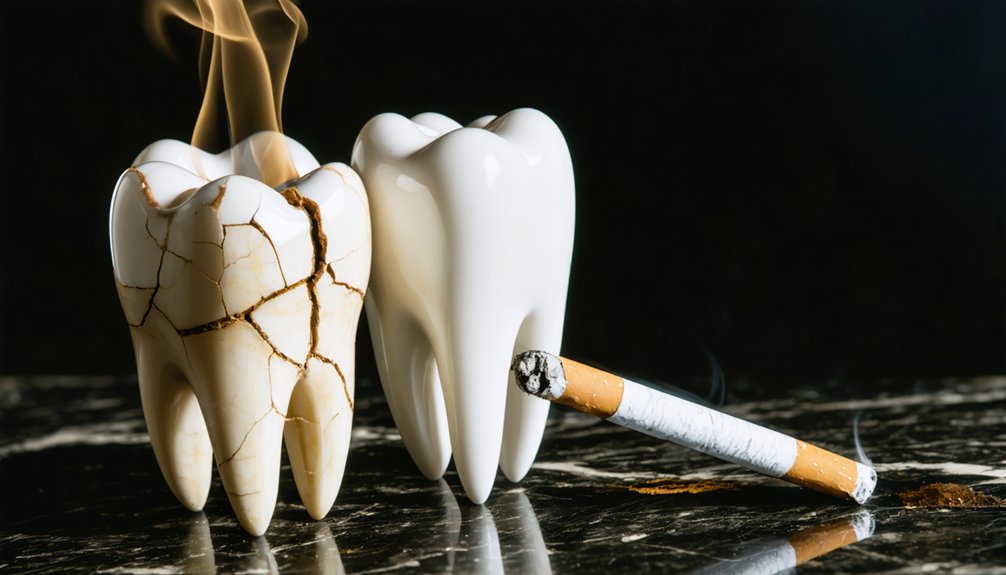
Smoking and smokeless tobacco are among the fastest ways to reverse professional whitening results.
When you smoke, tar and nicotine penetrate enamel deeply, creating stubborn yellow and brown discoloration that standard brushing won’t remove. Tobacco effects go beyond surface staining — they weaken your enamel structure, accelerating enamel erosion and making teeth more absorbent to future stains.
Smokeless tobacco delivers the same damage without combustion, so switching forms doesn’t protect your results. Every exposure resets the progress you’ve invested in.
To maintain whitening outcomes, you need to eliminate all tobacco and nicotine sources entirely. Quitting isn’t just cosmetic — it directly controls how long your whitening lasts and how quickly your enamel deteriorates.
Your results depend on this commitment.
How Long Can Teeth Whitening Results Actually Last?
Teeth whitening results typically last between six months and two years, depending on your habits, diet, and commitment to maintenance. You control the timeline.
Whitening myths often mislead people into expecting permanent results, but no treatment eliminates staining indefinitely. Managing teeth sensitivity and avoiding staining foods extends your results considerably.
Key factors that determine how long your whitening lasts:
- Diet choices – Coffee, red wine, and dark sauces accelerate discoloration faster than most people expect.
- Oral hygiene consistency – Brushing, flossing, and professional cleanings actively preserve brightness.
- Touch-up frequency – Periodic whitening pens or custom tray treatments reset fading results.
- Tobacco use – Even occasional smoking rapidly reverses whitening progress.
Treat your whitening results as maintenance-dependent, not permanent, and you’ll stay ahead of discoloration effectively.
Best Touch-Up Methods for Long-Lasting Teeth Whitening
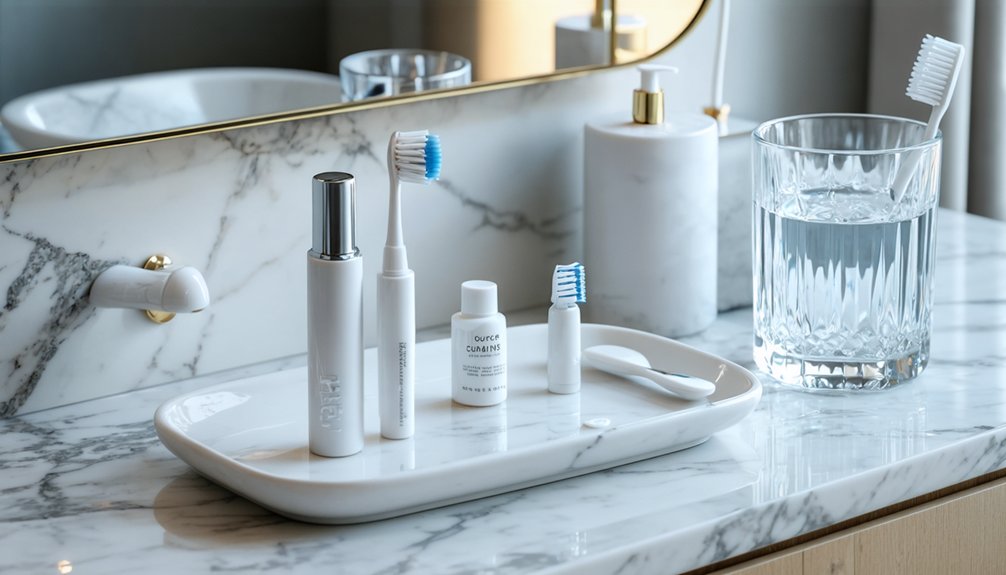
Even the best whitening results fade without a consistent touch-up routine, so knowing which methods work—and when to use them—keeps your smile reliably bright.
At home kits and whitening pens offer convenient maintenance between professional treatments, but you must verify ingredient concentrations before use to guarantee enamel protection. Carbamide peroxide levels above 10% require dentist recommendations to avoid sensitivity or tissue damage.
Touch up frequency depends on your diet and lifestyle, but most people benefit from monthly pen applications and quarterly tray sessions.
When using at home kits, always follow established safety guidelines—overuse accelerates enamel erosion rather than preserving whiteness.
Schedule periodic professional treatments for deeper correction, and consult your dentist to build a personalized protocol that matches your whitening goals and sensitivity threshold.
Lifestyle Habits That Protect Your Whitening Results Long-Term
Small daily habits make a significant difference in preserving your whitening results over time.
Drink staining beverages like coffee or tea through a straw to minimize direct contact with your enamel, and chew sugar-free gum after meals to stimulate saliva production, which naturally neutralizes acids and clears debris.
Staying consistently hydrated throughout the day prevents dry mouth, reduces stain adhesion, and supports overall enamel integrity.
Drink Through A Straw
One of the simplest habits you can adopt to protect your whitening results is drinking staining beverages through a straw. The straw benefits are clear—it redirects liquid past your front teeth, considerably reducing direct contact and pigment absorption.
This single adjustment delivers meaningful enamel protection without requiring you to eliminate beverages entirely.
Apply this habit consistently with:
- Coffee, tea, and cold brew to minimize tannin exposure on enamel surfaces
- Red wine and grape juice to reduce acid erosion and pigment staining
- Dark sodas and sports drinks that contain both acids and artificial dyes
- Berry smoothies and dark juices that deposit concentrated pigments on tooth surfaces
Use wide, reusable straws for comfort and pair this habit with rinsing immediately after drinking.
Chew Sugar-Free Gum
Chewing sugar-free gum after meals is a simple, effective habit that actively supports your whitening results. The mechanical action of chewing triggers saliva stimulation, which neutralizes acids, washes away food particles, and reduces stain adhesion on enamel surfaces.
These gum benefits extend beyond freshening breath—saliva acts as a natural buffer against the discoloration compounds found in everyday foods and beverages.
Choose gums containing xylitol, as this ingredient actively inhibits bacterial growth and strengthens enamel remineralization. Chewing for at least 20 minutes post-meal maximizes saliva production and its protective effects.
Avoid sugary gum entirely, since sugar feeds acid-producing bacteria and accelerates surface staining. Incorporating this habit consistently gives you a practical, low-cost tool for maintaining brightness between professional treatments and daily brushing routines.
Stay Consistently Hydrated
Staying consistently hydrated throughout the day is one of the simplest yet most effective strategies you can adopt to preserve your whitening results long-term.
Water delivers critical hydration benefits by neutralizing acids, washing away pigment-releasing particles, and reducing stain adhesion on enamel surfaces. Dry mouth accelerates discoloration, making hydration a non-negotiable daily habit.
Prioritize these enamel protection practices:
- Drink plain water consistently between meals to flush acidic residue before it weakens enamel.
- Choose water over sodas, citrus juices, or sports drinks that erode tooth surfaces.
- Rinse your mouth immediately after consuming staining foods or beverages.
- Carry a water bottle throughout the day to eliminate gaps in hydration.
Controlling your hydration habits directly controls how long your whitening results last.
How a Dentist Schedules Touch-Ups to Extend Your Results
Scheduling regular touch-up appointments with your dentist is the most reliable way to maintain whitening results over time. Your dentist evaluates your enamel condition, lifestyle habits, and initial treatment strength to develop dentist recommendations tailored specifically to your needs.
Based on those factors, they’ll determine the appropriate whitening frequency, which typically ranges from every three to six months for most patients.
During touch-up sessions, your dentist may apply professional-grade bleaching gel using custom trays for precise, controlled results. They’ll also monitor for enamel sensitivity or gum irritation before proceeding.
Between visits, they may recommend at-home whitening pens or gels to sustain brightness. Following your dentist’s structured schedule guarantees you’re not over-treating or under-maintaining—giving you consistent, measurable control over your whitening outcomes.
Frequently Asked Questions
Can Teeth Whitening Treatments Cause Permanent Sensitivity or Nerve Damage?
Like Achilles’ one vulnerability, whitening rarely causes permanent damage, but you’ll want to prioritize sensitivity management and nerve health by consulting your dentist, using lower concentrations, and allowing recovery time between treatments.
Are Whitening Results Different for Crowns, Veneers, or Dental Implants?
Yes, whitening longevity varies—crowns, veneers, and implants don’t respond to bleaching agents like natural enamel does. You’ll need to explore alternative treatment options with your dentist to achieve consistent, uniform results across all restorations.
Does Teeth Whitening Work the Same for Naturally Yellow Versus Gray Teeth?
Whitening doesn’t work equally—natural discoloration from yellow tones responds well, but gray teeth, often caused by internal staining or trauma, resist treatment. Your whitening effectiveness depends entirely on the discoloration’s origin, not just its appearance.
Is Teeth Whitening Safe During Pregnancy or While Breastfeeding?
You shouldn’t pursue teeth whitening safety isn’t guaranteed during pregnancy or breastfeeding. Pregnancy concerns include potential chemical absorption affecting fetal development. Consult your dentist to explore safer alternatives until after you’ve finished breastfeeding completely.
At What Age Is Teeth Whitening Considered Safe for Younger Patients?
Most teeth whitening regulations set age recommendations at 16–18 years. You shouldn’t pursue whitening before enamel fully develops, as it risks sensitivity and damage. Always consult your dentist to determine the safest, most appropriate timing for younger patients.
References
- https://www.oxforddental.com/how-to-maintain-your-teeth-whitening-results-for-longer/
- https://www.youtube.com/watch?v=iFYTiRVmjjI
- https://www.topdoctors.co.uk/medical-articles/5-tips-longer-lasting-teeth-whitening-bleaching-results/
- https://www.md.co.uk/blog/how-to-maintain-teeth-whitening-results-for-longer
- https://www.camarillopremierdental.com/best-oral-care-routine-for-long-lasting-white-teeth/
- https://pearcedentalgroup.com/blog/top-10-teeth-whitening-tips-for-long-lasting-results/
- https://www.americandentalofsandiego.com/blog/heres-how-you-can-make-your-teeth-whitening-last-longer
- https://health.clevelandclinic.org/how-to-whiten-teeth
- https://www.westmaddental.com/blog/teeth-whitening-tips-maintain-smile/51502
- https://www.healthline.com/nutrition/whiten-teeth-naturally