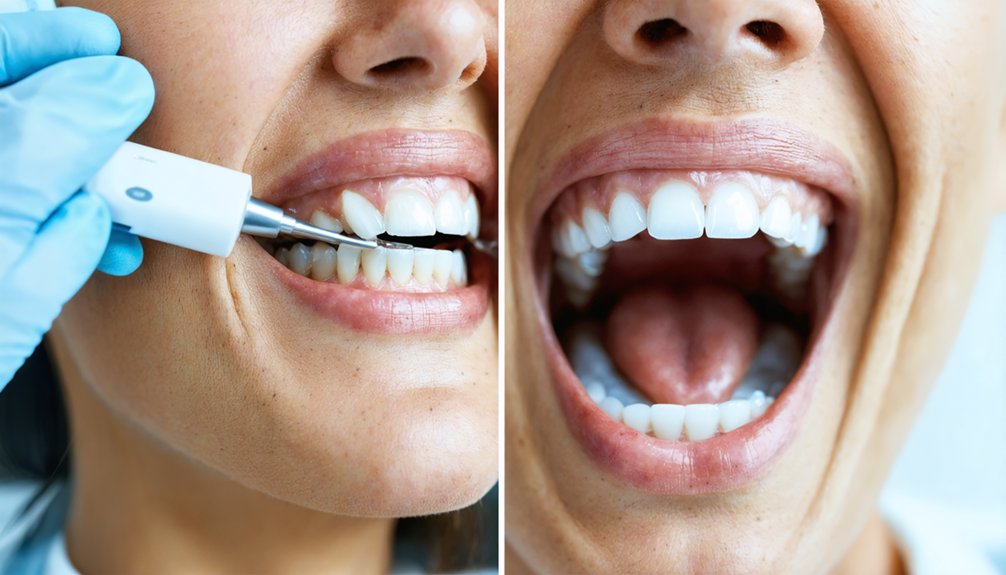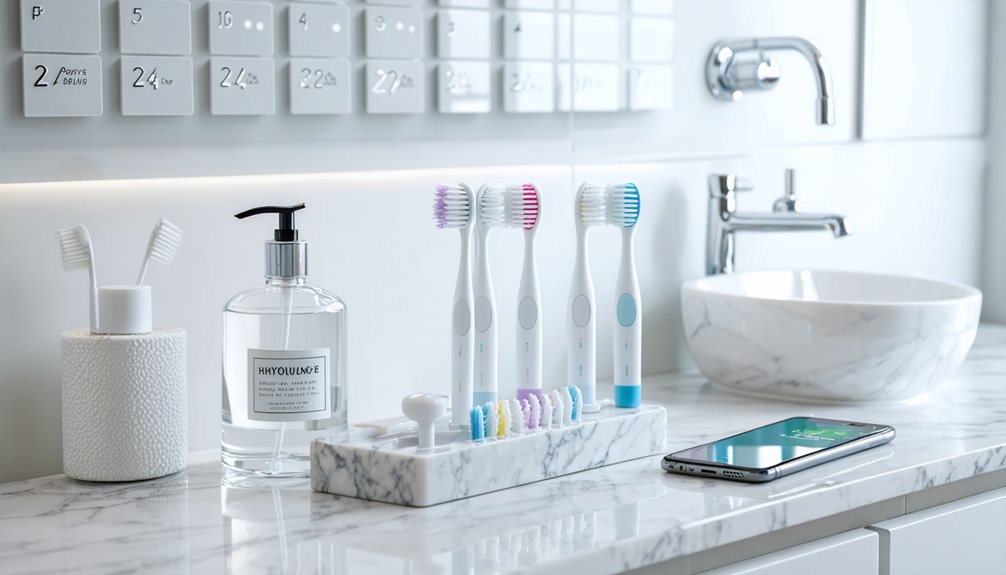
You can whiten your teeth safely at home, but you’ve got to choose your methods carefully. Stick to low-concentration hydrogen peroxide or baking soda paste used sparingly, and always brush twice daily with fluoride toothpaste and a soft-bristled brush. Avoid activated charcoal, lemon juice, and acidic ingredients that permanently erode enamel. Watch for sensitivity, gum irritation, or increased translucency as warning signs. Everything you need to protect your smile while still getting results is ahead.
Key Takeaways
- Avoid harmful ingredients like activated charcoal and lemon juice, as they erode enamel and increase long-term staining and decay risk.
- Brush twice daily with a soft-bristled toothbrush and fluoride toothpaste, and floss daily to remove plaque and stain-causing residue.
- Use baking soda sparingly as a mild abrasive and limit hydrogen peroxide to safe concentrations of 1.5% or 3%.
- Stop whitening immediately if you experience sensitivity, gum irritation, white patches, or increased tooth surface roughness or translucency.
- Consult a dentist for intrinsic stains or persistent discoloration, as DIY methods cannot address underlying decay or structural damage.
The Most Common DIY Whitening Mistakes
Many people assume that more abrasive or acidic ingredients mean faster, better results—but that reasoning works against your enamel.
Common misconceptions drive harmful trends like activated charcoal scrubs and lemon juice rinses—both of which erode enamel and increase long-term staining risk. Vinegar carries the same acidic danger.
Overly abrasive toothpastes labeled “maximum scrubbing” create microscopic grooves that trap discoloration rather than eliminate it.
Unsupervised, frequent peroxide use amplifies sensitivity and gum irritation rather than accelerating safe whitening.
Using baking soda daily as a toothpaste replacement removes too much enamel over time.
You retain more control over your results by understanding what causes damage than by chasing aggressive methods.
Protecting enamel is a prerequisite—not an afterthought—to achieving and maintaining whiter teeth.
Start With a Strong Brushing and Flossing Routine
Before trying any whitening method, you need to establish consistent brushing and flossing habits, since no DIY treatment compensates for poor foundational hygiene.
Brush twice daily for two minutes using a soft-bristled toothbrush and fluoride toothpaste, and floss once daily to clear plaque and stain-causing residue from between teeth.
An electric toothbrush can improve your cleaning effectiveness, but the tool matters less than your commitment to daily consistency.
Brush and Floss Daily
Building a consistent brushing and flossing routine forms the foundation of any whitening effort. You should brush twice daily for two minutes using proper brushing techniques — gentle, circular strokes with a soft-bristled brush — to remove surface stains and plaque effectively. Hard scrubbing accelerates enamel wear, which you’ll want to avoid.
Flossing benefits your whitening goals by clearing stain-causing residue between teeth that brushing can’t reach. Skipping it undermines your overall results. Use fluoride toothpaste with mild whitening ingredients rather than overly abrasive formulas that can create microscopic enamel grooves over time.
An electric toothbrush improves cleaning efficiency if manual brushing feels inconsistent. Without this daily discipline, no whitening method — DIY or professional — will deliver lasting, reliable improvement.
Choose the Right Tools
Choosing the right tools can meaningfully affect how well your whitening routine performs. Your toothbrush type directly influences enamel safety and plaque removal efficiency. Selecting appropriate whitening tools reduces unnecessary damage while improving results.
- Use a soft-bristled toothbrush. Hard bristles accelerate enamel wear and increase gum irritation, undermining your whitening efforts.
- Consider an electric toothbrush. Clinical evidence supports its superior plaque removal compared to manual brushing, making it one of the more effective whitening tools available without a prescription.
- Select fluoride toothpaste with gentle whitening agents. Avoid formulas labeled “maximum abrasion” or “charcoal scrubbing,” as these create microscopic enamel grooves that trap future stains.
Your toothbrush type and tool choices aren’t minor decisions—they’re foundational to safe, controlled whitening outcomes.
Build Consistent Habits
The right tools only deliver results when you use them consistently. Brush twice daily for two minutes using gentle pressure, and floss every night without exception. Skipping sessions allows plaque and staining compounds to accumulate, which undoes whitening progress faster than most people expect.
Habit tracking gives you measurable data on your compliance. Use a simple app or paper log to record each session, and review it weekly to identify patterns where you’re falling short.
Motivation techniques like attaching brushing to an existing routine — morning coffee or bedtime — reduce the mental effort required to stay consistent.
Consistency protects enamel, controls discoloration, and reduces your dependence on corrective whitening methods. Treat this routine as non-negotiable, not optional.
DIY Whitening Ingredients That Actually Work
When it comes to DIY whitening, not every popular ingredient is actually safe or effective — but two stand out as having reasonable evidence behind them.
Baking soda benefits include mild abrasive action that lifts surface stains without harsh chemical exposure.
Hydrogen peroxide safety depends entirely on concentration — stick to 1.5% or 3% solutions and follow directions precisely.
Use these ingredients correctly by following three evidence-based guidelines:
- Mix baking soda with water into a soft paste and limit use to a few times per week to reduce enamel abrasion.
- Cap peroxide use immediately if sensitivity develops — that’s your warning signal.
- Never replace regular fluoride toothpaste with either ingredient as your sole oral hygiene tool.
DIY Whitening Ingredients That Damage Enamel
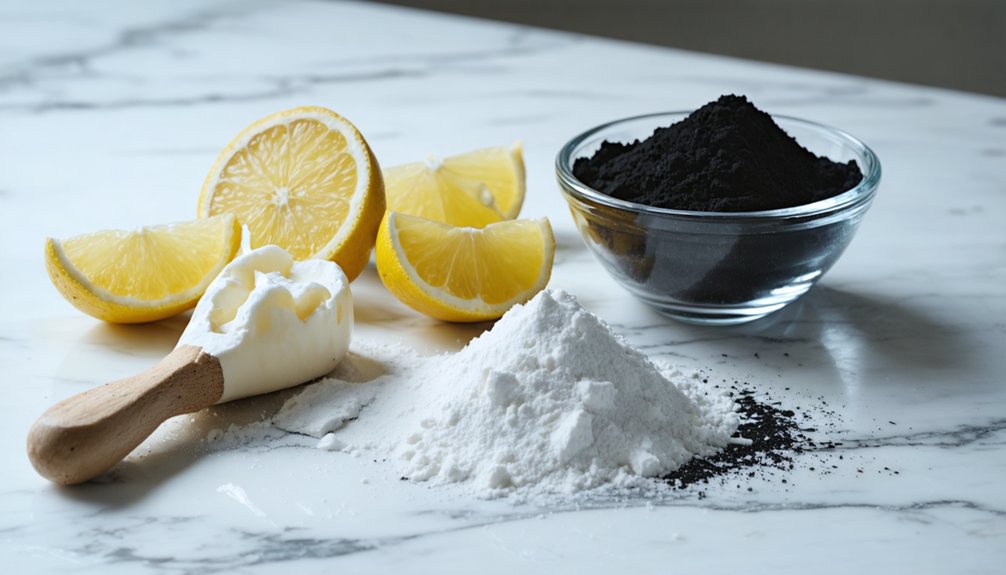
While some DIY ingredients deliver measurable results, others actively harm your enamel despite their popularity.
Activated charcoal, for example, contains abrasive particles that scratch enamel surfaces and create microscopic grooves where stains later accumulate, making discoloration worse over time.
Acidic ingredients like lemon juice and vinegar pose an equally serious risk, as their low pH erodes enamel with repeated use, causing irreversible structural damage.
Activated Charcoal Enamel Risks
Activated charcoal may seem like a natural whitening solution, but its abrasive particles can scratch and erode enamel with repeated use.
Once enamel wears down, it doesn’t regenerate, leaving your teeth vulnerable to stain trapping in microscopic surface grooves.
Consider these evidence-based risks before using activated charcoal:
- Enamel erosion — Coarse charcoal particles physically scratch enamel, accelerating irreversible wear.
- Stain trapping — Roughened enamel surfaces collect pigments more easily, worsening discoloration over time.
- Lack of verified safety data — No ADA approval currently supports activated charcoal as a safe whitening method.
For alternative whitening, choose ADA-approved whitening toothpastes with controlled abrasivity or low-concentration hydrogen peroxide products.
You’ll protect your enamel while still pursuing measurable whitening results.
Acidic Ingredients To Avoid
Although lemon juice and vinegar are popular in DIY whitening circles, both are acidic enough to dissolve the mineral structure of enamel on contact.
Acidic ingredient dangers extend beyond surface sensitivity — repeated exposure softens enamel permanently, increasing vulnerability to staining, decay, and erosion. You can’t reverse that structural loss once it occurs.
Enamel damage risks from acidic applications compound over time. Even diluted solutions of lemon juice or apple cider vinegar lower your mouth’s pH enough to initiate demineralization.
The cosmetic appeal of these ingredients doesn’t outweigh their documented harm.
Avoid applying any acid-based substance directly to your teeth as a whitening method. If you’ve consumed acidic foods or drinks, rinse with water and wait 30 to 60 minutes before brushing.
How Your Diet Affects DIY Whitening Results
Even the most consistent whitening routine can lose ground if your diet works against it. Your food choices directly influence stain prevention, color maintenance, and enamel health.
Beverage effects are particularly significant — coffee, red wine, black tea, and soda accelerate discoloration faster than most DIY methods can reverse it.
To maintain whitening balance and nutritional support:
- Rinse with water immediately after consuming stain-producing foods or drinks to reduce residue buildup.
- Use a straw for iced coffee or tea to limit direct contact with front teeth.
- Incorporate calcium-rich foods like cheese and milk to reinforce enamel health against diet impact.
Controlling what enters your mouth is as critical as any whitening product you apply.
How to Use OTC Whitening Products Without Overdoing It
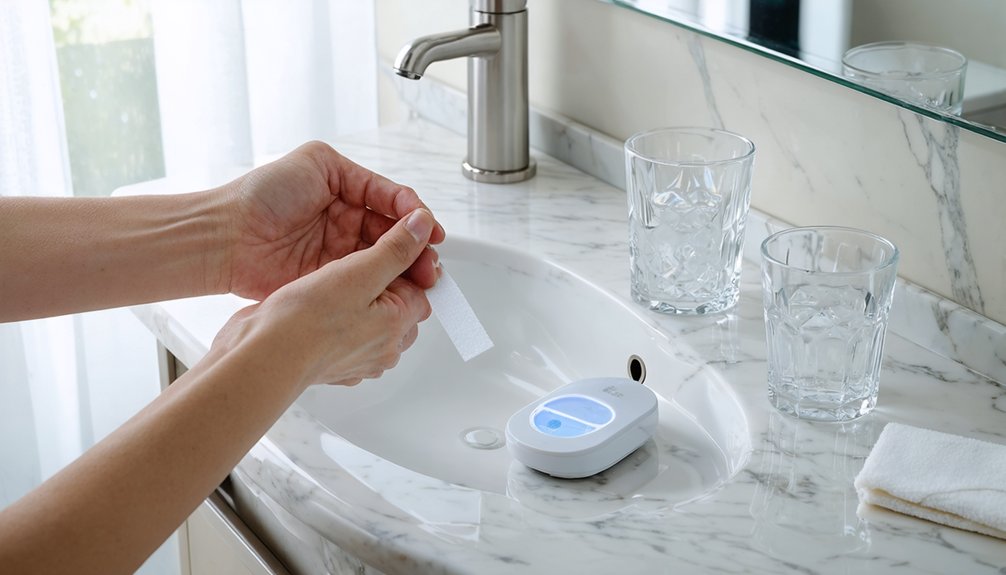
Controlling dietary staining sets a stronger foundation, but what you apply to your teeth carries equal weight in your whitening outcomes.
Over-the-counter products vary greatly in concentration and formulation, so following directions precisely isn’t optional—it’s essential for both product effectiveness and safety.
Whitening frequency is where most people go wrong. Applying strips or gels more often than directed won’t accelerate results; it’ll increase sensitivity and gum irritation.
If discomfort develops, reduce usage immediately and allow recovery time before resuming.
Always choose ADA-approved products over unverified alternatives.
Avoid layering multiple whitening methods simultaneously, such as combining peroxide strips with whitening toothpaste and baking soda on the same day.
If you have cavities, cracks, or gum disease, consult your dentist before starting any OTC whitening regimen.
Signs Your DIY Whitening Routine Is Hurting Your Teeth
Sensitivity is your clearest signal that your whitening routine has crossed a safe threshold. When you ignore early sensitivity signs, you risk compounding enamel damage that becomes irreversible.
Watch for these three warning indicators:
- Tooth sensitivity during or after whitening — sharp or lingering pain signals that peroxide concentration or frequency is too high.
- Gum irritation or white patches along the gumline — these indicate chemical exposure beyond what tissue tolerates safely.
- Increased surface roughness or translucency at tooth edges — visible enamel damage requiring immediate cessation and dental evaluation.
If you notice any of these, stop your current method immediately.
Reduce frequency, lower peroxide strength, or discontinue entirely until you consult a dentist. Early intervention prevents deeper structural compromise.
When DIY Whitening Isn’t Enough
Some discoloration runs deeper than surface stains, and no amount of baking soda or peroxide will correct it.
Intrinsic stains caused by fluorosis, tetracycline use, or enamel damage originate within the tooth structure itself. These fall outside DIY whitening limitations entirely.
Intrinsic stains live inside the tooth itself — beyond the reach of any whitening strip or DIY remedy.
If you’ve maintained a consistent routine for several weeks without visible improvement, that’s a clear signal to stop and consult a dentist.
Persistent discoloration may also indicate underlying issues like decay or cracked enamel that whitening products can worsen.
Professional alternatives, including in-office bleaching or custom tray systems supervised by a dentist, deliver stronger, controlled results.
Pursuing unverified DIY escalations won’t compensate for what requires clinical intervention. Recognizing this boundary protects both your enamel and your long-term oral health.
Frequently Asked Questions
Can Calcium-Rich Foods Genuinely Help Protect Enamel During Whitening Routines?
Yes, calcium-rich foods can support enamel strengthening during whitening routines. You’ll benefit from including calcium sources like milk, cheese, and broccoli, but they don’t replace professional guidance when sensitivity or enamel damage occurs.
Does Smoking Significantly Reverse Progress Made Through DIY Whitening Efforts?
Yes, smoking’s effects actively reverse your DIY whitening progress by deeply staining enamel over time. You can’t achieve meaningful enamel restoration while continuing tobacco use, as it consistently undoes whitening gains and accelerates discoloration.
Should Children or Teenagers Attempt Any Form of DIY Teeth Whitening?
Like a double-edged sword, DIY whitening carries real safety concerns for young users. You shouldn’t let children or teenagers attempt it—age restrictions exist because developing enamel and roots aren’t ready for whitening agents’ effects.
Can Electric Toothbrushes Replace the Need for Any Whitening Products Entirely?
Electric toothbrush benefits won’t fully replace whitening product alternatives. You can lift surface plaque and reduce dinginess, but deeply set stains require targeted treatments. Don’t assume brushing alone achieves significant whitening without additional, evidence-based interventions.
Does Drinking Water Fluoride Content Affect DIY Whitening Product Effectiveness?
Like background noise, drinking water’s fluoride absorption doesn’t directly block whitening ingredients’ effectiveness. You’ll find DIY whitening results depend more on consistent application, stain severity, and enamel health than your water’s fluoride levels.
References
- https://www.dentalcareofmidfl.com/blog/six-simple-ways-whiten-teeth-naturally/
- https://www.queensparkclinic.co.uk/23-0911-safe-ways-to-whiten-teeth-at-home-without-harsh-chemicals/
- https://www.hyannisdental.com/blog/effective-diy-teeth-whitening-tips-and-tricks/
- https://www.northeastdentalarts.com/blog/what-is-the-least-damaging-way-to-whiten-your-teeth/
- https://www.healthline.com/nutrition/whiten-teeth-naturally
- https://www.lwdentist.com/diy-teeth-whitening-what-works-and-what-to-avoid/
- https://mypenndentist.org/dental-tips/2024/02/29/safe-ways-to-whiten-teeth-naturally/
- https://www.mindbodygreen.com/articles/how-to-naturally-whiten-your-teeth-at-home
- https://worldofdentistry.org/diy-teeth-whitening/
- https://health.clevelandclinic.org/how-to-whiten-teeth