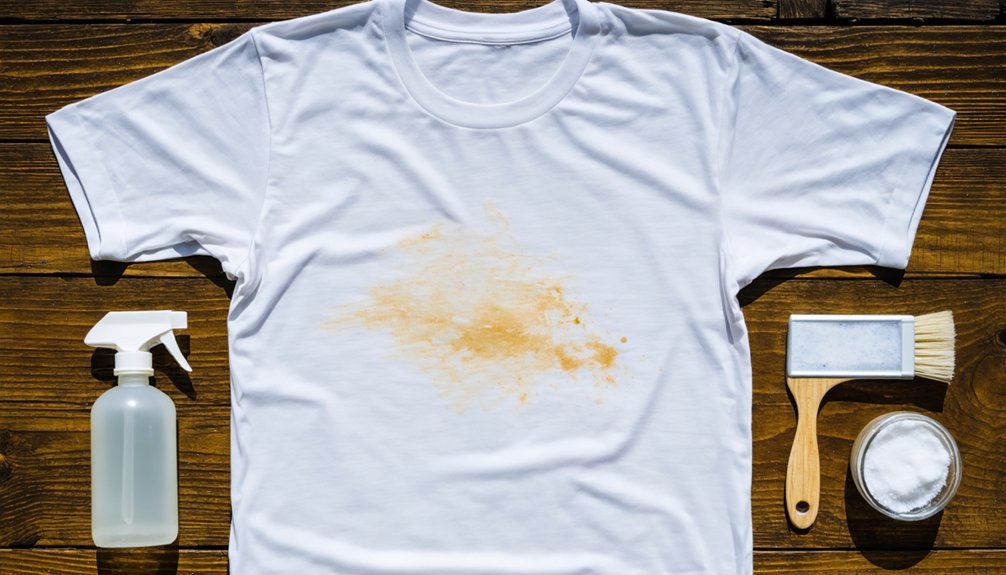
Your best options for medication stain removal depend on what caused the stain. Liquid syrups respond to dish soap or white vinegar, while oily gels need a solvent like rubbing alcohol first. Crushed tablets require scraping before any liquid treatment. Always use cold water, never hot, and avoid the dryer until the stain’s fully gone. The right method makes the difference between a clean fabric and a permanent mark—and there’s more to know about each approach.
Key Takeaways
- Blot liquid medication stains immediately with a clean cloth, then flush from the back with cold water to prevent setting.
- Identify the medication type first; syrup stains need tannin treatment, oily medications require solvents, and creams need dish soap.
- Apply enzyme-based detergent or dish soap directly to fresh stains, letting it sit 5–30 minutes before cold-water laundering.
- For set-in stains, soak in enzyme detergent solution for several hours, then apply oxygen bleach for safe, effective removal.
- Delicate fabrics require mild detergent, careful blotting, and air drying; consult a professional cleaner if home treatments fail.
Why Medication Stains Are Harder to Remove Than Most
Medication stains present a unique removal challenge because they often combine multiple stain types in a single deposit—dyes, binders, coatings, oils, and active chemical compounds—each requiring a different treatment approach.
This complex stain composition means no single cleaner addresses every component simultaneously. A solvent effective against oily coatings may leave dye residue behind, while a water-based treatment targeting dyes won’t touch grease-based binders.
These layered cleaning challenges are compounded by the fact that heat, incorrect solvents, or delayed treatment can permanently bond certain compounds to fabric fibers.
You’re also dealing with active pharmaceutical ingredients that may react unpredictably with common household cleaners.
Understanding what’s actually in the stain—not just its surface appearance—determines which removal sequence you apply and in what order.
What Type of Medication Caused the Stain
Whether you’re dealing with a liquid syrup, a crushed tablet, a gel capsule, or a topical cream determines your entire removal strategy before you apply a single cleaner.
Medication types produce distinct stain characteristics that demand targeted approaches:
Medication types leave behind distinct stains — and each one demands a completely different removal approach.
- Liquid syrups: sugar and dye-based; treat as a tannin stain using cold water and vinegar early
- Crushed tablets: powdered binders and pigments; scrape solids first, then pretreat with enzyme detergent
- Gel capsules: oily residue base; apply solvent-based treatment before any water-based cleaner
- Topical creams: combined oil and chemical carriers; use dish soap or dry-cleaning solvent depending on cream composition
Misidentifying the medication type leads to the wrong cleaner, which can permanently set the stain.
Identify first, then act.
Act Fast: What to Do Before Reaching for Any Cleaner
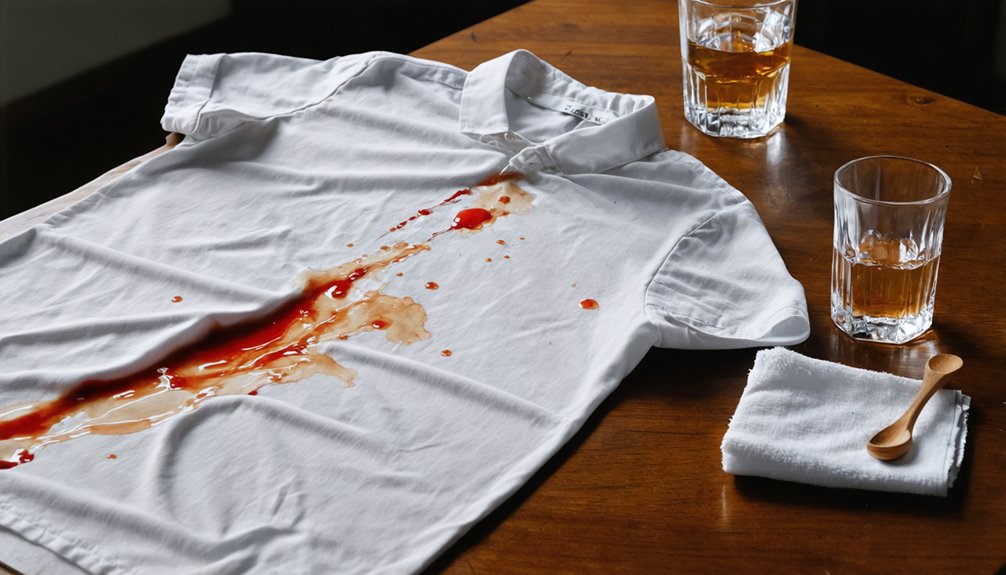
Once you’ve identified the medication type, your next move happens before any cleaner touches the fabric. Immediate mechanical removal is critical for stain prevention. Use a dull knife or spoon to lift any solid residue without pressing deeper into the fibers.
For liquid medication, blot firmly with a clean cloth — don’t rub.
Flush fresh stains from the back of the fabric using cold water. This pushes residue out rather than driving it further in. Avoid hot water entirely; heat sets certain compounds permanently, compromising your fabric care efforts before treatment even begins.
Don’t apply any cleaning agent until you’ve completed these steps. Acting within the first few minutes dramatically improves your removal outcome, regardless of which cleaner you’ll use next.
Cold Water and Dish Soap for Fresh Medication Stains
Once you’ve blotted away the excess, flush the stained area with cold water from the back of the fabric to push the medication residue out of the fibers rather than deeper in.
Apply a small amount of dish soap or enzyme-based laundry detergent directly to the stain, working it gently into the fabric with your fingers or a soft brush.
Let the pretreatment sit for 5 to 30 minutes before rinsing, and avoid hot water at every stage since heat can permanently set the stain.
Rinsing Fresh Medication Stains
Fresh medication stains respond best when you act within the first few minutes. Immediate rinsing limits how deeply residue penetrates the fabric fibers, which is a key stain prevention tip for long-term fabric care.
Flush the stained area from the back of the fabric using cold water. This pushes the medication residue out rather than driving it deeper. Avoid hot water entirely, since heat can set the stain permanently.
Follow these rinsing steps precisely:
- Use cold running water at steady, moderate pressure
- Flush from the reverse side of the fabric
- Continue rinsing for at least 60 seconds
- Blot excess moisture with a clean, dry cloth afterward
After rinsing, the fabric is ready for dish soap pretreatment as the next removal step.
Applying Dish Soap Treatment
After rinsing, apply a small amount of dish soap directly to the stained area and work it gently into the fibers using your fingertips.
Dish soap effectiveness depends on direct contact with the stain, so guarantee full coverage without over-saturating the fabric. Use cold water to lightly dampen the treated area, then continue working the soap into the fibers with controlled circular motions.
Pretreatment timing is critical here. Let the dish soap sit for 5 to 30 minutes before laundering, giving the surfactants time to break down medication residue.
Don’t rinse prematurely. For enzyme-based dish soaps, that dwell time accelerates the breakdown of organic compounds within the stain.
After the waiting period, launder the garment in cold water according to its care label instructions.
How to Treat Oily Medication Stains With Solvents First
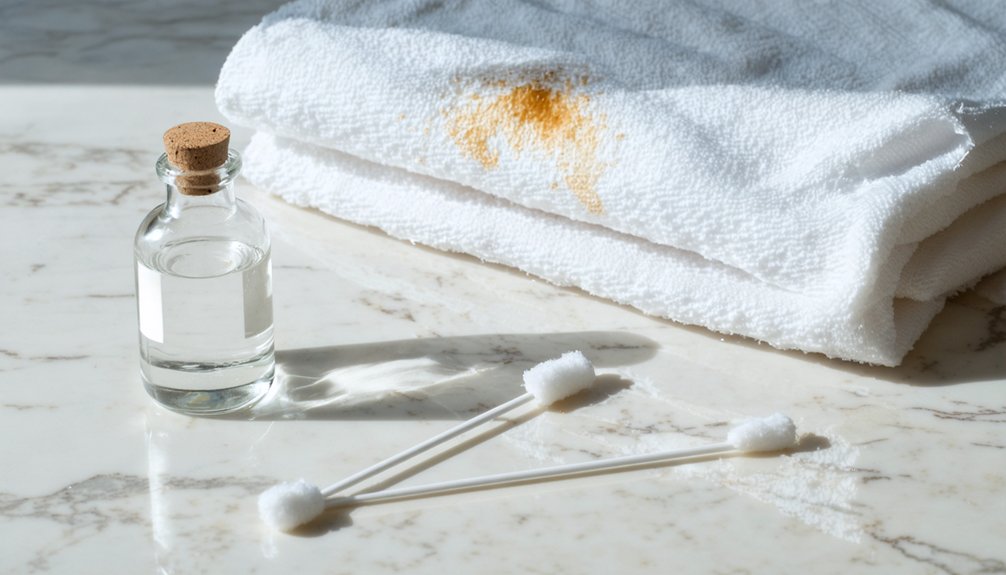
Oily medications—including ointments, creams, and gel capsule residues—require a solvent-based first step before any water or detergent is applied, since water alone can drive oil deeper into fabric fibers.
Your solvent options include rubbing alcohol, acetone, and dry-cleaning solvent, each effective depending on fabric tolerance.
Follow these treatment techniques precisely:
- Apply solvent to a clean cloth, then blot the stain from the outer edge inward.
- Allow the solvent to penetrate for 3 to 5 minutes before lifting residue.
- Use a dull knife or spoon to remove loosened oily material.
- Repeat solvent application if greasy residue remains before introducing detergent.
Only after the oily component is fully broken down should you proceed with dish soap or detergent pretreatment and laundering.
When Hydrogen Peroxide or Oxygen Bleach Is the Right Call
When dish soap and solvent pretreatment fail to fully clear medication residue, you’ll need a stronger oxidizing agent to break down what’s left.
Hydrogen peroxide works well for lighter or white fabrics—apply it directly, let it sit for 10 to 15 minutes, and then wash as directed.
For colored or mixed fabrics where peroxide risks bleaching, oxygen bleach is the safer choice, offering comparable stain-lifting power with broader fabric compatibility.
Targeting Stubborn Medication Residue
Some medication stains resist standard soap-and-water treatment, and that’s when hydrogen peroxide or oxygen bleach becomes the right tool.
Medication types like iron supplements, liquid antibiotics, and topical ointments leave residues that require oxidizing agents to break down effectively.
Apply hydrogen peroxide directly and let it sit for 10 to 15 minutes before washing. For set-in residue, oxygen bleach provides deeper penetration with broader fabric compatibility.
Key application steps for stubborn medication residue:
- Test the fabric first to confirm colorfastness
- Apply hydrogen peroxide or oxygen bleach directly to the stain
- Allow a minimum 10-minute dwell time before rinsing
- Repeat the cycle if residue remains after the first wash
Stain prevention starts with prompt action, but oxidizing treatments give you reliable control over resistant medication stains.
Oxygen Bleach Versus Peroxide
Hydrogen peroxide and oxygen bleach both use oxidation to break down medication residue, but they’re not interchangeable.
Peroxide effectiveness peaks on light or white fabrics, where its bleaching action won’t compromise color integrity. Apply a 3% solution directly, let it sit 10 to 15 minutes, then flush with cold water before washing.
Oxygen bleach benefits extend further across fabric types. It works more slowly but handles set-in medication stains on colored fabrics with less risk of fiber degradation.
Dissolve it in warm water, soak the stained garment for several hours, then launder as directed.
Choose peroxide for fresh stains on white fabric. Choose oxygen bleach for older residue on colorfast materials.
Never combine either with chlorine bleach, as this destabilizes the treatment chemistry.
Vinegar and Baking Soda as a Gentler Treatment Option
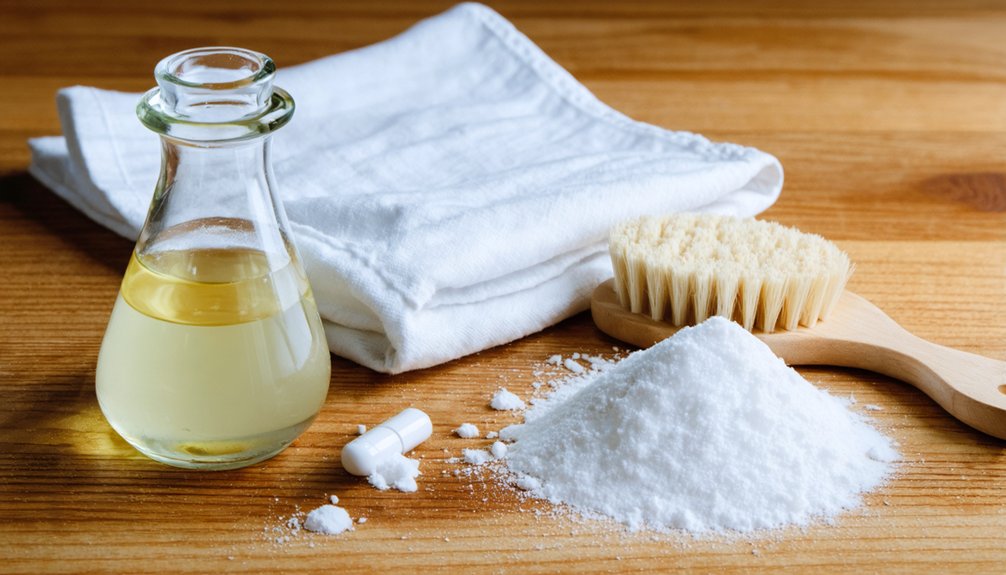
For a gentler, low-cost alternative, white vinegar and baking soda offer a color-safe treatment option worth trying before reaching for stronger chemicals.
Vinegar benefits include breaking down tannin-based residues common in liquid medications, while baking soda effectiveness comes from its ability to lift stains and neutralize odors simultaneously.
Vinegar breaks down tannin residues while baking soda lifts stains and eliminates odors in one step.
Apply this method with precision:
- Saturate the stain with undiluted white vinegar and let it penetrate for 20–30 minutes.
- Sprinkle baking soda directly over the vinegar-treated area to activate the fizzing lift action.
- Work the paste gently into the fibers using a soft brush.
- Launder in cold water immediately after treatment.
Spot test unfamiliar fabrics first.
These methods suit delicate or colored fabrics that can’t tolerate peroxide or oxygen bleach.
How to Remove Set-In or Dried Medication Stains
Set-in medication stains require a more aggressive approach than fresh ones, since dried residue bonds more deeply to fabric fibers over time.
Start by scraping off any crusted material with a dull knife, then soak the affected area in an enzyme-based detergent solution for several hours or overnight. Enzyme formulas break down organic residue that standard detergents can’t lift effectively.
For stubborn cases, apply an oxygen bleach solution suited to your fabric care label‘s specifications, letting it penetrate for 15 to 30 minutes before washing.
Repeat the pretreat-soak-wash cycle if residue remains. Avoid heat until the stain is fully gone.
Following these stain prevention tips early reduces the likelihood of permanent bonding, but set-in stains often demand multiple targeted treatment cycles before full removal.
Fabrics That Need a Gentler Approach
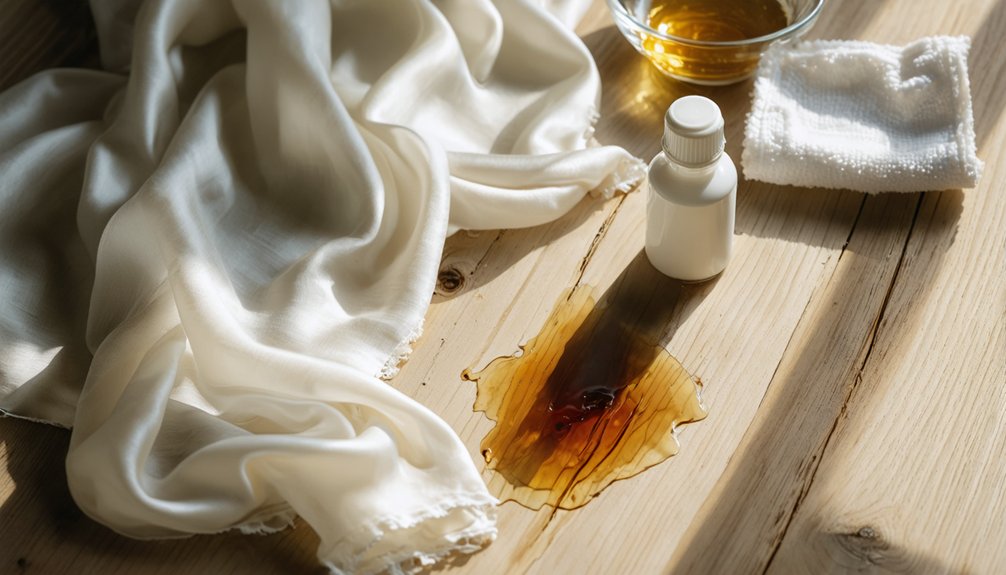
While aggressive treatment works on durable fabrics, delicate materials can’t tolerate the same methods without risking damage.
Durable fabrics withstand aggressive treatment, but delicate materials demand a gentler approach to avoid irreversible damage.
When dealing with medication stains on delicate fabrics, you’ll need to apply gentle treatments that preserve fiber integrity.
Follow these protocols for vulnerable materials:
- Mix mild detergent with cold water only — avoid enzyme formulas on silk or wool
- Blot stains carefully; never rub, as delicate fibers break down quickly under friction
- Spot test white vinegar or hydrogen peroxide on a hidden area before full application
- Skip heat entirely — air dry only, since dryers can permanently set residual staining
If home gentle treatments fail, don’t push further.
Professional dry cleaning gives you the most controlled outcome for valuable or structurally fragile garments without risking irreversible fiber damage.
When to Call a Professional Cleaner
Some medication stains — particularly dye-based or oily formulations on delicate or high-value fabrics — will resist every home treatment method you apply.
When repeated pretreatment, enzyme soaking, and solvent application fail to clear residue, you’ve reached the limit of safe DIY intervention. At that point, professional dry cleaning is your most controlled option.
Communicate the stain’s source clearly to the cleaner, since medication formulations vary greatly and affect solvent selection. Fabric care labels also provide critical data the professional will need before treatment begins.
For future incidents, applying stain prevention tips — such as immediate blotting and cold-water flushing before residue sets — reduces the likelihood you’ll need professional intervention again.
Waiting too long or over-treating at home can permanently compromise the fabric and eliminate recovery options.
Frequently Asked Questions
Can Medication Stains Cause Permanent Fabric Discoloration Over Time?
Yes, medication stains can permanently discolor fabric if you delay treatment. You’ll prevent irreversible damage through prompt stain prevention action—blot immediately, avoid heat, and apply enzyme detergent early to maintain proper fabric care and color integrity.
Are There Specific Washing Machine Settings Best for Medication-Stained Clothing?
Use the gentle cycle with cold water—never hot water—to protect fibers and prevent setting medication stains. You’ll want to pretreat first, then let your machine’s gentle cycle handle the rest methodically.
Do Medication Stains Smell, and How Can Odors Be Eliminated?
Yes, medication stains can smell. You’ll eliminate odors using targeted odor neutralization techniques: apply white vinegar or baking soda as fabric treatment methods, let them sit 20–30 minutes, then launder with enzyme detergent for precise odor control.
Can Expired Cleaning Products Still Effectively Remove Fresh Medication Stains?
Studies show cleaning products lose up to 50% potency after expiration. Expired products can’t guarantee cleaning effectiveness on fresh medication stains—you’ll risk incomplete removal. Always use fresh, active formulas to maintain full control over stain elimination.
Should Medication-Stained Clothes Be Washed Separately From Other Laundry?
Yes, you should separate medication-stained clothes during laundry sorting to prevent color bleeding and cross-contamination. Treat stains first, then wash isolate items in cold water before reintegrating them into your regular laundry cycle.
References
- https://www.cleaninginstitute.org/cleaning-tips/clothes/stain-removal-guide
- https://mci.si.edu/stain-removal
- http://www.uschemical.com/wp-content/uploads/2016/04/L000210_USC_STAIN_TRAINING_GUIDE.pdf
- https://www.nytimes.com/wirecutter/reviews/best-laundry-stain-remover/
- https://www.asc.ohio-state.edu/zellmer.1/faq/REMOVING_STAINS_AT_HOME_2002.pdf
- https://www.consumerreports.org/home-garden/cleaning/the-ultimate-stain-removal-guide-a1115619847/
- https://www.thespruce.com/stain-removal-guide-3893802
- https://www.youtube.com/watch?v=OhsXqsUrzfM
- https://en.wikipedia.org/wiki/Stain_removal
- https://thedutchmanslaundry.com/how-to-remove-stains-from-clothes-using-household-items/