You can whiten your teeth safely without sacrificing enamel integrity when you choose methods backed by clinical evidence and professional oversight. Dentist-supervised in-office whitening offers the most controlled peroxide exposure, while custom dental trays provide at-home precision. ADA-accepted OTC strips and low-abrasivity whitening toothpastes offer accessible alternatives, and natural methods serve as mild supplemental support. Each approach carries distinct protective benefits worth understanding before you decide which option fits your needs.
Key Takeaways
- Dentist-supervised in-office whitening controls peroxide exposure while offering real-time sensitivity monitoring to protect enamel throughout treatment.
- Custom dental trays provide precise gel application, minimizing spillover and reducing unnecessary peroxide exposure under professional guidance.
- ADA-approved OTC strips with low peroxide concentrations safely whiten teeth when contact time and frequency are strictly followed.
- Low-abrasivity whitening toothpastes with an RDA below 70 and fluoride effectively remove surface stains without wearing enamel.
- Natural methods like oil pulling and baking soda offer mild surface support but work best alongside professional whitening treatments.
How to Whiten Teeth Without Damaging Enamel
Whitening your teeth doesn’t have to come at the cost of enamel health—but only if you’re choosing methods backed by clinical evidence and using them correctly.
Start with dentist-supervised in-office whitening or custom-fitted trays paired with appropriate-strength gel—both deliver controlled peroxide exposure with built-in enamel protection tips.
Dentist-supervised whitening delivers controlled peroxide exposure—protecting enamel while still achieving meaningful, lasting results.
If you prefer over-the-counter options, use ADA-accepted strips or gels strictly as directed, since overuse is the primary risk.
For daily maintenance, select a low-abrasivity whitening toothpaste with an RDA below 70 and fluoride.
Natural whitening methods like oil pulling and baking soda offer mild surface support but shouldn’t replace clinical approaches.
Between sessions, use remineralizing products and allow adequate recovery time so enamel can fully strengthen before your next treatment.
Professional In-Office Whitening: Safest Results
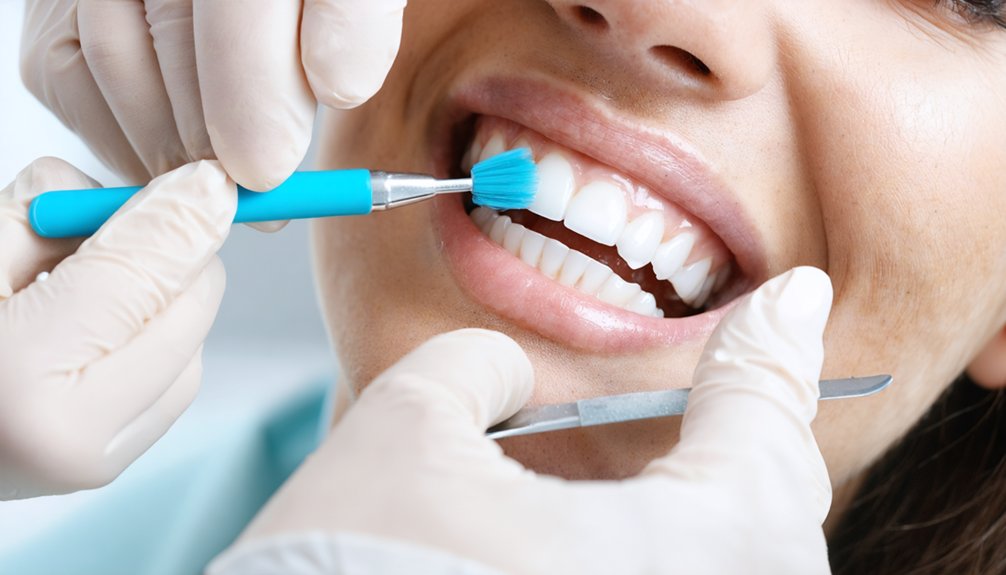
Among all teeth-whitening methods, professional in-office treatment consistently ranks as the safest and most effective option for enamel preservation. Your dentist controls every variable—concentration, application time, and gum protection—eliminating the guesswork that compromises enamel health in unsupervised approaches.
In-office protocols deliver long term benefits through four evidence-based advantages:
- Controlled peroxide concentrations prevent excessive enamel exposure
- Protective barriers shield gum tissue from chemical irritation
- Real-time sensitivity monitoring allows immediate treatment adjustments
- Professional-grade remineralization support follows each session
You’re not just whitening—you’re investing in a supervised process designed to protect enamel structure while achieving measurable results.
When enamel health is non-negotiable, professional treatment gives you the precision and accountability that no over-the-counter product can match.
Custom Dental Trays for Safer At-Home Whitening
When professional treatment isn’t your primary route, custom-fitted dental trays represent the next safest at-home option for whitening without compromising enamel.
Your dentist takes precise impressions to fabricate trays that conform exactly to your teeth, which is one of the key custom tray benefits — minimal gel spillover onto gum tissue reduces unnecessary irritation and peroxide exposure.
Your dentist also guides your whitening gel options, pairing your trays with an appropriate-concentration carbamide or hydrogen peroxide gel rather than high-strength formulas unsuitable for unsupervised use.
The American Academy of Cosmetic Dentistry specifically recommends this approach for its controlled, gradual results. You manage the schedule, but within a clinically established framework.
This combination of precision fit and guided gel selection gives you meaningful control while protecting your enamel throughout the process.
OTC Strips and Gels That Won’t Harm Enamel
For those who prefer the convenience of store-bought products, ADA-accepted strips and gels offer a legitimate whitening option that won’t compromise your enamel — provided you use them exactly as directed.
Smart product selection and disciplined use are what separate safe results from preventable damage.
Prioritize these four factors:
- ADA Seal of Acceptance — confirms safety and efficacy standards are met
- Low peroxide concentration — minimizes enamel and soft tissue exposure
- Strict adherence to contact time — overuse risks include enamel erosion and heightened sensitivity
- Controlled frequency — never exceed the manufacturer’s recommended treatment schedule
Hydrogen peroxide and carbamide peroxide are clinically validated whitening agents when used correctly.
The risk isn’t the ingredient — it’s unsupervised overuse.
Peroxide doesn’t damage teeth. Undisciplined, unsupervised overuse does.
Discipline determines outcome.
Low-Abrasivity Whitening Toothpaste for Daily Use
Daily whitening toothpaste is only as safe as its abrasivity level — and that distinction matters more than most people realize. When selecting a product, you’ll want to check the Relative Dentin Abrasivity (RDA) score and stay below 70 to minimize enamel wear during daily use.
Fluoride-containing formulas strengthen enamel while removing surface stains, making them a clinically sound choice. For stain prevention, brush twice daily and don’t exceed the recommended contact time.
Natural whitening claims on packaging don’t override abrasivity data — always verify the RDA regardless of marketing language. These toothpastes address extrinsic discoloration effectively but won’t correct deep intrinsic stains.
Think of them as precision maintenance tools that preserve brightness between professional treatments rather than standalone solutions for significant whitening results.
Frequently Asked Questions
Can Whitening Treatments Worsen Existing Tooth Sensitivity or Nerve Pain?
Yes, whitening treatments can worsen existing sensitivity or nerve pain. You’ll want to pause treatment if discomfort spikes, prioritize sensitivity management, and consult your dentist to safeguard nerve health before continuing any whitening protocol.
Is Teeth Whitening Safe During Pregnancy or While Breastfeeding?
Like a storm cloud over caution, you should avoid whitening during pregnancy or breastfeeding. Opt for natural alternatives instead, and schedule professional consultations post-pregnancy when it’s safest to resume evidence-based whitening treatments.
How Long Do Teeth Whitening Results Typically Last Before Fading?
Your whitening results typically last six months to two years. You’ll extend longevity by applying natural whitening maintenance tips—avoid staining foods, drink water after coffee, and schedule regular dental cleanings to preserve your brightness effectively.
Can Whitening Products Affect Dental Crowns, Veneers, or Fillings?
Whitening products won’t change crown discoloration or alter fillings since peroxide doesn’t bleach restorations. You’ll want to confirm veneer compatibility with your dentist, as results may appear uneven against your natural teeth.
At What Age Is Teeth Whitening Considered Safe for Teenagers?
Your smile’s foundation sets at 16, when root development completes—that’s when safe whitening methods become appropriate for teenage dental health. You’ll want dentist approval first, ensuring enamel maturity before beginning any supervised whitening protocol.
References
- https://lustrodental.com/whitening-methods/
- https://www.brusho.com/blog/articles/how-to-safely-whiten-teeth-without-damaging-enamel
- https://www.youtube.com/watch?v=d98KAyxTGwo
- https://www.insmyledental.com/how-to-whiten-teeth-without-damaging-enamel/
- https://pmc.ncbi.nlm.nih.gov/articles/PMC9915942/
- https://pmc.ncbi.nlm.nih.gov/articles/PMC4058574/
- https://www.dr-braces.com/blog/what-is-the-safest-and-most-effective-natural-alternative-to-professional-teeth-whitening-that-wont-damage-enamel/
- https://www.nirvanadental.com/blog/how-to-whiten-your-teeth-without-damaging-them
- https://www.goodrx.com/conditions/dental-care/is-teeth-whitening-safe
- https://www.mouthhealthy.org/all-topics-a-z/teeth-whitening