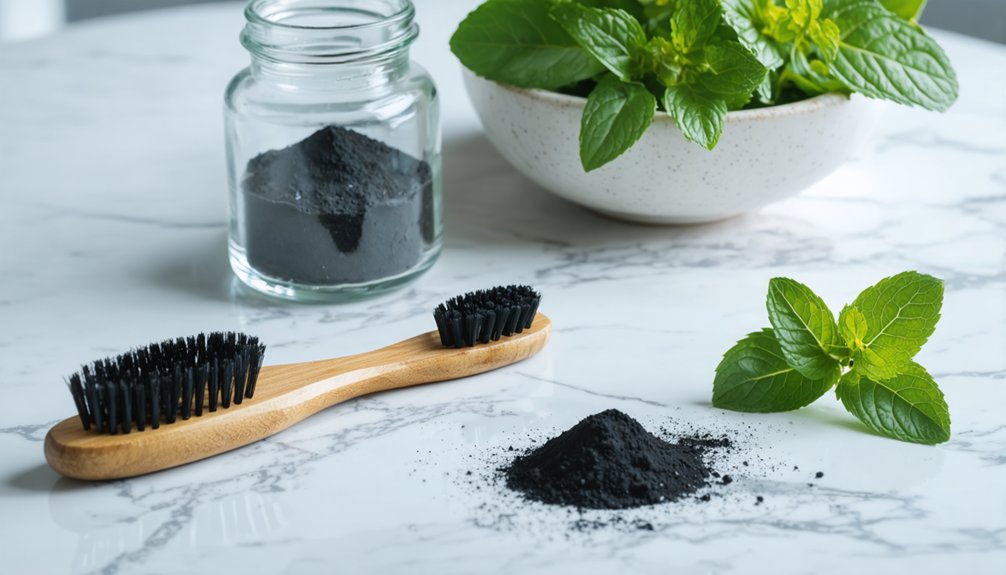
To use charcoal powder safely, you’ll want to choose food-grade activated charcoal with a fine consistency and a Relative Dentin Abrasivity level below 250. Apply it by dabbing—never scrubbing—with a soft-bristled toothbrush using light circular motions for no longer than three minutes. Limit use to two or three times per week, and stop immediately if you notice sensitivity, bleeding, or rough tooth surfaces. There’s much more you should know before getting started.
Key Takeaways
- Use food-grade activated charcoal powder with a fine consistency and Relative Dentin Abrasivity level below 250 to protect enamel.
- Wet a soft-bristled toothbrush, then dab powder gently onto teeth using light circular motions for up to three minutes.
- Limit use to two or three times weekly, as more frequent application increases damage risk without improving whitening results.
- Stop using immediately if you experience sensitivity, gum irritation, or rough tooth surfaces, and consult a dentist if symptoms persist.
- After use, rinse thoroughly with water and mouthwash, and clean your toothbrush with hydrogen peroxide to remove embedded particles.
How to Pick a Safe Charcoal Powder for Your Teeth
When selecting a charcoal powder for teeth whitening, you’ll want to confirm it’s food-grade and activated—never BBQ or non-activated charcoal, which can introduce harmful chemical contaminants into your mouth. Check that the product relies on natural ingredients and contains no chemical additives or artificial substances that could irritate your oral tissues.
Be aware that no charcoal whitening product currently holds FDA approval for teeth whitening, and the ADA hasn’t issued its Seal of Acceptance to any charcoal-based dental product, signaling unproven safety.
Prioritize powders with a fine, dust-like consistency, since coarser textures increase abrasive damage to enamel. Also, confirm the product’s Relative Dentin Abrasivity level stays below 250. These precautions help you maintain control over both your whitening results and your long-term oral health.
How to Apply Charcoal Powder Without Damaging Enamel
Once you’ve chosen a safe, fine-grade charcoal powder, proper application becomes your next line of defense against enamel damage. Even natural abrasives can erode enamel when used carelessly, so your technique matters as much as your product choice.
Follow these three critical steps for enamel safety:
- Wet your soft-bristled toothbrush before dipping it into the powder to improve adhesion and control mess.
- Dab—don’t scrub—the powder onto your teeth, using light circular movements for 2 to 3 minutes to lift surface stains without grinding enamel away.
- Start with just one minute of contact time, gradually increasing to three minutes only if sensitivity doesn’t develop.
Discontinue use immediately if you notice roughness, bleeding, or heightened tooth sensitivity.
How Often Should You Actually Use Charcoal Powder?
Even if your application technique is flawless, using charcoal powder too frequently can still erode enamel over time. Like many natural remedies, charcoal powder carries risks when misused. Limit applications to two or three times per week at most, and consider reducing that to once weekly for long-term protection.
One persistent dental myth is that more frequent use accelerates whitening. It doesn’t. It accelerates enamel loss. For stubborn stains, some protocols recommend three to five consecutive days followed by a multi-month break.
Never substitute charcoal powder for your regular toothpaste. Treat it strictly as a supplemental, occasional treatment. If you notice increased sensitivity or gum irritation, reduce frequency immediately.
You’re in control of protecting your enamel—don’t let marketing override evidence.
What Warning Signs Mean You Should Stop Using It
Charcoal powder sends clear distress signals when it’s damaging rather than helping your teeth. Recognizing these signs early puts you back in control of your oral health before permanent damage occurs.
Stop using charcoal powder immediately if you notice any of these red flags:
- Dental sensitivity — Sharp pain or discomfort when consuming hot, cold, or sweet foods signals enamel erosion.
- Gum irritation — Bleeding, swelling, or tenderness after brushing indicates tissue damage from abrasion.
- Rougher tooth surfaces — A gritty or uneven texture means enamel is wearing down, not whitening.
These aren’t minor inconveniences — they’re your body’s warning system.
Consult your dentist promptly, as continued use can cause irreversible structural damage to your teeth.
How to Clean Up After Charcoal Powder Without Staining Everything
The aftermath of charcoal powder treatment is notoriously messy, but a few deliberate steps prevent permanent black stains on your sink, toothbrush, and surrounding surfaces. Spit into a cup or toilet rather than your sink to protect white fixtures and reduce the environmental impact of charcoal residue entering your drain.
Rinse your mouth several times with water, then follow up with a regular mouthwash to eliminate any lingering taste. If black residue reaches your sink, wipe it immediately with a baby wipe before it sets.
Clean your toothbrush bristles using hydrogen peroxide mouthwash to remove embedded particles. These precautions matter especially if you’re evaluating alternative whitening methods, since poor cleanup habits may discourage consistent oral hygiene routines that ultimately protect your enamel long-term.
Frequently Asked Questions
Can Activated Charcoal Powder Remove Deep Internal Tooth Stains Effectively?
You can’t rely on activated charcoal powder for dental stain removal of deep internal stains. It doesn’t penetrate enamel, making internal bleaching by a dental professional your only scientifically validated, effective option for intrinsic discoloration.
Should You Rinse With Water Immediately After Drinking Coffee or Tea?
Yes, you should rinse immediately. Picture coffee’s dark tide washing over your enamel — acting fast with water flushes those stain-causing compounds away, strengthening your oral hygiene routine and making stain prevention a proactive, empowering daily habit.
Does Stopping Smoking Improve Results When Using Charcoal Powder Whitening Treatments?
Yes, smoking cessation considerably improves your results. Smoking causes stubborn stains that charcoal powder can’t remove. You’ll maximize oral health benefits by quitting, as charcoal treats surface discoloration but can’t counteract tobacco’s persistent, deep-set staining effects.
Is Activated Charcoal Powder Scientifically Validated for Teeth Whitening by Researchers?
You should know that activated charcoal powder isn’t scientifically validated for teeth whitening. Researchers haven’t confirmed its dental safety or effectiveness, so you’re exploring alternative methods without solid clinical evidence supporting reliable whitening outcomes.
Can Drinking Staining Beverages Through a Straw Reduce Tooth Discoloration Over Time?
Like a river bypassing fragile banks, proper straw positioning shields your enamel during dental hydration. Yes, you can reduce tooth discoloration over time by drinking staining beverages through a straw, minimizing direct surface contact.
References
- https://www.webmd.com/oral-health/what-to-know-about-activated-charcoal-whitening
- https://www.123dentist.com/blog/whitening-teeth-activated-charcoal/
- https://www.healthline.com/health/activated-charcoal-teeth-whitening
- https://timesofindia.indiatimes.com/life-style/beauty/how-to-use-charcoal-powder-to-whiten-teeth/articleshow/113824376.cms
- https://www.youtube.com/watch?v=LrWj114cvzw
- https://www.youtube.com/watch?v=4IJPJnnyO6w
- https://www.wikihow.com/Use-Activated-Charcoal-for-Teeth-Whitening
- https://www.mamanatural.com/charcoal-teeth-whitening/
- https://www.youtube.com/watch?v=UN6JWmDmwlM