Whitening treatments won’t change the color of your porcelain veneers. Unlike natural enamel, porcelain is non-porous, so bleaching agents can’t penetrate the surface. Your veneer shade is permanently locked in from the day they’re placed. Worse, attempting to whiten can irritate your gums and create visible shade mismatches with surrounding teeth. Effective veneer maintenance requires a completely different approach — and understanding your options makes all the difference.
Key Takeaways
- Whitening treatments are ineffective on porcelain veneers because bleaching agents cannot penetrate their non-porous surface.
- The shade of porcelain veneers is permanently fixed at placement and cannot be altered by whitening products.
- Whitening surrounding natural teeth can create a visible shade mismatch with existing veneers.
- Abrasive whitening products can scratch porcelain surfaces or irritate gum tissue, causing potential damage.
- Professional polishing and routine cleanings are the most effective methods for maintaining veneer brightness.
Do Whitening Treatments Actually Work on Veneers?
When considering whitening treatments for porcelain veneers, you need to understand one critical fact: they don’t work.
Porcelain is non-porous, meaning hydrogen peroxide and bleaching agents can’t penetrate its surface. Whether you’re using at-home strips, LED kits, or professional-grade gels, these products target natural enamel exclusively—not synthetic materials.
One of the most persistent whitening myths is that stronger products produce better results on veneers. They don’t. They simply irritate your gums and create shade mismatches between your veneers and natural teeth.
Effective veneer maintenance doesn’t involve chemical whitening—it requires professional polishing, non-abrasive toothpaste, and routine cleanings.
Understanding what actually works gives you control over your smile’s appearance without wasting resources on ineffective treatments.
Why Porcelain Veneers Don’t Respond to Bleaching Agents
When you apply a bleaching agent to porcelain veneers, the treatment fails at the most fundamental level: the non-porous surface blocks hydrogen peroxide from penetrating the material entirely.
Unlike natural enamel, which absorbs whitening compounds and undergoes internal pigment oxidation, your veneers resist chemical interaction at the molecular level.
The shade your dentist selected during placement remains permanently fixed, making bleaching agents not just ineffective but completely irrelevant to veneer maintenance.
Non-Porous Veneer Surface
Unlike natural tooth enamel, porcelain veneers feature a non-porous surface that physically blocks whitening agents from penetrating the material.
Hydrogen peroxide and other bleaching compounds rely on absorption to oxidize internal pigments — a process your veneer’s dense structure completely prevents. The non-porous benefits extend beyond whitening resistance; this same impermeability protects against stain absorption from coffee, wine, and tobacco over time.
Understanding this distinction puts you in control of your veneer maintenance strategy. Rather than wasting money on ineffective whitening products, you can focus on professional polishing and gentle, low-abrasive toothpaste to preserve surface luster.
The shade selected during your veneer placement remains chemically stable, meaning no over-the-counter treatment will alter it — so your maintenance approach must shift accordingly.
Bleaching Agents Fail
Bleaching agents work by penetrating enamel’s microscopic pores and oxidizing internal pigments — but porcelain gives them nothing to work with.
Hydrogen peroxide, the active compound in virtually every whitening system, requires a porous substrate to trigger that chemical reaction. Porcelain doesn’t provide one.
Whether you’re using professional-grade gels, LED-activated strips, or at-home kits, the result is identical: zero color change on your veneers.
These are whitening myths you can’t afford to act on. Applying bleaching agents accomplishes nothing except potentially irritating your gum tissue and lightening your surrounding natural teeth — creating an obvious shade mismatch.
Smart veneer care means understanding what the material actually responds to.
Porcelain responds to polishing, not chemistry. Control your results by working with that reality, not against it.
Permanent Shade Stability
The shade you select for your porcelain veneers at placement is the shade you keep — permanently. Porcelain’s non-porous structure locks in your chosen color at the molecular level, creating a surface that bleaching compounds simply can’t penetrate.
Hydrogen peroxide, the active ingredient in virtually every whitening system, relies on oxidizing internal pigments within porous natural enamel. That mechanism doesn’t exist with porcelain.
This permanent color stability is actually a feature, not a limitation. The *Journal of Prosthetic Dentistry* confirms that veneer longevity spans 10–15 years with proper maintenance, during which your shade remains chemically unchanged.
You selected that color intentionally. No whitening agent — professional or over-the-counter — will alter it. Understanding this keeps you from wasting resources on treatments designed for an entirely different material.
What Happens When You Whiten the Teeth Around Your Veneers?
When you whiten the teeth surrounding your veneers, you’re creating a visible shade mismatch that’s difficult to correct without professional intervention.
Your natural enamel responds to bleaching agents, but your veneers don’t—their porcelain surface permanently resists chemical penetration. The result is a smile where your natural teeth appear brighter while your veneers retain their original shade, producing an uneven, unnatural appearance.
Porcelain resists bleaching agents entirely—leaving veneers their original shade while surrounding teeth grow visibly brighter.
One of the most persistent whitening myths is that brightening surrounding teeth will harmonize your overall smile. It won’t.
Instead, you’re undermining your veneer maintenance investment by creating a cosmetic imbalance. Your only real corrective options become either replacing the veneers to match your newly whitened teeth or waiting for your natural teeth to shade-shift back—neither outcome is ideal or cost-effective.
Which Whitening Products Can Actually Damage Your Veneers?
While whitening products can’t lighten your veneers, certain formulations actively damage them. Abrasive toothpastes containing baking soda, bleaching agents, or high RDA values above 100 scratch porcelain surfaces and degrade bonding material over time.
Whitening strips saturated with hydrogen peroxide won’t alter your veneer shade, but prolonged contact irritates surrounding gum tissue and compromises adhesive integrity at veneer edges.
Don’t fall for whitening myths suggesting specialized “veneer-safe” bleaching kits produce results — no clinical evidence supports those claims. Proper veneer maintenance means avoiding these products entirely.
LED whitening systems, abrasive gels, and high-concentration peroxide trays all carry risks without delivering benefits on porcelain surfaces. Protecting your investment requires choosing non-abrasive, fluoride-based toothpaste and scheduling professional cleanings instead of pursuing ineffective, potentially destructive DIY solutions.
How Professional Polishing Restores Veneer Brightness
When your veneers lose their luster, professional polishing restores brightness by removing surface buildup and refining the porcelain glaze—something no whitening product can achieve.
Unlike bleaching, which targets pigment inside natural enamel, polishing works mechanically on the veneer’s outer surface to revive its original sheen.
Your dentist uses specialized non-abrasive instruments and compounds to clean and buff the glaze without altering shade or compromising the bonding material.
Polishing Versus Whitening Explained
Although whitening and polishing are often conflated, they’re entirely different procedures with distinct outcomes for veneered teeth. Whitening chemically oxidizes pigments inside natural enamel — a process that simply can’t penetrate porcelain’s non-porous surface.
Polishing, by contrast, mechanically removes surface deposits and restores the veneer’s original glaze without altering its fundamental shade.
When you invest in professional polishing techniques, you’re addressing dullness caused by glaze wear or edge buildup — not attempting an impossible color shift. Your dentist uses low-abrasive, specially formulated compounds that protect the bonding material while refining the surface finish.
Understanding this distinction directly supports veneer longevity. Attempting whitening wastes resources and risks surface damage. Choosing polishing preserves your investment and restores the luster your veneers were designed to deliver.
Restoring Glaze Through Cleaning
Knowing that polishing outperforms whitening for veneered teeth, the next logical step is understanding exactly how professional cleaning restores that original brightness.
Your dentist uses specialized low-abrasive polishing compounds and ultrasonic cleaning techniques to eliminate surface biofilm, tartar buildup, and edge staining without compromising your veneer’s structural integrity.
These targeted cleaning techniques work directly on the porcelain glaze, removing dulling deposits that accumulate despite diligent home care.
Unlike abrasive whitening products, professional instruments restore surface reflectivity by clearing what’s obscuring the glaze rather than attempting chemical alteration.
Glaze maintenance scheduled every six months keeps that factory-polished luster intact and prevents microscopic surface degradation.
You’re not changing the veneer’s shade—you’re reclaiming the brightness that was always there, precisely and safely.
When Veneer Shade Mismatch Means You Need a Dentist
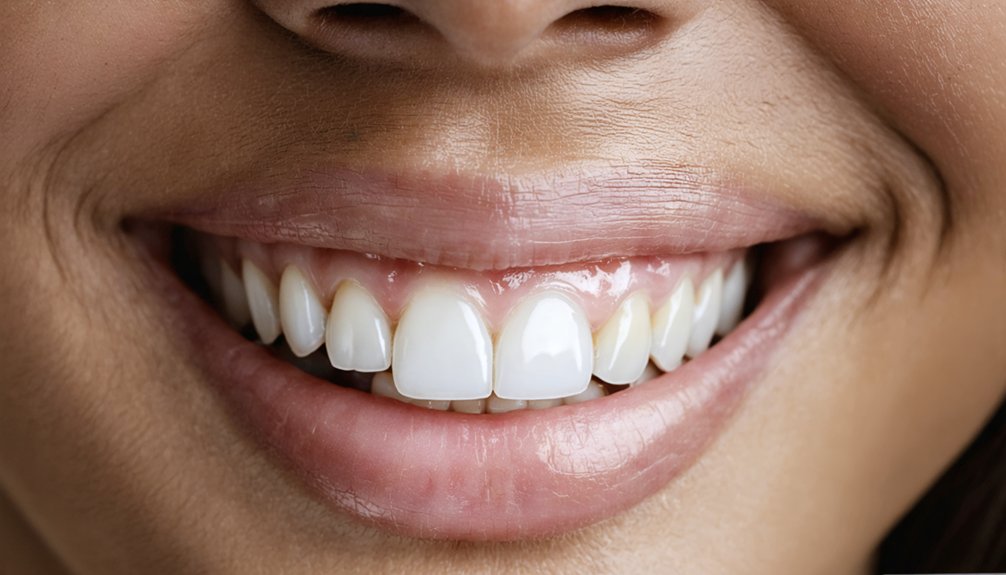
Shade mismatch between your veneers and natural teeth is one of the clearest signs that professional intervention is necessary.
If you’ve whitened your surrounding teeth or your veneers have dulled over time, the color disparity becomes visible and difficult to ignore. No over-the-counter product corrects this imbalance—only a cosmetic dentist can accurately assess the degree of mismatch and recommend solutions.
Proper veneer maintenance requires scheduled dental consultations where a professional evaluates shade alignment, polishes porcelain surfaces, or advises veneer replacement when the color gap is irreversible.
Attempting DIY corrections wastes time and risks further damage. You’re in control of your smile’s outcome, but that control starts with acting decisively and consulting a qualified dentist rather than relying on ineffective at-home alternatives.
The Only Way to Actually Change Veneer Color
If you want to genuinely change the color of your veneers, replacement is the only viable option. No whitening agent, professional or over-the-counter, penetrates porcelain’s non-porous surface. The shade locked in during placement is permanent by design.
Replacement gives you complete control. You’ll consult with your cosmetic dentistry provider, select a new shade, and have fresh veneers bonded precisely to your specifications. It’s a deliberate, permanent solution rather than a failed attempt to chemically alter existing material.
Veneers longevity works against color change here — the same durability that protects your smile for 10 to 15 years also prevents modification. Embrace that trade-off strategically.
If your current shade no longer meets your standards, replacement isn’t a setback; it’s your most decisive move.
Frequently Asked Questions
How Long Do Porcelain Veneers Typically Maintain Their Original Color Shade?
Your porcelain veneers maintain their original shade for 10–15 years, delivering exceptional color durability. You’ll preserve that longevity by following smart maintenance tips: avoid staining foods, use gentle toothpaste, and schedule regular professional cleanings consistently.
Can Lifestyle Habits Like Coffee or Wine Drinking Stain Porcelain Veneers?
Porcelain veneers resist staining from coffee or wine, but edge discoloration can occur. Prioritize veneers maintenance by avoiding these habits, ensuring discoloration prevention and preserving your investment’s appearance long-term with consistent, proactive care.
What Toothpaste Ingredients Should Veneer Wearers Completely Avoid Using Daily?
You should avoid toothpaste types containing bleach, baking soda, or high-RDA abrasives exceeding 100. These ingredients produce no whitening effects on veneers—they’ll only damage your porcelain surface, compromise bonding material, and accelerate premature wear.
Is Bleaching the Backside of Teeth Safe With Veneers Present?
Yes, bleaching the backside of your teeth is safe with veneers present. Under dentist supervision, these bleaching methods support effective veneer maintenance by improving translucency alignment without compromising your veneer’s structural integrity or altering its permanent shade.
How Often Should Veneer Wearers Schedule Professional Dental Cleaning Appointments?
Polishing your luster, protecting your investment, preserving your smile—you should schedule professional dental cleanings every six months for ideal veneers maintenance. This cleaning frequency keeps buildup at bay and guarantees your veneers perform at their best.
References
- https://www.colgate.com/en-us/oral-health/veneers/can-you-whiten-veneers
- https://www.reddit.com/r/weddingplanning/comments/8b8nw4/teeth_whitening_experience_with_veneers/
- https://www.medfordsmiles.com/2021/08/3-ways-you-can-whiten-porcelain-veneers/
- https://www.towncaredental.com/blog/a-warning-about-whitening-with-veneers-and-crowns
- https://www.smilesbydesign.biz/can-veneers-be-whitened-what-albuquerque-residents-must-know/
- https://www.drbowyer.com/blog/can-porcelain-veneers-be-whitened/
- https://www.crescentsmiles.com/can-dental-veneers-be-whitened/
- https://www.purpleplumdentistry.com/post/does-teeth-whitening-work-on-veneers-heres-what-you-need-to-know
- https://111dental.com/can-veneers-be-whitened/
- https://www.sipesdental.com/can-you-whiten-veneers/