If you’re planning to get veneers, you should whiten your teeth first — not after. Whitening agents temporarily destabilize your enamel’s color, so you’ll need to wait one to two weeks before shade matching begins. This waiting period guarantees your dentist locks in an accurate, stable shade. Since porcelain can’t be whitened once it’s placed, getting the sequence right is permanent. The details ahead will show you exactly how to protect your results.
Key Takeaways
- Whitening should always be done before veneer placement to ensure veneers are matched to your brightest natural tooth shade.
- Wait 1–2 weeks after whitening before shade matching, as residual bleaching agents temporarily destabilize tooth color.
- Veneers cannot be whitened after placement since porcelain is non-porous and unresponsive to whitening agents.
- Professional whitening pushes enamel to its brightest, stable shade, enabling precise and permanent veneer color matching.
- After veneer placement, periodic whitening of natural teeth helps maintain consistent color between veneers and surrounding teeth.
Why the Sequence of Whitening and Veneers Determines Your Final Shade
When it comes to veneers, the order in which you whiten your teeth isn’t a minor detail—it’s the deciding factor in your final smile’s appearance.
With veneers, timing your whitening isn’t a small decision—it’s what determines everything about your final smile.
Whitening techniques work by penetrating porous natural enamel, shifting its shade permanently. Veneer materials, specifically porcelain, are non-porous—they won’t respond to whitening agents at all.
If you whiten after placement, your natural teeth brighten while your veneers stay fixed at their original shade, creating a visible mismatch.
But if you whiten first, your dentist selects veneer shades that align precisely with your brightest natural tooth color, locking in a seamless result.
You control the outcome by controlling the sequence. Whitening before veneer placement isn’t just recommended—it’s the only approach that guarantees long-term color consistency.
Why Your Teeth Need Time to Settle Before Veneer Shade Is Matched
Whitening first is only half the equation—the timing of your shade matching appointment matters just as much.
After whitening, your tooth color remains temporarily unstable. Residual whitening agents continue oxidizing enamel for up to two weeks post-treatment, meaning the shade you see immediately after whitening isn’t your final result.
Scheduling shade matching too early locks you into a veneer color that won’t align with your teeth once they’ve fully stabilized. That mismatch becomes permanent.
Waiting one to two weeks gives your enamel time to settle into its true, stabilized shade. Only then can your dentist perform accurate shade matching and select a veneer tone that integrates seamlessly.
This window isn’t optional—it’s the difference between a harmonious result and a correctable mistake.
Why Veneers Can’t Be Whitened After Placement
Once your veneers are placed, no whitening treatment can change their shade—not professional bleaching, not at-home trays, not whitening toothpaste. This is one of the most critical whitening limitations to understand before committing to veneers.
Unlike natural enamel, porcelain is non-porous. Whitening agents penetrate enamel by absorbing into its surface—porcelain simply doesn’t allow that process to occur. Your veneers will hold their original shade permanently, which is precisely what makes veneer durability an advantage and a constraint simultaneously.
If you whiten your natural teeth after placement, those teeth will brighten while your veneers stay fixed. The resulting contrast undermines your entire smile.
You control the outcome by whitening first—locking in a baseline shade that your veneers can accurately match from day one.
Can You Whiten Teeth That Already Have Veneers on Them?
This mismatch compromises your smile’s aesthetics and may require costly shade corrections or replacement veneers.
Proper veneer care means understanding this limitation before committing to a shade.
Caring for your veneers starts with one crucial step: knowing their limits before choosing your shade.
If you’re determined to whiten after placement, work closely with your dentist to monitor color discrepancies and manage expectations.
The smarter approach, however, is whitening beforehand—giving your dentist the ability to match veneers precisely to your brightest natural shade and eliminating long-term color management challenges entirely.
How Long Before Veneers Should You Whiten Your Teeth?
Skipping this ideal duration compromises the entire process. Freshly whitened teeth can shift slightly in shade during the days following treatment, so rushing into veneer placement risks an inaccurate color match.
By waiting the recommended period, you give your dentist precise, stable data to work with.
This strategic window protects your long-term investment, eliminates future shade corrections, and positions you for a seamlessly matched, aesthetically consistent smile from day one.
How Professional Whitening Works When You’re Preparing for Veneers
Professional whitening before veneers isn’t a casual teeth-brightening session—it’s a calibrated preparatory step that directly determines how accurately your dentist can shade-match your final restorations.
Your dentist applies concentrated bleaching agents using controlled whitening techniques designed to push your enamel to its brightest, most stable shade.
Concentrated bleaching agents push your enamel to its brightest, most stable shade before veneer shade-matching begins.
Once your color stabilizes—typically one to two weeks post-treatment—your dentist selects veneer materials that precisely mirror that baseline.
Porcelain is non-porous, meaning it locks permanently into whatever shade gets chosen at fabrication. There’s no adjusting it later.
How Dentists Pick Your Veneer Shade After Whitening
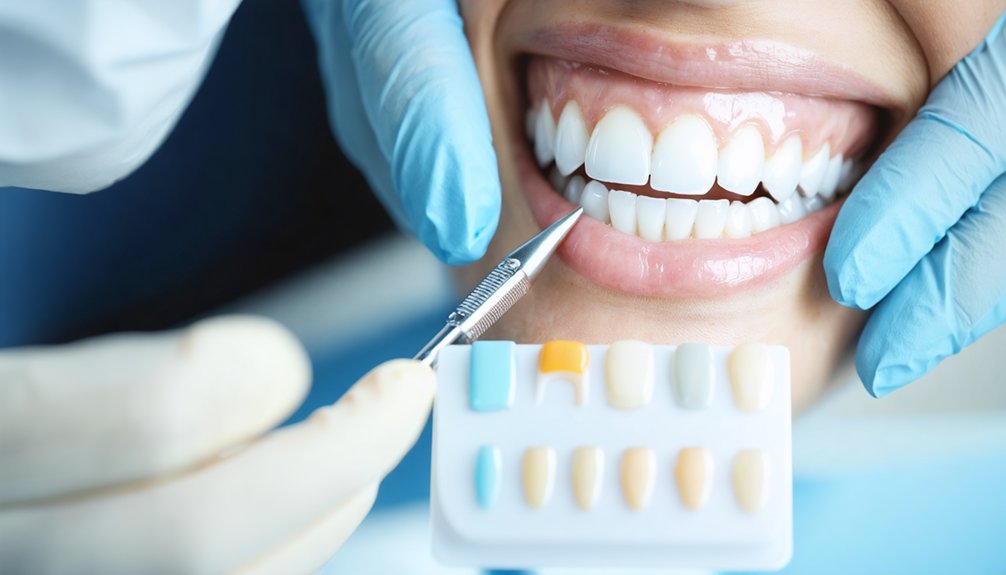
Once your teeth reach that stabilized post-whitening shade, your dentist moves into one of the most precise steps of the veneer process: shade selection.
Using a standardized shade guide, your dentist compares porcelain samples directly against your whitened enamel under controlled lighting. This color matching process accounts for translucency, undertones, and light reflection—factors that determine whether your veneers blend seamlessly or look artificial.
You’re selecting a permanent shade here. Porcelain won’t shift over time, so the color your dentist locks in at this appointment stays for the next 10–15 years.
Whitening beforehand gives you maximum control over this decision—you’re matching veneers to your brightest, most optimized baseline rather than compromising with a shade built around dull, pre-treatment enamel.
How to Maintain Color Consistency Between Veneers and Natural Teeth
After your veneers are placed, maintaining color consistency between them and your natural teeth becomes an ongoing responsibility. Since veneers hold their shade permanently while natural enamel can shift, you must actively manage shade consistency to preserve your results.
Veneers hold their shade permanently—your natural teeth won’t. Managing that contrast is an ongoing responsibility, not a one-time fix.
Follow these three practices to protect your color matching long-term:
- Schedule periodic whitening treatments on your natural teeth to realign them with your veneer shade before noticeable contrast develops.
- Limit staining agents like coffee, tea, and tobacco, which darken natural enamel faster than veneers fade.
- Monitor color changes at every dental visit so your dentist can recommend corrective whitening before mismatches become pronounced.
Staying proactive keeps your smile uniform, eliminates costly shade corrections, and guarantees your veneers continue delivering the seamless appearance you invested in.
Frequently Asked Questions
Does Teeth Whitening Cause Sensitivity That Could Affect Veneer Placement?
Yes, whitening can cause temporary sensitivity, but proper sensitivity management guarantees it won’t affect your placement. You’ll want to optimize whitening timing—completing treatment 1–2 weeks before your appointment lets sensitivity subside and color stabilize effectively.
Are There Whitening Methods That Work Better Before Veneer Placement?
Professional whitening treatments deliver the most effective results before veneer placement. You’ll achieve ideal whitening timing by using in-office bleaching, allowing your dentist to accurately match your veneer color to your brightest, most stable smile.
Can Severely Stained Teeth Still Benefit From Whitening Before Veneers?
“Better late than never” doesn’t apply here—act early. Even with severe staining, you can benefit from whitening before veneers by addressing staining types strategically within your whitening timeline, ensuring accurate shade matching for prime results.
Does Whitening Affect the Bonding Strength of Veneers to Teeth?
Whitening doesn’t compromise bonding techniques when you follow proper timing protocols. Wait 1–2 weeks after whitening before placement, allowing peroxide to dissipate fully, ensuring ideal adhesion and maximizing veneer longevity for lasting, confident results.
What Happens to Veneers if Natural Teeth Are Over-Whitened Beforehand?
If you over-whiten beforehand, your veneers won’t match your unnaturally bright enamel effects once it stabilizes. Control your whitening duration carefully—your dentist’ll select veneer shades after color stabilizes, ensuring a seamless, lasting match.
References
- https://monroefamilydentistry.com/blog/cosmetic-dentistry/why-its-better-to-do-teeth-whitening-before-adding-dental-veneers/
- https://www.drhighsmith.com/whitening-before-veneers-or-bonding-clyde-nc/
- https://www.e-sdental.com/blog/1274239-whitening-before-veneers-a-bright-idea
- https://ahhdentistry.com/blog/673314-whitening-before-veneersa-bright-idea
- https://www.novifamilydentistry.com/blog/should-i-get-teeth-whitening-before-veneers-or-after
- https://www.scottgreenhalghdds.com/blog/should-i-whiten-my-teeth-before-or-after-i-get-veneers
- https://www.mycostamesadentist.com/blog/should-i-whiten-my-teeth-before-getting-dental-veneers/
- https://www.drlinger.com/blog/teeth-whitened
- https://www.towncaredental.com/blog/a-warning-about-whitening-with-veneers-and-crowns