If you smoke, standard whitening products won’t reach the nicotine and tar compounds embedded within your dentin layer. Professional treatments use high-concentration hydrogen peroxide agents, like Philips Zoom, that break down these deeply bonded pigments at a molecular level. Dentists calibrate treatment intensity based on your stain severity, ensuring both safety and effectiveness. Everything you need to know about achieving measurable results as a smoker is covered below.
Key Takeaways
- Professional whitening treatments like Philips Zoom can brighten smokers’ teeth up to 12 shades in a single supervised session.
- High-concentration hydrogen peroxide agents penetrate deeply into enamel, effectively breaking down tobacco compounds bonded to hydroxyapatite crystals in dentin.
- Laser activation accelerates the oxidation process, making it particularly effective against the deep infiltration caused by combustion heat.
- Dentists customize treatment intensity based on stain severity, ensuring smokers receive protocols tailored to their specific discoloration level.
- Moderate smokers typically achieve 7–10 shades improvement after one session, while heavy smokers may require multiple treatments for optimal results.
Why Smoking Stains Teeth Differently Than Other Habits?
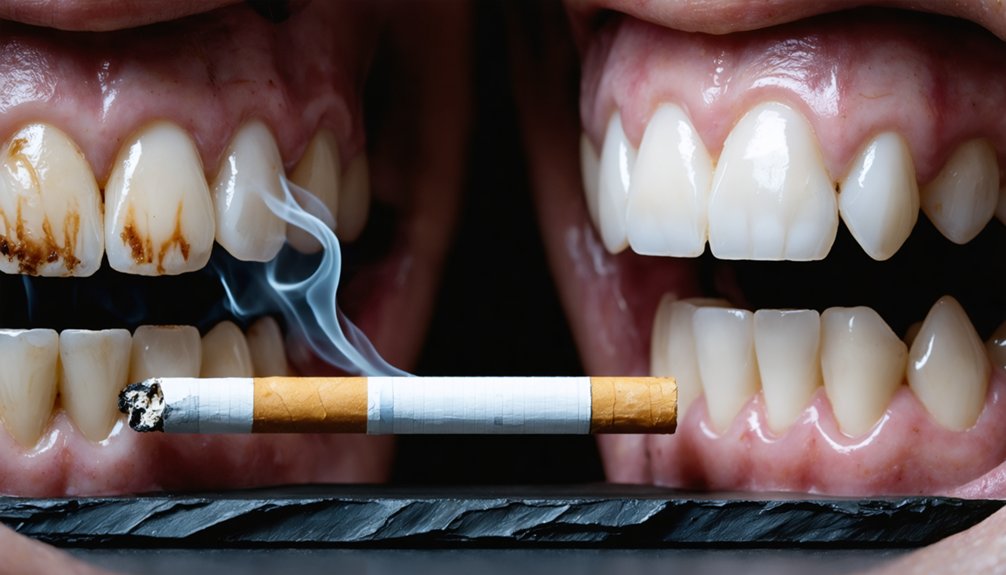
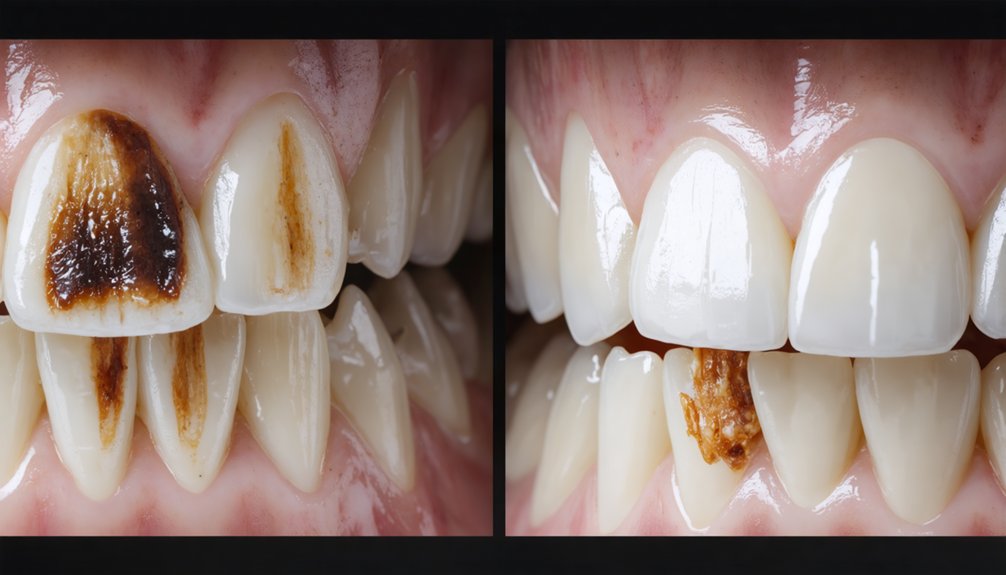
Smoking stains teeth through a mechanism that’s fundamentally different from dietary habits like coffee or tea consumption. Tobacco compounds, specifically nicotine and tar, penetrate the enamel’s porous surface and embed within the dentin layer beneath.
Unlike dietary stains that adhere superficially, these discoloration mechanisms operate at a structural level, making standard whitening toothpastes ineffective.
Tobacco stains penetrate beyond the surface, embedding structurally into enamel where ordinary whitening products simply cannot reach.
When you smoke, heat from combustion opens enamel pores, allowing tar’s dark pigments to infiltrate deeply. Nicotine, though initially colorless, oxidizes upon oxygen exposure, producing stubborn yellow-brown deposits that resist conventional cleaning.
Your saliva can’t neutralize these compounds effectively, unlike with food-based stains. This penetration depth explains why smokers require professional-grade treatments with higher-concentration bleaching agents rather than over-the-counter solutions.
Is Professional Whitening Safe If You Still Smoke?
Although you haven’t quit smoking, professional whitening treatments remain safe when performed under proper dental supervision. Your dentist evaluates smoker sensitivity before recommending any protocol, ensuring treatments accommodate compromised gum tissue or enamel concerns.
American Dental Association-approved agents, like those in Philips Zoom and Opalescence Boost, deliver controlled hydrogen peroxide concentrations that protect teeth while effectively lifting nicotine and tar stains.
Whitening precautions are standard practice in professional settings. Your dentist customizes treatment intensity based on your oral health status, reducing sensitivity risks through desensitizing gels or adjusted bleaching durations.
Even with existing gum disease, supervised whitening remains viable when properly managed. You’ll require a consultation first, allowing your dentist to identify complications and tailor a protocol that balances effective stain removal with your long-term dental health.
How Does Professional Whitening Remove Nicotine and Tar Stains?
When you undergo professional whitening, the hydrogen peroxide in agents like Philips Zoom breaks down the molecular bonds holding nicotine and tar stains within your enamel, lifting discoloration that surface-level products can’t reach.
The high-concentration formula penetrates deep into the tooth structure, targeting the embedded pigments responsible for yellow and brown tobacco staining.
Laser activation further enhances this process by energizing the whitening gel, accelerating stain removal and delivering results up to 12 shades brighter in a single session.
Hydrogen Peroxide Stain Breakdown
Nicotine and tar from tobacco penetrate the enamel‘s porous surface, embedding chromogens—color-causing compounds—deep within the tooth structure where surface-level cleaning can’t reach them.
Professional whitening agents containing hydrogen peroxide reverse this damage through oxidation. Once applied, hydrogen peroxide breaks down into reactive oxygen molecules that penetrate the enamel and disrupt the chemical bonds holding chromogens together.
This molecular-level stain removal neutralizes the discoloration at its source rather than masking it. In-office systems like Philips Zoom and Opalescence Boost deliver high-concentration hydrogen peroxide—often between 25–40%—directly to affected enamel, achieving results that over-the-counter products can’t replicate.
You’re targeting the actual structure of the stain, not just its surface appearance, which is why professional treatment produces measurably superior outcomes for tobacco-damaged teeth.
Deep Nicotine Stain Penetration
Tobacco stains penetrate far deeper than the enamel’s surface, embedding nicotine and tar chromogens into the tooth’s structural matrix where standard cleaning methods can’t reach them.
Tobacco chemistry dictates that these compounds bond aggressively to hydroxyapatite crystals within dentin, making stain severity directly proportional to your smoking frequency and duration.
Professional-strength hydrogen peroxide addresses this through oxidative diffusion, driving active bleaching agents past enamel into the dentin layer where chromogens are chemically broken apart.
Laser-activated systems accelerate this penetration, targeting deep pigmentation that over-the-counter products can’t disrupt.
Your dentist assesses stain severity during consultation, calibrating peroxide concentration and exposure time accordingly.
This precision guarantees that even heavily embedded nicotine and tar deposits respond to treatment rather than resist it.
Laser Activation Enhances Removal
Laser activation takes the oxidative chemistry described above a step further, converting a passive bleaching process into an accelerated, targeted intervention.
When your dentist applies a high-concentration hydrogen peroxide gel to tobacco-stained enamel, laser technology directs concentrated light energy into that compound, rapidly elevating its temperature and triggering a faster release of free radicals.
Those radicals penetrate dentin tubules where nicotine and tar deposits reside, breaking molecular bonds that standard bleaching can’t efficiently reach.
This mechanism directly improves whitening efficiency, compressing what multiple at-home sessions achieve into a single 30-to-60-minute appointment.
Clinical evidence confirms you can gain up to 12 shades of brightness in one visit.
You control the outcome by choosing an approach that matches the severity of your tobacco-related discoloration.
Which In-Office Treatments Work in a Single Visit?
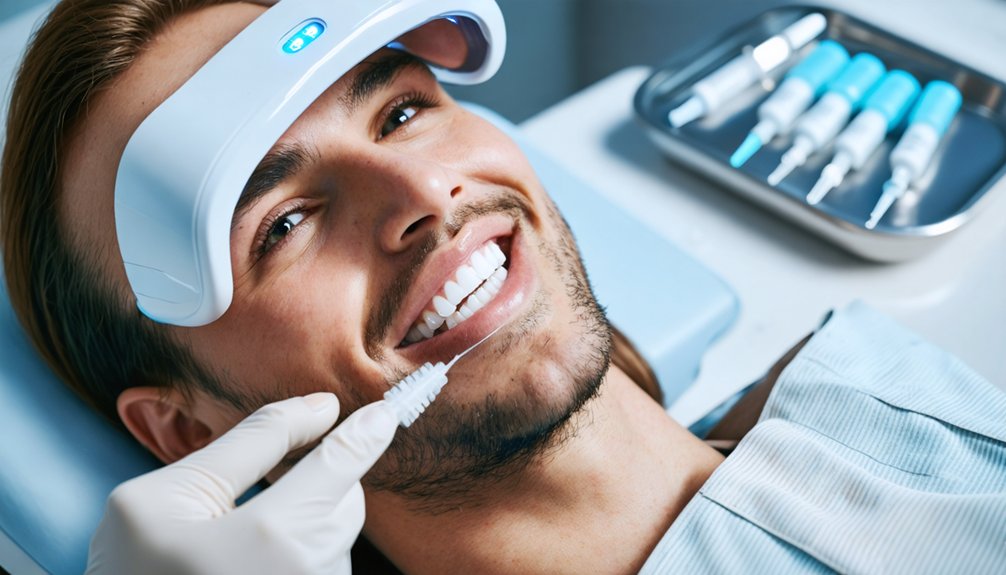
If you’re seeking immediate results, Philips Zoom delivers up to 12 shades of brightness in a single 45-minute session by activating a high-concentration hydrogen peroxide gel against tobacco-stained enamel.
Laser bleaching builds on this by using focused light energy to accelerate the whitening agent, producing measurable stain removal that surpasses standard in-office methods.
Both treatments offer you clinically verified, one-visit outcomes that standard over-the-counter products can’t replicate on nicotine and tar deposits.
Philips Zoom Single Session
Philips Zoom delivers one of the most effective single-session whitening solutions available for smokers, using a high-concentration hydrogen peroxide gel activated by an LED light source to break down embedded nicotine and tar stains.
Zoom effectiveness stems from its ability to brighten teeth up to 12 shades within a 45-60 minute appointment. Your dentist applies the gel in multiple intervals, maximizing penetration into tobacco-damaged enamel.
Philips benefits extend beyond speed—the system’s controlled delivery minimizes sensitivity while targeting deep discoloration that standard treatments can’t reach.
A professional cleaning precedes the session, ensuring the whitening agent contacts enamel directly without tartar interference.
For smokers requiring immediate, measurable results, Philips Zoom represents a clinically validated, high-performance option that puts visible improvement firmly within your control.
Laser Bleaching Benefits
Another single-visit option worth considering alongside Philips Zoom is laser bleaching, which uses concentrated light energy to activate a hydrogen peroxide gel and accelerate the breakdown of tobacco stains.
The laser benefits are clinically significant—light activation penetrates deeper into enamel, targeting embedded nicotine and tar more aggressively than standard gel applications alone.
For smokers, whitening effectiveness improves substantially because the activated gel disrupts stain compounds that have bonded over years of tobacco exposure.
You’ll typically see results within a single 30-to-60-minute session, with shades brightening noticeably under controlled conditions.
Your dentist monitors gel concentration and light exposure throughout, minimizing sensitivity risks.
If your staining is severe, your dentist may recommend combining laser bleaching with follow-up at-home maintenance to sustain and build upon in-office results.
One Visit Results
Both Philips Zoom and laser bleaching deliver measurable whitening results within a single in-office visit, making them the two primary options when you need efficient stain removal without a multi-session commitment.
Treatment duration typically ranges from 30 to 60 minutes, during which the whitening agent penetrates enamel and breaks down embedded nicotine and tar compounds. You’ll notice immediate effects following the session, with teeth brightening up to 12 shades in some cases.
Laser activation accelerates the hydrogen peroxide gel’s performance, compressing what would otherwise require multiple appointments into one controlled procedure.
A professional cleaning beforehand removes tartar buildup, allowing the bleaching agent to penetrate more effectively. If your staining is severe, your dentist may recommend follow-up sessions to achieve your target shade.
Can At-Home Kits Handle Serious Tobacco Stains?
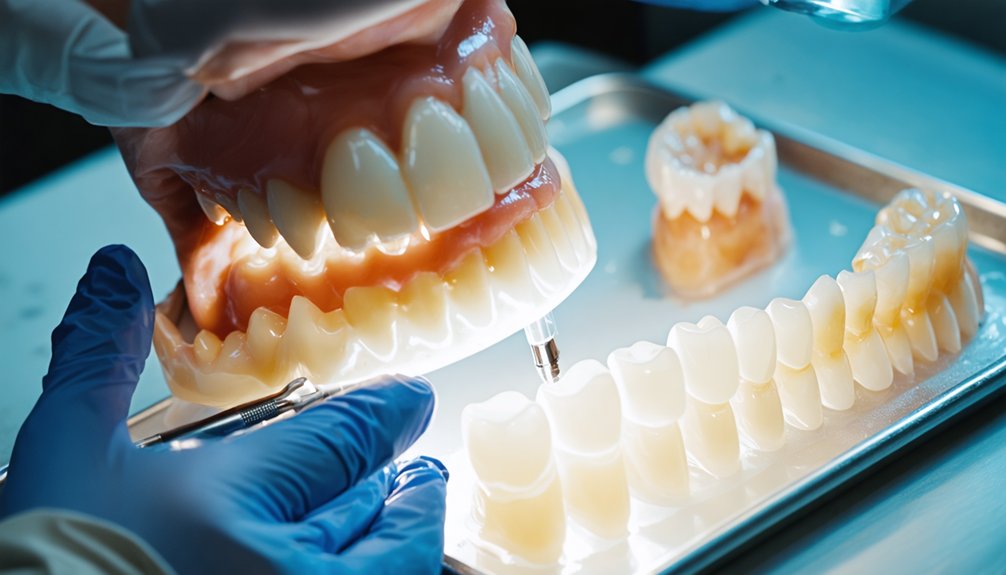
When it comes to serious tobacco stains, at-home professional kits can deliver meaningful results—but their effectiveness depends on the severity of discoloration and consistent use.
At-home effectiveness improves considerably when your dentist provides custom-fitted trays paired with high-concentration hydrogen or carbamide peroxide gels. These formulations target deep nicotine and tar deposits that standard over-the-counter products can’t reach.
Custom-fitted trays and high-concentration peroxide gels reach the deep nicotine and tar deposits store-bought products simply can’t.
Smoker challenges, however, are real. You’ll need to commit to wearing trays two hours daily for two weeks to see ideal outcomes.
Severe staining may still require professional in-office sessions first. Without reducing tobacco use, stains return faster, demanding touch-ups every three to six months.
Dentist-supervised kits outperform store-bought alternatives, giving you stronger agents and a structured approach that maximizes your results.
How Many Shades Whiter Can Smokers Realistically Expect?
Beyond knowing what at-home kits can do, you’ll want realistic expectations about actual shade improvements.
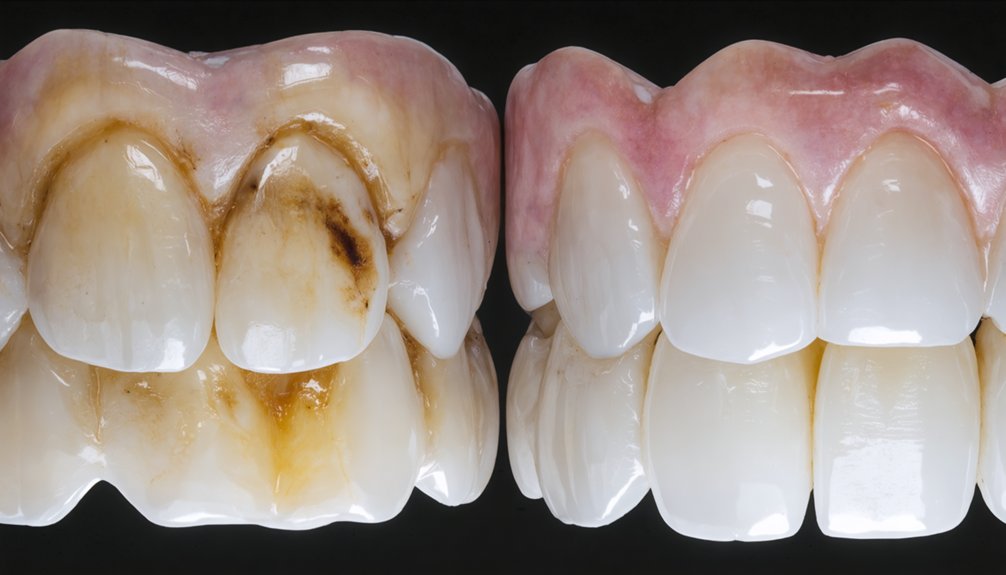
Professional in-office treatments can brighten your teeth up to 12 shades in a single session, with results visible within 30 minutes. Your whitening timeline depends on stain severity, smoking frequency, and treatment type.
For heavy smokers, deep nicotine and tar stains typically require multiple sessions to achieve ideal shade expectations.
Laser-activated systems and high-concentration hydrogen peroxide treatments deliver the most dramatic results. Moderate smokers often achieve 7–10 shades brighter after one professional session.
However, you must understand that continued smoking accelerates stain recurrence, compressing your whitening timeline considerably.
Maintaining results demands professional cleanings every 3–4 months combined with consistent at-home maintenance protocols.
How Smokers Maintain Professional Whitening Results Long-Term
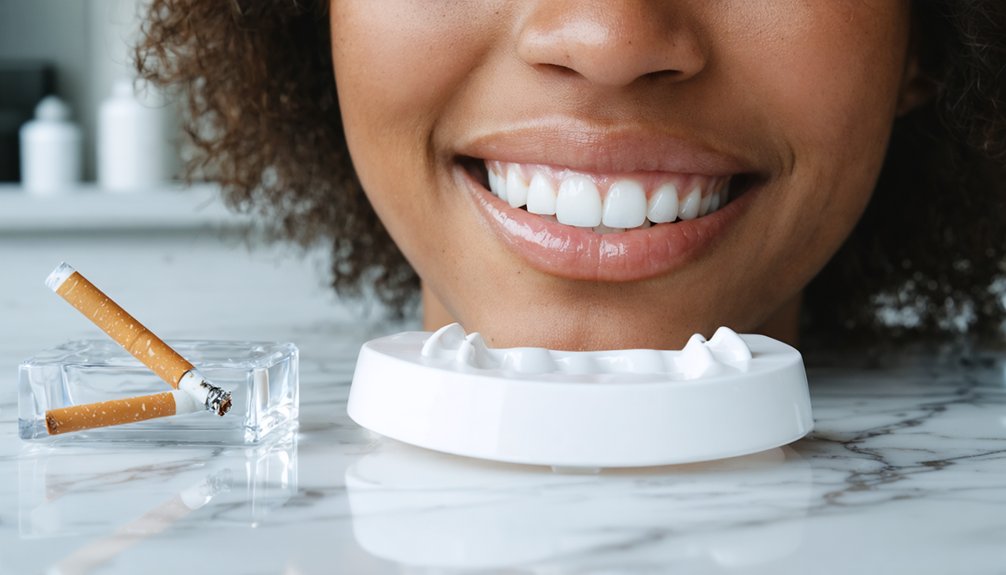
Maintaining professional whitening results as a smoker demands a disciplined, multi-layered approach. Your smoking habits accelerate stain redeposit, making consistent whitening maintenance non-negotiable.
Brush twice daily with whitening toothpaste formulated for deep stains, and floss daily to prevent interproximal tar buildup. Rinse immediately after smoking or consuming dark beverages to minimize pigment adhesion.
Schedule professional cleanings every three to four months—smokers require more frequent intervention than non-smokers. Return for touch-up bleaching sessions every three to six months, depending on your smoking frequency.
Use whitening pens or mouthwash for daily reinforcement between professional treatments.
Reducing or eliminating smoking directly extends your results’ longevity. You control how long your investment lasts—your post-treatment discipline determines whether brightness is sustained or rapidly reversed.
When Smokers Should Schedule Their Next Whitening Treatment
Knowing when to schedule your next whitening treatment directly determines how consistently you preserve your results.
Your whitening frequency depends on how often you smoke. If you’re a heavy smoker, schedule professional treatments every three to four months. Light smokers can extend treatment intervals to every six months.
Between sessions, use dentist-supervised at-home kits with custom trays to maintain brightness and slow stain reaccumulation.
Watch for visual cues — yellowing or browning signals it’s time to act before stains deepen. Don’t wait until discoloration becomes severe, because deeper stains require more aggressive and costly interventions.
Pairing consistent professional cleanings with structured treatment intervals gives you maximum control over long-term results, regardless of continued tobacco use.
Frequently Asked Questions
Does Smoking Immediately After Whitening Treatment Permanently Damage Newly Bleached Teeth?
Smoking immediately after whitening doesn’t permanently damage your teeth, but it’ll rapidly reverse results and heighten tooth sensitivity. You’re compromising your whitening maintenance, as nicotine and tar restain porous enamel within hours of treatment.
Can Professional Whitening Treat Stains on Dental Veneers or Crowns?
Like painting over glass, whitening can’t penetrate veneers or crowns—they don’t respond to bleaching agents. You’ll need replacement for veneer maintenance and crown longevity, as professional treatments only work on natural tooth enamel.
Are There Whitening Treatments Specifically Formulated for Heavy, Long-Term Smokers?
Yes, you’ll find custom formulations targeting heavy, long-term tobacco stains. Dentists tailor high-concentration hydrogen peroxide treatments, addressing smoker sensitivity while lifting deep nicotine buildup. Multiple in-office sessions combined with supervised at-home trays deliver your most effective, controlled results.
Does Smokeless Tobacco Cause Different Staining Patterns Requiring Unique Whitening Approaches?
Yes, smokeless tobacco’s unique staining mechanisms demand treatment customization. You’ll face concentrated localized deposits where you place tobacco, requiring your dentist to target those specific zones with professional-strength peroxide applications for effective results.
Can Gum Disease Caused by Smoking Prevent Professional Whitening Treatments Altogether?
Gum disease effects don’t completely prevent whitening, but smoking impact requires your dentist to assess severity first. You’ll need supervised treatment tailored to manage sensitivity risks, ensuring safe, effective results without complications.
References
- https://parkwaysmiles.com/teeth-whitening-for-smokers/
- https://watsonnivenskahendds.com/teeth-whitening-for-smokers/
- https://www.smilesbysimpson.com/blog/2020/01/16/teeth-whitening-for-smokers-203469/
- https://www.80parkavenuedental.com/erase-smoking-stains-with-professional-whitening-treatment/
- https://www.thesmilenova.com/post/the-ultimate-guide-to-teeth-whitening-for-smokers
- https://walkindentalclinic.ca/teeth-whitening-for-smokers/
- https://whitehorsedental.com.au/ultimate-guide-smokers-teeth-whitening-journey/
- https://www.toothclub.co.uk/teeth-whitening-for-smokers-what-you-need-to-know/
- https://www.theweymouthdentist.com/teeth-whitening-for-smokers-what-you-should-consider/
- https://thewhiteningstore.com/blogs/smileblog/teeth-whitening-for-smokers