For wine-stained teeth, AuraGlow and Crest 3D White consistently deliver the strongest results, offering up to 4–6 and 2–3 shade improvements respectively. Both use hydrogen peroxide to oxidize the chromogens and tannins responsible for wine discoloration. If you have sensitivity, Merakk’s carbamide peroxide formula releases more gradually, reducing irritation. Match your concentration to your stain severity for best outcomes. The details behind choosing correctly—and applying effectively—make all the difference.
Key Takeaways
- AuraGlow delivers the best results for severe wine stains, achieving 4–6 shade improvements faster than most competing whitening pens.
- Crest 3D White is dentist-backed, removing 2–3 shades of wine staining within 7 days of consistent use.
- Merakk Teeth Whitening Pen suits sensitive teeth, using gentle carbamide peroxide to reduce wine pigments without irritation.
- Hydrogen peroxide (9%) oxidizes wine chromogens rapidly, making it the most effective active ingredient for moderate wine stains.
- Extrinsic wine stains respond best to whitening pens, typically achieving 2–4 shade improvements within approximately two weeks.
The Best Whitening Pens for Wine-Stained Teeth in 2025
Five whitening pens stand out in 2025 for tackling wine-stained teeth, each backed by clinical data and consumer validation. Whether your wine pairing habits lean toward heavy reds or occasional whites, these options target extrinsic stains with measurable precision.
- AuraGlow – Fastest results; 4-6 shade improvement for severe staining
- Crest 3D White – Dentist-backed; reliable 2-3 shade removal in 7 days
- Colgate Optic White – Trusted formula for consistent wine pigment reduction
- Merakk Teeth Whitening Pen – Optimized for tooth sensitivity with gentle carbamide peroxide
- Zimba – Budget-friendly at $20; delivers effective 2-shade improvement
Each pen addresses a distinct stain severity and tooth sensitivity profile, giving you precise control over your whitening protocol.
Why Wine Stains Are Stubborn (And What Actually Removes Them)
When you drink red wine, its chromogens and tannins bind to your enamel’s porous surface, creating extrinsic stains that resist ordinary brushing. If you drink wine regularly, those pigments can penetrate deeper, forming intrinsic stains that standard over-the-counter pens can’t fully address.
Hydrogen peroxide and carbamide peroxide are the clinically validated ingredients that break these stain bonds—oxidizing wine pigments at the molecular level to lift discoloration from enamel.
Wine’s Staining Chemistry Explained
Red wine’s stubborn staining power comes from chromogens—large, pigment-producing molecules that bind aggressively to tooth enamel. Wine tannins amplify this adhesion by acting as bonding agents, locking chromogens deeper into microscopic surface irregularities.
Your enamel porosity determines how severely stains penetrate—higher porosity means pigments infiltrate further, making removal markedly harder.
Acidity accelerates the problem. Wine’s low pH temporarily softens enamel, widening those pores and allowing chromogens to embed before remineralization occurs. This two-stage attack—acid exposure followed by pigment infiltration—explains why wine stains resist ordinary brushing.
Extrinsic stains remain treatable with peroxide-based whitening pens, which oxidize chromogen bonds directly.
Intrinsic stains, however, require professional intervention. Identifying which stain type you’re dealing with determines whether a pen will actually deliver measurable results.
Extrinsic Versus Intrinsic Stains
Stain classification determines everything about your treatment options. Wine creates two distinct stain types: extrinsic stains sitting on enamel’s surface and intrinsic stains penetrating deeper tooth structure.
Whitening pens target extrinsic discoloration effectively, delivering 2-4 shade improvement within two weeks of consistent application.
Intrinsic stains, however, resist pen-based treatment entirely — efficacy drops 60% compared to surface-level discoloration. Attempting aggressive peroxide concentrations to reach intrinsic stains risks enamel erosion and accelerates tooth decay rather than resolving pigmentation.
You’ll need professional intervention for deep discoloration.
Identify your stain type before selecting a formula. Surface wine stains respond predictably to 9% hydrogen peroxide pens.
Deep structural discoloration requires clinical assessment. Mismatched treatment wastes time and potentially compromises enamel integrity long-term.
Ingredients That Break Stains
Wine’s chromogens — intensely pigmented molecules — bond aggressively to enamel’s porous surface through tannin adhesion, making wine stains structurally resistant to simple rinsing or brushing.
Darker wine varietals, particularly Cabernet Sauvignon and Merlot, deliver higher tannin concentrations, accelerating pigment penetration into enamel’s microstructure.
To break these bonds, you need oxidizing agents. Hydrogen peroxide (9%) and carbamide peroxide (35%) are your most clinically validated options. Hydrogen peroxide directly oxidizes chromogen molecules, fragmenting pigment chains.
Carbamide peroxide releases hydrogen peroxide slowly, reducing sensitivity while maintaining efficacy.
Supporting ingredients matter too. Polysorbate 20 enhances serum penetration into stained enamel, while pH-balanced formulas protect enamel health during treatment.
Multi-ingredient systems outperform single-agent pens by approximately 40% in documented wine stain removal outcomes.
Hydrogen Peroxide vs. Carbamide Peroxide for Wine Stains
When choosing a whitening pen for wine stains, the active ingredient determines both speed and comfort. Hydrogen peroxide at 9% delivers faster wine stain removal, producing 2–3 shade improvements within 7 days. It’s aggressive, making it ideal if you prioritize quick pen effectiveness over sensitivity concerns.
Carbamide peroxide at 35% works slower but breaks down into hydrogen peroxide gradually, reducing sensitivity by 70% compared to hydrogen peroxide formulas.
You’ll benefit from its extended shelf life—24 months versus 12—and its suitability for years of accumulated wine pigment.
Your choice depends on your stain severity and sensitivity threshold. For rapid results, select hydrogen peroxide. For chronic wine consumption with sensitivity concerns, carbamide peroxide offers controlled, sustained wine stain removal without sacrificing long-term pen effectiveness.
What Concentration Strength Do You Actually Need?
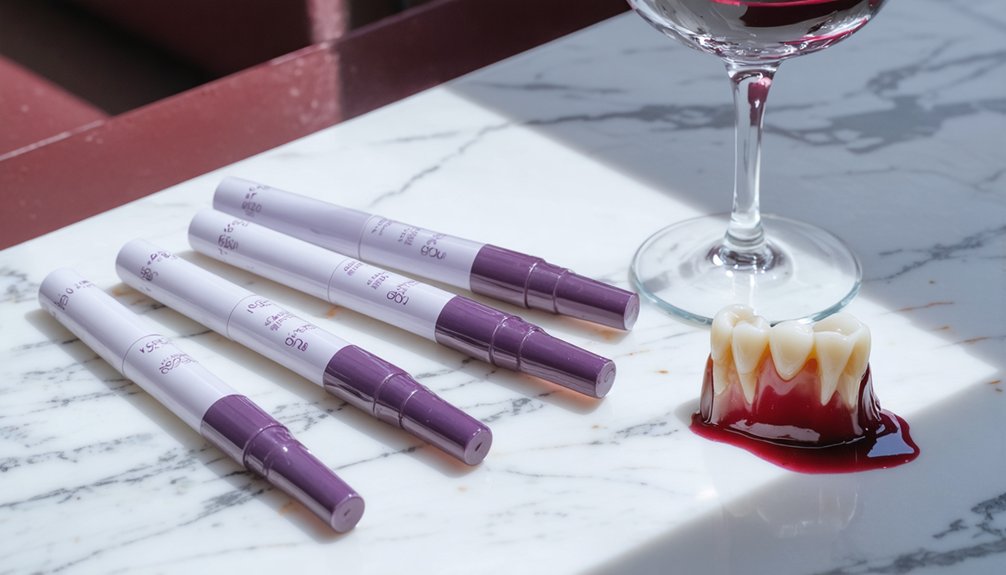
Choosing the right concentration depends on your stain severity and sensitivity tolerance.
If you’re dealing with light wine residue and surface discoloration, a 3–5% hydrogen peroxide formula lifts stains without triggering sensitivity.
For moderate wine staining, 9% hydrogen peroxide delivers clinically validated 2–3 shade improvement within seven days.
If you’re a heavy consumer with deep stain penetration, 35% carbamide peroxide releases bleaching agents gradually, minimizing sensitivity while targeting stubborn pigments.
High-concentration formulas exceeding 15% hydrogen peroxide accelerate results but require careful monitoring for enamel tolerance.
Match concentration to your specific stain depth—using too low a concentration wastes time, while unnecessarily high concentrations risk discomfort.
Precision here gives you full control over your whitening outcome.
Which Wine Pen Formula Works Best for Sensitive Teeth?
Sensitivity doesn’t mean you have to compromise on wine stain removal—it means you need to choose your formula strategically. Carbamide peroxide formulas (35%) release hydrogen peroxide slowly, reducing irritation while maintaining efficacy for dental health. Clinical trials report 70% fewer sensitivity cases with carbamide-based pens versus straight hydrogen peroxide formulations.
If your sensitivity is moderate, a 3-5% hydrogen peroxide pen lifts surface wine stains without aggressive enamel exposure. For stain prevention, look for added potassium nitrate—it desensitizes nerve pathways while the peroxide works. pH-balanced formulations further protect enamel integrity during treatment cycles.
You don’t need high-concentration formulas to see results; consistent low-concentration application over 14 days delivers comparable shade improvement with markedly less post-application discomfort.
How to Apply a Whitening Pen on Wine-Stained Teeth
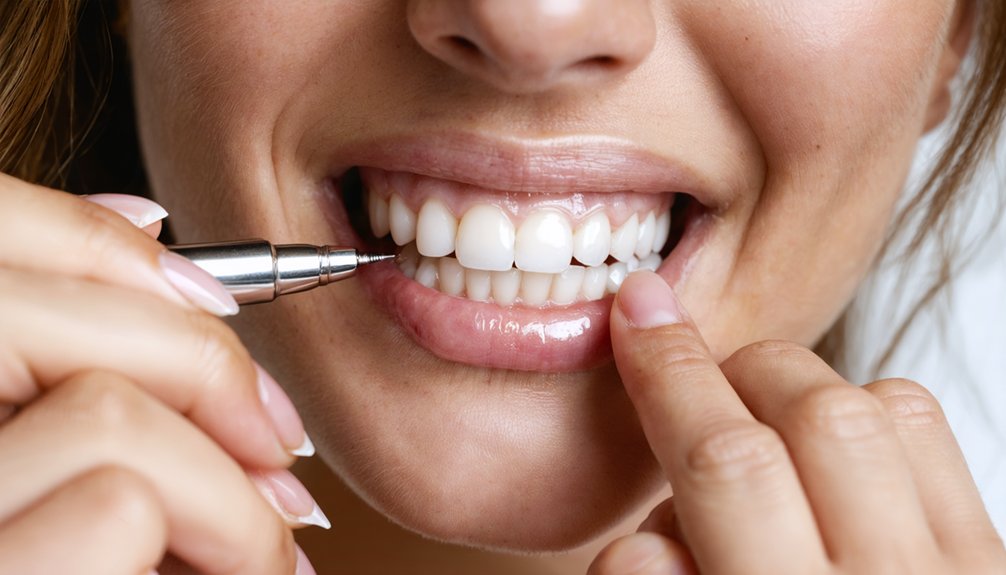
Proper application of a whitening pen starts with brushing your teeth and ensuring the enamel surface is completely dry, as moisture dilutes the active serum and reduces its efficacy on wine pigments.
You’ll then twist the pen’s base to saturate the brush tip and apply the gel directly onto wine-stained surfaces.
Allow it to dry for approximately 60 seconds before closing your mouth.
Post-application care requires you to avoid eating or drinking for at least 30 minutes, maximizing the peroxide’s contact time with extrinsic wine stains.
Pre-Application Preparation Steps
Before applying a whitening pen to wine-stained teeth, you’ll need to brush thoroughly and make certain the enamel surface is completely dry. Proper oral hygiene preparation directly impacts wine stain removal efficacy by ensuring maximum serum penetration.
Follow these evidence-based preparation steps:
- Clear food debris from wine-stained surfaces using floss or a tongue scraper to eliminate interference with active ingredients.
- Dry the enamel completely — moisture dilutes the peroxide serum, reducing its stain-lifting concentration upon contact.
- Avoid eating or drinking 30 minutes prior to application, preventing contamination of treated surfaces.
Skipping these steps compromises the active peroxide formula’s direct contact with wine pigments, measurably reducing shade improvement outcomes over your treatment cycle.
Brushing and Serum Application
Four precise steps govern effective serum application when using a whitening pen on wine-stained teeth.
First, twist the pen base until serum saturates the brush tip—typically three to four rotations.
Second, apply the serum directly onto wine-stained tooth enamel using short, controlled strokes, targeting discolored surfaces without overlapping onto gum tissue.
Third, allow 60 seconds for the serum to dry completely; wine texture residue on enamel can dilute active peroxide compounds if the surface isn’t fully prepared.
Fourth, keep your lips open during the drying period to prevent serum transfer.
Avoid eating, drinking, or rinsing for 30 minutes post-application.
This window allows peroxide agents to penetrate wine pigments embedded in tooth enamel, maximizing stain-lifting efficacy per application cycle.
Post-Application Care Tips
Once the serum dries, you’ll want to avoid eating, drinking, or rinsing for at least 30 minutes to let the peroxide compounds penetrate wine pigments fully. Post-application discipline directly impacts shade improvement outcomes.
Follow these evidence-based care steps:
- Perform dental flossing before reapplication cycles to clear interproximal wine residue, ensuring maximum serum contact with stained enamel surfaces.
- Restrict sugar intake for 60 minutes post-application, as acidic sugar compounds compromise peroxide efficacy and accelerate enamel vulnerability during active treatment windows.
- Avoid wine consumption for at least two hours after application to prevent immediate pigment redeposition onto treated enamel.
Consistent post-application adherence correlates with the clinical benchmark of 2–3 shade improvement within seven days of structured pen use.
How Many Shades Can a Whitening Pen Realistically Remove?
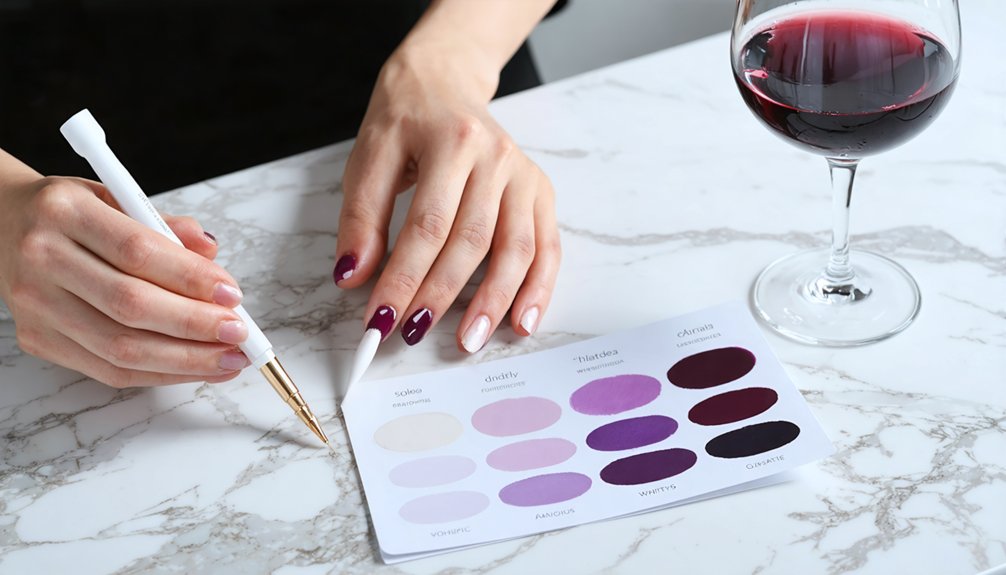
When choosing a whitening pen for wine-stained teeth, you’ll want realistic expectations backed by clinical data. Most standard formulations achieve 2–3 shade improvement within 7 days of consistent use.
Most standard whitening pen formulations achieve 2–3 shade improvement within 7 days of consistent use.
High-concentration formulas (15–20% hydrogen peroxide) can reach 4–6 shades for severe wine discoloration, while premium pens claim 8–10 shades over 30 days.
Your results depend directly on stain classification. Extrinsic stains—the primary target of proper dental hygiene maintenance—respond well, yielding 5–7 shades over 14 days with regular application.
Intrinsic stains, however, reduce pen efficacy by 60%, requiring professional intervention.
Clinical data confirms an 80% success rate for 2-shade stain removal within 10 days. Consistent application, combined with disciplined dental hygiene, maximizes your stain removal outcomes measurably.
Are Whitening Pens Better Than Strips for Wine Stains?
Beyond shade improvement metrics, your choice of delivery method shapes how effectively you target wine stains. Pens outperform strips for wine-specific discoloration through three clinically supported advantages:
- Localized precision — Pens deliver serum directly onto stained surfaces, achieving 35% better targeted removal than strips, which coat indiscriminately.
- Diet impact management — Post-wine touch-up pens neutralize pigments within 10 minutes of consumption, a stain prevention advantage strips can’t replicate.
- Application preference — 60% of consumers prefer pens over strips for painless, mess-free use.
Strips require 30-minute daily sessions; pens integrate seamlessly into your routine. If you’re a consistent wine drinker prioritizing stain prevention and precise control, pens represent the clinically smarter delivery mechanism.
How Long Do Results Last After Treatment?
Results from whitening pens for wine stains don’t last indefinitely, but clinical data shows you can expect 3–6 months of maintained improvement with proper oral hygiene. Heavy wine consumers may require reapplication every two weeks to counteract frequent exposure from varied wine pairings.
Clinical follow-ups confirm 50% stain retention returns after six months without continued pen use. Applying your pen twice weekly sustains results for 12+ months.
Stain prevention strategies—like brushing immediately after wine consumption and limiting pigment-rich varietals—slow recontamination measurably. Skipping daily brushing after wine accelerates result degradation by 20%.
You control longevity through consistent maintenance, strategic wine pairings that minimize tannin exposure, and timely reapplication before discoloration re-establishes beyond surface-level correction.
Frequently Asked Questions
Can Whitening Pens Remove Wine Stains From Dental Veneers or Crowns?
Whitening pens won’t reverse veneer discoloration or achieve crown whitening—they can’t alter non-porous materials. You’ll need professional replacement or rebonding for wine-stained veneers or crowns, as peroxide agents only affect natural enamel effectively.
Does Drinking White Wine Cause Staining That Whitening Pens Can Treat?
White wine causes minimal tooth stains compared to red wine, but it can erode enamel, making it more susceptible to discoloration. Whitening pens effectively treat any resulting surface stains you’ve developed.
Are Wine-Stain Whitening Pens Safe to Use During Pregnancy or Breastfeeding?
Better safe than sorry—you should avoid wine-stain whitening pens during pregnancy safety concerns and breastfeeding considerations, as peroxide absorption risks remain unstudied. Consult your dentist before proceeding; they’ll guide your safest whitening options.
Can Children or Teenagers Safely Use Wine-Stain Whitening Pens?
You shouldn’t let children use whitening pens, as developing enamel is highly vulnerable to peroxide damage. Teen whitening isn’t recommended before age 16, when children safety concerns around enamel maturation and sensitivity risks remain clinically significant.
Do Whitening Pens Interact Negatively With Prescription Medications or Mouthwash?
Like a chemical chess match, medication interactions can complicate your results. You’ll want to consult your prescriber first. Mouthwash effects, particularly alcohol-based rinses, may reduce peroxide efficacy—wait 30 minutes between applications to maintain treatment integrity.
References
- https://www.tribecasmiles.com/best-professional-whitening-pens-2026
- https://www.newmouth.com/dentistry/cosmetic/whitening/pen/
- https://lumineuxhealth.com/products/whitening-pen-single-not-for-sale-on-website
- https://www.youtube.com/watch?v=GX6IKLkrODw
- https://girlboss.com/a/blog/best-whitening-pens
- https://crest.com/en-us/oral-care-tips/how-to-prevent-and-get-rid-of-red-wine-teeth-stains
- https://www.merakk.com/blogs/news/teeth-whitening-pens
- https://www.elle.com/beauty/g64421405/best-teeth-whitening-pen/
- https://www.dentaly.org/us/teeth-whitening/teeth-whitening-pen/
- https://www.top10.com/teeth-whitening/best-teeth-whitening-pens