While orange peel is widely promoted as a natural teeth whitener, it’s not supported by clinical evidence. The D-limonene in orange peel has minimal stain-removing capability, and any perceived brightness comes from citric acid eroding your enamel — not cleaning it. This damage is irreversible and can increase sensitivity over time. If you’re considering this remedy, understanding exactly what it does to your teeth will change how you see it.
Key Takeaways
- Orange peel contains D-limonene and citric acid, often promoted for whitening, but clinical evidence shows minimal stain-removing effectiveness.
- Any perceived brightness from orange peel results from enamel erosion, not actual stain removal, creating only a temporary illusion.
- Citric acid in orange peel strips enamel permanently, increasing tooth sensitivity and causing irreversible long-term structural damage.
- If applied, use the inner peel side briefly for no more than 15 seconds, avoiding aggressive rubbing to limit damage.
- Dentist-recommended treatments like fluoride products, remineralizing gels, and professional whitening are safer and more effective alternatives.
What’s Actually Inside an Orange Peel?
Orange peels contain several active compounds that you should understand before applying them to your teeth. The outer zest layer concentrates essential oils, while the white pith holds D-limonene, a compound frequently promoted for stain removal. Antioxidants are abundant throughout the peel structure, and fiber gives the peel texture its characteristic firmness.
However, you should recognize that citric acid dominates the peel’s chemical profile, directly contributing to its sharp fruit flavor. This acid poses real risks to your enamel. Clinical evidence confirms that acidic compounds erode your tooth’s protective outer layer, increasing sensitivity over time.
Before you act on social media claims about orange peel benefits, you need a clear, accurate understanding of what you’re actually applying to your teeth.
Does Orange Peel Really Whiten Teeth?
Now that you understand what’s inside an orange peel, you’re likely wondering whether it actually whitens teeth. The short answer is: not effectively, and not safely.
D-limonene, the compound promoted across social media and often associated with natural extracts and herbal remedies, shows minimal stain-removing capability in clinical trials. What you’re actually observing when teeth appear brighter is enamel erosion, not cleaning.
Citric acid strips your tooth’s outer protective layer, creating a visual illusion of whiteness while permanently thinning enamel.
This distinction matters considerably. You’re not removing stains; you’re removing structure. Repeated exposure accelerates sensitivity and long-term damage.
Dentists consistently advise against direct citrus peel contact with teeth. If you want real control over your oral health, evidence-based treatments outperform this approach every time.
How D-Limonene Actually Works on Tooth Stains
Although D-limonene gets frequent attention in natural wellness circles, the clinical evidence doesn’t support its reputation as a stain remover. Studies consistently show it has minimal impact on actual tooth discoloration. What you’re likely observing isn’t stain removal — it’s enamel erosion.
When citric acid strips your enamel’s outer surface, the tooth briefly appears brighter. That visual change isn’t cleaning; it’s chemical degradation. You’re trading long-term tooth integrity for a short-term illusion of whiteness.
The consequence you should anticipate is acid sensitivity — a documented side effect of repeated citrus peel contact. Once enamel thins, it doesn’t regenerate. You’re permanently compromising your tooth structure.
If you’re pursuing genuine whitening, clinically validated methods protect your enamel rather than dissolve it.
The Truth About Citric Acid and Your Enamel
It doesn’t clean your teeth — it dissolves them. Citric acid, a primary component of dietary acids found in orange peels, chemically erodes enamel rather than removing stains. Once enamel’s gone, it won’t regenerate.
Here’s what repeated exposure actually triggers:
- Enamel erosion strips your tooth’s protective outer layer permanently
- Tooth sensitivity intensifies as the underlying dentin becomes exposed
- Visual deception occurs — thinner enamel temporarily appears brighter
- Accelerated degradation compounds with every repeated application
You’re not whitening your teeth; you’re thinning them. Dentists consistently warn against regular citrus peel contact precisely because the damage is cumulative and irreversible.
Fluoride-based alternatives protect enamel rather than compromising it — that’s the clinically supported choice.
How to Prepare Orange Peel for Use on Teeth
Before applying orange peel to your teeth, you’ll need to wash it thoroughly to remove dirt, pesticides, and surface contaminants.
You should also remove the white pith to reduce unnecessary acid exposure, though understand that even the remaining zest carries erosion risks.
If you’re considering dried peel powder, dehydrate and pulverize the zest carefully, recognizing that concentrated forms may intensify enamel damage.
Washing Orange Peels Thoroughly
Washing orange peels thoroughly before applying them to your teeth is a necessary first step, as surface contaminants like pesticide residues and dirt can introduce harmful substances directly onto your gum line and enamel. Natural remedies carry real risks when preparation is skipped.
Follow these steps to maintain control over what contacts your teeth:
- Rinse the peel under cold running water for 30 seconds minimum.
- Scrub the outer zest gently using a clean produce brush.
- Pat dry with an uncontaminated cloth before use.
- Inspect the peel for visible mold or soft spots and discard accordingly.
Artificial whitening products undergo regulated safety testing — natural alternatives don’t. Your preparation protocol directly determines your exposure risk.
Removing the White Pith
Once you’ve washed the peel, removing the white pith becomes your next critical step — though not because it improves whitening outcomes, but because it reduces direct acid concentration against your enamel.
The pith contains concentrated citric acid that accelerates enamel erosion with repeated exposure. While orange peel antioxidants and fiber content benefits are frequently cited as supportive properties, neither counteracts the erosive damage acid inflicts on your tooth’s protective layer.
Use a small knife or spoon to scrape the inner white layer cleanly away, leaving only the outer zest. This preparation doesn’t make the remedy safe — it simply decreases immediate acid load.
Dentists still caution against regular application, noting that even reduced acid contact poses measurable risk to long-term enamel integrity.
Creating Dried Peel Powder
Dehydrating orange peel into powder form requires careful preparation, though the process doesn’t eliminate the core risk: citric acid remains present and continues posing a measurable threat to enamel integrity.
Follow these controlled steps:
- Wash peels thoroughly to remove surface contaminants
- Remove excess pith to reduce concentrated acid exposure
- Dehydrate at low heat to preserve fruit antioxidants without accelerating acid concentration
- Pulverize dried peel fiber into fine powder using a grinder
Even properly prepared powder delivers citric acid directly onto enamel surfaces. Clinical evidence confirms repeated acidic contact degrades enamel progressively.
The peel fiber content doesn’t buffer acid sufficiently to protect tooth structure. Dentists advise against routine powder application, recommending fluoride-based alternatives that strengthen rather than erode your enamel.
Step-by-Step: How to Rub Orange Peel on Your Teeth
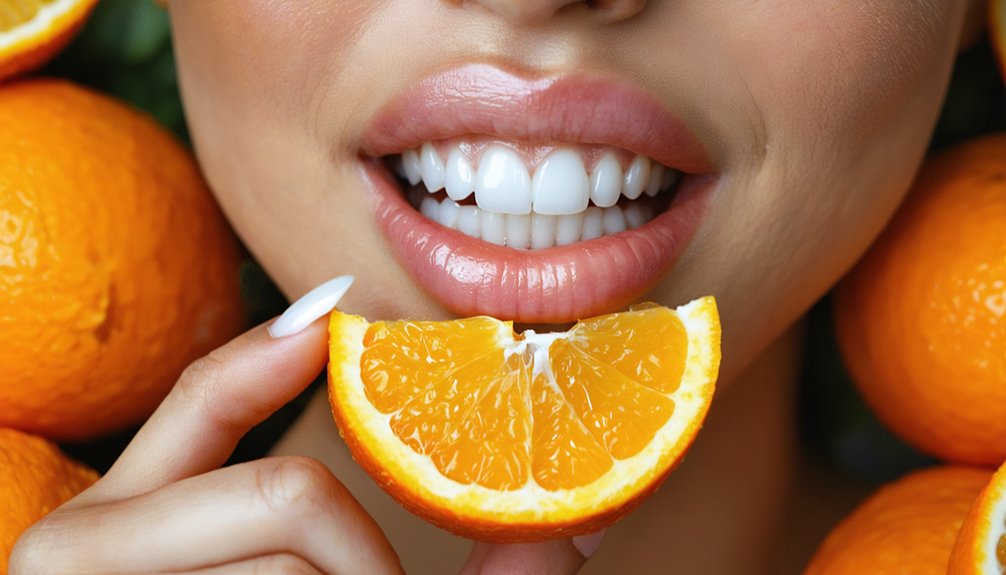
Before you begin, thoroughly wash the orange peel to remove surface contaminants. This step protects your dental hygiene by eliminating bacteria that could transfer to your mouth during application.
Next, remove the white pith to reduce acid concentration against your enamel. Apply the inner side of the peel directly to your teeth for no longer than 15 seconds. Avoid aggressive rubbing, as friction combined with citric acid accelerates enamel erosion.
Remove the white pith, then apply the peel’s inner side briefly—never rub, as citric acid and friction erode enamel fast.
After application, rinse your mouth completely with water. Don’t brush immediately, as softened enamel is vulnerable to abrasion.
While natural remedies like orange peel are popular, clinical evidence doesn’t support frequent use. Dentists caution that repeated acid exposure causes irreversible enamel damage.
Limit applications and consult your dentist before incorporating this practice regularly.
Can Orange Peel Powder or Oil Do Less Damage?
Beyond direct peel application, you might wonder whether processed forms like orange peel powder or infused oils carry fewer risks. Unfortunately, the evidence doesn’t support that assumption.
Here’s what you need to control for:
- Orange peel powder retains citric acid, meaning enamel erosion risk remains significant.
- Infused oils concentrate D-limonene, which clinical trials confirm has minimal stain-removing effect.
- Peel pigmentation compounds transfer during processing, potentially staining rather than whitening teeth.
- Sugar content in some commercial peel preparations accelerates bacterial activity, worsening tooth health.
Whether powdered or oil-based, these forms don’t eliminate the core problem: acidic compounds still contact your enamel. Dentists recommend fluoride-based alternatives as safer, evidence-backed options for maintaining your smile’s integrity.
Warning Signs Orange Peel Is Damaging Your Teeth
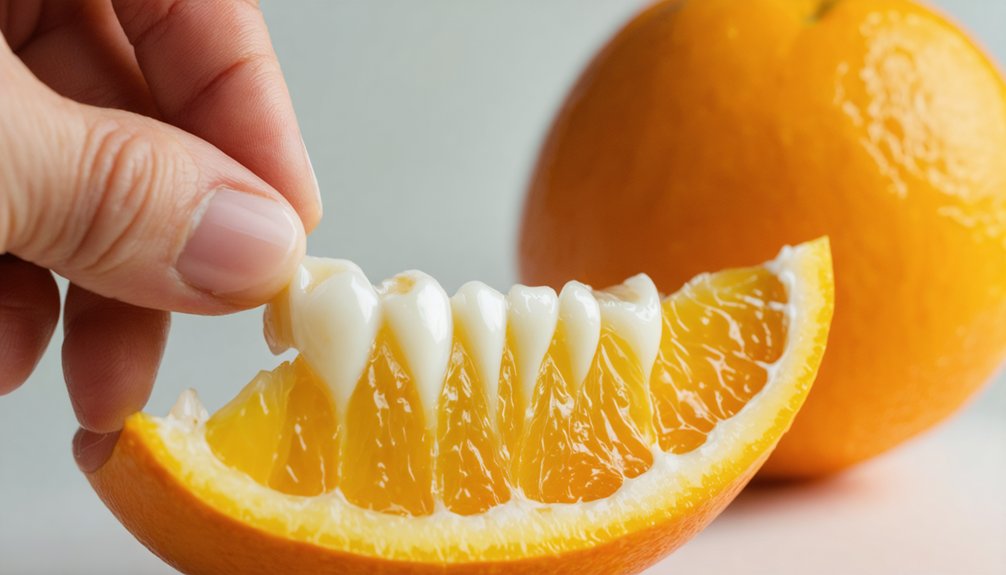
If you’re using orange peel on your teeth, recognizing early damage signs can prevent irreversible harm. Despite its botanical properties, orange peel contains citric acid that actively erodes enamel with repeated use.
Orange peel’s citric acid actively erodes enamel — recognize the damage signs before the harm becomes irreversible.
Watch for these warning signs:
- Increased sensitivity to hot, cold, or sweet substances
- Visible translucency along tooth edges, indicating enamel thinning
- Persistent discomfort during or after application
- Surface roughness when running your tongue across teeth
Fruit preservation techniques like drying or infusing peel don’t eliminate its acidic compounds. The erosive mechanism remains active regardless of preparation method.
If you notice any of these signs, discontinue use immediately and consult a dentist. Enamel doesn’t regenerate, making early intervention critical for preserving long-term dental health.
What Dentists Recommend Instead of Orange Peel
Dentists consistently recommend fluoride-based treatments as safer, clinically supported alternatives to orange peel. When you choose professional alternatives over unverified natural remedies, you protect your enamel rather than erode it.
Take control of your dental health by following evidence-backed options:
- Fluoride toothpaste — strengthens enamel and reduces sensitivity caused by acid exposure.
- Professional whitening treatments — deliver clinically proven results without chemical erosion.
- Remineralizing gels — restore mineral density to compromised enamel surfaces.
- Regular dental cleanings — remove surface stains through safe mechanical methods.
You’re risking irreversible enamel damage when you substitute these options with citrus-based approaches.
Dentists cite clear clinical evidence supporting professional alternatives over natural remedies that cause more harm than measurable benefit.
Frequently Asked Questions
Can Children Safely Use Orange Peel Remedies on Their Developing Teeth?
You shouldn’t use orange peel remedies on children’s developing teeth. Pediatric dental safety demands caution, as citric acid erodes fragile enamel faster. Opt for child-friendly remedies recommended by dentists to protect your child’s vulnerable dental development effectively.
Does Eating Oranges Cause the Same Enamel Damage as Rubbing Peels?
Coincidentally, just like rubbing peels, eating oranges triggers enamel erosion too. You’re exposing your teeth to citric acid either way. Citrus sensitivity worsens with repeated consumption, but rubbing concentrates the acid contact, accelerating damage considerably faster.
How Long After Orange Peel Use Should You Wait Before Brushing?
You should wait at least 30 minutes before brushing after using orange peel natural remedies. This protects softened enamel from abrasion. For proper oral hygiene, don’t rush the process—premature brushing accelerates enamel erosion considerably.
Are Organic Orange Peels Safer to Use on Teeth Than Conventional Ones?
Careful choices can’t completely counter citric acid’s corrosive concern. Organic orange peels don’t guarantee chemical safety for your enamel. While organic benefits eliminate pesticides, you’re still exposing your teeth to the same erosive acids that damage enamel regardless of farming methods.
Can Orange Peel Remedies Interact Negatively With Existing Dental Work?
Yes, orange peel remedies can compromise your dental safety. Citric acid’s ingredient interactions with crowns, veneers, or fillings may weaken adhesives and erode surrounding enamel. You should consult your dentist before applying any citrus-based treatments.
References
- https://draculacitrus.com/10-amazing-uses-for-orange-peel/
- https://www.youtube.com/watch?v=1_9lb-TACgg
- https://www.firstforwomen.com/home/orange-peel-uses-154753
- https://www.bombaytimes.com/photo-stories/orange-peel-diys-natural-skin-and-hair-remedies-you-need-to-try/1747902689607
- https://www.parkerfamilydentists.com/blog/trends-natural-whiter-smile-home/33091
- https://www.youtube.com/watch?v=6DXZpC25b74
- https://www.youtube.com/watch?v=paZDLaEgVDg
- https://ndtv.in/health/how-to-apply-orange-peel-on-yellow-teeth-for-teeth-whitening-home-remedy-teeth-stains-peele-danto-ko-safed-kaise-karen-4431520
- https://bebodywise.com/blog/orange-peel-face-pack/
- https://pleasantdental-peoria.com/blog/do-orange-peels-whiten-teeth-or-is-it-just-a-myth?p=mWoNNKtQAGMDrb892