You’re likely drawn to orange peel whitening because it’s cheap, natural, and backed by enough online buzz to seem worth trying. The peel contains d-limonene, a citrus oil loosely linked to surface stain removal, which fuels the appeal. But evidence doesn’t strongly support it as an effective whitening method, and repeated use risks permanent enamel erosion. There’s more to understand about what it actually does—and doesn’t do—to your teeth.
Key Takeaways
- Orange peels are natural, affordable, and widely available, making them an appealing alternative to commercial teeth-whitening products.
- D-limonene, a citrus oil found in orange peel, is believed to help remove surface stains from teeth.
- Many people prefer natural remedies over chemical-based whitening treatments, driving interest in orange peel methods.
- Rubbing the inner white pith across teeth for a few minutes is a simple, low-effort whitening technique.
- However, benefits are minimal and temporary, primarily targeting surface stains rather than producing deep whitening results.
Why People Think Orange Peel Can Whiten Teeth
Because orange peels are natural, inexpensive, and easy to find, they’ve become a popular choice for DIY teeth whitening. Many people turn to natural remedies when they want to avoid commercial chemicals, and orange peel fits that preference perfectly.
The appeal centers on d-limonene, a citrus oil found in the peel that some sources link to surface stain removal.
However, you should distinguish between popular belief and verified evidence. Many whitening claims surrounding orange peel fall into the category of dental myths — ideas that sound plausible but lack strong scientific support.
Most reported benefits are temporary and cosmetic, targeting only surface stains from coffee or tea. Understanding why this remedy gained traction helps you make a more informed, evidence-based decision about your oral care routine.
What’s Actually Inside Orange Peel That Could Whiten Teeth?
When people promote orange peel as a whitening remedy, they usually point to a specific compound called d-limonene, a citrus oil found in the peel’s outer layer that’s loosely associated with surface stain removal.
The white inner pith also contains vitamin C, pectin, and soluble fiber, which some frame as supportive whitening compounds worth considering among natural alternatives to commercial products.
However, you should know what the evidence actually shows. A Harvard-linked study found that d-limonene couldn’t reduce extrinsic stains caused by tea.
The evidence doesn’t support orange peel whitening — research shows d-limonene fails to remove tea stains.
The remaining compounds lack strong clinical backing for meaningful whitening. While these ingredients appear in some toothpaste formulations, their effectiveness in raw peel form remains questionable.
Understanding what’s inside the peel helps you evaluate whether the claimed benefits justify the real risks involved.
Does Orange Peel Whitening Actually Work?
The short answer is that orange peel whitening offers minimal, temporary results at best. While it’s tempting to trust natural alternatives, the evidence doesn’t strongly support this method.
A Harvard-linked study found that d-limonene, the compound most associated with stain removal, couldn’t reduce extrinsic stains caused by tea. Any cosmetic effects you notice are likely surface-level and short-lived.
Dentists consistently describe the whitening outcome as minimal, and repeated use introduces a real risk: acid erosion.
Orange peel’s citrus content gradually weakens enamel, which is irreversible. Once enamel breaks down, your teeth actually become more prone to staining and sensitivity.
If you’re serious about whitening, you’ll get better, safer results from professionally recommended options than from rubbing citrus peel on your teeth.
How People Use Orange Peel on Their Teeth
Despite the limited evidence behind orange peel whitening, many people still try it—so it’s worth understanding exactly how the method is typically performed. Among home remedies and natural alternatives, this one’s surprisingly straightforward:
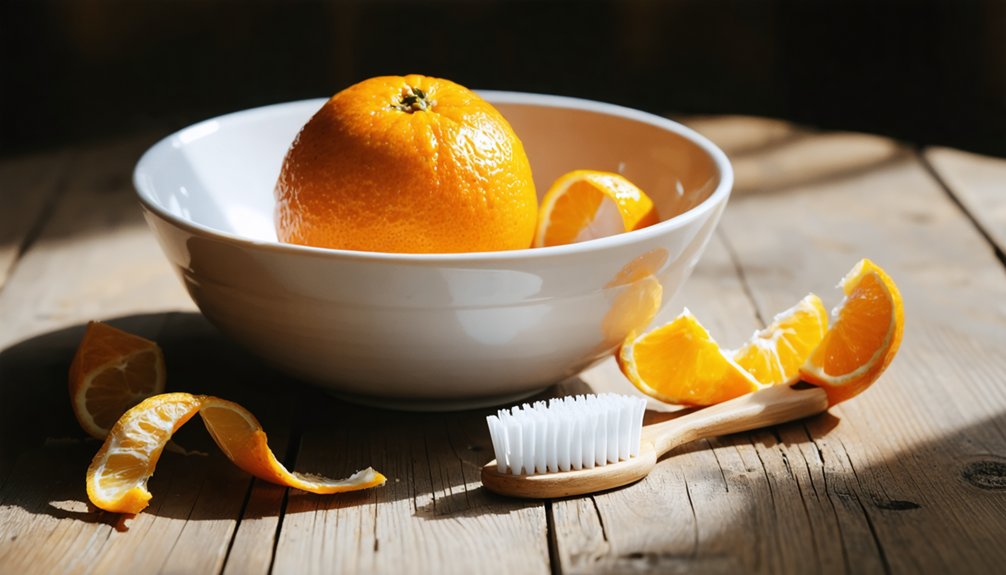
- Select a fresh, organic orange to minimize pesticide exposure, then peel it and cut a small, manageable piece.
- Rub the inner white pith gently across your teeth for one to four minutes, ensuring consistent contact with the surface.
- Rinse thoroughly and brush immediately afterward to clear any acidic residue from your enamel.
You’re in control of how you approach this, but knowing the exact steps also helps you recognize where the risks enter.
Acid contact time directly influences potential enamel damage.
Is It Safe to Rub Orange Peel on Your Teeth?
Rubbing orange peel on your teeth carries real risks that outweigh its modest, unproven benefits.
The primary safety concern is enamel erosion. Orange peel is acidic, and repeated acid exposure breaks down enamel permanently. Once it’s gone, it doesn’t regenerate.
Weakened enamel becomes rougher, which can actually trap more stains over time—the opposite of your goal. You may also experience increased tooth sensitivity as enamel thins.
Dental experts consistently caution against citrus-based whitening methods because the tradeoff isn’t favorable.
A Harvard-linked study found that d-limonene couldn’t reduce tea-caused extrinsic stains, undermining the core whitening claim entirely.
If you want real results without risking permanent damage, professional whitening or dentist-approved baking soda formulations are considerably safer, evidence-backed alternatives worth considering instead.
Frequently Asked Questions
Can Children Safely Try Orange Peel Whitening on Their Teeth?
Even if it seems natural, you shouldn’t let children try orange peel whitening. Safety considerations for children’s dental health are critical—their developing enamel is especially vulnerable to acid erosion, making this practice potentially more harmful than beneficial.
How Does Orange Peel Whitening Compare in Cost to Professional Treatments?
You’ll find orange peel whitening nearly free compared to professional treatments, but a cost analysis reveals it’s not worth it—the effectiveness comparison shows minimal results with serious enamel risks that could ultimately cost you more.
Are There Specific Orange Varieties That Work Better for Whitening?
Like chasing shadows, no specific orange variety reveals superior whitening—research doesn’t support that distinction. You’ll find the same limited health benefits and natural alternatives across varieties, with identical enamel erosion risks remaining your primary concern.
Can Orange Peel Whitening Worsen Existing Tooth Sensitivity or Pain?
Yes, orange peel’s acidity can worsen your existing sensitivity reactions by eroding your dental enamel further. If you’ve already got sensitivity or pain, you’re risking irreversible damage, so you should avoid this method entirely.
How Soon After Eating Should You Avoid Using Orange Peel?
Wait an eternity—at least 30 minutes after eating—before using orange peel. Your tooth enamel’s already softened from acids, so you’d completely sabotage any orange benefits and massively increase erosion risk by applying it sooner.
References
- https://corporatewelfare.socsci.uci.edu/other-networks/how-to-effectively-use-orange-peel-for-teeth-whitening-a-comprehensive-guide.html
- https://norwalkvillagedentalcenter.com/lets-talk-about-orange-peels-and-teeth/
- https://www.furumotodentistry.com/office/our-blog/foods-that-can-help-whiten-teeth
- https://crest.com/en-us/oral-care-tips/teeth-whitening/natural-teeth-whitening-options-are-they-effective
- https://www.lwdentist.com/diy-teeth-whitening-what-works-and-what-to-avoid/
- https://www.youtube.com/watch?v=umnxy9XbdFE
- https://pacificavedental.com/p/BLOG-28362-2016.5.17-Can-Orange-Peels-Give-You-a-Whiter-Smile-p.asp
- https://upperfortdental.com/the-truth-about-natural-whitening-fads-dr-carly-hamilton/
- https://www.instagram.com/reel/DXIj5xIDQCO/
- https://www.herdin.ph/index.php?view=research