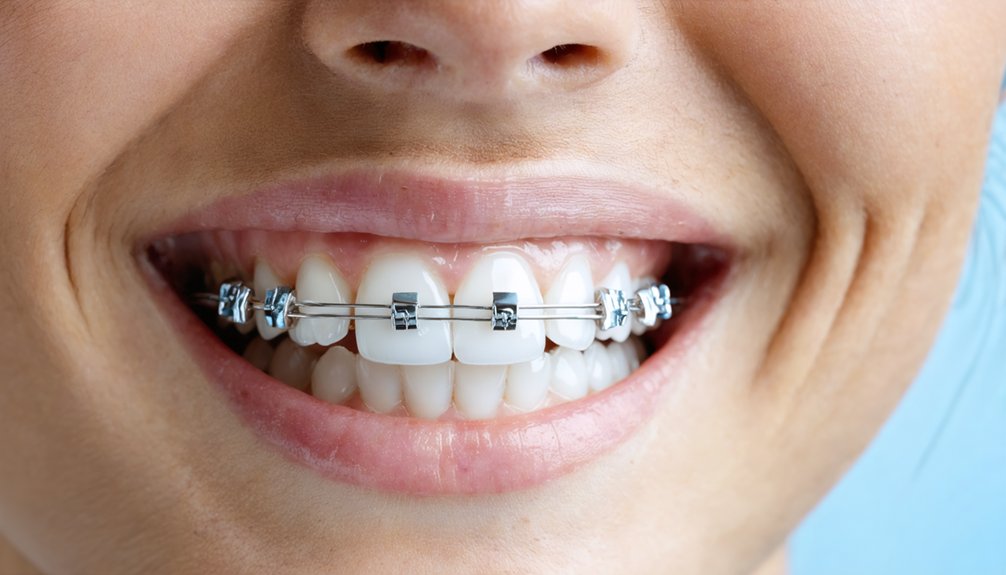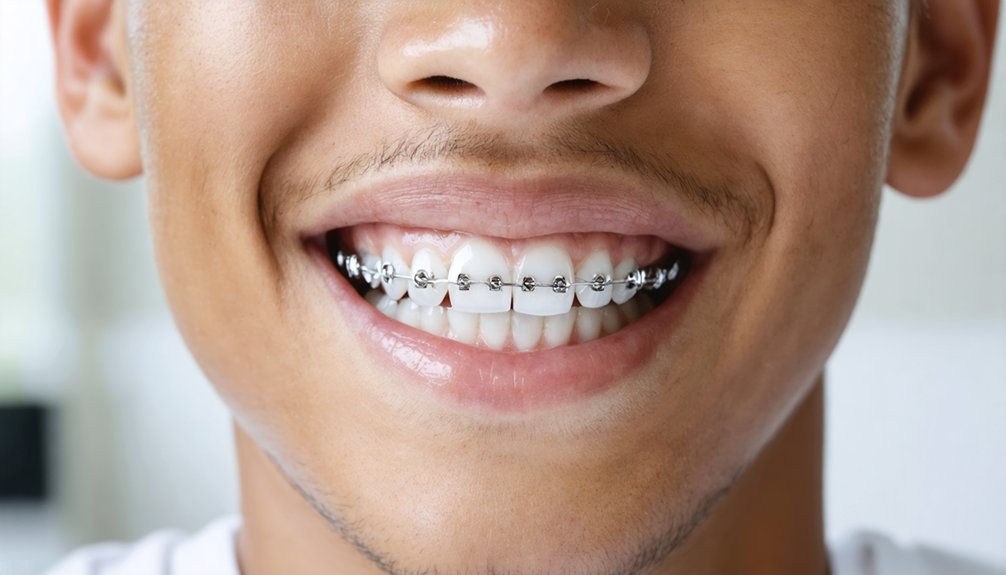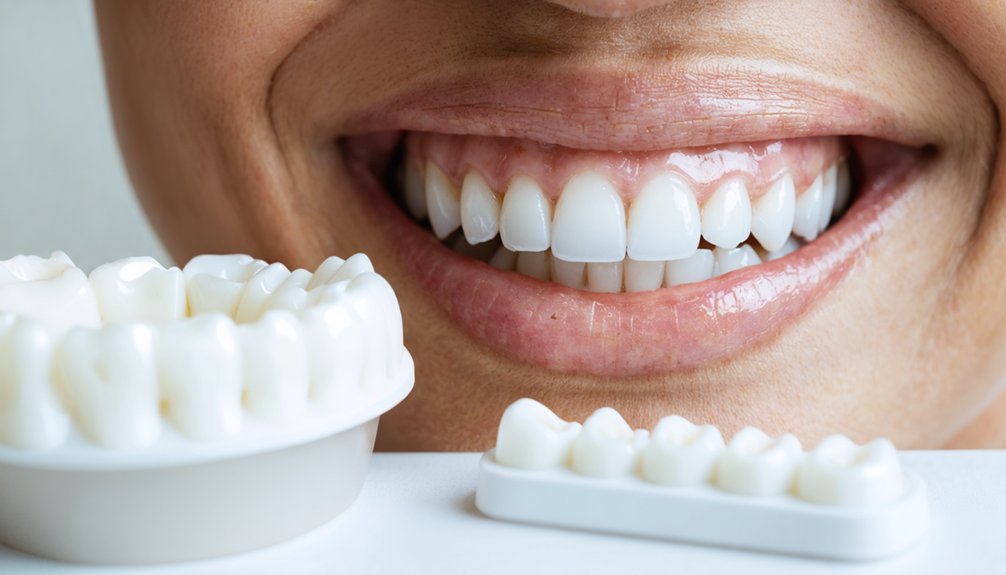
Whitening agents only penetrate natural enamel, so your crowns and fillings won’t lighten alongside your teeth. This creates a visible shade gap that’s often difficult and costly to correct. Front-tooth restorations carry the highest cosmetic risk, as surrounding enamel can brighten several shades while restorations stay fixed. You should always consult your dentist before whitening to protect your existing work — and the details ahead will help you navigate every risk with confidence.
Key Takeaways
- Whitening agents only affect natural enamel, leaving crowns and fillings unchanged, which can create a noticeable color mismatch after treatment.
- Front-tooth restorations carry the highest cosmetic risk, as surrounding enamel brightens while restorations remain their original shade.
- Excessive bleaching can weaken the bond integrity of existing restorations, increasing the risk of damage with repeated exposure.
- Complete whitening before getting new restorations, allowing shades to stabilize so replacements can be matched to your brighter enamel.
- Consult a dentist before whitening to evaluate restoration location, material type, and shade compatibility to minimize cosmetic and structural risks.
Why Whitening Won’t Change Your Crowns or Fillings
When you whiten your teeth, the peroxide-based agents work by penetrating natural enamel and breaking down stain molecules—a process that simply doesn’t apply to dental restorations.
Composite fillings, porcelain crowns, veneers, and ceramic restorations are engineered to resist chemical alteration, which means their restoration shade stays fixed regardless of how many tooth whitening sessions you complete.
Your natural enamel can brighten several shades while every restoration remains exactly where it started chromatically.
That gap becomes most visible when restorations sit in your front teeth, where color contrast is immediately noticeable.
Repeated whitening only widens the discrepancy.
Understanding this biological and material distinction gives you precise control over your cosmetic outcome before you commit to any whitening protocol.
Which Restoration Materials Respond to Whitening: and Which Don’t?
When you whiten your teeth, your natural enamel absorbs the peroxide and lightens; your restorations don’t.
Composite resin, porcelain, ceramic, and metal materials each resist bleaching agents, leaving them locked at their original shade regardless of how many whitening sessions you complete.
The material type of each restoration is ultimately what determines whether color matching is even possible after treatment.
Natural Enamel Bleaches Readily
Natural tooth enamel bleaches readily because peroxide-based agents penetrate the enamel’s crystalline structure and oxidize stain molecules beneath the surface. This process drives natural whitening effectively across most healthy teeth, often lightening your smile several shades within a controlled treatment cycle.
Your enamel’s responsiveness, however, comes with a trade-off. As the surrounding teeth brighten, any existing crowns, veneers, or composite fillings remain their original shade. That contrast becomes your primary cosmetic concern.
Additionally, enamel sensitivity frequently increases during or after whitening, since peroxide temporarily affects the tooth’s nerve pathways.
Understanding how readily your natural enamel responds gives you precise control over timing, treatment intensity, and shade goals—particularly before committing to new restorations that must match your post-whitening result.
Restorations Resist Whitening Agents
Unlike your natural enamel, dental restorations—composite resin, porcelain, ceramic, and metal—don’t respond to peroxide-based whitening agents. Each material resists bleaching by design, which supports restoration longevity but creates a predictable cosmetic challenge.
When you whiten, your natural teeth brighten while your restorations stay fixed at their original shade. The contrast becomes especially visible with front-tooth crowns, veneers, or composite fillings. Repeated whitening sessions widen that shade gap further.
Understanding material behavior is essential to whitening safety. Composite resin absorbs little to no peroxide. Porcelain and ceramic reflect it entirely. Metal restorations are simply unaffected. None will shift toward your new, lighter enamel tone.
Knowing this before you whiten lets you make deliberate, informed decisions about your treatment sequence and esthetic outcomes.
Material Type Determines Response
Each restoration material responds to whitening agents differently—or not at all—so knowing what’s in your mouth shapes every decision you make about bleaching.
Composite resin fillings don’t bleach like enamel; peroxide bypasses them entirely. Porcelain and ceramic crowns resist lightening just as completely, maintaining their original shade regardless of treatment intensity. Metal restorations don’t respond at all.
Material compatibility directly determines whether whitening produces a uniform result or an obvious mismatch. When your front teeth include any of these restorations, surrounding enamel can brighten several shades while your dental work stays fixed at its original color.
Understanding restoration longevity also matters—older composites may appear darker once adjacent enamel brightens. Knowing your materials before you whiten keeps you in control of the cosmetic outcome.
Which Restorations Are Most at Risk for a Color Mismatch?
If you have restorations on your front teeth, you’re at the highest risk for a visible color mismatch after whitening.
Your surrounding enamel can brighten several shades while composite fillings, porcelain crowns, or veneers stay fixed at their original color, creating a noticeable contrast right where it’s most visible.
Older fillings and crowns are especially vulnerable, as they may appear darker or more discolored once the natural teeth around them whiten.
Front Tooth Restorations
Front-tooth restorations carry the highest cosmetic risk when whitening is involved, simply because they’re the most visible part of your smile.
Composite fillings, porcelain crowns, and veneers placed on incisors or canines won’t respond to whitening techniques the way your natural enamel does. As surrounding teeth brighten, these restorations remain their original shade, creating a visible contrast that’s difficult to ignore.
Restoration aesthetics depend heavily on consistent color across your entire smile zone. Once a shade mismatch develops in the front of your mouth, correcting it often requires replacing the restoration entirely.
Older composite fillings are especially vulnerable—they can appear noticeably darker once adjacent enamel lightens. If you have any front-tooth restorations, consult your dentist before starting any whitening protocol.
Older Fillings and Crowns
Older fillings and crowns carry a disproportionate risk for color mismatch because years of staining, wear, and material degradation have already shifted their baseline shade.
When you whiten surrounding enamel, that pre-existing shift becomes amplified and far more visible. Restoration longevity works against you here—the longer a restoration has been in place, the less likely it’s to align with your post-whitening shade.
Restorations most vulnerable to visible mismatch include:
- Composite fillings darkened by years of food and beverage absorption
- Porcelain crowns with surface micro-abrasions that collect stain
- Older ceramic veneers that have shifted from their original shade
Accurate color matching becomes considerably harder once you’ve already whitened.
Consult your dentist before proceeding to assess each restoration’s current condition and longevity.
How Far Apart Can Shades Get After Whitening?
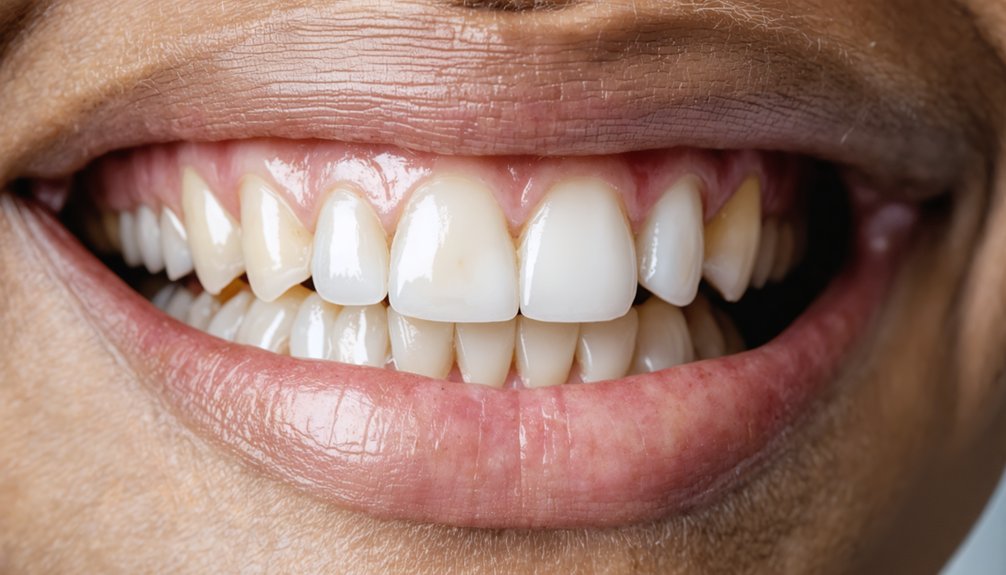
How noticeable the shade gap becomes depends largely on how light your natural teeth get and how visible your restorations are.
Whitening effects can shift natural enamel several shades brighter, while your crowns or fillings stay fixed at their original color. That shade variation can range from subtle to striking depending on your baseline tooth color, the number of whitening sessions you complete, and where your restorations sit in your smile.
Front-tooth restorations create the highest cosmetic risk because they’re directly in view.
A filling that once blended seamlessly can look noticeably darker once surrounding enamel brightens two to four shades. The wider that gap becomes, the more likely you’ll need restoration replacement to restore visual consistency.
Does Whitening Damage Crowns or Fillings?
Whether whitening damages your existing crowns or fillings is a concern worth addressing before you start any bleaching regimen. Most supervised whitening techniques don’t structurally harm restorations, but risks still exist depending on how you apply them.
Three factors that affect restoration longevity during whitening:
- Bond integrity — Excessive or unsupervised bleaching agents may weaken the bond between a restoration and surrounding tooth structure.
- Product concentration — Higher-strength at-home formulas increase exposure risk if misused.
- Application frequency — Repeated whitening sessions compound potential stress on existing dental work.
Your restorations are durable, but they weren’t designed with peroxide exposure in mind.
A dentist can evaluate your specific materials and guide you toward whitening techniques that preserve both aesthetics and structural integrity.
How to Tell If Your Restorations Already Look Mismatched After Whitening
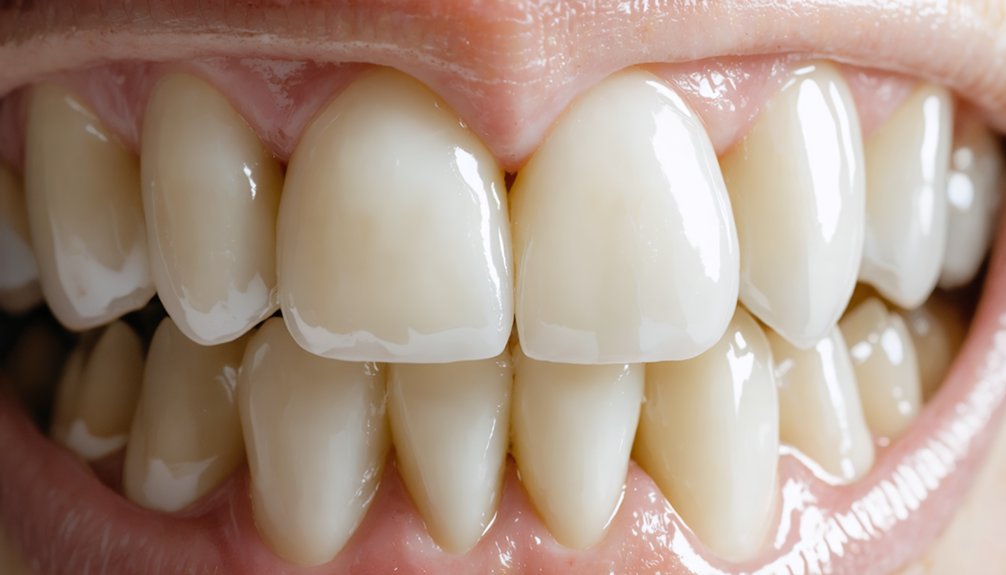
Spotting a shade mismatch after whitening is often straightforward once you know what to look for. Stand in natural light and examine your smile closely. If a crown, veneer, or filling appears noticeably darker or yellower than your surrounding teeth, mismatched shades have already developed.
Front-tooth restorations are the most revealing, since contrast becomes visible even in casual conversation.
A thorough restoration evaluation involves comparing each restoration against adjacent natural enamel under consistent lighting. Photographs taken before and after whitening can highlight subtle shifts.
Older composite fillings are especially likely to stand out, as surrounding enamel brightens while the material stays fixed. If you’re detecting a visible discrepancy, consult your dentist promptly to discuss replacement, tinting options, or alternative cosmetic solutions before the contrast worsens.
Whiten Before Your Next Crown or Filling, Not After
Timing matters more than most patients realize when dental work is on the horizon. Whitening timing directly shapes how well your future restoration matches your natural teeth.
Getting the sequence wrong means living with a visible mismatch you could’ve avoided.
Smart cosmetic planning follows this order:
- Complete your whitening treatment first and allow shades to stabilize.
- Schedule your crown, veneer, or filling appointment after your final shade is confirmed.
- Have your dentist fabricate the restoration to match your new, brighter baseline.
This approach gives your dental team a fixed target. They can’t lighten a crown after it’s placed, but they can match it precisely before it is.
You control the outcome when you control the sequence.
Does Whitening Mean You’ll Need to Replace Your Old Fillings or Crowns?
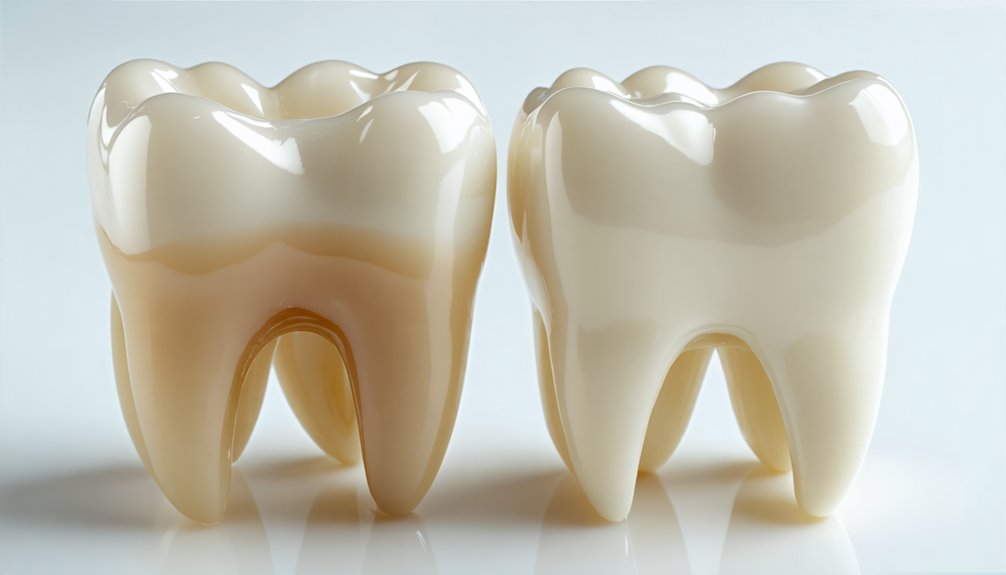
Planning your whitening before a new restoration is straightforward—but what about the crowns and fillings you already have? Not necessarily.
Whitening techniques don’t damage existing restorations, so replacement isn’t automatically required. The real issue is cosmetic: your natural enamel will brighten, but your restorations won’t. If those restorations sit in a visible area, the shade contrast becomes obvious and difficult to ignore.
Whitening won’t harm your restorations—but it will make them look darker against your newly brightened natural teeth.
Restoration longevity isn’t the concern here—appearance is. If your existing crowns or fillings are older, already discolored, or positioned prominently in your smile, whitening can make them look markedly darker by comparison.
At that point, replacing them becomes a cosmetic decision, not a structural one. A dentist can assess placement and shade before you commit to any whitening plan.
Why Patients With Crowns or Fillings Should See a Dentist Before Whitening
Before you commit to any whitening treatment, a dental consultation is the most effective way to protect both your cosmetic results and your existing work.
Skipping this step leaves you vulnerable to whitening misconceptions that can cost you more in the long run.
A dentist evaluates three critical factors:
- Restoration location — front-tooth restorations carry the highest mismatch risk
- Material type — porcelain, composite, and ceramic each respond differently to peroxide
- Shade compatibility — your current restorations may require replacement to achieve color harmony
Without professional assessment, you’re making irreversible decisions without complete information.
A dental consultation gives you the control to sequence treatment correctly and achieve consistent, predictable results.
Frequently Asked Questions
Can Whitening Strips Be Used Safely Over Existing Dental Bonding?
Whitening strips won’t lighten your dental bonding — imagine a patient whose bonded front tooth stayed yellow while surrounding enamel brightened dramatically. You can use them, but whitening safety demands you understand bonding materials won’t respond equally.
How Long Should I Wait to Whiten After Getting a New Filling?
Wait at least two weeks before whitening to manage filling sensitivity and optimize whitening timing. You’ll let the restoration fully set, reducing irritation risk while ensuring surrounding enamel responds evenly to bleaching agents.
Will Whitening Affect the Gum Tissue Surrounding My Crown?
Whitening agents won’t typically harm your gum tissue, but you may notice gum sensitivity during treatment. Your crown won’t experience crown discoloration from bleaching—it’ll retain its original shade while surrounding enamel brightens noticeably.
Can a Dentist Recolor or Tint an Existing Crown to Match?
Picture a flawless smile—dentists can’t recolor or tint existing crown materials. Your only real path to precise color matching is replacement, letting you control the exact shade from the start.
Does Teeth Whitening Affect the Lifespan of Existing Dental Restorations?
Teeth whitening generally won’t shorten your dental restoration’s lifespan, but you’ll want to avoid excessive or unsupervised use. Bleaching agents can potentially weaken bonding interfaces, so consulting your dentist before beginning any whitening regimen remains essential.
References
- https://clubwhitesmile.com/risks-of-whitening-if-you-have-crowns-or-fillings/
- https://www.confidentsmilestudiotx.com/will-teeth-whitening-work-with-crowns-and-fillings/
- https://www.revivedentalimplantcenters.com/2024/05/11/can-i-whiten-my-teeth-if-i-have-crowns/
- https://www.restorehealthdentistry.com/post/will-teeth-whitening-work-with-crowns-and-fillings
- https://www.fountainheaddentistry.com/is-it-safe-to-whiten-crowns-or-veneers/
- https://www.oakmanfamilydentistry.com/teeth-whitening-and-dental-work-will-it-affect-fillings-or-crowns/
- https://longislandimplantdentistry.com/imported-rocky-point/does-teeth-whitening-affect-fillings-crowns-or-veneers/
- https://www.dentalgroupofamarillo.com/can-whitening-damage-existing-dental-work-what-happens-to-your-crowns-and-fillings/
- https://greenlinedentalcare.com/can-you-whiten-your-teeth-if-you-have-fillings-or-crowns/
- https://www.colgate.com/en-us/oral-health/teeth-whitening/can-you-whiten-a-crown