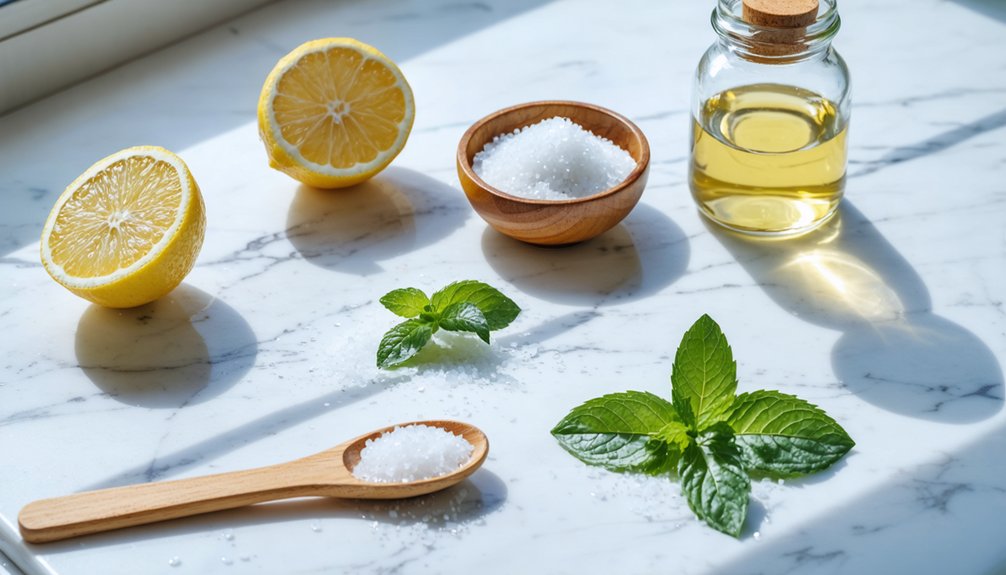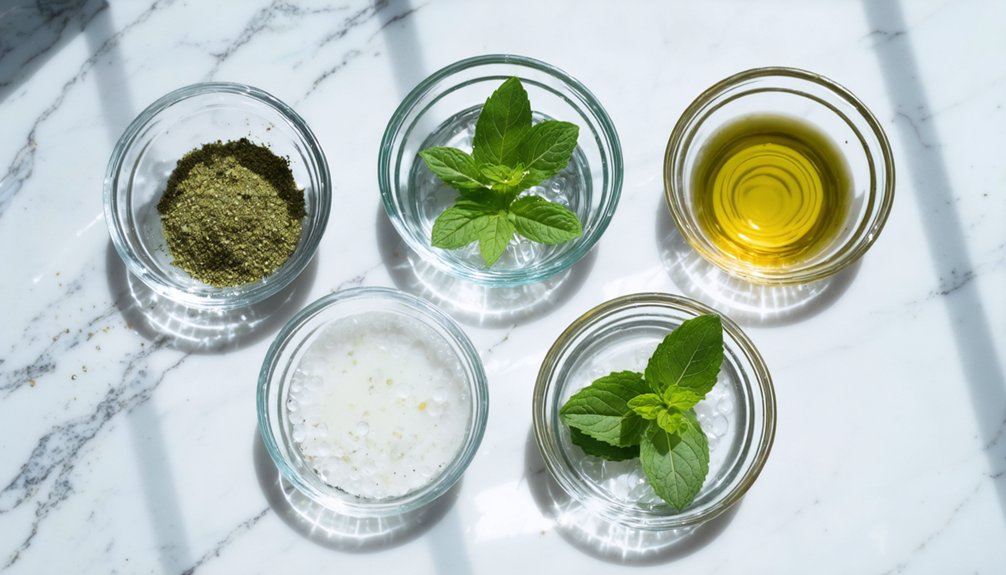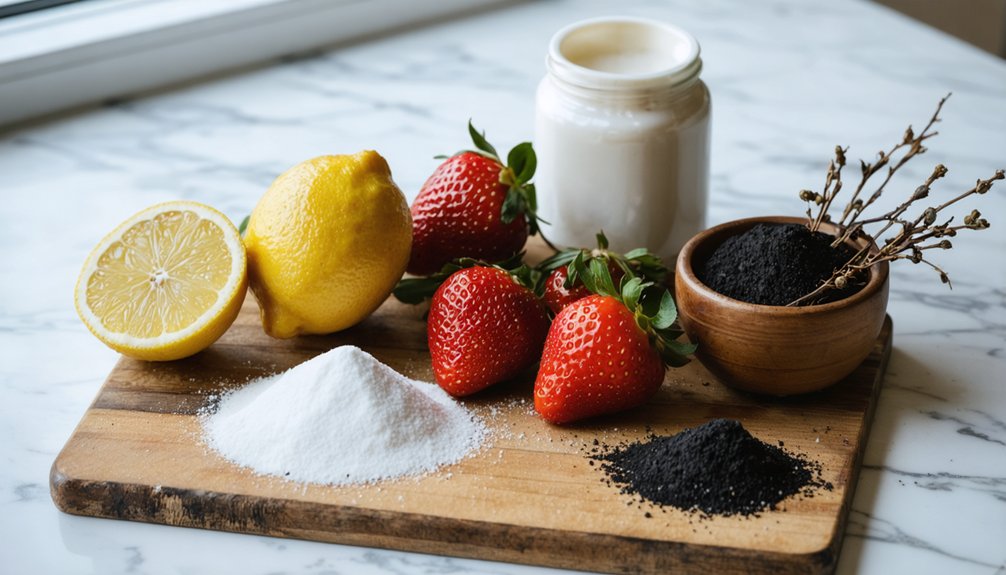
You can whiten your teeth naturally using five effective DIY methods: baking soda paste, hydrogen peroxide combined with baking soda, coconut oil pulling, activated charcoal, and fruit-based treatments like strawberry paste or banana peel. Each method works with nature’s ingredients to gently lift stains and brighten your smile. Limit most treatments to two or three times weekly to protect your enamel. Keep going to discover exactly how each method works and which delivers the fastest results.
Key Takeaways
- Mix baking soda with water into a paste and brush for 1-2 minutes, limiting use to 2-3 times weekly to protect enamel.
- Combine hydrogen peroxide with baking soda for the fastest whitening results, with noticeable brightness appearing within a few sessions.
- Swish one tablespoon of coconut oil for 15-20 minutes daily to gradually reduce bacteria and brighten teeth naturally.
- Mash one ripe strawberry with baking soda, apply for 5 minutes, and limit use to once weekly.
- Rub activated charcoal gently onto teeth once or twice weekly to adsorb stain-causing compounds effectively.
Baking Soda and Hydrogen Peroxide: Two Methods Worth Trying
Baking soda and hydrogen peroxide are two of the most accessible natural whitening agents you’ll find, and they work even better when used thoughtfully.
For a simple start, mix equal parts baking soda and water into a paste, then brush gently for one to two minutes. Rinse thoroughly and limit this to a few times weekly to protect your enamel.
For a stronger approach, combine two teaspoons of 3% hydrogen peroxide with one teaspoon of baking soda. Brush all visible surfaces for two minutes, then rinse completely.
These natural remedies support your oral hygiene routine without synthetic additives, but restraint matters. Overuse risks enamel erosion, so stick to two or three applications per week. You’re in control of how far you take it.
Does Coconut Oil Pulling Actually Whiten Teeth?
Coconut oil pulling has roots in ancient Ayurvedic practice, and it’s worth understanding what it actually does before you commit 20 minutes of your morning to it. Oil pulling benefits go beyond surface whitening — you’re reducing harmful oral bacteria while loosening plaque that dulls your enamel’s natural brightness.
Coconut oil safety makes it one of the gentler options in your whitening toolkit. Take one tablespoon, let it melt if solid, then swish gently for 15 to 20 minutes. You’re not aggressively rinsing; you’re methodically pulling the oil between your teeth.
Spit it into the trash afterward — never the sink — then rinse and brush normally. Done daily, you’ll gradually reclaim a cleaner, brighter smile on your own terms.
Strawberry, Charcoal, and Fruit Peel Treatments Compared
When you move beyond oil pulling, three nature-derived options — strawberry paste, activated charcoal, and fruit peels — each bring a distinct mechanism to your whitening routine.
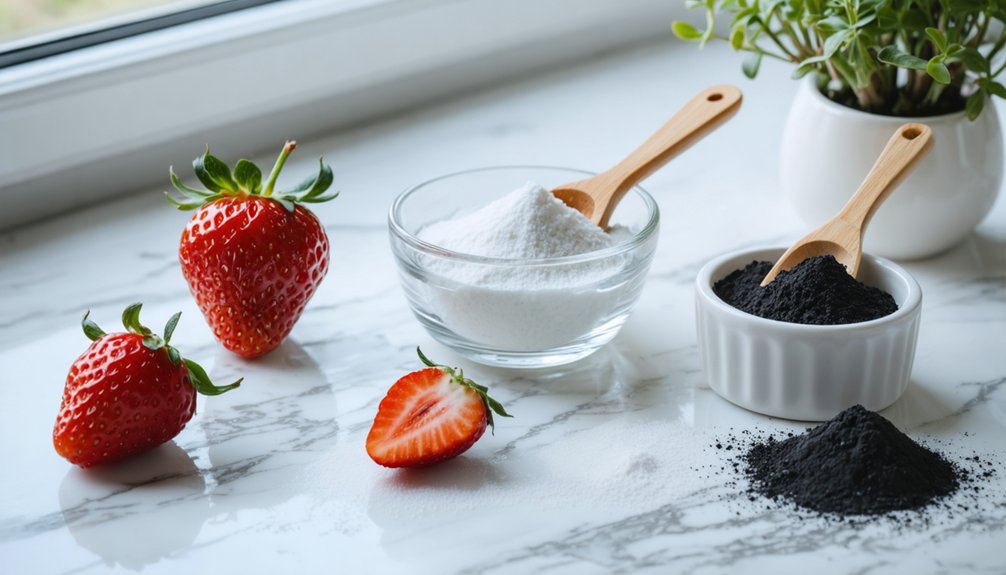
Strawberries deliver malic acid and natural enzymes that gently lift surface stains; mash one ripe berry with half a teaspoon of baking soda, apply for five minutes, then rinse and brush normally. Limit this to once weekly.
Activated charcoal works through adsorption, binding stain-causing compounds to its porous surface — use it once or twice weekly, brushing gently in small circles.
Fruit peels, particularly banana, rely on fruit acids and minerals absorbed during brief contact; rub the white inner side against your teeth for ten minutes before brushing.
Each method rewards consistent, measured application over aggressive, frequent use.
Which DIY Whitening Method Works Fastest?
Among the six methods covered, hydrogen peroxide and baking soda combined works fastest, often delivering noticeable brightness within a few sessions. You’re harnessing two proven natural agents that work synergistically to lift surface stains efficiently.
Enamel safety remains a priority, so you’ll want to limit use to two or three times weekly and always dilute your peroxide solution properly.
Cost effectiveness is another reason this method stands out — both ingredients are inexpensive and widely available at any drugstore.
If you prefer a gentler pace, baking soda paste or activated charcoal offer slower but steady results.
Fruit-based treatments work most gradually, rewarding consistent long-term use.
Ultimately, you control the balance between speed and caution, choosing the approach that best aligns with your whitening goals and sensitivity levels.
How Often Can You Whiten Teeth Without Damaging Enamel?
Protecting your enamel means respecting each method’s recommended frequency, since overuse of even natural whitening treatments can gradually wear down your teeth’s protective outer layer. Baking soda and hydrogen peroxide mixtures should stay limited to two or three times weekly. Activated charcoal works safely only once or twice per week. Strawberry paste suits a once-weekly rhythm, while coconut oil pulling remains gentle enough for daily use.
You’re ultimately in control of your oral health, but enamel safety requires honest self-assessment. If sensitivity develops or gum irritation appears, scale back immediately.
Professional consultation with a holistic or biological dentist helps you establish a personalized whitening schedule that honors your unique enamel strength. Listening to your body’s signals ensures your natural whitening practice stays genuinely protective rather than quietly destructive.
Frequently Asked Questions
Can DIY Whitening Treatments Effectively Remove Deep Intrinsic Tooth Stains?
Natural remedies can’t fully achieve deep stain penetration for intrinsic discoloration. You’ll find they work best on surface stains, but you should consult a dentist for holistic solutions targeting deeper, internal tooth discoloration effectively.
Are These Whitening Methods Safe for People With Dental Crowns?
Like a puzzle with mismatched pieces, these methods won’t whiten crowns due to dental material compatibility limits. You’ll want to explore alternative cosmetic options with your holistic dentist to reclaim your brightest, most balanced smile naturally.
Should Children or Teenagers Attempt Any of These DIY Whitening Treatments?
You shouldn’t let children try these treatments due to child safety concerns, as developing enamel is vulnerable. Discourage teenage experimentation too — their growing teeth need holistic, professional guidance before exploring any natural whitening approach.
Can These Treatments Worsen Existing Tooth Sensitivity or Gum Problems?
Like salt on a wound, yes, these treatments can worsen sensitivity. Baking soda and peroxide wear down tooth enamel, while coconut oil or charcoal may trigger gum irritation—so you’ll want to listen to your body’s signals.
Do DIY Whitening Results Last as Long as Professional Dental Treatments?
DIY results don’t last as long, but you’re actively supporting enamel health naturally. Professional treatments penetrate deeper, yet these cost-effective holistic methods empower you to maintain brightness through consistent, mindful practice aligned with your body’s wellness.
References
- https://redandhoney.com/5-ways-naturally-whiten-teeth-without-harsh-chemicals/
- https://www.healthline.com/nutrition/whiten-teeth-naturally
- https://helloglow.co/8-natural-teeth-whitening-remedies/
- https://www.queensparkclinic.co.uk/23-0911-safe-ways-to-whiten-teeth-at-home-without-harsh-chemicals/
- https://www.youtube.com/watch?v=snhhQi10vrE
- https://smilepath.com.au/blogs/blog/how-to-whiten-teeth-naturally
- https://www.dentalcareofmidfl.com/six-simple-ways-whiten-teeth-naturally/
- https://summerlinsmiles.com/6-natural-ways-to-whiten-your-teeth-at-home/
- https://www.medicalnewstoday.com/articles/322421
- https://bweisshealth.com/blogs/oral-health-blog/how-to-whiten-teeth-without-or-at-least-less-of-chemicals