You can target stubborn teeth spots at home using five evidence-backed methods: a baking soda and hydrogen peroxide paste, activated charcoal with a strawberry scrub, diluted apple cider vinegar rinses, coconut oil pulling, and fruit peel rubbing. Each approach addresses surface stains differently, but all require careful frequency limits to protect your enamel. Misuse can cause sensitivity or erosion, so understanding the clinical reasoning behind each method matters before you start.
Key Takeaways
- Mix baking soda with hydrogen peroxide into a paste and apply with a soft toothbrush for two minutes a few times weekly.
- Brush gently with activated charcoal or a strawberry-baking soda mix to lift surface stains, rinsing thoroughly afterward.
- Swish diluted apple cider vinegar for two to three minutes weekly, then brush immediately to prevent enamel erosion.
- Pull one tablespoon of coconut oil through teeth for 15–20 minutes daily, then spit and brush thoroughly.
- Rub the inner side of fruit peels on teeth for two minutes, letting natural acids sit before rinsing.
Baking Soda and Hydrogen Peroxide Paste for Spot Whitening
One of the most accessible home remedies for whitening teeth spots involves combining baking soda with hydrogen peroxide to form an abrasive, oxidizing paste.
Mix one tablespoon of baking soda with two tablespoons of 1.5% or 3% hydrogen peroxide until you achieve a thick consistency. Apply it directly to stained areas using a soft-bristled toothbrush for two minutes, then let it sit for one minute before rinsing thoroughly.
For whitening effectiveness, you’ll want to repeat this a few times weekly rather than daily. Overuse compromises enamel safety, as the paste’s acidity can soften enamel and irritate gum tissue over time.
You can also dilute the same ratio with water to create a targeted mouthwash. Control your application frequency carefully to protect long-term dental integrity.
Activated Charcoal and Strawberry Scrub to Whiten Surface Stains
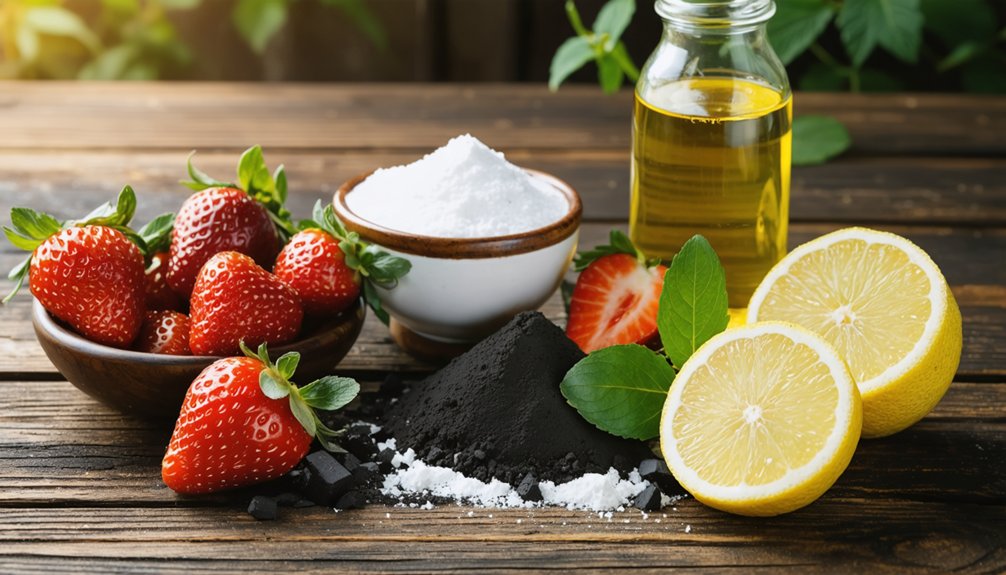
Two natural abrasives—activated charcoal and strawberry-baking soda scrub—offer distinct mechanisms for reducing surface stains, though both require cautious application to avoid enamel damage.
Charcoal benefits include adsorbing surface pigments, while strawberry enzymes gently polish enamel when combined with baking soda.
- Dip a wet toothbrush into powdered activated charcoal; brush gently in small circles for 2 minutes.
- Mash fresh strawberries, mix with baking soda, apply to teeth, and leave for a few minutes.
- Rinse thoroughly after each treatment to remove residual particles.
- Use charcoal sparingly—excessive abrasion damages gum tissue and enamel surfaces.
- Brush with regular toothpaste afterward to neutralize remaining compounds.
Limit both treatments to a few weekly applications. Overuse compromises enamel integrity, undermining long-term whitening goals.
How Apple Cider Vinegar Dissolves Yellow Tooth Stains
While charcoal and strawberry scrubs work mechanically to lift stains, apple cider vinegar (ACV) takes a chemical approach—its acetic acid actively dissolves yellow surface deposits by breaking down mineral compounds and bacterial biofilm.
To use it safely, mix 1 part ACV with 2 parts water, then swish for 2–3 minutes without swallowing. Follow immediately with regular toothpaste brushing and a thorough water rinse.
Dilute one part ACV with two parts water, swish for two to three minutes, then brush and rinse thoroughly.
You must understand ACV’s acidity effects on tooth enamel. Prolonged or daily exposure erodes the enamel’s mineralized surface, creating irreversible structural damage.
Limit use to a few sessions weekly. If you experience sensitivity, stop immediately.
ACV offers a controlled, chemical-based whitening option, but discipline in frequency is non-negotiable for protecting your long-term dental integrity.
Can Coconut Oil Pulling Remove Deep Tooth Stains?
Unlike the chemical dissolution that ACV applies to surface stains, coconut oil pulling works through a lipid-based mechanical process—but its reach into deep stain removal is limited and shouldn’t be overstated.
Coconut oil benefits include antimicrobial action and plaque reduction, not structural whitening.
Here’s how to use it correctly:
- Swish 1 tablespoon of coconut oil for 15–20 minutes daily
- Push and pull it through your teeth without gargling
- Spit into a trash bin—never the sink drain
- Rinse with water, then drink a full glass afterward
- Brush immediately after to clear residual oil
You won’t reverse intrinsic discoloration with oil pulling. It targets surface bacteria and mild extrinsic staining only.
Manage your expectations and combine it with stronger whitening methods for measurable results.
Does Rubbing Fruit Peels Actually Whiten Stubborn Spots?
Fruit peels carry natural acids and enzymes—citric acid in lemon and orange, malic acid in banana—that can lift mild extrinsic stains. However, their effectiveness on stubborn or deep spots is limited and frequently overstated.
The fruit peel benefits are real but modest; you’re addressing surface-level discoloration, not intrinsic staining.
To apply, rub the peel’s inner side on your teeth for two minutes. Let the acids sit for ten minutes, then rinse thoroughly. Repeat a few times weekly—not daily.
Natural whitening through peels works best as a maintenance tool, not a corrective solution.
If you have sensitive teeth, avoid this method entirely. Citric acid can irritate enamel and gum tissue, worsening sensitivity over time.
Frequently Asked Questions
How Long Does It Take to See Results From DIY Whitening Methods?
You’ll typically notice results within 2–4 weeks, depending on your whitening frequency and consistency. Maintain cautious application—overuse risks enamel erosion. Your results timeline varies based on stain severity, method chosen, and disciplined adherence to recommended usage limits.
Are DIY Teeth Whitening Solutions Safe for Children and Teenagers?
You shouldn’t use DIY whitening on children due to age appropriateness concerns. Developing enamel heightens teeth sensitivity risks. Consult a pediatric dentist before attempting any whitening treatment to guarantee evidence-based, safe outcomes for younger patients.
Can These Whitening Remedies Damage Existing Dental Crowns or Veneers?
Potentially problematic peroxides and pungent acids can discolor, degrade, or destabilize your crowns and veneers. You’ll risk teeth sensitivity and ingredient safety concerns, as harsh DIY remedies actively erode bonding materials, compromising your restorations’ structural integrity permanently.
Should I Consult a Dentist Before Trying Homemade Whitening Treatments?
Yes, you should consult a dentist before using homemade ingredients on your teeth. They’ll evaluate your dental health, identify risks like sensitivity or enamel erosion, and confirm whether DIY whitening treatments are safe for you.
How Do I Store Leftover DIY Whitening Mixtures for Later Use?
Don’t store these mixtures — you’ll compromise their efficacy. Freshly prepared batches guarantee mixture longevity and potency. For ideal storage tips, discard leftovers immediately; chemical instability degrades active ingredients, reducing whitening effectiveness and increasing your risk of irritation.
References
- https://www.medicalnewstoday.com/articles/322421
- https://www.healthline.com/nutrition/whiten-teeth-naturally
- https://www.womansworld.com/beauty/whiten-teeth-diy
- https://www.berkeleyhillsdentist.com/brighten-your-smile-naturally-berkeley-home-remedies-for-teeth-whitening/
- https://www.designdentistrycolumbia.com/top-5-diy-whitening-home-remedies-tested-and-reviewed
- https://www.wellness.guide/teeth-whitening/
- https://www.gq.com/story/how-to-whiten-teeth-at-home
- https://www.healthline.com/health/dental-and-oral-health/how-to-get-rid-of-yellow-teeth
- https://www.armandhammer.com/en/articles/how-to-whiten-teeth-with-baking-soda
- https://www.dabur.com/blog/oral-care/diy-teeth-whitening-natural-methods-tips