Professional teeth whitening operates on a clinically tiered system, giving you faster and more measurable results than over-the-counter alternatives. In-office bleaching uses high-concentration hydrogen peroxide to deliver visible results in 30 to 60 minutes, while custom tray systems provide controlled, incremental lightening over several weeks. You’ll need natural teeth, no active decay, and realistic expectations to qualify as an ideal candidate. Keep exploring to uncover which method, cost tier, and maintenance protocol best fits your clinical needs.
Key Takeaways
- In-office bleaching delivers visible whitening results within 30 to 60 minutes using high-concentration hydrogen peroxide under professional supervision.
- Custom tray systems use precision-molded trays with prescribed peroxide gel, worn daily for up to four weeks for incremental results.
- Professional treatments cost between $300 and $1,000, offering superior effectiveness compared to cheaper over-the-counter alternatives.
- Ideal candidates have natural teeth, no active decay or gum disease, and realistic expectations about whitening outcomes.
- Post-treatment care, including avoiding staining foods and maintaining oral hygiene, is essential for prolonging whitening results.
What Makes Professional Teeth Whitening Different?
Professional teeth whitening stands apart from over-the-counter alternatives primarily because of the concentration of bleaching agents used. Dentists apply high-concentration hydrogen peroxide or carbamide peroxide directly to your teeth under controlled conditions, delivering results within 30 to 60 minutes.
Over-the-counter whitening techniques simply can’t match this efficacy or speed.
You also gain professional supervision throughout the procedure, which minimizes risks like gingival inflammation and prolonged sensitivity. Patient experiences in clinical settings consistently reflect greater satisfaction due to precise application and customized protocols.
Costs typically range from $300 to $500 per session, reflecting the expertise and materials involved.
When you choose professional treatment, you’re taking direct control over both the process and outcome, ensuring measurable, predictable results rather than guessing with retail products.
How Much Does Professional Teeth Whitening Cost?
Understanding the cost of professional teeth whitening helps you plan realistically after weighing its clinical advantages.
In-office bleaching typically runs between $300 and $500 per session, delivering visible results within 30 to 60 minutes. That cost comparison shifts considerably when you consider dentist-supplied at-home tray systems, which range from $500 to $1,000 but extend treatment duration across several weeks.
You’re paying for custom-fitted trays and professional-grade peroxide gel concentration rather than speed. Over-the-counter alternatives cost notably less but sacrifice precision and potency.
When evaluating your options, factor in not just the upfront price but the total treatment duration required to achieve your target shade. Consulting your dentist guarantees you’re allocating resources toward the method that aligns with your clinical needs and timeline.
In-Office Bleaching: Fastest Results, Highest Concentration
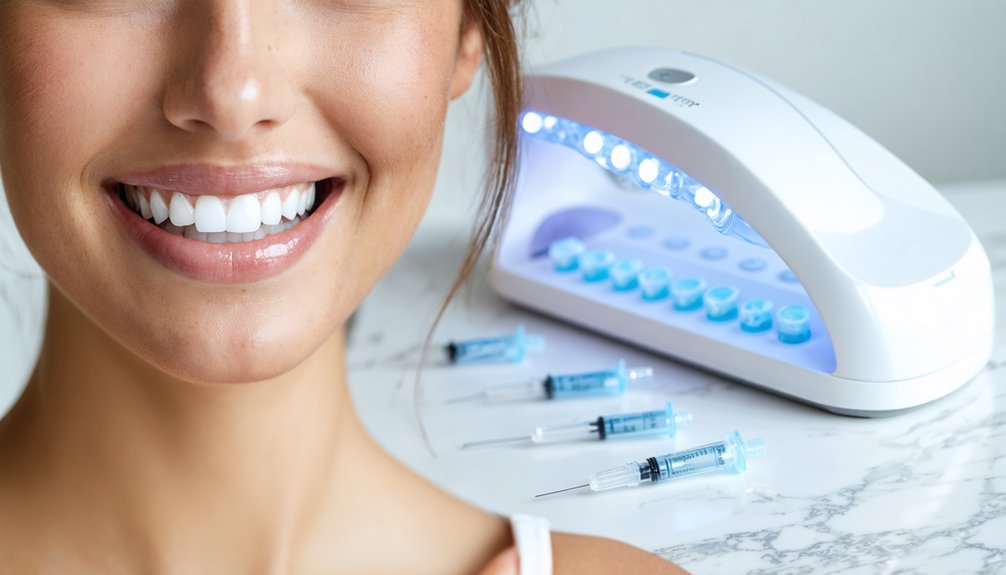
When speed and potency are your priorities, in-office bleaching delivers both within a single appointment. You’ll benefit from high-concentration hydrogen peroxide or carbamide peroxide applied directly to your teeth under professional supervision.
In-office techniques produce visible results within 30 to 60 minutes, making this the most efficient whitening option available.
Treatment safety is maintained through careful tissue isolation, preventing chemical contact with your gums and soft tissues. Your dentist controls every variable—concentration levels, application time, and exposure—giving you measurable outcomes with minimized risk.
Expect to invest $300 to $500 per session. While temporary sensitivity may occur post-treatment, proper professional oversight greatly reduces adverse effects.
If you want maximum whitening with precision and speed, in-office bleaching remains your most reliable clinical option.
How Do Custom Tray Systems Work at Home?
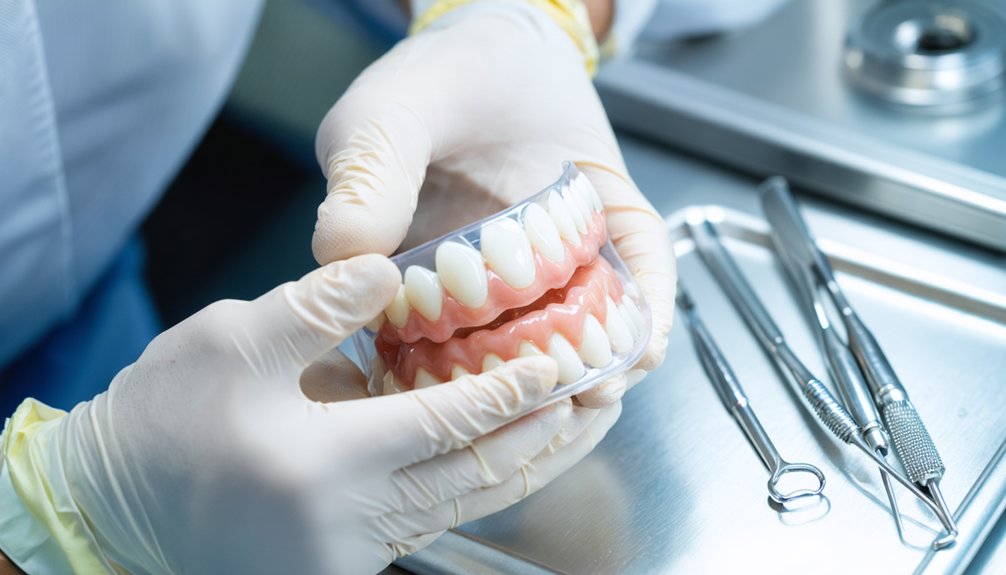
Custom tray systems bridge the gap between clinical-grade whitening and at-home convenience. Your dentist fabricates custom trays molded precisely to your dental arch, ensuring uniform gel contact and minimizing peroxide exposure to soft tissue.
You’ll fill each tray with a prescribed peroxide-based bleaching gel, then wear them for two to four hours daily—or overnight—for up to four weeks.
Custom trays deliver controlled, incremental results, typically lightening teeth by one to two shades within the first few days. Unlike generic strips, custom trays let you manage concentration levels and wear duration, giving you direct oversight of your whitening progress.
Costs range from $500 to $1,000, reflecting the precision engineering involved. Always follow your dentist’s gel concentration recommendations to avoid prolonged sensitivity or gingival irritation.
Over-the-Counter Strips vs. Professional-Grade Gels
For those who can’t justify the $500–$1,000 investment in custom trays, over-the-counter strips offer a practical alternative—though the trade-offs are measurable.
Strips effectiveness depends on consistent daily application over 10–14 days, yielding 1–2 shade improvements. Professional gel application, by contrast, delivers faster, more controlled results using higher peroxide concentrations.
Consistent daily use over 10–14 days yields modest results; professional-grade gels work faster with greater precision.
Key distinctions to evaluate:
- Concentration: OTC strips contain lower peroxide levels; professional gels use clinical-grade formulations.
- Contact precision: Strips don’t conform to tooth contours; custom trays optimize gel application coverage.
- Duration: OTC results last 4+ months with proper maintenance.
- Cost: Strips remain considerably more affordable for budget-conscious users.
Choose based on your timeline, sensitivity tolerance, and desired shade outcome.
Whitening Toothpastes: What They Can and Can’t Do
Whitening toothpastes occupy a distinctly limited tier in the spectrum of teeth-whitening options, yet they serve a specific, well-defined purpose. Their toothpaste effectiveness relies on mild abrasives and polishing agents that mechanically target surface stains rather than chemically bleaching enamel.
You’re not getting a peroxide-driven reaction here — you’re getting controlled abrasion.
For stain removal, they’ll brighten your teeth by approximately one shade over consistent use. That’s a measurable but modest outcome. They contain no bleaching agents, meaning intrinsic discoloration remains entirely unaffected.
Where they perform reliably is maintenance — preserving results you’ve already achieved through professional or at-home systems. If you’re managing daily staining from coffee or tea, they’re a practical, accessible tool.
Don’t, however, mistake accessibility for clinical potency.
Post-Treatment Maintenance: Rinses, Gums, and Long-Term Results
Once you’ve completed a whitening regimen, maintaining those results requires consistent, targeted intervention.
Post treatment care determines how long your results last, and without structured maintenance strategies, staining recurs rapidly.
Without structured maintenance strategies, your whitening results won’t last — staining recurs faster than most people expect.
Hydrogen peroxide rinses used twice daily for 60 seconds deliver mild but sustained whitening reinforcement.
Whitening gums actively neutralize stain-causing compounds from coffee, tea, and tobacco before they bond to enamel.
Prioritize these maintenance strategies:
- Hydrogen peroxide rinses — apply twice daily for incremental stain prevention
- Whitening chewing gums — use immediately after consuming staining substances
- Avoid primary stain sources — limit coffee, tea, and tobacco exposure consistently
- Schedule professional evaluations — monitor enamel integrity and restoration compatibility
Neither rinses nor gums replace primary treatment, but both protect your investment effectively.
Side Effects You Should Know Before Whitening
Maintenance strategies protect your results, but they don’t eliminate the need to understand what whitening does to your teeth during treatment.
Temporary tooth sensitivity and gingival inflammation are the most frequently reported adverse effects. Sensitivity management requires reducing application frequency or switching to lower-concentration formulas if discomfort intensifies.
Your gum health is directly at risk when bleaching agents contact soft tissue, causing localized irritation or chemical burns if trays fit improperly or gel overflows. Restorations won’t whiten, creating potential shade mismatches post-treatment.
Prolonged sensitivity signals improper use — stop treatment immediately and consult your dentist. Following manufacturer protocols precisely controls risk exposure.
Before initiating any whitening regimen, a professional evaluation identifies contraindications and establishes a safe, effective treatment plan tailored to your dental profile.
Who Is a Good Candidate for Professional Teeth Whitening?
Not everyone qualifies as an ideal candidate for professional teeth whitening, and identifying your eligibility before treatment prevents wasted investment and potential harm.
Age considerations matter—most dentists require patients to be 16 or older, as younger enamel remains vulnerable to chemical agents.
You’re likely an ideal candidate if you meet these criteria:
- Natural teeth present – Restorations like crowns or veneers won’t respond to bleaching agents.
- No active decay or gum disease – Existing pathology must be resolved before treatment begins.
- Extrinsic staining – Surface stains from coffee, tea, or tobacco respond best to peroxide-based systems.
- Realistic expectations – You understand whitening lightens, not perfects, your smile.
Consult your dentist first to confirm your candidacy and optimize your results.
Frequently Asked Questions
Can Teeth Whitening Treatments Affect Existing Dental Implants or Veneers?
Teeth whitening safety demands you understand this essential fact: whitening treatments can’t change your veneers or implants one single shade. You’ll only bleach natural teeth, so prioritize dental implant care by consulting your dentist first.
How Long Should You Wait Between Professional Whitening Sessions?
You should wait at least 6 to 12 months between professional whitening sessions. Control your whitening frequency by following your dentist’s post-treatment care guidelines to prevent sensitivity and maintain ideal, long-lasting results effectively.
Does Teeth Whitening Work on Teeth With Deep Intrinsic Stains?
Whitening efficacy assessment shows it’s limited for deep intrinsic stains. You’ll find bleaching agents don’t fully penetrate structural discoloration. For effective intrinsic stain treatment, you should consult your dentist about veneers or bonding as superior alternatives.
Are There Age Restrictions for Undergoing Professional Teeth Whitening Treatments?
You’ll find that teeth whitening regulations typically restrict professional treatments to patients 16 and older, as age suitability matters due to developing enamel. Always consult your dentist to confirm you meet the clinical criteria before proceeding.
Can Whitening Treatments Cause Permanent Damage to Tooth Enamel?
Whitening treatments won’t permanently damage your enamel if you follow manufacturer guidelines. You’ll experience temporary enamel sensitivity, but whitening safety depends on proper application. Consult your dentist to control risks and protect your enamel effectively.
References
- https://www.dentaly.org/us/teeth-whitening/professional-teeth-whitening/
- https://www.champaigndentalgroup.org/about-us/blog-articles/top-professional-teeth-whitening-techniques-2024-effective-safe
- https://drsandihamm.com/top-5-teeth-whitening-methods-explained-by-dr-sandi-hamm-dds-your-expert-guide-to-a-brighter-smile-in-mansfield-texas/
- https://gorgeoussmilesdental.com/blog/best-teeth-whitening-treatments-recommended-by-dentists/
- https://www.webmd.com/oral-health/teeth-whitening-and-bleaching
- https://www.ada.org/resources/ada-library/oral-health-topics/whitening
- https://pmc.ncbi.nlm.nih.gov/articles/PMC4058574/
- https://www.rejuv-health.com/cosmetic-dentistry/teeth-whitening-cost/
- https://www.youtube.com/watch?v=i8yqDgT0tCE
- https://www.youtube.com/watch?v=KloenqZIekw