During pregnancy, you should avoid most whitening products, including peroxide-based strips, gels, trays, and professional bleaching treatments. Safer alternatives include fluoride toothpaste, nano hydroxyapatite-based formulas, and toothpastes with mild abrasives like calcium carbonate. Natural methods, such as oil pulling with coconut oil and rinsing after staining foods, can also help. Always consult your dentist before using any whitening product. Keep exploring to find out exactly which ingredients are safe and which to avoid.
Key Takeaways
- Fluoride toothpaste is considered safe during pregnancy and helps maintain enamel strength without harsh bleaching chemicals.
- Nano hydroxyapatite toothpastes gently remineralize enamel and reduce surface stains without peroxide-based bleaching agents.
- Xylitol-containing toothpastes safely reduce cavity-causing bacteria and are appropriate for use during pregnancy.
- Natural methods like oil pulling with coconut oil and baking soda can mildly reduce staining safely.
- Avoid all products containing hydrogen peroxide, carbamide peroxide, activated charcoal, or alcohol-based formulas during pregnancy.
Is Teeth Whitening Safe During Pregnancy?
Although teeth whitening is a common cosmetic procedure, it’s not considered safe during pregnancy due to a significant lack of clinical safety data. Ethical constraints prevent clinical trials on expectant mothers, leaving the FDA without a basis to classify whitening products for dental safety during pregnancy.
Whitening agents like hydrogen peroxide and carbamide peroxide can absorb through your gums, introducing chemicals into your bloodstream when safety thresholds remain undefined.
Whitening chemicals absorb through gum tissue, entering your bloodstream at exposure levels that remain scientifically undefined.
Because teeth whitening is an elective cosmetic procedure, both dentists and obstetricians consistently advise postponing it until after delivery and breastfeeding are complete.
You should consult both your dentist and obstetrician before using any whitening product. When clinical evidence is absent, the responsible choice is to wait rather than expose your baby to unknown risks.
Why Dentists Recommend Waiting Until After Pregnancy
Dentists recommend waiting until after pregnancy because no clinical safety trials have been conducted on expectant mothers, leaving the risks to your baby entirely unknown. Ethical constraints prevent researchers from testing whitening gel safety on pregnant women, meaning the FDA hasn’t established specific safety classifications for these products.
Professional dental stain removal treatments use high-concentration peroxides that absorb through your gums and enter your bloodstream. Even over-the-counter options carry insufficient safety data to justify use during pregnancy.
Since teeth whitening is an elective cosmetic procedure, the prevailing medical consensus is straightforward: postpone it.
Your dentist and obstetrician will both advise you to wait until after delivery and breastfeeding are complete before pursuing any whitening treatment, professional or otherwise.
Whitening Products to Avoid While Pregnant
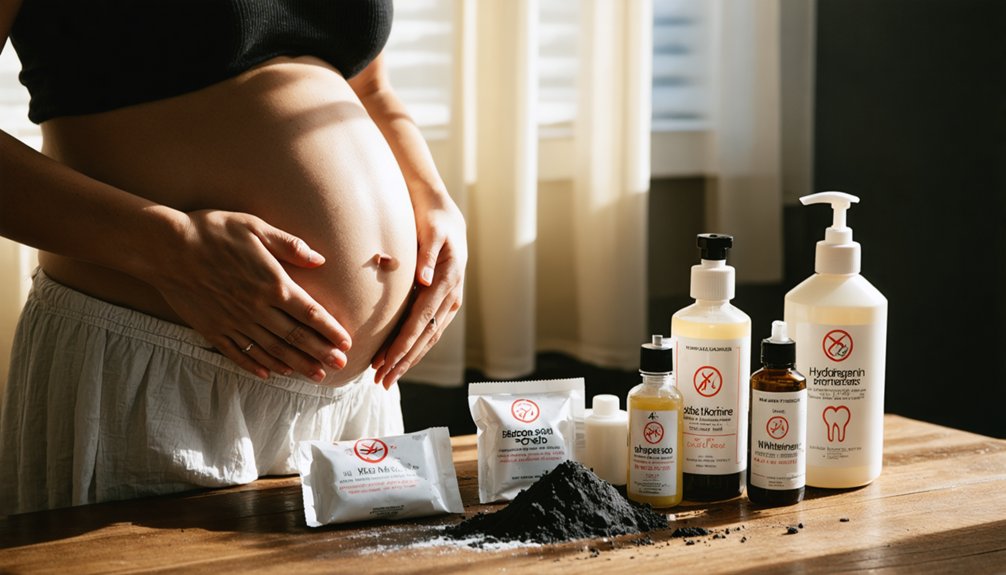
When you’re pregnant, you should avoid professional bleaching treatments, over-the-counter whitening kits, and any products containing hydrogen peroxide or carbamide peroxide, as these chemicals can be absorbed through your gums and pose unknown risks to your developing baby.
You’ll also want to steer clear of whitening strips, trays, and LED or laser treatments, since all of these rely on high-concentration peroxides with insufficient safety data for expectant mothers.
Checking ingredient labels carefully and consulting your dentist and obstetrician before using any whitening product can help you avoid unnecessary chemical exposure during pregnancy.
Professional Bleaching Treatments
Professional bleaching treatments are among the whitening methods you’ll want to avoid during pregnancy. Dentists and obstetricians alike recommend postponing these procedures until after you’ve completed breastfeeding.
The hydrogen peroxide and carbamide peroxide used in professional treatments can absorb through your gums, entering your bloodstream with unknown effects on fetal development.
LED and laser whitening systems rely on high-concentration peroxide formulations, making them particularly inadvisable.
Unlike dental x rays, which have established safety thresholds, or fluoride treatments, which carry well-documented risk profiles, professional bleaching lacks sufficient safety data for pregnant patients.
No ethical clinical trials have been conducted on expectant mothers, leaving risks unquantified.
Since these are elective cosmetic procedures, the medical consensus is clear: wait until postpartum before pursuing professional bleaching.
Over-The-Counter Whitening Kits
The same caution that applies to professional bleaching extends to over-the-counter whitening kits. These products contain variable peroxide concentrations with insufficient safety data for pregnancy, making them inadvisable regardless of their accessibility.
Whitening trays pose additional concern due to prolonged chemical contact with gum tissue, increasing potential absorption risks.
You can better support your smile by focusing on dietary habits that minimize staining—reducing coffee, tea, and acidic foods—while maintaining consistent oral hydration to prevent discoloration and protect enamel.
Most dental professionals recommend postponing OTC kit use until postpartum, as even minimal peroxide exposure introduces unnecessary risk.
The American Dental Association urges consulting your dentist before using any OTC whitening product, reinforcing that caution remains the clinically sound position during pregnancy.
Harmful Ingredients To Avoid
Knowing which ingredients to avoid can meaningfully reduce your exposure risk during pregnancy. Hydrogen peroxide and carbamide peroxide are primary concerns—both absorb through gum tissue and carry unknown fetal risks.
Activated charcoal poses enamel erosion risks without sufficient pregnancy safety data to justify use. Sodium monofluorophosphate requires caution if accidental ingestion occurs. Alcohol-based formulas can irritate already-sensitive pregnancy gums.
If you have dental veneers, harsh bleaching agents present additional concerns, as concentrated peroxides can compromise bonding integrity over time. Blue light therapy systems also lack adequate pregnancy safety research.
Your safest approach is straightforward: check every ingredient label before purchasing, consult your dentist and obstetrician about anything unfamiliar, and default to avoidance when safety data is absent or inconclusive.
Natural Teeth Whitening Methods Safe for Pregnancy
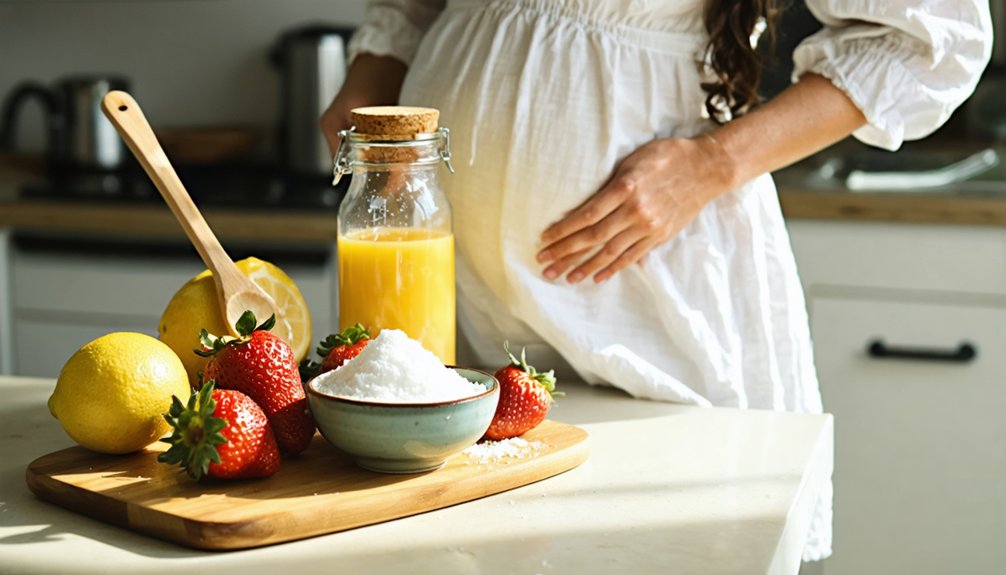
While chemical bleaching agents are best avoided during pregnancy, several natural methods can help you maintain a brighter smile without exposing your developing baby to unnecessary risks.
Avoid chemical bleaching while pregnant—natural alternatives protect your smile and your baby without unnecessary risk.
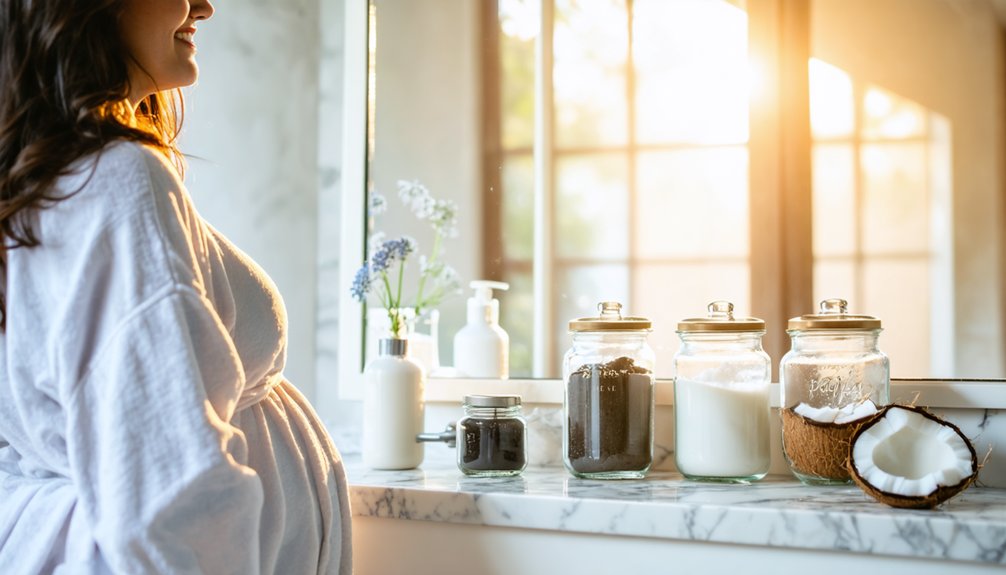
- Oil pulling: Swish coconut oil for 10–15 minutes daily to reduce surface bacteria and minor staining.
- Baking soda: Use sparingly as a mild abrasive to lift surface stains—overuse risks enamel erosion.
- Fluoride toothpaste: Brush twice daily to protect enamel integrity and prevent discoloration that could later require costly interventions like dental veneers.
- Rinse after staining foods: Flush teeth with warm water immediately after consuming coffee, tea, or berries to prevent pigment absorption.
These methods prioritize safety while giving you measurable control over your oral health during pregnancy.
Are Whitening Toothpastes Safe During Pregnancy?
Beyond natural methods, you may wonder whether whitening toothpastes offer a safer middle ground during pregnancy. The answer depends on formulation.
Toothpastes relying on mild abrasives rather than bleaching agents work by polishing surface stains without chemically altering dental enamel, making them generally acceptable during pregnancy.
Look for products carrying the ADA Seal of Acceptance, which confirms gentler formulations that minimize gum irritation and support healthy saliva pH balance.
Nano hydroxyapatite toothpastes remineralize enamel effectively while providing subtle whitening benefits without chemical bleaching risks.
However, avoid toothpastes containing hydrogen peroxide, such as Colgate Optic White, as absorption through oral tissues remains a concern.
When uncertain about specific ingredients, consult your dentist or obstetrician before incorporating any whitening toothpaste into your routine.
Which Toothpaste Ingredients Are Safe While Pregnant?
Understanding which toothpaste ingredients are safe during pregnancy helps you make informed decisions without unnecessary risk. Whether you’re considering dental veneers post-pregnancy or focusing on enamel preservation now, ingredient awareness matters.
Knowing which toothpaste ingredients are pregnancy-safe empowers smarter choices for both your health and your smile.
Look for these pregnancy-safe toothpaste ingredients:
- Fluoride – Strengthens enamel and prevents decay; widely considered safe at standard toothpaste concentrations.
- Nano hydroxyapatite – Remineralizes enamel gently without bleaching chemicals, supporting enamel preservation effectively.
- Mild abrasives (e.g., calcium carbonate) – Remove surface stains without chemical bleaching agents.
- Xylitol – Reduces cavity-causing bacteria safely during pregnancy.
Avoid toothpastes containing hydrogen peroxide, carbamide peroxide, or activated charcoal.
Choose products carrying the ADA Seal of Acceptance to confirm formulations meet established safety and efficacy standards.
Always consult your dentist before switching products.
Hydrogen Peroxide, Charcoal, and Other Ingredients to Avoid
Certain whitening ingredients pose enough concern during pregnancy that most dental and medical professionals advise avoiding them altogether. Hydrogen peroxide and carbamide peroxide—found in strips, trays, and gels—can absorb through your gums, introducing chemicals with unknown fetal effects. You should avoid these entirely, including toothpastes listing hydrogen peroxide as an active ingredient.
Activated charcoal presents a different risk: its abrasive properties accelerate enamel erosion, permanently weakening tooth surfaces. If you have dental veneers, charcoal products can cause additional structural damage.
Research on charcoal’s pregnancy safety remains insufficient, making caution essential.
Sodium monofluorophosphate requires careful monitoring, particularly if ingestion is possible.
Blue light therapy, while unlikely to cause direct harm, lacks adequate pregnancy-specific research. When uncertain, postpone these treatments until after delivery.
Questions to Ask Your Dentist About Whitening During Pregnancy
When you meet with your dentist, ask which specific whitening toothpastes or products they consider safe given your trimester and oral health status.
You should also discuss whether it’s better to postpone any whitening treatment until after delivery or breastfeeding is complete.
Additionally, request that your dentist monitor pregnancy-related oral changes, such as gum sensitivity or enamel erosion, which can affect both your comfort and the appropriateness of any whitening approach.
Safe Product Recommendations
Before using any whitening product during pregnancy, you’ll want to consult both your dentist and obstetrician to assess your individual risk. These evidence-based recommendations prioritize holistic dental care while accounting for dietary habits that contribute to staining:
- Whitening toothpastes with mild abrasives and the ADA Seal of Acceptance are your safest daily option—avoid formulas containing hydrogen peroxide.
- Nano hydroxyapatite toothpastes remineralize enamel and gently brighten teeth without chemical bleaching agents.
- Oil pulling with coconut oil may reduce surface bacteria and minor staining through a non-chemical approach.
- Baking soda, used sparingly, removes surface stains via mild abrasion—overuse risks enamel erosion.
Postpone professional treatments and OTC peroxide-based kits until after pregnancy and breastfeeding are complete.
Timing Whitening Treatments
Timing your whitening treatments around pregnancy requires a direct conversation with your dental care team. Ask your dentist whether your dental insurance covers postpartum whitening consultations, since most plans categorize bleaching as cosmetic procedures and exclude pregnancy-period treatments entirely.
Confirm the safest window to resume professional or OTC whitening after delivery or after breastfeeding concludes. Request a documented timeline so you maintain control over scheduling decisions.
Ask whether your specific oral health conditions, such as gum sensitivity or enamel erosion, require additional waiting time beyond standard guidelines.
Consult your obstetrician alongside your dentist, since both specialists must align on clearance before you proceed. Getting precise answers now prevents unnecessary chemical exposure and positions you to act decisively once your pregnancy and breastfeeding period ends.
Monitoring Oral Health Changes
Pregnancy alters your oral environment considerably, making routine monitoring essential before any whitening decisions arise. Hormonal shifts accelerate gum sensitivity, enamel erosion, and discoloration, requiring proactive dental evaluations.
Before considering any whitening product, ask your dentist these critical questions:
- Has enamel erosion progressed to a point where whitening agents would cause further structural damage?
- Are dental veneers or existing restorations present that whitening products won’t affect uniformly?
- Have pregnancy gingivitis or gum changes contraindicated even gentle whitening toothpastes?
- What oral health benchmarks should you track monthly to determine postpartum whitening eligibility?
Your dentist’s clinical assessments provide the evidence-based foundation you need to make controlled, informed decisions. Don’t act without documented evaluations confirming your oral tissues can tolerate any whitening exposure safely.
What About Teeth Whitening While Breastfeeding?
Once you’ve delivered your baby, you may wonder whether teeth whitening is finally safe to use. When it comes to breastfeeding safety, the evidence is somewhat reassuring. Current research suggests that peroxides are rapidly metabolized by your body and are unlikely to pass into breast milk in meaningful concentrations.
That said, postpartum whitening decisions should still involve your dentist and obstetrician. While breastfeeding poses a lower theoretical risk than pregnancy, limited clinical data means absolute safety can’t be confirmed. Most dental professionals consider professional and over-the-counter whitening more acceptable during this stage, but caution remains warranted.
If you choose to whiten while breastfeeding, select lower-concentration products, follow directions strictly, and avoid swallowing any whitening agents to minimize unnecessary chemical exposure.
How to Maintain White Teeth Without Bleaching
You can maintain a brighter smile during pregnancy by choosing whitening toothpastes that rely on mild abrasives rather than bleaching agents.
With ADA-approved formulas and nano hydroxyapatite options offering safe, effective enamel care.
Natural methods like oil pulling with coconut oil and occasional baking soda use can gently reduce surface stains without exposing you or your baby to harsh chemicals.
Preventing discoloration proactively—by rinsing with warm water after consuming staining foods and brushing twice daily with fluoride toothpaste—remains the safest, most evidence-supported approach during pregnancy.
Safe Whitening Toothpaste Options
While bleaching agents are best avoided during pregnancy, whitening toothpastes that rely on mild abrasives rather than chemicals offer a safer alternative for maintaining a brighter smile.
Rather than pursuing cosmetic procedures, you can support your dental hygiene with carefully selected toothpaste options:
- ADA-Sealed toothpastes — Choose products bearing the ADA Seal of Acceptance to ensure gentle, pregnancy-appropriate formulations.
- Nano hydroxyapatite toothpastes — These remineralize enamel while gently reducing surface stains without chemical bleaching agents.
- Fluoride-based whitening toothpastes — Brush twice daily with fluoride formulas that clean without harsh peroxides.
- Hydrogen peroxide-free formulas — Avoid products like Colgate Optic White that contain peroxide, which warrants caution during pregnancy.
Always consult your dentist before switching products.
Natural Stain Removal Methods
Beyond chemical bleaching, several natural methods can help you manage surface stains safely during pregnancy. Oil pulling with coconut oil—swishing for 10–15 minutes—may reduce surface bacteria and mild discoloration.
Baking soda, used sparingly, removes stains through gentle abrasion, though overuse risks enamel erosion.
Rinsing with warm water after consuming staining foods like coffee or berries helps prevent discoloration from setting.
These approaches won’t replicate cosmetic bonding or dental veneers, which remain elective procedures you’ll want to revisit postpartum. However, they offer meaningful stain control without introducing bleaching chemicals.
Consistent brushing twice daily remains your most evidence-supported strategy. If surface staining concerns you considerably, consult your dentist for personalized guidance rather than attempting aggressive at-home interventions during pregnancy.
Preventing Tooth Discoloration
Preventing discoloration from occurring is more effective than reversing it after the fact. During pregnancy, you can protect your enamel and minimize staining through consistent, evidence-based habits:
- Rinse with warm water immediately after consuming staining foods or beverages like coffee, tea, or berries.
- Brush twice daily with a fluoride toothpaste containing mild abrasives rather than bleaching chemicals.
- Limit staining culprits by reducing consumption of deeply pigmented foods and acidic drinks that erode enamel.
- Schedule regular dental cleanings to remove surface buildup professionally and safely.
If discoloration persists postpartum, cosmetic bonding or dental veneers are viable corrective options your dentist can evaluate.
Postponing cosmetic intervention until after pregnancy remains the clinically cautious, recommended approach.
Frequently Asked Questions
Can Pregnancy Hormones Cause Permanent Tooth Discoloration Over Time?
Like a storm weathering stone, hormonal fluctuations can affect your tooth enamel temporarily, but permanent discoloration isn’t typical. You’re not powerless—maintain diligent oral hygiene, consult your dentist, and monitor changes proactively throughout pregnancy.
Does Morning Sickness Acid Exposure Worsen Teeth Staining During Pregnancy?
Yes, morning sickness exposes your dental enamel to stomach acid repeatedly, accelerating acid erosion. You’ll notice increased staining vulnerability as weakened enamel absorbs discoloration more readily. Rinse with water immediately after vomiting to minimize damage.
Are Teeth Whitening Results From Before Pregnancy Affected by Hormonal Changes?
Like Cinderella’s fading magic, hormonal changes can dull your pre-pregnancy whitening results. You’ll notice shifts in enamel and gum sensitivity affecting dental safety. Explore pregnancy-appropriate whitening options cautiously, consulting your dentist to maintain control over your smile’s appearance.
Can Dental X-Rays Be Safely Combined With Whitening Treatments Postpartum?
You can safely combine dental x-rays with whitening treatments postpartum. Prioritize x-ray timing first to assess dental safety, then proceed with whitening. Consult your dentist to sequence both procedures effectively for ideal oral health outcomes.
Do Prenatal Vitamins Containing Iron Contribute to Tooth Staining During Pregnancy?
Yes, iron supplements can cause dental stain. You’ll notice dark deposits if you take liquid iron prenatally. Brush promptly after doses and consult your dentist to manage discoloration safely without harsh whitening agents during pregnancy.
References
- https://nvdentists.com/pregnancy-safe-teeth-whitening/
- https://www.reddit.com/r/BabyBumps/comments/liih81/pregnancy_safe_teeth_whitening_strips/
- https://www.reddit.com/r/moderatelygranolamoms/comments/1btzs6d/is_teeth_whitening_safe_for_pregnant_women/
- https://www.estrellamountaindentistry.com/blogs/is-teeth-bleaching-safe-during-pregnancy/
- https://www.thebump.com/a/whiten-teeth-pregnancy
- https://www.mdsgdentistry.com/can-you-use-teeth-whitening-strips-while-pregnant/
- https://mothertobaby.org/baby-blog/whitening-teeth-during-pregnancy-or-breastfeeding-lets-bite-into-the-subject/
- https://www.trysnow.com/blogs/news/is-at-home-whitening-safe-during-pregnancy-or-breastfeeding