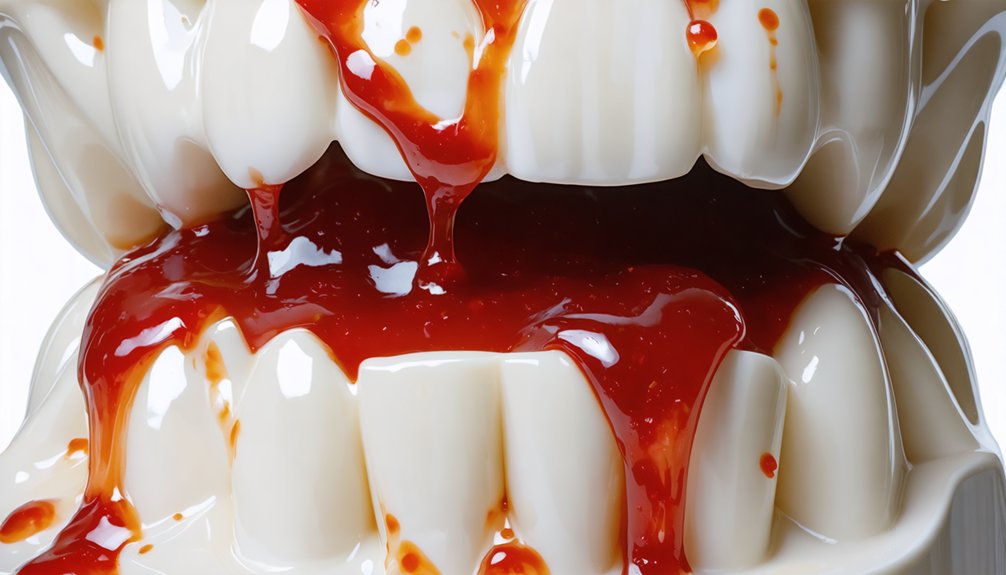
Red pasta sauce stains your teeth through a three-part chemical process. The tomatoes’ natural acidity softens your enamel, making it porous and vulnerable. Concentrated chromogens then penetrate that weakened surface at a molecular level rather than just sitting on top. Tannins act as binding agents, locking those pigments deeper into microscopic grooves where brushing can’t easily reach. Understanding each step gives you real leverage in protecting your smile.
Key Takeaways
- Red pasta sauce contains chromogens, concentrated pigments that penetrate enamel at a molecular level, causing deep, persistent stains beyond surface adhesion.
- Tomato sauce’s natural acidity softens enamel, increasing its porosity and making it significantly more receptive to chromogen absorption and staining.
- Tannins in the sauce act as binding agents, adhering pigments deeper into microscopic enamel grooves, making stains harder to remove.
- The sauce’s thick viscosity prolongs contact time with teeth, extending pigment exposure and increasing overall staining potential.
- Repeated acid exposure causes cumulative enamel erosion, permanently weakening its structure and progressively worsening discoloration over time.
What Makes Red Pasta Sauce So Hard on Teeth?
Red pasta sauce damages teeth through three compounding mechanisms: chromogens, acidity, and viscosity. Chromogens—concentrated pigments in tomato-based sauces—bind directly to enamel, leaving visible discoloration.
Regardless of flavor profiles or ingredient variations, tomato acids simultaneously soften enamel, increasing its porosity and vulnerability to pigment absorption. This creates a “double attack” on your tooth structure.
Viscosity compounds the problem further. Unlike water-based foods, thick sauce clings to your teeth, extending pigment contact time and amplifying staining potential.
Tannins present in the sauce enhance chromogen adhesion, allowing stains to penetrate enamel grooves more deeply.
You’re not powerless here. Understanding these mechanisms gives you precise control over your dietary choices and post-meal hygiene strategies before cumulative discoloration becomes difficult to reverse.
The Chromogens in Tomato Sauce That Stain Enamel
Tomato-based pasta sauce contains chromogens—chemical compounds with strong color properties that bind directly to enamel surfaces. These pigments, responsible for the deep red hue central to the sauce’s visual appeal and cultural significance, don’t simply sit on your teeth. They penetrate enamel at a molecular level, leaving visible discoloration behind.
The melanoidins formed during cooking—a byproduct of flavor enhancement processes like browning and reduction—exhibit particularly strong enamel affinity. The darker and more concentrated the sauce, the greater the staining potential. Pigment concentration, not just color intensity, determines how aggressively chromogens bind.
You can’t eliminate chromogens from tomato sauce, but you can control exposure. Rinsing immediately after eating removes surface chromogens before they penetrate softened enamel and establish persistent stains.
How Tomato Acidity Opens Enamel to Discoloration
Acids in tomato sauce don’t just flavor your food—they actively degrade the structural integrity of your enamel. Tomato’s natural acidity softens enamel, making its surface porous and highly receptive to chromogen binding. Once softened, your teeth absorb pigments far more efficiently than intact enamel would allow.
This matters within culinary traditions where tomato-based dishes appear frequently. Regular food pairing of acidic sauces with starchy pastas prolongs acid contact time, compounding enamel erosion with each meal. Eroded enamel doesn’t recover quickly—repeated acid exposure creates cumulative porosity, gradually producing yellowish discoloration.
You can disrupt this process. Rinsing with water immediately after eating dilutes residual acids before they fully compromise enamel. Waiting 30–60 minutes before brushing prevents further mechanical damage to already-softened surfaces.
What Acid Exposure Actually Does to Your Enamel Over Time
When you repeatedly expose your enamel to tomato-based acids, you’re accelerating a cumulative erosion process that permanently weakens its crystalline structure.
Over time, this erosion renders your enamel increasingly porous, creating microscopic entry points where chromogens bind more aggressively and discoloration sets deeper.
You’re not just facing surface staining—you’re contending with a progressively compromised barrier that grows harder to protect with each acidic meal.
Enamel Erosion Over Time
Every time you eat red pasta sauce, the tomato acids begin softening your enamel almost immediately. This temporary softening increases porosity, allowing chromogens to penetrate deeper into the surface. Repeated exposure prevents full enamel regeneration between meals, leaving your teeth progressively more vulnerable.
Enamel doesn’t contain living cells, so your body can’t rebuild it independently. However, tooth remineralization can partially restore mineral density through calcium and phosphate in saliva. Acidic foods disrupt this process by depleting those minerals faster than saliva replenishes them.
Over time, cumulative erosion produces yellowish discoloration as the underlying dentin becomes more visible. Controlling your consumption frequency and rinsing immediately after eating directly supports remineralization and slows the progression of acid-driven enamel breakdown.
Increased Staining Vulnerability
Repeated acid exposure doesn’t just weaken your enamel temporarily—it structurally alters its surface in ways that compound staining risk over time. Each acidic meal increases porosity, creating microscopic channels where chromogens penetrate deeper and bond more stubbornly. Your oral hygiene routine becomes less effective against stains that have already embedded below the surface.
Three structural changes that amplify your vulnerability:
- Increased porosity allows pigments to infiltrate enamel rather than sit on it
- Surface roughness gives tannins and chromogens more area to grip
- Reduced mineral density slows natural remineralization, extending exposure windows
Natural remedies like rinsing with water and consuming high-fiber foods support remineralization, but prevention requires consistency.
Understanding this progression gives you the control to interrupt it before cumulative damage sets in.
How Tannins in Tomato Sauce Make Stains Stick
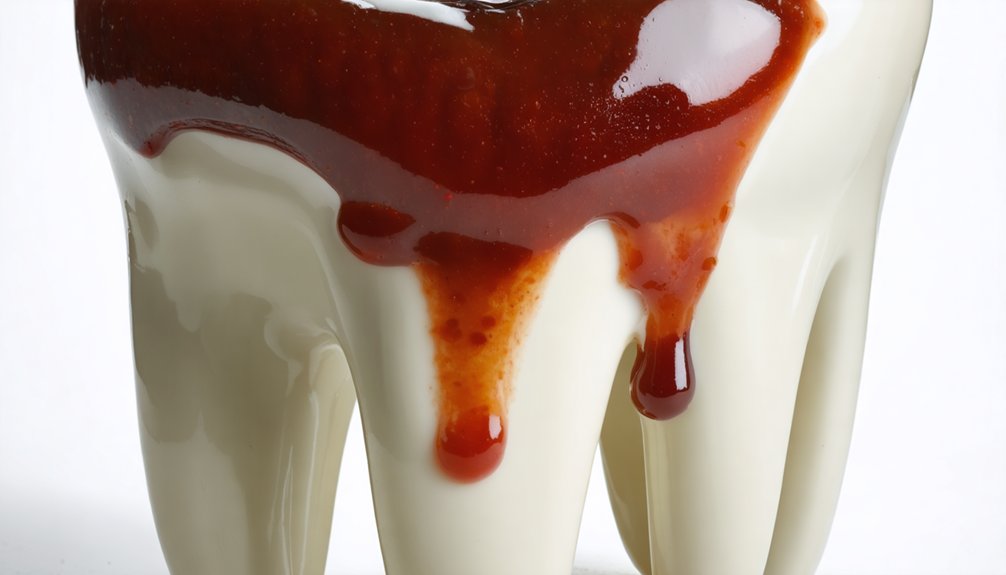
Though tomatoes aren’t typically associated with tannins the way coffee or red wine are, the acidic environment they create enhances tannin adhesion from other dietary sources and amplifies the staining potential of the sauce’s pigments.
When your enamel softens under acidic conditions, tannin absorption accelerates — polyphenols sink deeper into microscopic grooves on your tooth surface. This deeper stain penetration makes discoloration harder to reverse through routine brushing alone.
Tannins function as binding agents, allowing chromogens to adhere more aggressively to compromised enamel. The more frequently you consume tomato-based sauce alongside tannin-rich foods — such as wine or aged cheese — the greater your cumulative staining risk.
Controlling meal combinations and rinsing immediately after eating directly reduces tannin-facilitated pigment binding before it sets.
Why Thick Pasta Sauce Clings to Teeth Longer Than Other Foods
Beyond how tannins and pigments interact chemically with your enamel, the physical properties of pasta sauce create their own staining risk. Culinary traditions prioritize flavor enhancement through thick, reduced sauces — but that viscosity works against your teeth in three measurable ways:
- Prolonged contact — Thick sauce clings to enamel surfaces longer than water-based foods, extending pigment exposure.
- Groove penetration — Its dense texture forces pigment into surface irregularities and microscopic enamel pits.
- Resistance to clearance — Saliva can’t efficiently dilute or remove viscous sauce the way it handles thinner liquids.
Each factor compounds the staining effect. You can counteract this by rinsing with water immediately after eating, mechanically disrupting the sauce’s contact time before pigments bind to softened enamel.
The Double Attack: How Acid and Pigment Work Together Against Enamel
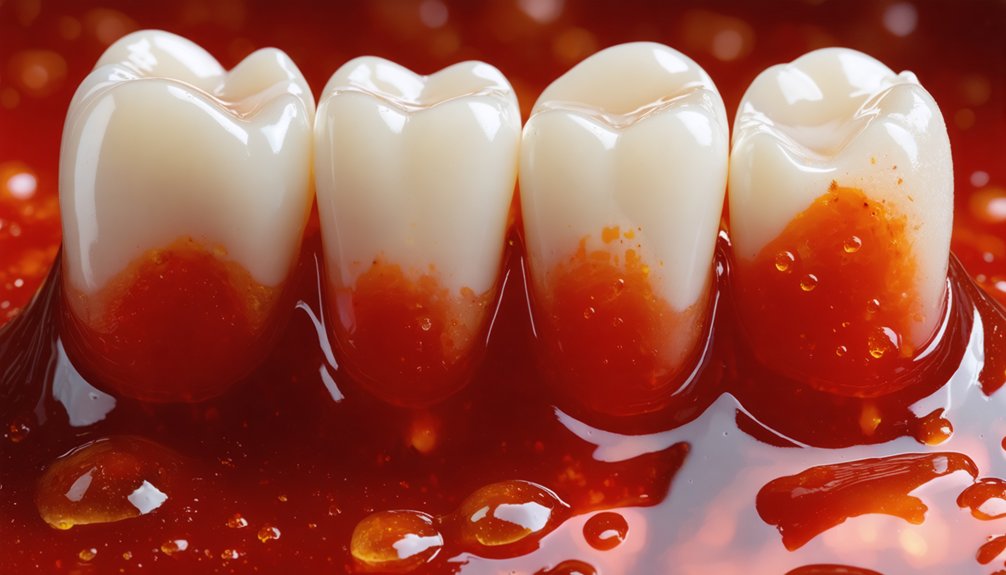
While viscosity explains how sauce stays on your teeth, acidity explains why that contact causes lasting damage. Tomato-based sauces carry a high acid load that softens enamel on contact, creating a porous surface that invites pigment infiltration.
Once enamel weakens, chromogens exploit that vulnerability through favorable pigment chemistry—binding more deeply and resisting removal.
Weakened enamel doesn’t just stain—it surrenders, letting chromogens bind deeper than any brush can reach.
This is the double attack: acid dismantles your enamel’s defense, and pigment seizes the opening. Color stability becomes a problem here because chemically resilient chromogens don’t fade once embedded in softened enamel.
You’re not just dealing with surface discoloration—you’re dealing with structural compromise followed by persistent staining. Rinsing with water immediately after eating disrupts this cycle before both mechanisms complete their combined effect on your enamel.
How Pasta Sauce Frequency Drives Cumulative Tooth Staining
Each time you eat pasta sauce, your teeth don’t fully recover before the next exposure begins. Cumulative staining builds precisely because repeated acid and pigment contact outpaces your enamel‘s natural remineralization. Your flavor pairing choices and cooking methods directly influence this cycle.
Three cumulative staining drivers you control:
- Frequency of exposure — Each serving deposits additional chromogens onto already-softened enamel.
- Cooking methods — Longer-simmered sauces concentrate pigments and acidity, intensifying staining potential per serving.
- Flavor pairing habits — Pairing sauce with acidic beverages compounds enamel erosion during the same meal.
Without intervention, pigment buildup accelerates with every meal. Reducing consumption frequency and rinsing immediately after eating are your most direct tools for interrupting this cumulative discoloration cycle.
Does Pigment Concentration Determine How Badly Teeth Stain?
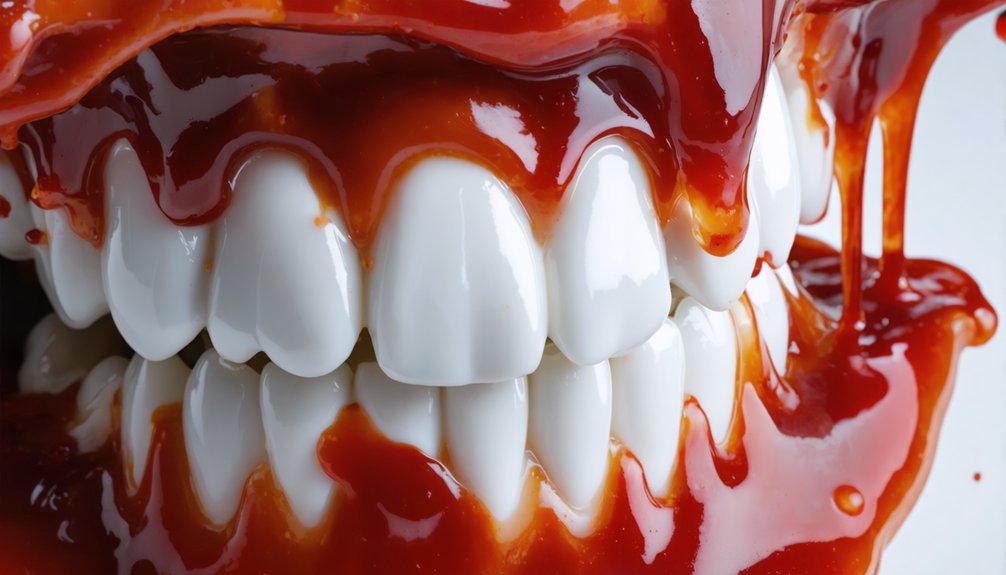
When you eat red pasta sauce, the concentration of chromogens it contains directly influences how much discoloration your enamel absorbs.
However, pigment concentration alone doesn’t tell the whole story — the chemical nature of those pigments and their specific affinity for enamel matter just as much.
You can encounter a deeply colored sauce that stains less than a moderately pigmented one if its chromogens bond more weakly to your tooth surface.
Pigment Concentration and Staining
Pigment concentration plays a significant role in how badly teeth stain, but it doesn’t tell the whole story. The chromogens in red pasta sauce bind aggressively to enamel, and higher pigment loads accelerate discoloration. However, other factors compound the damage:
- Enamel porosity — Acid softens enamel, making it more receptive to chromogen infiltration.
- Enamel regeneration — Compromised remineralization slows your enamel’s natural recovery, prolonging stain vulnerability.
- Oral microbiome disruption — Acidic foods alter bacterial balance, weakening enamel’s protective biofilm.
You’re not powerless here. Controlling exposure duration, rinsing immediately after eating, and supporting enamel regeneration through proper nutrition gives you measurable leverage. Pigment concentration matters, but your behavioral choices ultimately determine how deeply those pigments set.
Chemical Nature Versus Color Intensity
Color intensity alone doesn’t determine how badly teeth stain—the chemical nature of pigments matters more. A pale-colored compound with high enamel affinity causes more discoloration than a brightly colored one that doesn’t bind well.
In red pasta sauce, chromogens actively latch onto enamel surfaces, especially when acid has already compromised your enamel strength.
Your saliva role is critical here. Saliva neutralizes acids and dilutes pigments before they bind, but frequent sauce consumption overwhelms this defense.
When chromogens carry strong chemical affinity for enamel proteins, saliva can’t fully prevent adhesion.
You need to understand that managing stain risk means prioritizing the chemical profile of what you eat, not just avoiding deeply colored foods. Chemical binding capacity is what truly drives discoloration.
How to Stop Pasta Sauce From Staining Teeth
Preventing pasta sauce from staining your teeth requires addressing its three main mechanisms: acid-driven enamel erosion, chromogen binding, and prolonged surface contact. Despite flavor enhancement and ingredient variations across recipes, most tomato-based sauces share the same discoloration risk factors.
You can greatly reduce staining by following these evidence-based steps:
- Rinse immediately with water after eating to dislodge chromogens before they bind to softened enamel.
- Wait 30–60 minutes before brushing, allowing acid-weakened enamel time to reharden.
- Consume high-fiber foods alongside your meal to stimulate saliva production, which naturally scrubs tooth surfaces.
Controlling exposure duration and cleaning timing gives you direct influence over cumulative pigment buildup and long-term enamel integrity.
Frequently Asked Questions
Can Teeth Naturally Reverse Discoloration Caused by Red Pasta Sauce?
Over 90% of staining is reversible. Your teeth can’t fully self-repair, but natural remedies like rinsing with water boost enamel protection, actively reducing discoloration before pigments permanently bind to softened enamel surfaces.
Does Cooking Pasta Sauce Longer Increase Its Staining Potential on Teeth?
Yes, cooking pasta sauce longer concentrates chromogens and raises ingredient acidity, lowering pH levels further. You’re exposing your enamel to intensified pigments that bind more aggressively, increasing discoloration risk considerably with prolonged cooking.
Are Children’s Teeth More Vulnerable to Pasta Sauce Staining Than Adults?
Straight from the gate, yes — your child’s tooth enamel is thinner and more porous, accelerating stain absorption from pasta sauce. You’ll want to rinse their teeth promptly after every acidic, pigmented meal.
Do Certain Pasta Sauce Brands Stain Teeth Worse Than Others?
Yes, certain brands stain worse. You’ll find that higher pasta sauce ingredients like pigment concentration and acidity directly impact tooth enamel sensitivity. Choose low-acid, low-chromogen options and rinse immediately to maintain control over discoloration.
Can Whitening Toothpaste Fully Remove Stains Caused by Pasta Sauce?
Like fighting shadows, whitening toothpaste can’t fully remove deep pasta sauce stains. It helps with surface discoloration, but you’ll need professional treatment alongside natural remedies and consistent stain prevention habits for complete results.
References
- https://familydentistottawa.com/7-foods-staining-teeth/
- https://gsodentist.com/foods-drinks-that-stain-teeth/
- https://www.healthline.com/health/foods-that-stain-teeth
- https://www.citydentists.co.nz/dental-blog/5-foods-you-didnt-know-were-staining-your-teeth/
- https://www.sensodyne.com.sg/oral-health-tips/whitening-sensitive-teeth/foods-that-stain-teeth.html
- https://pmc.ncbi.nlm.nih.gov/articles/PMC12795918/
- https://www.stpetedentist.com/blog/prevent-food-drink-staining-teeth/
- https://www.opdental.com/blog/whiter-teeth-avoid-these-five-foods/
- https://www.confidentdentalcare.in/blog/foods-and-drinks-that-are-discolouring-your-teeth/?bp=33052
- https://www.michellewangdds.com/blog/4-foods-and-drinks-that-cause-yellow-teeth/