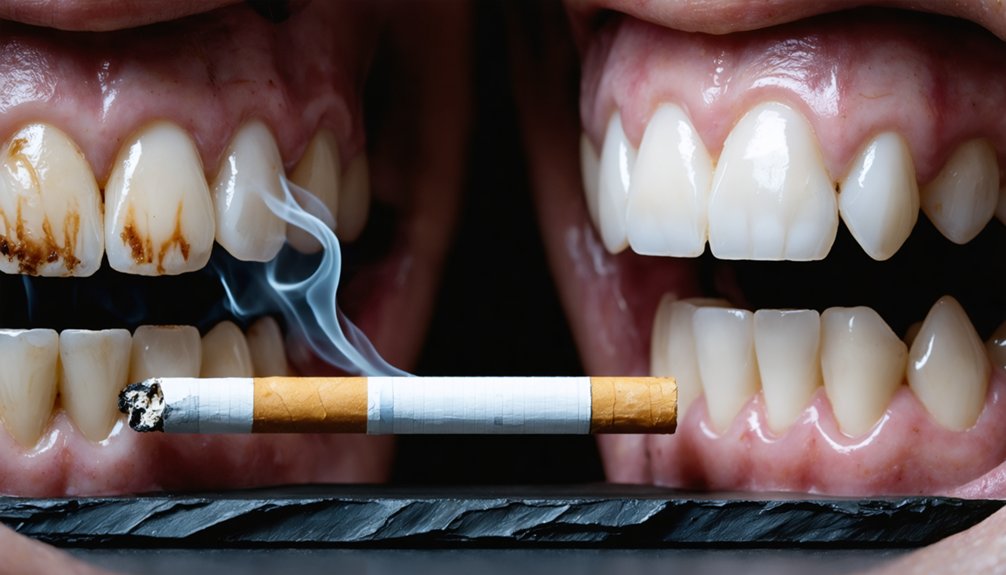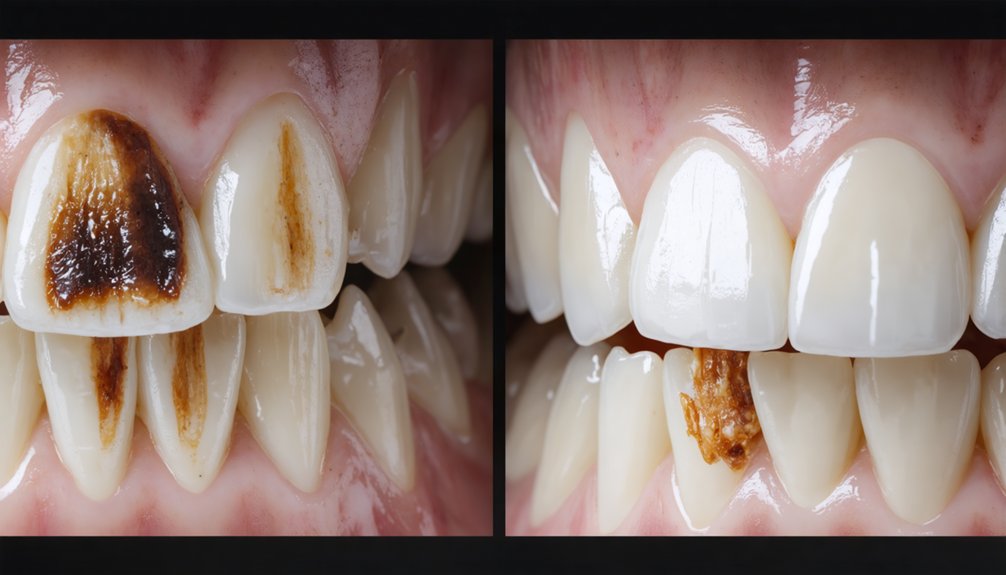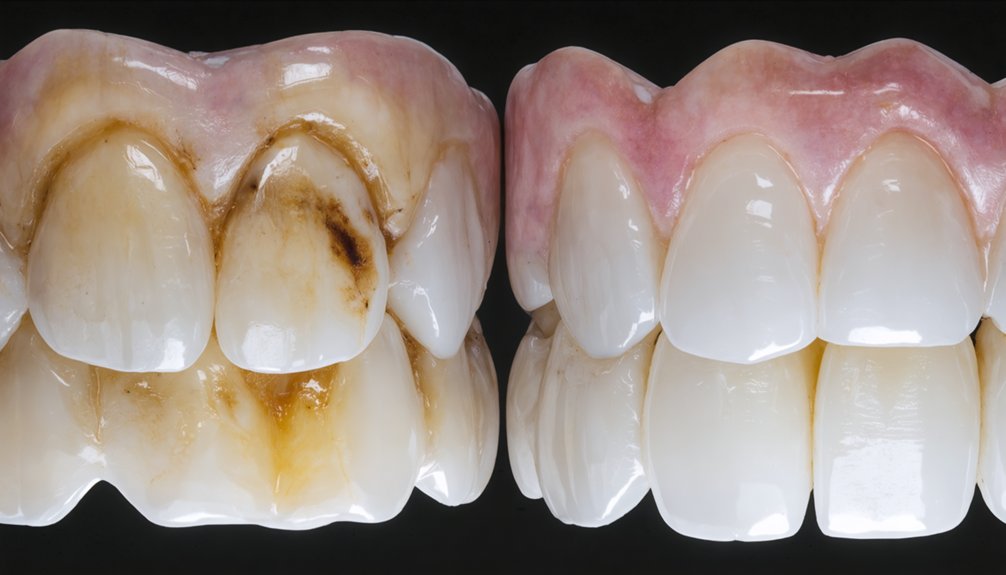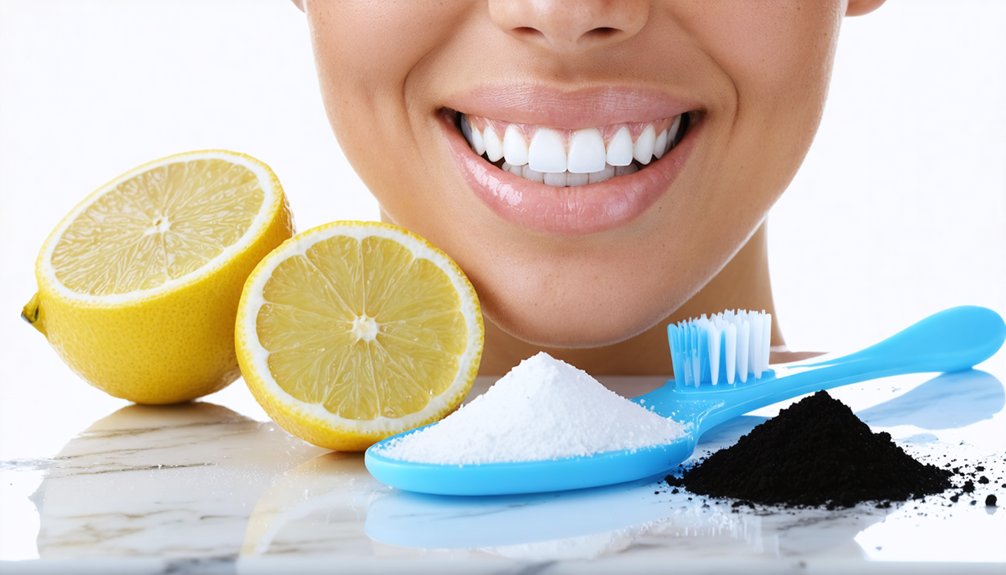
Tobacco stains embed into enamel quickly, but you can fight back with the right approach. Brush and floss immediately after smoking, use whitening toothpastes containing hydrogen peroxide or activated charcoal, and try natural remedies like baking soda with strawberry. Crunchy foods like apples and carrots mechanically scrub surface stains daily. At-home peroxide kits and professional treatments target deeper discoloration. Long-term habits like hydration and regular checkups sustain your results—and each method works even better when you understand exactly how to apply it.
Key Takeaways
- Brush and floss immediately after smoking using an electric toothbrush with SLS-free toothpaste to prevent tar and nicotine from embedding into enamel.
- Apply a mixture of mashed strawberry and baking soda, or rub orange peel on teeth, as natural remedies for surface stain removal.
- Use whitening toothpastes containing activated charcoal or hydrogen peroxide to target tobacco stains while following recommended frequency to protect enamel.
- Mix baking soda with hydrogen peroxide no more than two to three times weekly as an effective at-home chemical whitening method.
- Schedule professional whitening treatments for deep tobacco stains, as dentists use higher-concentration peroxide formulas tailored to stain severity.
Brush and Floss Right After Smoking
Brushing and flossing immediately after smoking is one of the most effective preventive measures you can take to stop tar and nicotine from embedding into your enamel. The longer these chemicals sit on your teeth, the deeper they penetrate.
Tar and nicotine penetrate deeper the longer they sit — brush immediately after smoking to stop them.
Consistent oral hygiene after every cigarette disrupts that process before it compounds.
Use an electric toothbrush with SLS-free toothpaste and brush gently for two minutes. Follow with flossing to clear residue from between teeth, where staining accelerates unnoticed. Rinse with an antibacterial mouthwash to eliminate remaining nicotine and tar.
While this routine won’t reverse existing stains, it markedly slows their progression.
Pairing it with a tobacco cessation plan gives your enamel the best realistic chance at long-term recovery and sustained whiteness.
Natural DIY Remedies That Actually Work
Several natural remedies can visibly reduce tobacco stains when applied consistently. You can mash one strawberry with a teaspoon of baking soda, apply the mixture to your teeth for a few minutes, then rinse and brush with toothpaste. The malic acid in strawberries works alongside baking soda’s mild abrasiveness to lift surface stains.
Alternatively, you can crush one to two guava leaves into a coarse paste or rub the inside of an orange peel directly on your teeth for one to two minutes. Both of these methods deliver natural compounds that break down tobacco residue before you follow up with a standard toothpaste brushing.
Strawberry And Baking Soda
Combining 1 mashed strawberry with 1 teaspoon of baking soda creates a natural whitening paste that targets tobacco stains through a dual mechanism. Malic acid in strawberries acts as a mild astringent, breaking down surface discoloration, while baking soda’s alkalinity neutralizes acids and buffers against bacterial activity.
Apply the paste directly to your teeth, leave it on for two minutes, then rinse thoroughly and brush with toothpaste to remove residue.
Pair this treatment with consistent dental flossing to eliminate stain-contributing plaque between teeth. Additionally, the paste’s texture stimulates saliva production, which naturally rinses away loosened debris and tobacco compounds.
Limit use to twice weekly to prevent enamel erosion from prolonged malic acid exposure, maintaining structural integrity while progressively reducing visible staining.
Guava Leaves Paste Method
Crushing 1 to 2 fresh guava leaves into a coarse paste delivers tannins and flavonoids directly onto enamel surfaces, where they work to break down tobacco-derived discoloration at a molecular level. These bioactive compounds simultaneously target dental plaque accumulation, disrupting the microbial biofilm that anchors stain particles to your teeth.
Apply the paste using controlled, circular motions for two minutes, ensuring complete surface coverage without aggressive scrubbing that risks enamel erosion. Rinse thoroughly, then follow immediately with standard toothpaste brushing to neutralize any residual acidity.
Unlike synthetic whitening agents, guava leaf paste poses minimal chemical risk when used consistently. Integrate this method three to four times weekly for measurable stain reduction without compromising structural enamel integrity over time.
Orange Peel Whitening Technique
The white inner rind of an orange peel contains d-limonene, a naturally occurring compound shown to dissolve surface lipid-based stains left by tobacco tar. This makes it a functional, low-cost tool for supporting dental health between professional treatments.
To apply the technique correctly, rub the inner white side of a fresh orange peel directly onto your teeth for one to two minutes. Rinse thoroughly, then brush with toothpaste to clear residue and reinforce oral hygiene.
Consistency determines results. Use this method several times weekly, not as a replacement for clinical care, but as a targeted supplementary step.
The citric acid content requires moderation—overuse risks mild enamel erosion, so frequency must remain controlled and deliberate.
Foods That Help Scrub Away Tobacco Stains
Certain crunchy fruits and vegetables work as natural abrasives, physically scrubbing plaque and surface tobacco stains from your enamel as you chew. Apples, celery, and carrots are particularly effective, generating mechanical friction that removes debris before it embeds deeper into enamel.
Incorporating these foods regularly into your diet supports oral health by reducing stain accumulation between brushing sessions.
For stain prevention, pair this dietary strategy with rinsing your mouth with water after consuming any staining beverages like coffee, tea, or red wine.
You’ll also want to avoid dark drinks entirely for 48 hours following any whitening treatment to protect your results.
These adjustments give you consistent, measurable control over tobacco-related discoloration without relying solely on chemical treatments or professional interventions.
Whitening Toothpastes Worth Trying for Smokers
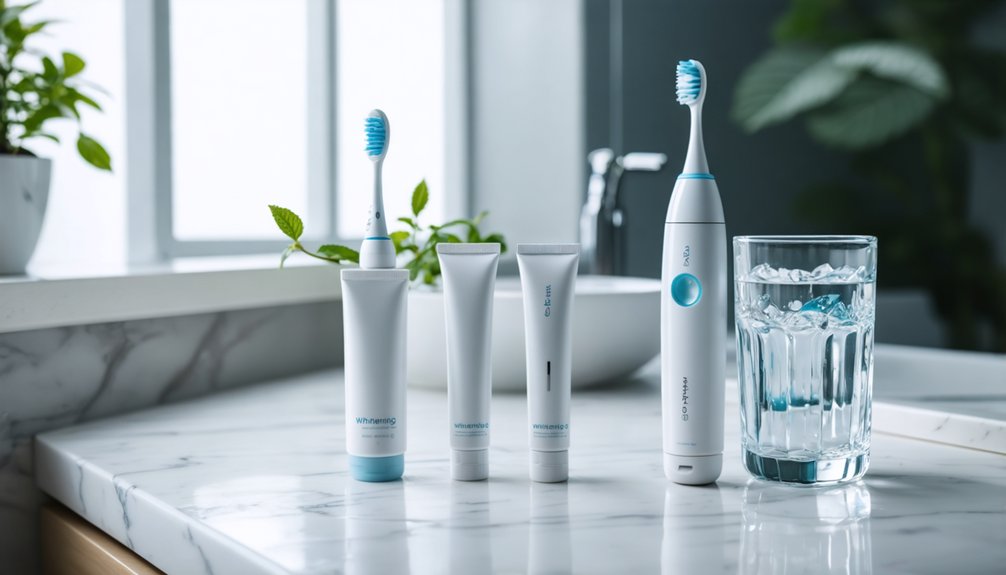
Whitening toothpastes formulated for smokers typically rely on mild abrasives and chemical agents to break down surface stains, though they won’t penetrate deep discoloration the way professional treatments can.
You’ll find activated charcoal options that bind to tar residue and lift staining compounds from enamel, but use them cautiously to avoid accelerating enamel erosion.
Hydrogen peroxide and carbamide peroxide formulas offer a more clinically supported approach, delivering measurable lightening results with consistent, twice-daily use.
Abrasives And Chemical Agents
Most whitening toothpastes rely on two core mechanisms to reduce tobacco stains: mild abrasives that physically scrub surface deposits and chemical agents that break down discoloration at a molecular level. Choosing the right formulation lets you target dental plaque without triggering enamel erosion.
Key agents to look for:
- Hydrogen peroxide – Oxidizes stain compounds directly within enamel pores
- Carbamide peroxide – Releases hydrogen peroxide slowly for sustained whitening action
- Activated charcoal – Adsorbs surface deposits but requires cautious, limited use to prevent abrasion
- Baking soda (sodium bicarbonate) – Mild abrasive that neutralizes acids while lifting tobacco residue
Use these toothpastes twice daily with a soft-bristled electric toothbrush to maximize stain removal while controlling the risk of enamel erosion over time.
Activated Charcoal Options
Activated charcoal toothpastes work by adsorbing surface tobacco deposits onto their porous carbon particles, physically lifting discoloration rather than chemically oxidizing it. This stain removal mechanism targets extrinsic staining effectively, though it won’t address deeper enamel discoloration.
You’ll find activated charcoal formulas less effective than professional-grade whitening treatments, but they provide a measurable advantage over standard toothpastes for smokers managing surface buildup.
Use activated charcoal toothpaste cautiously — brush gently for two minutes and limit application frequency to prevent enamel erosion. Its abrasive nature demands controlled technique; aggressive brushing accelerates enamel thinning and increases sensitivity.
Select formulas with a documented Relative Dentin Abrasivity score within safe ranges. Pair it with your routine dental hygiene protocol rather than treating it as a standalone solution.
Hydrogen Peroxide Formulas
Where activated charcoal relies on physical adsorption, hydrogen peroxide works chemically — oxidizing pigmented compounds within enamel to break down both surface and shallow intrinsic stains. Pair consistent dental flossing with these targeted formulas to maximize stain removal between contact points.
- Paste: Mix one tablespoon baking soda with two tablespoons hydrogen peroxide; brush 2–3 times weekly maximum.
- Rinse: Dilute hydrogen peroxide with equal parts water, swish one minute, rinse thoroughly afterward.
- Toothpaste: Select products containing carbamide peroxide or hydrogen peroxide for daily enamel protection without professional-grade abrasion.
- Frequency cap: Exceeding recommended use degrades enamel — prioritize restraint over intensity.
Monitor sensitivity closely; it signals overuse requiring immediate reduction in application frequency.
At-Home Whitening Kits for Tobacco Stains
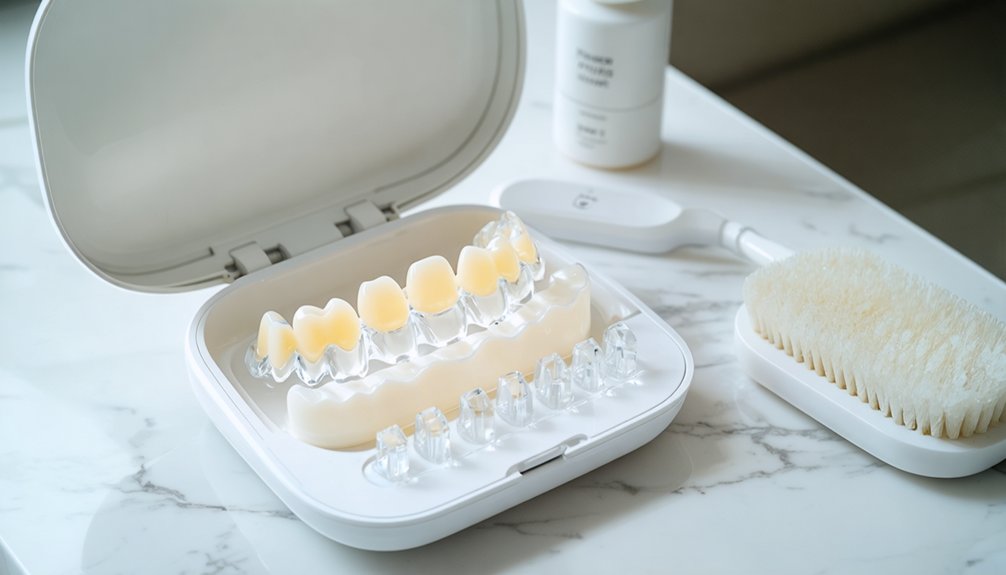
At-home whitening kits offer a practical alternative when professional treatment isn’t accessible, though they’re less effective against deep tobacco stains. These kits typically contain carbamide peroxide or hydrogen peroxide as active agents, which penetrate enamel to oxidize embedded stain compounds.
For ideal results, pair your whitening regimen with consistent dental flossing to eliminate plaque between teeth before applying trays or strips. Plaque accumulation blocks whitening agents from contacting enamel surfaces directly, reducing their efficacy.
Incorporate antibacterial mouth rinses into your routine to clear residual nicotine and tar before each whitening session. Follow kit instructions precisely, avoiding overuse, which risks enamel erosion and heightened sensitivity.
Whitening toothpastes containing activated charcoal or hydrogen peroxide can supplement kit treatments, sustaining surface-level results between applications.
Professional Teeth Whitening for Stubborn Smoking Stains
When over-the-counter kits fall short against deeply embedded tobacco stains, professional teeth whitening delivers measurably stronger results. A dental hygienist removes dental plaque and tartar buildup before treatment, ensuring whitening agents penetrate evenly without interference.
Clinicians use higher-concentration peroxide formulas that aren’t available over the counter, targeting stains at a deeper structural level while minimizing enamel erosion risk through controlled application.
Consider these four professional advantages:
- Higher efficacy — Clinical-grade agents break down stubborn chromogens embedded in enamel.
- Plaque removal first — Clean surfaces allow uniform whitening compound absorption.
- Erosion control — Supervised treatment reduces overexposure risks you’d face with unsupervised use.
- Personalized protocol — Your dentist tailors concentration and duration to your specific stain severity.
Schedule a consultation to take direct control of your results.
Long-Term Habits to Stop Tobacco Stains Coming Back

Sustaining whiter teeth after treatment requires five consistent habits that prevent tobacco stains from re-embedding into enamel.
Brush twice daily with an SLS-free toothpaste and an electric toothbrush to clear surface residue before it sets.
Brush twice daily using an SLS-free toothpaste and electric toothbrush to remove surface residue before it permanently sets.
Prioritize dental flossing daily to eliminate interproximal plaque that accelerates discoloration between teeth.
Maintain oral hydration throughout the day, as consistent water intake flushes nicotine and tar residues before they bond to enamel.
Use an anti-tar mouthwash formulated for smokers alongside a whitening toothpaste to sustain lighter results long-term.
Schedule regular dental checkups so a hygienist can remove tartar accumulation and provide personalized maintenance guidance.
Quitting smoking entirely remains the single most effective strategy for preventing recurrence and allowing your oral health to recover fully.
Frequently Asked Questions
Can Tobacco Stains Eventually Cause Permanent Discoloration That Whitening Cannot Fix?
Yes, prolonged tobacco exposure can cause deep intrinsic discoloration that standard dental bleaching can’t fully reverse. You’ll need consistent oral hygiene and early professional intervention to prevent stains from embedding permanently into your enamel’s structural layers.
Are Tobacco Stains on Teeth Linked to Serious Underlying Oral Health Conditions?
Like a warning siren, tobacco stains signal serious risks—you’re facing elevated chances of gum disease and oral cancer. They’re not cosmetic issues alone; they’re red flags demanding immediate clinical attention and proactive oral health management.
Does Chewing Tobacco Stain Teeth Differently Compared to Cigarette or Cigar Smoking?
Yes, chewing tobacco’s direct, prolonged contact intensifies its chewing impact, embedding nicotine deeper into enamel and increasing stain depth considerably. You’ll notice darker, more localized discoloration compared to smoking’s broader, surface-level yellowing from inhaled tar exposure.
How Long Does It Typically Take to Visibly Reduce Tobacco Stains Noticeably?
Studies show 63% of users see results within two weeks. With consistent teeth whitening and stain removal methods, you’ll notice visible reduction in tobacco stains in one to four weeks, depending on stain severity and technique frequency.
Can Tobacco Stains Spread Beneath the Gumline and Affect Tooth Roots?
Yes, tobacco stains can penetrate beneath your gumline. Gum inflammation from smoking accelerates gum recession, leading to root exposure, making your roots vulnerable to deeper staining since they lack protective enamel and absorb pigments more readily.
References
- https://guelphdentist.com/remove-teeth-stains-caused-smoking/
- https://activedentalonline.com/blog/how-remove-smoking-stains-from-teeth/
- https://greenvalleysmilecare.com/blog/remove-tobacco-stains-fast-from-your-teeth/
- https://perforacare.com/blogs/stained-teeth/how-to-get-rid-of-tobacco-stains-on-teeth
- https://www.healthline.com/health/how-to-remove-nicotine-stains-from-teeth
- https://www.cdentalarts.com/how-to-remove-nicotine-stains-from-teeth/
- https://www.youtube.com/watch?v=gGGHj6tnPQ8