Beets and tomato sauce stain your teeth because their intense chromogens bond directly to your enamel while their acidity simultaneously weakens its surface. Beet pigments embed deep within enamel’s microscopic pores, and tomato sauce’s thick, sticky texture prolongs contact, intensifying absorption. Tomatoes’ acidity temporarily softens your enamel, opening channels that accelerate pigment penetration. Understanding exactly how each mechanism works can help you take more targeted steps to protect your smile.
Key Takeaways
- Beets contain highly adhesive chromogens with intense purple-red pigments that embed directly into microscopic pores within tooth enamel.
- Tomato sauce is acidic, temporarily softening enamel and opening microscopic channels that allow pigments to penetrate more deeply.
- Lycopene, the pigment in tomatoes, binds effectively to softened enamel, creating persistent discoloration with repeated exposure.
- Tomato sauce’s thick, sticky texture prolongs contact with teeth, giving pigments more time to adhere to enamel surfaces.
- Tannins present in these foods act as binding agents, helping chromogens attach more firmly and accelerate overall discoloration.
Why Beets and Tomato Sauce Stain Teeth So Easily
Beets and tomato sauce stain teeth so easily because they combine intense pigmentation with compounds that help color adhere to enamel. Beets contain deep purple-red pigments that deposit directly onto dental surfaces, while tomato sauce delivers lycopene, a strong red pigment, alongside significant acidity.
Beets and tomato sauce pack a double punch—intense pigments and adhesive compounds that bond color directly to enamel.
That acidity increases enamel porosity, making your enamel temporarily more porous and vulnerable to color absorption. When enamel softens, pigment penetrates more efficiently, embedding beneath the surface rather than sitting on top.
Tannins compound the problem by helping chromogens bind more firmly to enamel. Repeated exposure accelerates visible discoloration, gradually shifting teeth toward brown, red, or yellow undertones.
Understanding this dual mechanism—pigment plus acidity—gives you the information needed to take targeted preventive action.
Why Acidic Foods Like Tomatoes Make Staining Worse
Acidity does more than create a tart flavor—it chemically alters enamel in ways that make pigment absorption considerably more likely. Tomatoes carry cultural significance across cuisines globally, and their flavor enhancement properties make them difficult to avoid.
However, their acidity temporarily softens enamel, increasing porosity and staining vulnerability.
Three mechanisms explain why acidity accelerates discoloration:
- Enamel softening — acid demineralizes the surface, opening microscopic channels for pigment entry.
- Increased porosity — weakened enamel absorbs chromogens more rapidly than intact enamel.
- Compounded staining — when acidity pairs with strong pigment, you face a simultaneous chemical and chromatic attack.
You can disrupt this process by rinsing immediately after eating and waiting 30 minutes before brushing to protect softened enamel.
Why Beet Pigments Leave Such a Lasting Mark on Teeth
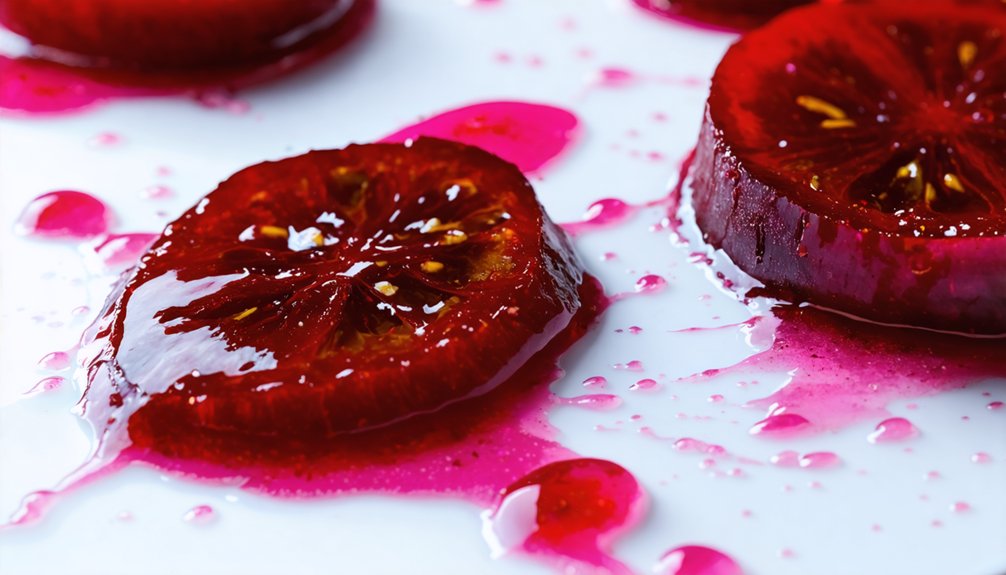
Few foods demonstrate the staining potential of chromogens as vividly as beets. Their deep purple-red natural pigments adhere aggressively to enamel surfaces, making enamel absorption nearly immediate upon contact.
Beets rank among the most aggressive chromogen sources, their pigments binding to enamel almost instantly upon contact.
Unlike lighter foods, beets deposit concentrated color that embeds within enamel’s microscopic pores, producing brown, red, or orange discoloration over time.
Beet juice intensifies this effect because its pigment concentration exceeds that of whole beets.
Repeated exposure compounds the problem — each contact deposits additional chromogens before previous stains fully clear.
You can reduce this risk by rinsing with water immediately after eating beets. This removes residual pigment before it sets.
Limiting frequent beet consumption and scheduling regular dental cleanings further prevents cumulative discoloration from becoming difficult to reverse.
Why Tomato Sauce Hits Teeth Twice as Hard as Most Foods
Tomato sauce doesn’t just stain teeth — it actively makes enamel more vulnerable to staining. Its acidity temporarily softens enamel, increasing porosity and accelerating color absorption. That vulnerability compounds the damage from lycopene, tomato’s dense red pigment.
Here’s how the double attack unfolds:
- Acid weakens enamel — tomatoes lower oral pH, softening the surface and opening microscopic channels.
- Pigment adherence increases — lycopene binds more effectively to compromised enamel than to intact enamel.
- Residue lingers — sauce is thick and sticky, extending contact time between pigment and enamel.
You’re not just dealing with surface color. You’re dealing with a food that chemically prepares your teeth for deeper, more persistent staining with every exposure.
How to Reduce Teeth Staining After Eating Beets or Tomato Sauce
Knowing how beets and tomato sauce compromise enamel gives you a practical basis for countering the damage before it sets. Rinse with water immediately after eating either food to displace surface pigments before they bind to enamel.
Rinsing with water after eating beets or tomato sauce displaces surface pigments before they bind to enamel.
Wait 30 minutes before brushing, since acidity temporarily softens enamel and early brushing increases abrasion.
Chewing sugarless gum stimulates saliva, which naturally clears residual chromogens.
Incorporate crunchy produce like apples or carrots into your routine to mechanically cleanse surfaces.
Consistent oral hygiene, including twice-daily brushing and flossing, limits pigment accumulation over time.
Schedule regular professional cleanings to address extrinsic buildup that home care misses.
If discoloration has already developed, dental whitening treatments can reverse surface staining effectively when combined with preventive dietary habits.
Frequently Asked Questions
Can Beet or Tomato Stains on Teeth Become Permanent Over Time?
Yes, beet pigment and tomato stains can become stubborn over time if you don’t act quickly. Stain longevity increases with repeated exposure, but you can prevent permanence through consistent rinsing, regular dental cleanings, and timely brushing habits.
Do Beet Supplements or Capsules Stain Teeth the Same Way Food Does?
Like a dimmer switch, beet capsule impact on staining is substantially reduced—you’re bypassing direct enamel contact. Tomato supplement effects are similar. Since pigments don’t linger on your teeth, your staining risk stays minimal.
Are Children’s Teeth More Vulnerable to Staining From Beets and Tomato Sauce?
Yes, your children’s dental health faces heightened risk—their developing enamel is thinner and more porous, amplifying natural staining factors like beets’ deep pigments and tomato sauce’s acidity. You’ll want to rinse their teeth promptly after exposure.
Can Whitening Toothpaste Reverse Stains Caused by Beets or Tomato Sauce?
Like erasing footprints in sand, whitening toothpaste can reduce extrinsic stains from natural pigmentation. It won’t fully reverse dietary impact from beets or tomato sauce, but you’ll minimize discoloration through consistent, daily use.
Does Cooking Beets or Tomatoes Reduce How Much They Stain Teeth?
Cooking doesn’t considerably reduce natural pigmentation in beets or tomatoes. You’re still exposing your enamel to potent chromogens. Dietary influence remains strong, so rinsing immediately after consumption is your most effective preventive strategy against staining.
References
- https://rockhilldentist.com/6-foods-stain-teeth/
- https://www.bupa.co.uk/newsroom/ourviews/teeth-staining-foods
- https://www.azfd.com/blog/top-foods-whiten-teeth-prevent-staining/
- https://familydentistottawa.com/7-foods-staining-teeth/
- https://personalizedsmiles.com/10-surprising-foods-that-could-be-staining-your-teeth-and-how-to-avoid-them/
- https://dentimax.com/11-foods-that-stain-your-teeth/
- https://www.lwdentist.com/20-foods-and-drinks-that-cause-stains-on-teeth/
- https://www.disabled-world.com/health/oral/dental/stains.php
- https://www.zocdoc.com/blog/guides/9-foods-and-beverages-that-stain-your-teeth/
- https://www.gq.com/story/things-that-stain-your-teeth-the-most