For stubborn discoloration, you need a peroxide-based tray system with enough concentration and contact time to reach dentin-level stains. Custom-fit trays using 10–35% carbamide peroxide or 15% hydrogen peroxide consistently outperform strips and rinses on embedded stains. Top options for 2026 include Opalescence Go and Smile Brilliant T9, both clinically validated for resistant cases. Match your peroxide strength to your stain severity, and you’ll get measurably better results—everything you need to choose correctly is covered ahead.
Key Takeaways
- Custom-fit trays outperform prefilled options by conforming closely to teeth, maximizing gel contact, and delivering up to six shades of improvement.
- For stubborn stains, 35% carbamide peroxide used 30–45 minutes provides stronger penetration than lower-concentration alternatives.
- Hydrogen and carbamide peroxide release oxygen radicals that oxidize deep stains within enamel and dentin layers.
- Opalescence Go and Smile Brilliant T9 rank among the most effective tray systems for resistant discoloration in 2026.
- Consistent daily use over the full treatment course yields noticeable results within days and full results within three weeks.
Why Stubborn Stains Don’t Respond to Basic Whitening
When basic whitening products fail to deliver results, the issue usually comes down to stain depth and formula strength. Surface-level strips and rinses target extrinsic discoloration, but they can’t penetrate deeper layers where stubborn stains settle.
Your dental hygiene habits matter, yet they won’t reverse discoloration that’s already embedded in enamel or dentin.
Stain sources like coffee, tea, tobacco, and certain medications create discoloration that resists low-concentration formulas. Basic over-the-counter products typically use minimal peroxide levels, which limits their ability to break down those bonds effectively.
If you’re not seeing results, your stains likely require a higher-concentration peroxide system with prolonged gel contact.
Understanding this distinction helps you make a more targeted, informed decision about which whitening approach actually matches your situation.
How Whitening Trays Actually Break Down Deep Discoloration
When you apply a peroxide-based whitening tray, the active ingredient doesn’t just clean the tooth surface—it penetrates the enamel and reaches the discolored molecules embedded in the dentin beneath.
Hydrogen peroxide and carbamide peroxide both work by releasing oxygen radicals that break apart the chemical bonds holding those deep stain compounds together.
This oxidation process is what separates tray-based whitening from surface-level approaches that can’t reach intrinsic discoloration.
Peroxide Penetrates Tooth Enamel
Once peroxide contacts your enamel, it breaks down into free radicals that penetrate the tooth’s crystalline structure and oxidize the discolored organic compounds lodged within. Enamel resilience determines how effectively your tooth withstands repeated treatment cycles without structural compromise.
Saliva effects also matter—excess saliva dilutes gel concentration, reducing oxidation efficiency.
Understanding this process helps you control outcomes:
- Higher concentrations accelerate oxidation but increase sensitivity risk
- Longer contact time allows deeper penetration into intrinsic stain layers
- Tray fit directly affects how consistently peroxide maintains contact with enamel
- Saliva management through well-fitted trays preserves gel potency throughout the wear cycle
Matching concentration to stain depth and tray design to your anatomy gives you precise, evidence-backed control over whitening progression.
Targeting Intrinsic Stain Layers
Intrinsic stains sit within dentin, beneath the enamel surface, which is why surface-level products rarely produce meaningful results on deep discoloration. Peroxide compounds must diffuse through enamel to reach chromogens embedded in dentin tubules. Custom-fit trays maximize gel-to-tooth contact, giving active ingredients the sustained exposure needed to break those bonds effectively.
You’ll want to prioritize enamel-safe formulations, since prolonged or excessive peroxide use raises enamel erosion risk, compromising both structural integrity and veneer compatibility if restorative work is planned. Carbamide peroxide, released gradually over longer wear times, is often better suited for intrinsic discoloration than faster-acting alternatives.
Consistency across a full treatment course matters more than concentration alone. Targeting deep stain layers requires precision, patience, and a tray system engineered for controlled, even delivery.
Which Peroxide Strength Matches Your Stain Type?
Matching peroxide strength to your stain type directly affects how efficiently you whiten and how well you manage sensitivity. Saliva effects dilute gel over extended wear, and enamel erosion risk rises with higher concentrations used incorrectly.
- Light surface stains: 15% hydrogen peroxide for 15–20 minutes daily delivers results within 3–5 days.
- Moderate discoloration: 10% carbamide peroxide worn 2 hours to overnight offers controlled, sustained penetration.
- Stubborn or set stains: 35% carbamide peroxide used 30–45 minutes targets deeper layers more aggressively.
- Sensitivity concerns: Lower-concentration carbamide peroxide with desensitizing support reduces irritation without sacrificing progress.
Matching concentration to stain depth lets you apply the minimum effective dose, protecting enamel while maximizing outcome. Follow product instructions precisely—concentration determines both wear time and your safety profile.
Custom-Fit vs. Prefilled Whitening Trays for Tough Stains
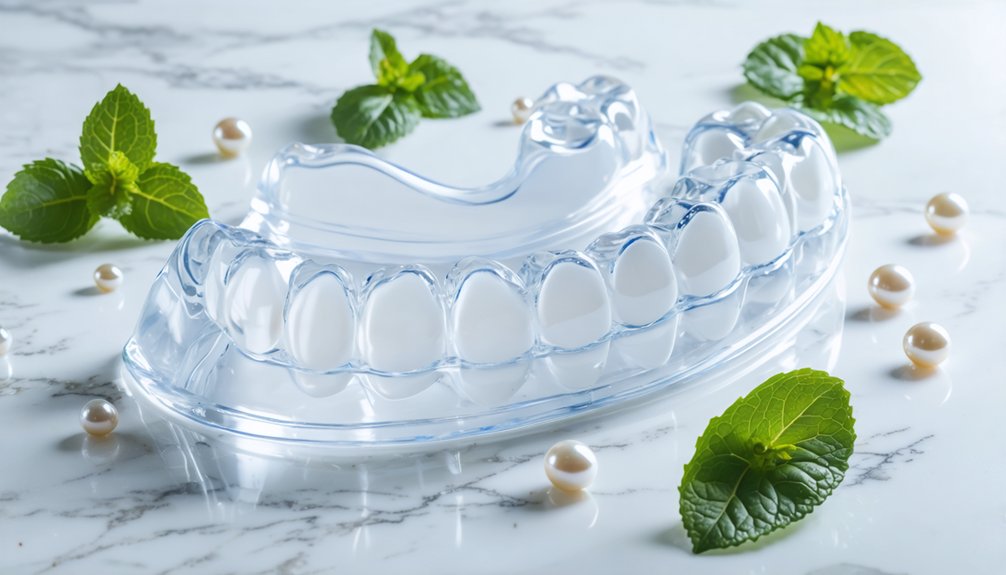
When selecting a tray system for tough stains, fit directly determines how well the gel contacts resistant tooth surfaces. Custom-fit trays conform closely to your enamel, maximizing gel consistency across uneven or deeply stained areas. That precise contact translates to more predictable whitening depth—up to six shades with professional-grade systems.
Prefilled trays offer convenience but sacrifice that close adaptation. On stubborn or intrinsic stains, gaps in fit reduce gel contact and limit outcomes.
Tray durability also factors into your decision. Custom trays withstand repeated use and extended treatment courses, while prefilled options are designed for shorter-term maintenance.
If you’re targeting persistent discoloration, a custom-fit system gives you greater control over gel placement, wear time, and overall whitening consistency.
The Best Teeth Whitening Trays for Stubborn Stains in 2026
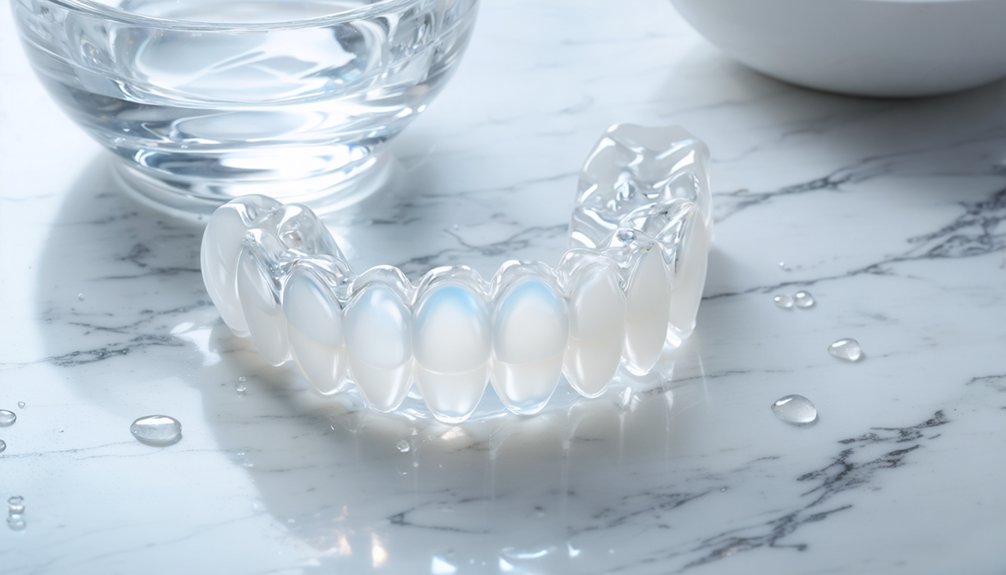
If you’re dealing with stubborn stains in 2026, your strongest options include custom-fit lab-made trays, professional-grade peroxide systems like Opalescence Go, and sensitivity-targeted formulas such as Smile Brilliant T9.
The active ingredient matters: hydrogen peroxide works faster at lower wear times, while carbamide peroxide suits longer overnight use and controlled whitening.
With consistent daily use, you can expect noticeable results within 3 days and up to 6 shades of improvement over a full treatment course.
Top Stain-Fighting Trays
Not all whitening trays are built to handle stubborn stains equally. Your results depend heavily on matching the right system to your stain type and dental hygiene routine. Custom-fit trays consistently outperform prefilled options for deeper discoloration because they maximize gel-to-enamel contact.
Consider these clinically supported options for effective stain removal:
- Opalescence Go – 15% hydrogen peroxide, prefilled, delivers 3–5 shades in roughly 10 days
- Smile Brilliant T9 – carbamide peroxide with desensitizing support, ideal for sensitive teeth
- SportingSmiles – budget custom-fit trays with separately purchased professional-grade gel
- Remi – whitening-compatible tray format suited for night guard users
Prioritize ADA-accepted formulas and follow concentration-specific wear times.
Daily consistency drives results more than any single application.
Key Whitening Ingredients
The active ingredient in your whitening tray determines both how fast you’ll see results and how well the formula handles stubborn discoloration. Two compounds dominate clinical formulations: hydrogen peroxide and carbamide peroxide.
Hydrogen peroxide acts faster, making it effective for surface stain types like coffee and tobacco. A 15% concentration typically delivers results within 3 to 5 days at 15 to 20 minutes of daily wear.
Carbamide peroxide releases hydrogen peroxide more slowly, suiting longer overnight protocols and deeper stain types tied to poor dental hygiene history or aging enamel.
Higher concentrations accelerate whitening but increase sensitivity risk. Selecting the right compound depends on your stain origin, sensitivity threshold, and wear schedule.
Matching concentration to those variables gives you precise control over your whitening outcome.
Expected Results Timeline
Most users following a consistent tray-based whitening protocol see noticeable changes within 3 days, with fuller results developing over 1 to 3 weeks depending on stain type and product concentration. Your dental hygiene habits and stain removal consistency directly influence outcomes.
Expected benchmarks by system type:
- 15% hydrogen peroxide prefilled trays: 3–5 shades over approximately 10 days
- Custom lab-made systems: up to 6 shades with a full treatment course
- 35% carbamide peroxide: visible stain removal within 1–2 weeks at 30–45 minutes daily
- Intrinsic or stubborn stains: respond slower and require custom-fit trays for adequate gel contact
Daily compliance matters more than occasional use. Skipping sessions extends your timeline and reduces total whitening depth.
How Long Before Whitening Trays Show Real Results?
While results vary by stain type and product strength, many users notice a change within 3 days of consistent use. Your dental anatomy plays a role here — enamel porosity and stain depth directly influence how quickly peroxide penetrates and lifts discoloration.
Most 15% hydrogen peroxide systems deliver 3 to 5 shades of improvement over approximately 10 days. Custom-fit trays tend to accelerate visible progress because gel contact is more uniform across tooth surfaces.
Tooth remineralization also factors into your timeline. Peroxide temporarily opens enamel pores, so spacing sessions appropriately supports both whitening depth and structural recovery.
For stubborn or intrinsic stains, expect 1 to 3 weeks before full results stabilize. Daily consistency, not frequency spikes, drives the most reliable outcomes.
How to Whiten With Trays Without Triggering Sensitivity
Whitening results improve faster when you stay consistent — but consistency becomes harder to maintain if sensitivity forces you to stop early. Managing sensitivity isn’t about avoiding whitening — that’s one of the most persistent whitening myths. It’s about controlling variables.
- Choose carbamide peroxide over hydrogen peroxide for slower, gentler release.
- Use custom-fit trays to minimize gel contact with gum tissue.
- Follow diet restrictions for 48 hours post-treatment — avoid acidic drinks and pigmented foods that compound irritation.
- Select sensitivity-formulated gels containing desensitizing agents, like those in Smile Brilliant T9.
Higher concentration doesn’t always mean better results — it often means higher sensitivity risk. You control outcomes by matching concentration to your tolerance, following wear-time guidelines precisely, and treating consistently rather than aggressively.
Tray Fit, Wear Time, and Habits That Maximize Whitening
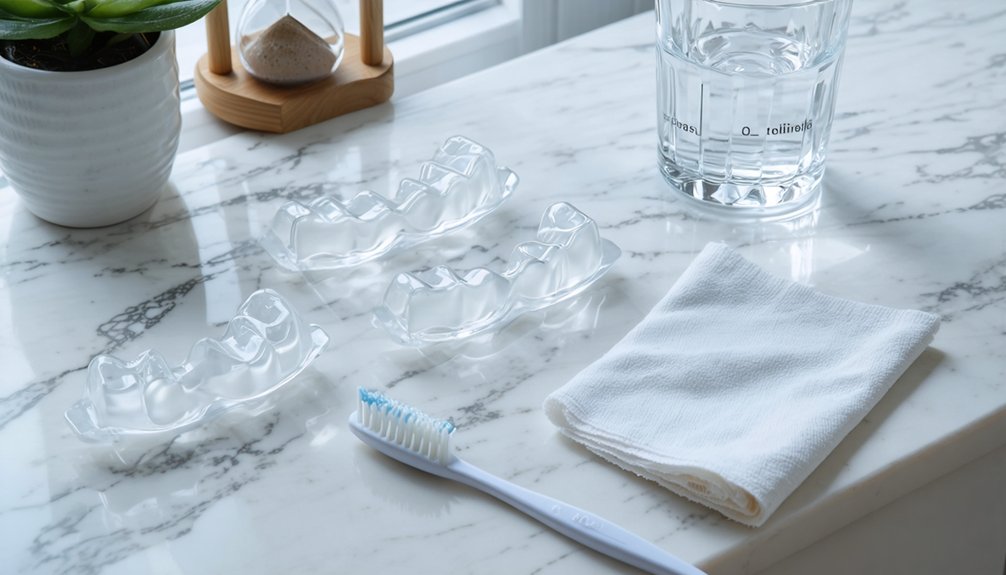
Even small gaps between the tray and your tooth surface reduce gel contact and slow results — which is why fit isn’t a minor detail, it’s the foundation of effective whitening. Custom-fit trays consistently outperform generic options because closer contact means more uniform gel distribution across stubborn stains.
Wear time depends on concentration. Use 15% hydrogen peroxide for 15 to 20 minutes daily. Use 10% carbamide peroxide for two hours or overnight. Don’t exceed recommended durations — longer exposure doesn’t accelerate results, it increases sensitivity risk.
Gel consistency matters beyond application. Store gel as directed, and avoid temperature extremes that degrade the formula.
Tray hygiene is equally non-negotiable: rinse with warm water and mild soap after each use.
Daily consistency, not intensity, drives measurable whitening progress.
How to Keep Teeth White After You Reach Your Target Shade
Once you’ve hit your target shade, maintenance becomes the priority. Relapse is predictable without consistent habits, but it’s also preventable.
Follow these evidence-backed practices to protect your results:
- Diet restrictions matter immediately: Avoid strongly pigmented foods and acidic drinks for at least 48 hours post-treatment. Then, limit them long-term.
- Oral hygiene is non-negotiable: Brush twice daily and floss consistently to prevent surface stain accumulation.
- Schedule periodic touch-ups: Use your custom tray with a lower-concentration gel every few weeks to counteract gradual discoloration.
- Store your trays properly: Clean them with warm water and mild soap to preserve fit and hygiene.
Consistency in both diet restrictions and oral hygiene determines how long your whitening results actually last.
Frequently Asked Questions
Can Whitening Trays Be Used With Dental Crowns or Veneers?
Like a key that won’t fit every lock, whitening trays can’t change dental crown compatibility or achieve veneer stain removal—peroxide doesn’t alter restorations. You’ll only whiten natural teeth surrounding them.
Is a Dentist’s Prescription Required to Purchase Professional-Grade Whitening Gels?
You don’t need a prescription for many professional-grade gels, but higher concentrations often require one. Over-the-counter options with custom-fit trays let you control your whitening regimen effectively without a dental visit.
Do Whitening Trays Work Differently on Teeth With Enamel Erosion?
Yes, they do. Eroded enamel increases enamel sensitivity, making peroxide penetration less predictable and potentially harsher. You’ll want a precise tray fit to minimize gel exposure and protect vulnerable surfaces during treatment.
Can Pregnant or Breastfeeding Individuals Safely Use Peroxide Whitening Trays?
You shouldn’t use peroxide whitening trays during pregnancy or while breastfeeding. Pregnancy safety data remains limited, and breastfeeding concerns about peroxide absorption aren’t fully studied. Consult your healthcare provider before starting any whitening treatment.
How Should Whitening Trays Be Stored Between Uses for Longevity?
rinse with warm water, use mild soap, and you’ll extend longevity greatly.
References
- https://www.tribecasmiles.com/best-home-whitening-kits-trays-2026
- https://www.dentistsanfrancisco.com/dental-whitening-trays-reviews-ultimate-guide/
- https://www.tribecasmiles.com/best-home-teeth-whitening-products-2025
- https://clubwhitesmile.com/best-yellow-teeth-whitening-products/
- https://www.yahoo.com/lifestyle/articles/10-dentist-approved-strips-teeth-175300534.html
- https://smilestories.co/how-to-clean-teeth-whitening-trays/