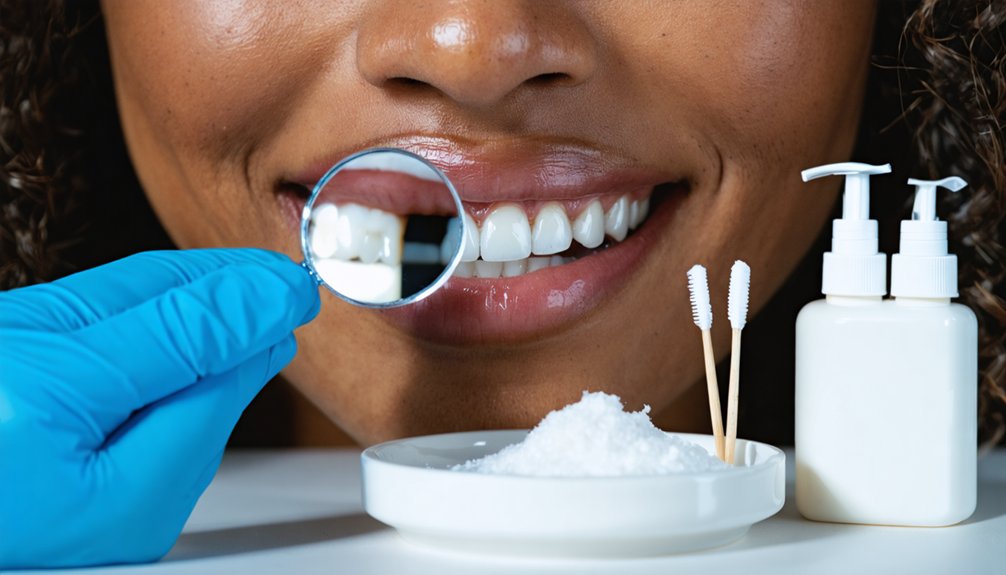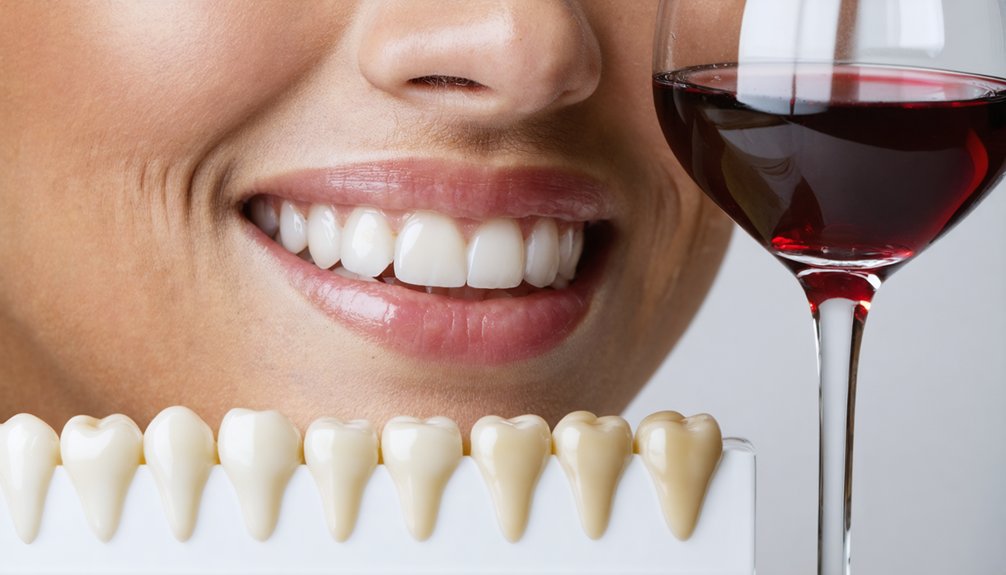
Wine stains your teeth fast because tannins and chromogens bond directly to enamel’s microscopic ridges. To remove fresh stains, rinse immediately with water, then wait 30–60 minutes before brushing with a whitening toothpaste. Don’t brush right away — wine softens enamel, making it vulnerable to abrasion. At-home remedies like diluted hydrogen peroxide and baking soda can help lift surface discoloration. For lasting results, your prevention strategy matters just as much as your removal routine.
Key Takeaways
- Rinse your mouth with water immediately after drinking wine to dilute acids and wash away stain-causing pigments before they bond.
- Avoid brushing teeth immediately after wine; wait 30–60 minutes to prevent brushing softened, acid-weakened enamel.
- Brush with whitening toothpaste before drinking to remove plaque, which binds pigments and worsens staining.
- Use baking soda paste or diluted hydrogen peroxide (2–3 times weekly) to lift surface stains without over-damaging enamel.
- For persistent or deep stains resistant to home remedies, consult a dental professional for appropriate whitening treatment.
Why Wine Stains Teeth in the First Place
Wine stains teeth through a two-part process involving chromogens and tannins. Wine chemistry delivers chromogens—intensely colored stain pigments—that bond directly to tooth enamel. Tannins act as a binding agent, helping those pigments adhere more stubbornly to your teeth’s surface.
Your enamel isn’t perfectly smooth. It contains microscopic ridges that trap stain pigments on contact. Plaque buildup worsens this problem significantly, giving chromogens an even rougher, more porous surface to grip.
White wine compounds the issue by softening enamel through acidity before you’ve even touched a red. That weakened surface absorbs pigment faster and more deeply.
Understanding this mechanism puts you in control. Staining isn’t random—it’s a predictable chemical process you can actively work against with the right timing and habits.
How to Remove Wine Stains Right After Drinking
The moment you finish your last sip, rinse your mouth thoroughly with water to flush away pigments before they bind to enamel.
If you have gauze or a soft cloth nearby, gently wipe your teeth to lift fresh residue with minimal abrasion.
Resist the urge to brush immediately—acidic wine temporarily softens enamel, so wait at least 30 minutes before introducing any toothbrush friction.
Rinse With Water Immediately
Once you’ve finished a glass of red, rinsing your mouth with water is the simplest and most immediate line of defense against staining. Water reduces contact time between wine pigments and enamel, flushing residue before it binds to plaque or settles into surface irregularities.
This step also supports saliva stimulation, encouraging your mouth’s natural acid-neutralizing response. Swish thoroughly for 20 to 30 seconds, ensuring water reaches between teeth where dental flossing would otherwise be needed to dislodge trapped pigment later.
Critically, rinsing is far safer immediately after drinking than brushing. Wine’s acidity temporarily softens enamel, making aggressive mechanical action counterproductive.
Water buys you the recommended 30-to-60-minute window before brushing while still actively minimizing pigment adhesion from the moment you set your glass down.
Gently Wipe Teeth Clean
If rinsing isn’t enough, a dry or damp piece of gauze—or even a clean cloth—gives you a gentle mechanical option for lifting fresh wine residue directly from tooth surfaces.
Gently wipe across each surface immediately after drinking before pigments bind to plaque. This approach prioritizes enamel integrity while still achieving meaningful plaque removal.
Follow this precise sequence for best results:
- Fold gauze or cloth into a firm pad for controlled contact.
- Wipe each tooth using short, deliberate strokes across the front surface.
- Rinse once more with water to clear any loosened residue.
Unlike aggressive brushing on acid-softened enamel, this method lets you act fast without compromising enamel structure—keeping your stain-management strategy both effective and protective.
Wait Before Brushing
After drinking wine, your instinct to brush immediately can actually work against you—acid from the wine temporarily softens enamel, making it more vulnerable to abrasion. Wine acidity creates a window of heightened sensitivity, and brushing during this period accelerates enamel erosion rather than preventing stain penetration.
Instead, wait 30 to 60 minutes before reaching for your toothbrush. During that window, rinse with water to neutralize residual acidity and dilute pigment contact. If you want additional support, chew sugar-free gum to stimulate saliva production, which actively remineralizes softened enamel.
Once you’ve waited, brush with a whitening toothpaste using an electric toothbrush for precise, effective plaque removal. Timing your brushing correctly transforms it from a potential liability into a controlled, protective measure.
Should You Brush Your Teeth Right After Wine?
Although it feels instinctive, reaching for your toothbrush immediately after wine is one of the worst things you can do for your enamel. Wine’s acidity temporarily softens enamel, making it vulnerable to abrasion. Brushing during this window accelerates enamel erosion rather than preventing stains.
Take control with this precise post-wine protocol:
- Rinse immediately with water to neutralize residual acid and dislodge surface pigments.
- Wait 30–60 minutes before brushing, allowing saliva to remineralize and reharden softened enamel.
- Prioritize dental flossing during your wait period to remove plaque and trapped pigment without abrading vulnerable enamel.
Once enamel has restabilized, brush using a whitening toothpaste. This sequenced approach protects structural integrity while still delivering meaningful stain control.
The Best At-Home Remedies for Wine-Stained Teeth
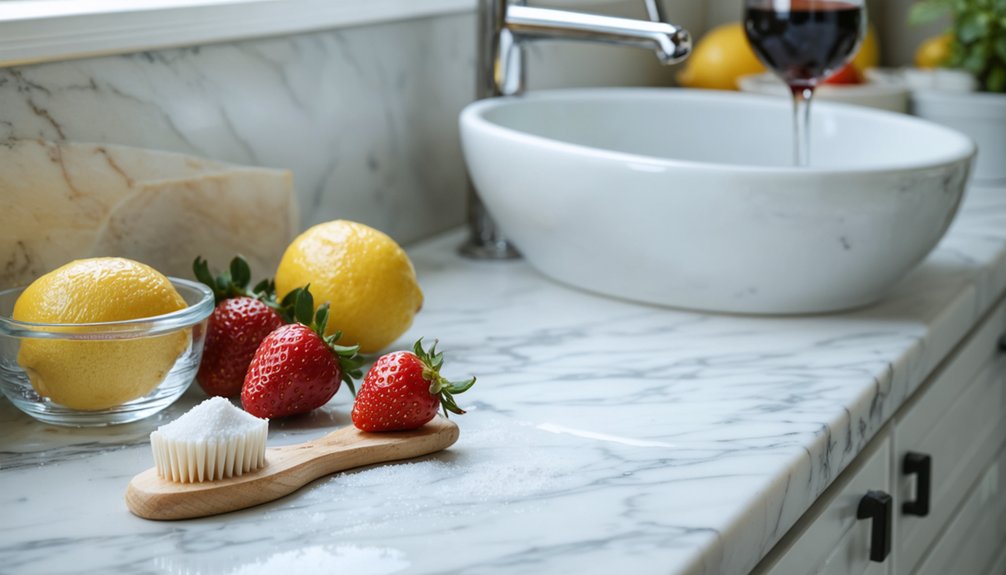
When professional treatments aren’t immediately accessible, two at-home remedies stand out for tackling wine-stained teeth: baking soda paste and diluted hydrogen peroxide.
Baking soda’s mild abrasive properties help lift fresh surface pigments without the harsh chemical load of stronger whitening agents.
Hydrogen peroxide works differently, acting as a bleaching agent that breaks down stain compounds, though you should limit its use to avoid enamel damage over time.
Baking Soda Paste Benefits
Baking soda paste is one of the simplest, most accessible tools for lifting fresh wine stains from your teeth. Its mild abrasive action works against tannin impact by physically disrupting pigment deposits before they penetrate deeper. Think of it as a controlled wine peel for your enamel’s surface layer.
To use it effectively, follow these steps:
- Mix a small amount of baking soda with water to form a thin paste.
- Apply gently with a soft-bristled brush using circular motions for 60 seconds.
- Rinse thoroughly and follow with water to restore oral pH balance.
Keep in mind that baking soda targets surface stains only. It won’t reverse deep discoloration, so consistent application after wine consumption matters most.
Hydrogen Peroxide Stain Removal
Hydrogen peroxide works as a bleaching agent by releasing oxygen molecules that break down the chromogen compounds responsible for wine discoloration. Understanding wine chemistry helps you use this remedy strategically — tannins and anthocyanins embed within enamel micro-pores, and peroxide’s oxidative action directly disrupts these stain mechanisms at a molecular level.
To apply it, dilute 3% hydrogen peroxide with equal parts water, swish for 60 seconds, then rinse thoroughly. You’ll notice gradual brightening with consistent, controlled use.
However, frequency matters critically — daily application risks enamel degradation and increased sensitivity. Limit treatments to two or three times weekly, and monitor your enamel’s response carefully.
For deeper discoloration that resists this approach, professional whitening remains the more reliable escalation.
At-Home Ingredients That Can Damage Your Enamel
Though marketed as natural remedies, some at-home stain-removal ingredients can quietly erode the enamel you’re trying to protect. Repeated exposure to acidic foods and abrasive compounds weakens enamel over time, accelerating sensitivity and discoloration rather than reversing it.
Some natural remedies quietly erode the enamel they claim to protect, accelerating damage rather than reversing it.
Three ingredients to use cautiously:
- Apple cider vinegar — Its high acidity triggers enamel erosion with consistent use, softening the surface it’s meant to brighten.
- Activated charcoal — The coarse texture may lift fresh stains, but aggressive application scratches enamel microscopically over time.
- Hydrogen peroxide (undiluted or daily) — While effective as a bleaching agent, daily use degrades enamel integrity and increases sensitivity.
If you use any of these, limit frequency and always rinse thoroughly with water afterward.
How to Prevent Wine Stains Before They Set
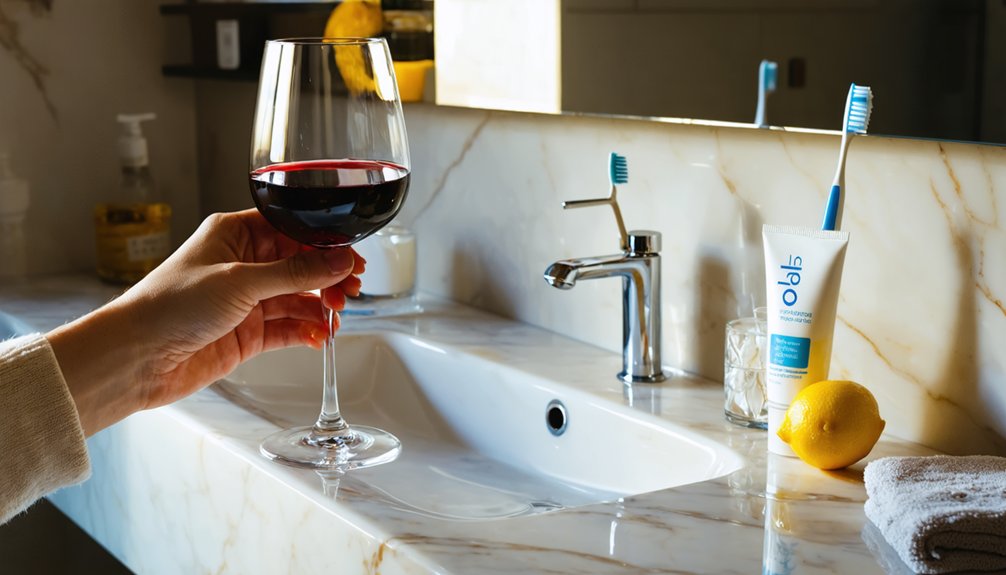
The most effective time to act against wine stains is before you take your first sip. Brushing your teeth beforehand removes the plaque layer that wine pigments bind to most aggressively, cutting off their primary point of adhesion.
Once you’re drinking, sip water between glasses to dilute acids and continuously flush staining particles away from your enamel.
Brush Before Drinking
Before your first sip, brushing your teeth is one of the most effective steps you can take to prevent wine stains from taking hold. Plaque acts as a magnet for pigments, so eliminating it beforehand is essential for stain prevention and long-term oral health.
Follow this pre-wine brushing protocol:
- Brush at least 30 minutes before drinking to avoid enamel vulnerability from any residual acidity.
- Use a whitening toothpaste with mild abrasives to polish away existing surface buildup.
- Focus on the front teeth where wine contact and visible discoloration are most prominent.
This single habit considerably reduces pigment adhesion throughout the evening, giving you a cleaner surface that’s far more resistant to staining before exposure even begins.
Sip Water Between Glasses
Sipping water between glasses is one of the simplest and most effective habits you can add to your routine. Each sip dilutes wine acidity that temporarily softens enamel, reducing the window during which stain pigments bind most aggressively to tooth surfaces.
Water also physically displaces residual wine before it settles into microscopic enamel irregularities.
For stronger results, choose sparkling water. Its carbonation helps loosen stain pigments that have already begun adhering, giving you a mechanical advantage without abrasion or chemical risk. Swirl it briefly before swallowing to maximize coverage across all surfaces.
This habit doesn’t require carrying extra products or changing your evening. It integrates directly into how you already drink, giving you consistent, low-effort control over staining before it ever becomes a problem worth treating.
What to Eat and Drink to Protect Against Wine Stains
What you consume alongside wine plays a direct role in how much pigment adheres to your enamel. Strategic food and drink choices reduce wine color transfer and minimize stain penetration before it starts.
What you eat and drink with wine directly controls how much staining pigment actually bonds to your enamel.
- Cheese and nuts neutralize mouth acidity and coat enamel with a protective film, reducing how aggressively tannins bind.
- Crunchy vegetables like carrots and apples mechanically scrub tooth surfaces while you chew, dislodging fresh pigment before it sets.
- Sparkling water between glasses uses carbonation to loosen stain-causing residue and dilute acids that soften enamel.
Avoid sequencing white wine before red—white wine’s higher acidity primes enamel for deeper red wine penetration.
Pairing intentionally isn’t just about flavor; it’s a practical defense for your smile.
The Daily Habits That Actually Prevent Wine Stains
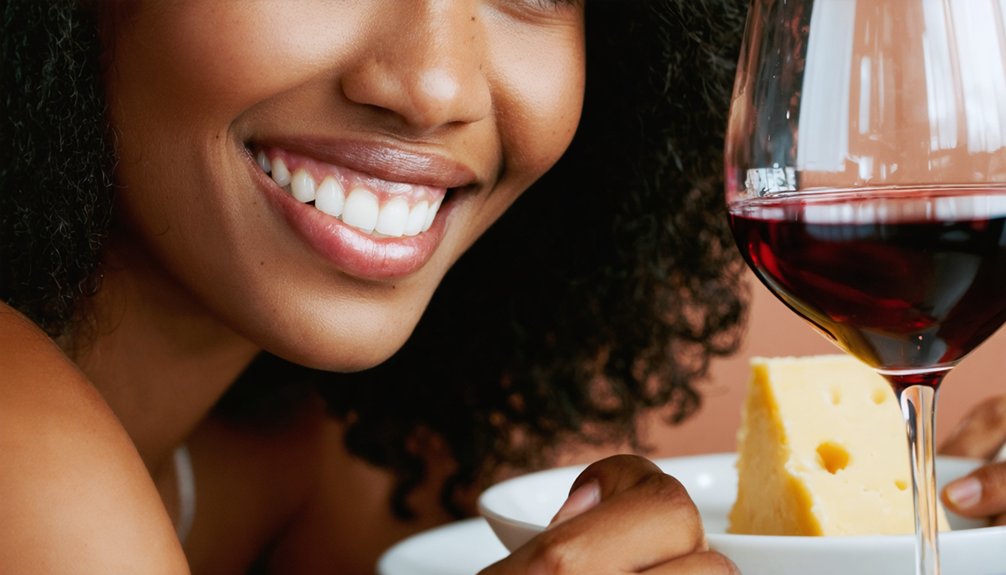
Consistent daily hygiene does more to prevent wine stains than any post-drinking remedy. Wine chemistry works against unprotected enamel — tannins and pigments bind most aggressively to plaque-coated surfaces, accelerating stain penetration before you’ve finished your glass.
Remove that binding site through disciplined brushing twice daily for two minutes, and you’ve already disrupted the process at its source.
Floss daily to eliminate plaque between teeth, where pigment accumulates invisibly. Use an electric toothbrush with a whitening toothpaste; the mechanical polishing action outperforms manual brushing for surface stain control.
Brush before drinking, not immediately after — acid temporarily softens enamel, making post-wine brushing counterproductive. These aren’t occasional corrections. They’re structural habits that systematically reduce your teeth’s vulnerability to staining with every glass you pour.
When Home Treatments Stop Working on Wine Stains
Home treatments have a ceiling, and once wine stains cross it, no baking soda paste or diluted peroxide will bring your teeth back. Wine fermentation produces pigments that penetrate beyond surface enamel over time, making at-home abrasives ineffective. Enamel erosion from repeated acid exposure compounds this, creating microscopic channels where discoloration embeds permanently.
Recognize when you’ve reached that ceiling:
- Whitening toothpaste produces no visible change after 4–6 weeks of consistent use.
- Stains appear yellow or gray beneath the enamel surface rather than on it.
- Sensitivity increases alongside discoloration, signaling structural compromise.
At this point, professional whitening becomes your primary option. A dentist can assess stain depth and prescribe targeted treatment that home care simply can’t replicate.
How to Stay Stain-Free as a Regular Wine Drinker
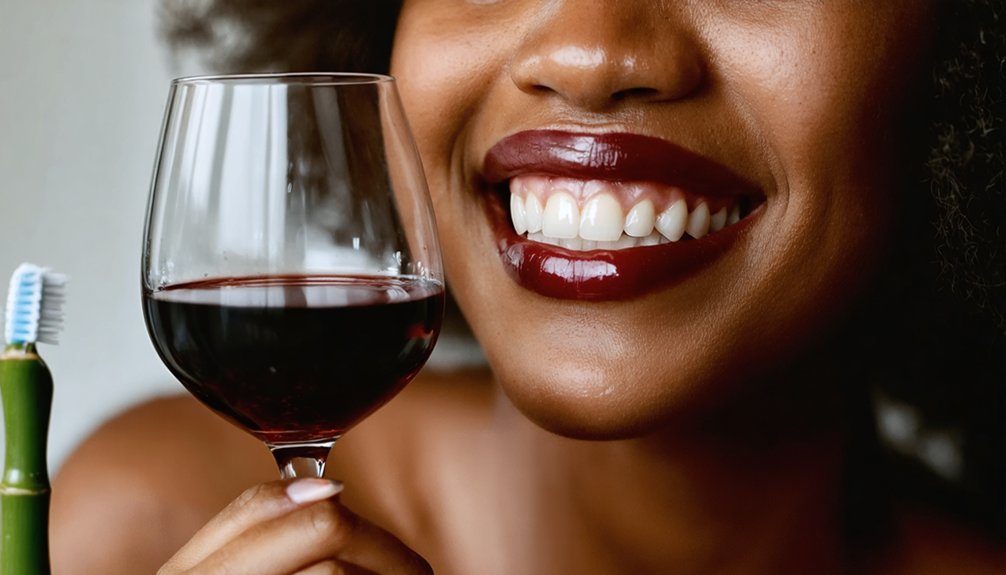
Staying stain-free as a regular wine drinker isn’t about avoiding wine—it’s about building a system that works alongside your habit. Brush before your first glass to eliminate plaque, the primary surface where pigments bind.
Prioritize smart wine pairing by eating cheese, apples, or carrots during your session; these foods neutralize acid and mechanically clean enamel between sips.
Consider glassware selection carefully—narrower rims reduce lip contact and incidental tooth exposure.
Sip water consistently between glasses, and rinse thoroughly when you’re done.
Wait 30 to 60 minutes before brushing.
Maintain twice-daily brushing with a whitening toothpaste, floss daily, and use an electric toothbrush for superior plaque removal.
Consistent prevention delivers far better results than reactive treatments ever will.
Frequently Asked Questions
Can Wine Stains on Teeth Affect the Strength of Enamel Permanently?
Wine’s acidity causes enamel erosion, which can permanently weaken your teeth if you’re not careful. You’ll notice increased tooth sensitivity over time, so rinse immediately after drinking and avoid brushing too soon.
Does the Temperature of Wine Influence How Badly It Stains Teeth?
Temperature doesn’t dramatically dictate staining, but warmer wine’s amplified wine acidity accelerates tooth absorption of pigments into enamel. You’ll minimize risk by choosing cooler temperatures and rinsing immediately after drinking.
Are Certain Tooth Shapes or Sizes More Vulnerable to Wine Staining?
Your tooth enamel’s surface area and texture influence your staining risk. Rougher, more porous enamel and wider, flatter teeth trap pigments more readily, so you’ll want to prioritize consistent plaque control and timely rinsing.
Can Medications Make Teeth More Susceptible to Wine Staining?
Like a sponge absorbing dye, certain medications amplify dental discoloration risks. Medication interactions—particularly antihistamines, antihypertensives, and chemotherapy drugs—can dry your mouth, reducing saliva’s protective barrier and making your teeth considerably more vulnerable to wine staining.
Does Drinking Wine Through a Straw Meaningfully Reduce Tooth Staining?
Straw effectiveness is limited—wine acidity still floods your oral environment. You’ll reduce some direct contact, but pigments and acid reach your enamel regardless. It’s a minor precaution, not a reliable stain-prevention strategy.
References
- https://www.mydentaloffice.com/natural-whitening-remedies-for-coffee-and-wine/
- https://crest.com/en-us/oral-care-tips/how-to-prevent-and-get-rid-of-red-wine-teeth-stains
- https://drpostel.com/8-tricks-to-enjoy-wine-without-staining-your-teeth/
- https://www.youtube.com/watch?v=OLMu8rHRAKA
- https://www.mainedentalclinic.com/blog/wine-stain-teeth-and-other-first-world-problems/
- https://www.reddit.com/r/wine/comments/1pnpqf4/seeking_advice_for_preventing_and_removing_red/
- https://www.carlmontdentalcare.com/blog/wine-and-tooth-staining
- https://www.rd.com/article/red-wine-stains-teeth/
- https://www.instagram.com/reel/CtelBCggU6a/