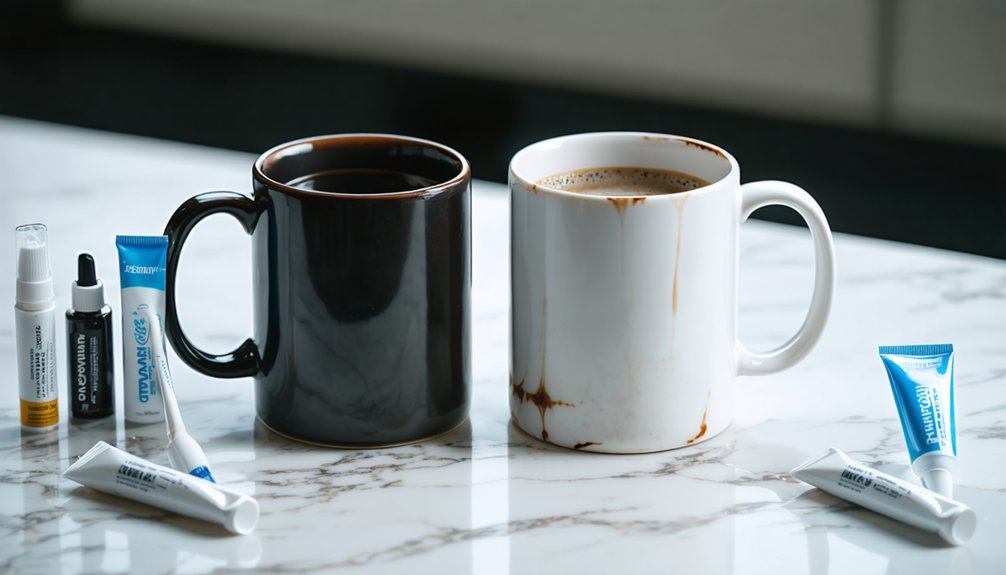
Whitening toothpastes containing sodium hexametaphosphate (SHMP) work best on coffee stains because they disrupt how tannins bond to enamel rather than just polishing the surface afterward. For mild staining, peroxide-based formulas oxidize surface pigments effectively. For moderate to heavy staining, SHMP-based products with controlled abrasivity provide stronger disruption of stain adhesion. You’ll want to match the formula to your stain severity to protect enamel integrity — and there’s more to that decision than most labels reveal.
Key Takeaways
- Sodium hexametaphosphate (SHMP) is the most effective ingredient for coffee stains, disrupting tannin adhesion and forming a protective film over enamel.
- For moderate to heavy staining, SHMP-based toothpastes outperform standard whitening formulas by targeting the chemical bonds that lock stains to enamel.
- Hydrogen peroxide-based toothpastes work best for mild coffee staining, oxidizing surface pigments effectively during daily routine use.
- Mild abrasives like hydrated silica help polish away surface stains, but high RDA values above 100 risk long-term enamel damage.
- Look for ADA-sealed products listing active ingredients like SHMP or peroxide, avoiding vague whitening claims without evidence-backed components.
Why Coffee Stains Bond to Enamel So Stubbornly
Coffee stains cling to enamel because of how tannins — naturally occurring polyphenolic compounds in coffee — interact with the porous surface of your teeth. Enamel porosity allows microscopic channels to absorb pigmented molecules during coffee absorption, embedding chromogens beneath the surface layer.
Once tannins bind to salivary proteins coating your enamel, they create a sticky film that traps additional staining compounds with each exposure. The longer coffee contacts your teeth, the deeper this pigmentation penetrates.
Acidic compounds in coffee temporarily soften enamel, widening those pores and accelerating absorption. Without targeted intervention, these bonds strengthen over time, making standard cleaning ineffective.
That’s why conventional toothpastes often fail — they’re not formulated to disrupt the specific chemical adhesion that coffee staining creates.
Which Ingredients Actually Lift Coffee Stains Off Teeth
Once you understand why coffee stains bond so tenaciously to enamel, the next logical question is which ingredients are actually capable of breaking that bond. Three compounds have demonstrated measurable efficacy:
Once you know *why* coffee stains bond to enamel, the real question becomes: what actually breaks that bond?
- Sodium hexametaphosphate (SHMP) — disrupts stain adhesion at the surface level, showing the highest coffee stain removal in controlled study conditions.
- Hydrogen peroxide — oxidizes pigment molecules directly, reducing stain penetration into enamel structure with the fastest visible results.
- Mild abrasives (hydrated silica, calcium carbonate) — mechanically polish surface deposits without accelerating enamel erosion when used within safe RDA thresholds.
Fluoride deserves mention as a supporting ingredient. It doesn’t lift stains, but it fortifies enamel against the acidity that makes stain penetration worse over time.
How to Match a Whitening Toothpaste to Your Stain Level
Before choosing a whitening toothpaste, you need to assess how visible your coffee staining actually is, since stain severity directly shapes which active ingredients will work.
If you’re dealing with minor discoloration, a peroxide-based formula used daily is typically sufficient.
While heavier surface staining responds better to sodium hexametaphosphate-containing products shown to outperform other toothpaste types in controlled study conditions.
You should also distinguish between daily maintenance use, which favors low-abrasion formulas that protect enamel over time, and short-term intensive whitening, where hydrogen peroxide toothpaste delivers the strongest immediate results.
Identify Your Stain Severity
How severe your coffee staining is should directly shape which whitening toothpaste you choose. Coffee pH and enamel porosity both influence how deeply pigment penetrates, making accurate self-assessment essential before selecting a formula.
- Mild staining: A peroxide-based toothpaste used consistently handles surface discoloration without excessive abrasion.
- Moderate staining: Look for sodium hexametaphosphate, which research shows disrupts stain adhesion more effectively than standard whitening agents.
- Heavy or persistent staining: Prioritize SHMP-containing formulas with controlled abrasivity; these outperformed conventional and basic whitening toothpastes in controlled study conditions.
If your enamel porosity is high due to frequent acid exposure from coffee, pair any whitening formula with fluoride to protect structure while targeting stains. Match formula strength to stain severity—not preference.
Match Ingredients To Staining
Matching the right whitening ingredient to your stain level reduces unnecessary enamel wear while maximizing stain removal. Coffee absorption accelerates with enamel permeability, so early-stage staining responds well to peroxide-based formulas, which oxidize surface pigment without aggressive abrasion.
For moderate staining, sodium hexametaphosphate disrupts stain adhesion at the enamel surface and outperforms conventional whitening agents in controlled studies.
Heavy, layered discoloration requires higher abrasive action, though you’ll trade some enamel integrity for faster results.
If your teeth are sensitive, choose a low-abrasion formula with fluoride or hydroxyapatite to protect compromised enamel while still targeting stains.
Align your ingredient choice with your stain depth, not marketing claims, and you’ll apply targeted removal rather than broad, potentially damaging treatment.
Daily Use Versus Intensive
Whether you’re managing early discoloration or visible layered staining, the frequency and intensity of your whitening approach should reflect your stain burden rather than default to the strongest available formula.
Match your routine to your actual stain level:
- Minor staining from daily coffee brewing responds well to a low-abrasion peroxide formula used consistently.
- Moderate-to-heavy staining warrants an SHMP-based toothpaste used short-term, then shifting to a maintenance formula.
- Sensitive or compromised enamel requires a gentle whitening product that prioritizes enamel remineralization over aggressive stain removal.
Rotating high-abrasion products into your routine without cause accelerates enamel wear unnecessarily. Reserve intensive formulas for targeted correction, then step down.
Your long-term goal should balance visible stain control with structural enamel integrity.
The Best Whitening Toothpastes for Coffee Stains
When choosing a whitening toothpaste for coffee stains, you’ll want to match the active ingredients to your stain severity and sensitivity level.
Products like Colgate Optic White, Crest 3D White, and Sensodyne Pronamel Gentle Whitening each target coffee discoloration through distinct mechanisms—peroxide oxidation, mild abrasion, or enamel-protective formulas.
Understanding which key ingredients drive stain removal helps you select the most effective option for your specific situation.
Top-Rated Whitening Toothpastes
Choosing the right whitening toothpaste for coffee stains comes down to the active ingredients and how well they match your level of staining. Coffee chemistry produces tannin-based pigments that bond to enamel, so your formula needs to actively disrupt that adhesion.
Three clinically supported options stand out:
- Colgate Optic White — peroxide-based, targets surface stains directly, effective for moderate daily coffee exposure.
- Crest 3D White — hydrogen peroxide formula that delivers measurable lightness improvement with consistent use.
- Sensodyne Pronamel Gentle Whitening — prioritizes enamel preservation with a lower-abrasion profile, suited for sensitive teeth or frequent use.
Match your choice to your staining severity. Heavier discoloration responds better to sodium hexametaphosphate or peroxide formulas, while mild staining requires less aggressive intervention.
Key Stain-Fighting Ingredients
What separates an effective whitening toothpaste from a mediocre one isn’t the branding—it’s the active ingredients. When you’re dealing with coffee stains, specific compounds do the heavy lifting.
Sodium hexametaphosphate (SHMP) shows the strongest stain-removal efficacy against coffee discoloration, reducing pigment adherence directly.
Hydrogen peroxide oxidizes stains quickly, making it your best option for immediate results.
Carbamide peroxide works similarly, breaking down into hydrogen peroxide upon contact.
For daily use, mild abrasives—hydrated silica or calcium carbonate—polish surface stains without accelerating enamel erosion.
This matters because coffee acidity already weakens enamel over time, so abrasive overuse compounds the damage.
Fluoride remains non-negotiable. It actively counteracts coffee acidity by reinforcing enamel structure, protecting your teeth during consistent whitening toothpaste use.
Best Options by Staining Level
Not all coffee stains respond the same way, so matching the right toothpaste to your staining level matters.
- Minor staining: A peroxide-based formula works well for daily maintenance, outperforming natural remedies like oil pulling or activated charcoal in controlled evidence.
- Moderate to heavy staining: Choose a toothpaste containing sodium hexametaphosphate, which demonstrated the strongest stain-removal efficacy against coffee discoloration in clinical testing.
- Sensitive teeth with visible staining: A low-abrasion formula like Pronamel Gentle Whitening protects enamel while addressing surface discoloration without requiring professional whitening intervention.
If stains persist despite consistent toothpaste use, professional whitening targets intrinsic discoloration that surface-active ingredients can’t reach.
Knowing your staining level lets you act precisely rather than defaulting to the most aggressive option available.
Why SHMP Outperforms Most Whitening Ingredients on Coffee Stains
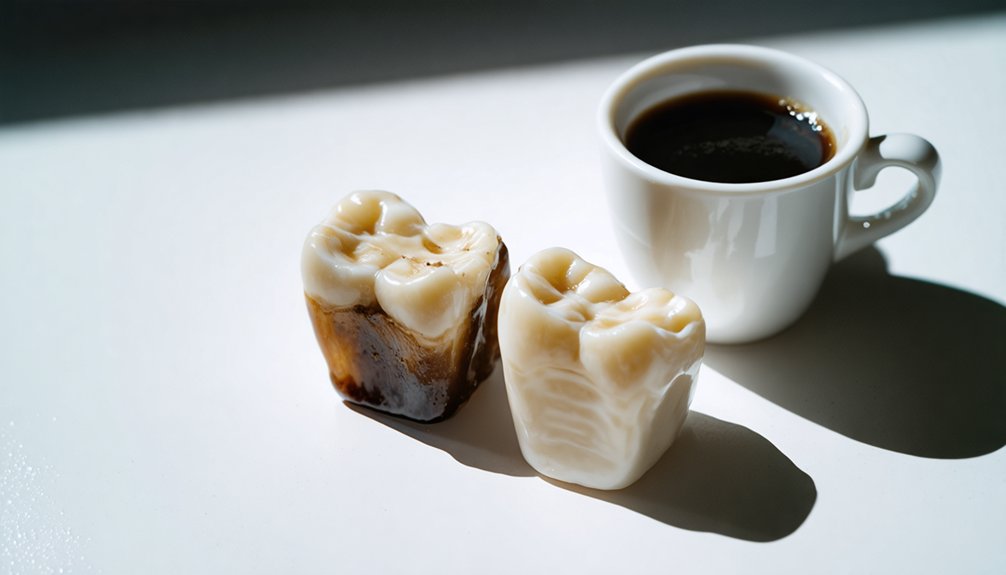
Among whitening ingredients studied for coffee stain removal, sodium hexametaphosphate (SHMP) stands out because it targets how coffee stains adhere to enamel in the first place.
Coffee chemistry involves tannins and chromogens that bind to enamel porosity, embedding pigment into microscopic surface irregularities. SHMP disrupts this process by forming a protective film over enamel, reducing the surface charge that allows stain molecules to attach.
Rather than simply abrading away discoloration, it interferes with the bonding mechanism itself. In controlled comparisons, SHMP-containing toothpastes outperformed both conventional and standard whitening formulas on coffee-stained teeth.
If you’re dealing with persistent coffee staining, choosing a toothpaste with SHMP gives you a mechanistically targeted option rather than relying solely on abrasion or oxidation to manage discoloration.
Does Hydrogen Peroxide Really Work on Coffee Stains?
- It targets intrinsic discoloration more than surface-level deposits.
- Overuse increases the risk of enamel erosion, particularly in acidic oral environments.
- Results appear fastest with consistent, controlled daily application.
If your goal is quick visible improvement, a peroxide-based formula gives you the most reliable short-term outcome.
However, if you’re managing heavier staining long-term, pairing it with an SHMP formula reduces coffee residue buildup without compounding erosion risk.
When Stronger Whitening Starts Damaging Your Enamel
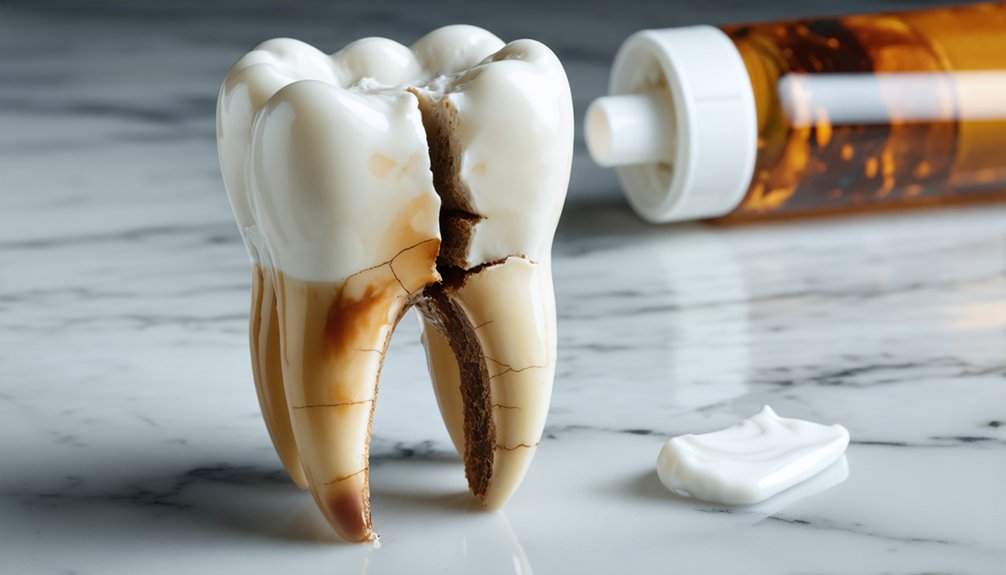
The stronger a whitening toothpaste’s stain-removal performance, the more likely it’s compromising your enamel. Research confirms a direct tradeoff: higher stain removal correlates with increased abrasion. That abrasion accelerates enamel erosion over time, permanently thinning the protective surface you can’t rebuild.
Once enamel wears down, tooth sensitivity follows — your teeth become more reactive to temperature, acidity, and pressure. RDA values help you track this risk. Products scoring above 100 deliver aggressive polishing action; daily use at that level isn’t safe long-term.
If you’re treating moderate coffee stains, a mid-range abrasive paired with peroxide gives you effective stain control without sacrificing structural integrity. Prioritize formulas with fluoride or hydroxyapatite to offset erosion risk while maintaining consistent whitening results.
The Label Claims Worth Paying Attention To
When scanning a whitening toothpaste label, not every claim carries equal weight. “Whitens teeth” is a marketing phrase; “contains sodium hexametaphosphate” or “hydrogen peroxide” tells you something clinically meaningful.
Before defaulting to natural remedies or escalating to professional treatments, verify these three label markers:
- Active whitening ingredient — sodium hexametametaphosphate, hydrogen peroxide, or carbamide peroxide signals real stain-disruption capacity.
- ADA Seal of Acceptance — confirms independent safety and efficacy testing, not just manufacturer assertions.
- RDA value or “low-abrasion” designation — protects enamel during daily use, particularly if you’re drinking coffee regularly.
Ignore vague terms like “advanced formula” or “brilliance boost.” You’re looking for specific, verifiable ingredients that correspond to documented mechanisms. That’s what separates a functional product from a packaged promise.
How to Get Better Results on Coffee Stains With Whitening Toothpaste
Choosing the right toothpaste matters less than how consistently and correctly you use it. Brush within 30 minutes after drinking coffee to disrupt pigment before it bonds to enamel. Use gentle, circular strokes — aggressive brushing accelerates enamel erosion without improving stain removal.
Rinse with water immediately after coffee to restore pH balance in your mouth, reducing acid-driven enamel softening before you brush. Brush twice daily without skipping, since whitening toothpastes address surface stains incrementally. Don’t exceed the recommended brushing duration; two minutes is sufficient.
If you’re using a peroxide-based formula, avoid eating or drinking for 30 minutes post-brushing to extend contact time. Pairing consistent technique with the right formula produces measurably better outcomes than product-switching alone.
Frequently Asked Questions
Can Whitening Toothpaste Remove Old, Set-In Coffee Stains Effectively?
Deeply settled discoloration won’t fully yield to whitening toothpaste alone. You’ll find stain removal improves with SHMP or peroxide-based formulas, but enamel safety limits how aggressively you can address truly set-in coffee stains.
Is Whitening Toothpaste Safe to Use Twice Daily Long-Term?
Yes, you can safely use most whitening toothpastes twice daily long-term if you choose low-abrasion formulas. Prioritize fluoride-containing options to support tooth enamel health and monitor for dental sensitivity, which signals you should reduce frequency.
Do Whitening Toothpastes Work Faster When Combined With Whitening Strips?
Yes, you’ll accelerate results by combining both. Whitening strips deliver concentrated peroxide for deeper action, while toothpaste maintains surface clarity daily. Unlike natural remedies, this pairing outperforms either alone—though it won’t replace professional treatments for severe discoloration.
Can Children or Teenagers Safely Use Whitening Toothpaste for Coffee Stains?
Studies show enamel’s still developing until age 18. You shouldn’t ignore children safety concerns—whitening toothpastes aren’t recommended for young children. For teenagers precautions, consult a dentist first, as peroxide-based formulas risk enamel sensitivity during development.
Does Rinsing After Coffee Help Whitening Toothpaste Work Better Overall?
Yes, rinsing benefits your whitening results. When you rinse after coffee, you’re reducing coffee residue before it binds to enamel, giving your whitening toothpaste a cleaner surface to target stains more effectively.
References
- https://www.knoxvillesmiles.com/dentist-recommended-toothpaste-for-nicotine-and-coffee-stains/
- https://pmc.ncbi.nlm.nih.gov/articles/PMC11551553/
- https://www.yahoo.com/lifestyle/drink-coffee-wine-start-using-155900264.html
- https://www.bonappetit.com/story/sensodyne-whitening-toothpaste
- https://www.colgate.com/en-sa/colgate-optic-white-lovers
- https://www.bustle.com/wellness/best-toothpastes-for-coffee-stains
- https://www.lidercare.com/best-whitening-toothpaste-for-coffee-stains/