For severe tooth stains, you’ll need professional cleaning before any whitening begins — whitening agents can’t penetrate plaque and tartar buildup. After scaling, in-office bleaching delivers high-concentration treatment in about one hour, targeting deep discoloration that over-the-counter products can’t reach. You’ll then maintain results with custom trays, dietary adjustments, and consistent daily hygiene habits. Each step in this routine builds on the last, and there’s much more to unpack ahead.
Key Takeaways
- Professional dental cleaning before whitening removes plaque and tartar, allowing bleaching agents to effectively reach and treat severely stained enamel.
- In-office whitening uses high-concentration bleaching agents for deep stain penetration, delivering visible results within approximately one hour.
- Avoid coffee, tea, red wine, and dark foods for 48 hours post-whitening, as enamel remains highly porous and stain-susceptible.
- Custom trays with professional-grade whitening gel or daily whitening strips help sustain results following in-office treatment.
- Brush twice daily with a soft-bristled toothbrush, floss daily, and rinse after consuming staining foods to preserve whitening results.
Why Severe Tooth Stains Need a Professional Cleaning First
When severe tooth stains are the problem, professional dental cleaning isn’t just a recommendation—it’s a necessary first step. Whitening agents can’t penetrate effectively through layers of plaque and tartar, making proper dental hygiene foundational before any whitening protocol begins.
Professional scaling removes calcified buildup that routine brushing can’t address, clearing the surface so whitening treatments actually reach the enamel.
For severe discoloration, in-office whitening remains the fastest solution, typically completed within one hour depending on the system used.
After cleaning, your dentist may recommend custom trays or whitening strips for continued stain reduction.
Over-the-counter products work primarily on surface stains, so deeper discoloration requires dentist-directed treatment.
Prioritizing professional cleaning before whitening isn’t optional—it’s the step that makes stain prevention and lasting results achievable.
What to Expect From In-Office Whitening for Deep Stains
For severe staining, in-office whitening is the most direct and effective route you can take. A dentist applies a high-concentration bleaching agent under controlled conditions, which penetrates deeper discoloration that over-the-counter products can’t reach. Most sessions take about one hour, depending on the system used.
In-office whitening reaches deeper stains that no over-the-counter product can touch.
You should anticipate some gum sensitivity during or after treatment, as the surrounding tissue occasionally reacts to the bleaching agent. Your dentist will use protective barriers to minimize this risk.
Enamel erosion is less likely under professional supervision because concentration levels and application time are carefully managed.
After the session, your teeth will be more porous for the first 48 hours, making stain avoidance critical. Following your dentist’s post-treatment instructions directly impacts how long your results last.
Which Whitening Products Dentists Recommend After Treatment
Once your in-office treatment wraps up, your dentist will likely recommend specific products to extend and maintain those results. Custom trays with professional-grade whitening gel offer precise application that generic options can’t match. Whitening strips used daily for one to two weeks are another evidence-based choice for continued stain reduction.
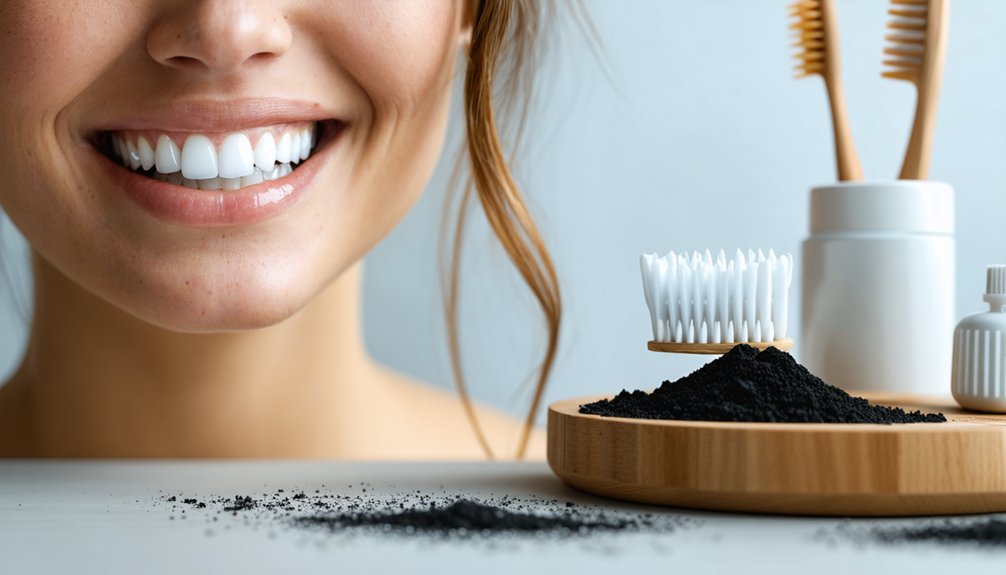
Don’t let teeth whitening myths steer you toward unregulated alternatives. Natural remedies like activated charcoal or DIY hydrogen peroxide mixtures lack the controlled formulation that ADA-approved products provide. Direct hydrogen peroxide use risks gum burns and unpredictable concentrations.
Whitening toothpaste can support maintenance, though some formulas are abrasive with daily use. Your dentist selects products matched to your stain severity, so following their specific protocol gives you the most controlled, measurable outcome.
How to Use Baking Soda Without Damaging Your Enamel
To make a baking soda paste, mix one teaspoon of baking soda with two teaspoons of water and brush gently for no longer than two minutes.
Limit this method to about once a week, since more frequent use risks gradual enamel erosion.
Keep in mind that baking soda addresses only surface stains and can’t match the deeper results that professional cleaning or dentist-directed whitening products deliver.
Baking Soda Paste Recipe
Exceeding this frequency increases the risk of enamel erosion and gingival irritation, particularly along the gum line where tissue is more vulnerable. Avoid pressing firmly or scrubbing aggressively, as mechanical force compounds abrasive damage. Rinse thoroughly after use.
This method addresses surface stains only. For deeper discoloration, baking soda alone won’t deliver meaningful results, and you’ll need professionally directed whitening intervention instead.
Safe Brushing Frequency
Never substitute baking soda for your regular fluoride toothpaste. Fluoride actively remineralizes enamel, providing structural protection that baking soda cannot.
Treat baking soda as a controlled, supplemental tool rather than a daily cleaning agent.
Limitations Versus Professional Options
Baking soda has two clear limitations that separate it from professional whitening: it addresses only surface stains and produces modest results compared to dentist-directed treatments. If your discoloration runs deeper than enamel buildup, baking soda won’t reach it.
Cosmetic dentistry offers in-office whitening that can produce measurable results in approximately one hour, a benchmark no at-home paste can match.
You should also consider tooth remineralization when evaluating your options. Baking soda doesn’t strengthen enamel or restore mineral density, whereas professional treatments often integrate fluoride protocols that support enamel integrity post-whitening.
For severe staining, a dental cleaning followed by custom trays or in-office bleaching delivers outcomes that occasional baking soda use simply can’t replicate.
Use baking soda as a supplemental surface-stain tool, not your primary whitening strategy.
What to Avoid in the First 48 Hours After Whitening
After whitening, your teeth enter a critical 48-hour window during which the enamel is more porous and absorbs pigments far more readily than usual.
You should eliminate coffee, tea, red wine, dark sauces, and berries from your diet entirely during this period to prevent new staining from undoing your results.
Protecting your teeth now directly determines how long your whitening outcome lasts.
High-Stain Foods To Avoid
The first 48 hours following a whitening treatment are when your teeth are most vulnerable to restaining, because the enamel remains more porous during this window. Unlike natural remedies or home solutions, clinical guidance is precise: chromogenic substances penetrate more deeply during this period.
Avoid these high-stain foods and drinks:
- Coffee and tea – dark pigments bind readily to porous enamel
- Red wine – tannins and chromogens accelerate discoloration
- Dark sauces – soy, tomato, and balsamic cause rapid staining
- Berries – blueberries, blackberries, and pomegranates deposit deep pigment
- Soda and dark juices – acidic and heavily pigmented compounds
If you consume any of these, rinse immediately with water to reduce stain deposition and protect your whitening results.
Protecting Porous Teeth Post-Whitening
During the first 48 hours after whitening, your teeth are at their highest risk for restaining because the enamel remains more porous and absorbs pigments more readily than usual.
Enamel erosion accelerates when you consume acidic foods or drinks during this window, so eliminate coffee, tea, red wine, dark sauces, and berries entirely.
If you consume anything acidic, don’t brush immediately — saliva neutralization requires roughly 60 minutes to reharden enamel before brushing is safe. Brushing too early drives acids deeper, compounding structural damage.
Use a straw when drinking light-colored beverages to minimize direct contact with front teeth. Rinse with water immediately after any pigmented intake.
These 48 hours are your highest-leverage window for protecting your whitening results long-term.
Daily Brushing and Flossing Habits That Preserve Your Results
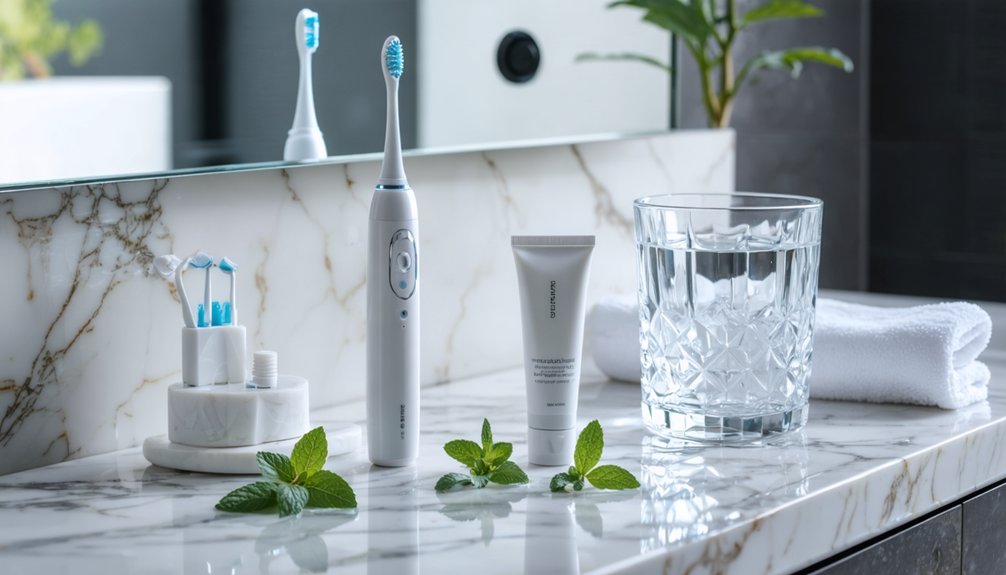
Brushing twice daily with a soft-bristled toothbrush and fluoride toothpaste forms the foundation of stain prevention after whitening. Unlike teeth whitening myths suggesting natural stain removal alone maintains results, consistent mechanical hygiene does the real work.
Follow these evidence-backed daily habits:
- Brush for two minutes, twice daily, using gentle, circular strokes
- Floss daily to remove plaque and debris between teeth where stains accumulate
- Use whitening toothpaste selectively—some formulas are abrasive with daily use
- Wait 60 minutes after acidic foods before brushing to protect softened enamel
- Rinse with water immediately after consuming pigmented foods or drinks
You’ll also want professional cleanings every six months to remove buildup that brushing can’t address, keeping your whitening results measurably longer-lasting.
Foods and Lifestyle Choices That Cause Severe Stains to Return
Even after professional whitening, certain foods, drinks, and habits systematically undo your results by reintroducing pigments and acids that penetrate newly porous enamel. Coffee, tea, red wine, dark sauces, and berries are primary offenders.
Tobacco compounds this damage notably, accelerating nicotine staining beyond what whitening treatments can easily reverse.
Genetic factors influence how quickly your enamel reabsorbs pigments, meaning your stain-return timeline differs from others.
Medication effects, particularly from antihistamines or antihypertensives, can alter saliva production, reducing your mouth’s natural ability to neutralize acids and clear chromogens.
You can slow stain recurrence by using a straw with pigmented liquids, rinsing with water immediately after consumption, and eliminating tobacco entirely.
Controlling these variables puts the outcome directly in your hands.
Frequently Asked Questions
Can Whitening Treatments Work on Dental Crowns, Veneers, or Implants?
Just as natural teeth and restorations sit side by side, their reactions diverge—whitening treatments don’t alter dental crown compatibility or veneer stain resistance. You can’t lighten crowns, veneers, or implants; only natural tooth enamel responds to whitening agents.
How Long Do Professional Whitening Results Typically Last Before Retreatment Is Needed?
You’ll typically maintain results for 6–12 months before retreatment’s needed. Longevity factors like tobacco use, diet, and oral hygiene directly impact duration. Cost considerations favor consistent maintenance habits, reducing how frequently you’ll require full professional retreatment sessions.
Is Tooth Sensitivity After Whitening Treatments a Sign of Permanent Enamel Damage?
Like Achilles’ temporary heel wound, tooth sensitivity after whitening isn’t permanent damage—it’s a transient response. Your enamel health remains intact; sensitivity typically resolves within 48 hours as your teeth’s pores close naturally post-treatment.
Are Whitening Treatments Safe for People With Gum Disease or Cavities?
You shouldn’t use whitening treatments if you have active gum disease or untreated cavities. Prioritize gum health and address cavity risk first, as whitening agents can worsen inflammation and penetrate damaged enamel, causing significant harm.
Does Teeth Whitening Work the Same Way for All Natural Tooth Shades?
No, natural shade variability directly affects whitening effectiveness. Your teeth’s baseline color determines how much brightening you’ll achieve—yellowed teeth typically respond better than gray or brown shades, which often require professional-strength treatment for noticeable results.
References
- https://www.healthline.com/nutrition/whiten-teeth-naturally
- https://www.healthpartners.com/blog/safe-teeth-whitening/
- https://www.gq.com/story/how-to-whiten-teeth-at-home
- https://dentistofplanotexas.com/blog/professional-teeth-whitening-for-deep-stains/
- https://cedardentalgroup.com/how-to-whiten-stained-teeth/
- https://www.youtube.com/watch?v=Wd-5CZQEeCE
- https://www.medicalnewstoday.com/articles/322421