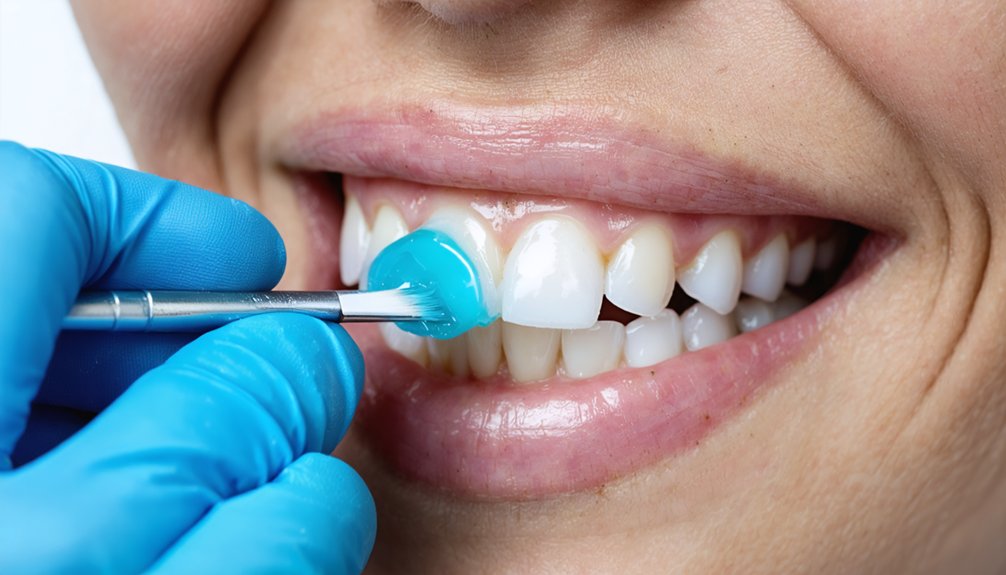
Peroxide whitening can damage your teeth if you’re not careful. Overuse causes enamel softening, surface roughening, and demineralization that exposes the yellower dentin beneath. You may experience sensitivity to hot, cold, or sweet foods, along with gum irritation from gel or strip contact. Existing fillings and crowns won’t respond to bleaching and may weaken or discolor. Understanding exactly how these risks develop can help you make safer, smarter whitening decisions.
Key Takeaways
- Overuse of peroxide whitening can roughen and soften enamel, strip minerals, and paradoxically make teeth appear more yellow over time.
- Tooth sensitivity affects up to 78% of patients, causing sharp pain triggered by hot, cold, or sweet foods.
- Frequent bleaching creates an acidic environment that disrupts enamel’s pH balance, weakening tooth structure and accelerating demineralization.
- Peroxide can discolor fillings and crowns while weakening resin-based restorations, creating mismatched appearances and compromised structural integrity.
- Repeated treatments increase enamel permeability and surface damage, making cautious, moderated whitening routines essential for long-term dental health.
Can Peroxide Actually Damage Your Teeth?
While peroxide whitening is widely considered safe when used correctly, it can damage your teeth if misused. Research confirms that aggressive bleaching causes surface roughening, enamel softening, and increased demineralization.
Peroxide whitening is safe when used correctly—but misuse causes real damage: roughened surfaces, softened enamel, and demineralization.
Repeated overuse strips minerals from your tooth structure, exposes underlying dentin, and accelerates erosion—leaving teeth more vulnerable and paradoxically more yellow over time.
You’re at greater risk when using high-concentration formulas, extending contact time beyond recommendations, or bleaching too frequently. These factors compound enamel breakdown with each session.
If you’re concerned about these risks, alternative whitening methods and natural remedies may offer gentler options worth exploring. However, you should evaluate any approach critically, since evidence supporting many alternatives remains limited.
Controlling how you whiten means understanding what the research actually shows about peroxide’s real potential for harm.
Tooth Sensitivity and Gum Irritation From Peroxide Whitening
Tooth sensitivity is the most frequently reported side effect of peroxide whitening, affecting anywhere from 15% to 78% of patients depending on the product and protocol used. Discomfort typically peaks during or shortly after treatment and can persist for several days. Hot, cold, or sweet foods often trigger sharp, temporary pain.
Gum health is equally at risk. Peroxide gel or strips that contact soft tissue can cause burning, irritation, and inflammation of the gingiva and oral mucosa. Misuse or overuse markedly worsens both outcomes.
You should understand that chasing whitening effectiveness through higher concentrations or longer exposure times doesn’t reduce these risks — it amplifies them. Controlling application time, concentration, and frequency is your most reliable strategy for minimizing harm.
What Peroxide Whitening Does to Enamel Over Time
Beyond sensitivity and gum irritation, peroxide whitening can quietly degrade the very structure it’s meant to improve. Repeated bleaching disrupts your enamel’s pH balance, creating an acidic environment that accelerates demineralization.
Over time, this softens enamel surfaces, increases roughness, and raises permeability—exposing the underlying dentin, which is naturally more yellow than enamel.
Aggressive or frequent regimens compromise enamel remineralization, meaning your teeth struggle to rebuild lost mineral content between sessions. The result isn’t a brighter smile—it’s structurally weaker enamel and, paradoxically, a more translucent or yellowed appearance.
You control how often and how aggressively you whiten. Recognizing that overuse causes measurable surface damage lets you make informed decisions before irreversible structural changes occur.
Moderation and proper intervals aren’t optional—they’re protective.
What Peroxide Whitening Does to Fillings and Crowns
Peroxide whitening doesn’t just affect natural tooth structure—it can also degrade existing restorations. If you have fillings, crowns, or bonded veneers, peroxide exposure can cause restoration discoloration, creating visible color mismatches between treated natural teeth and your dental work.
Unlike enamel, restorative materials don’t respond to bleaching agents the same way, leaving you with uneven results that may require costly replacements.
Beyond appearance, research documents bond weakening in resin-based materials following peroxide exposure. This reduction in bond strength compromises the structural integrity of fillings and bonded restorations, increasing your risk of failure over time.
Higher concentrations and prolonged contact amplify these effects. If you have existing dental work, consult your dentist before starting any whitening regimen to assess your specific risk accurately.
Is Peroxide Teeth Whitening Safe in the Long Run?
When restorations are already at risk from peroxide exposure, it’s reasonable to ask whether long-term whitening causes broader, lasting harm. Current evidence suggests that properly used, low-concentration peroxide doesn’t produce significant systemic toxicity.
However, repeated treatments accelerate enamel demineralization, increase surface permeability, and can expose dentin—making teeth appear more yellow over time, undermining your original goal.
Theoretical concerns around genotoxicity exist but haven’t been confirmed at concentrations used clinically. The real risk lies in cumulative misuse.
When you factor in the cost effectiveness of repeated whitening cycles against mounting enamel damage and restoration replacement, the numbers rarely favor continued aggressive treatment.
You should evaluate alternative options—such as supervised, lower-frequency protocols—before committing to routines that may cause irreversible structural compromise.
Frequently Asked Questions
Can Children or Teenagers Safely Use Peroxide Teeth Whitening Products?
You shouldn’t let children use peroxide whitening products due to Children safety concerns. Teenager risks include enamel damage, heightened sensitivity, and gum irritation, as developing teeth are more vulnerable to peroxide’s adverse effects.
Does Peroxide Whitening Interact With Any Medications or Medical Conditions?
Like a chemical reaction waiting to happen, peroxide whitening doesn’t operate in isolation. You’ll find medication interactions and medical condition risks—including dry mouth disorders and gum disease—can amplify sensitivity, irritation, and enamel damage considerably.
How Soon After Whitening Can You Eat or Drink Normally?
You should wait at least 48 hours before resuming normal eating and drinking. Dietary restrictions help with sensitivity management—avoid hot, cold, or sweet foods that can trigger discomfort while your enamel remains temporarily vulnerable post-treatment.
Are There Safer Natural Alternatives to Peroxide for Teeth Whitening?
Natural remedies and DIY solutions seem safer, but they’re not proven effective. While peroxide carries risks, you won’t find clinically validated alternatives yet. Consult your dentist before trying baking soda, charcoal, or oil-pulling methods.
Can Peroxide Whitening Cause Permanent Discoloration or Irreversible Tooth Damage?
Yes, overusing peroxide can cause irreversible tooth damage. You risk permanent staining from exposed dentin and chronic tooth sensitivity if you exceed recommended concentrations or frequency, making enamel more permeable and structurally compromised over time.
References
- https://pubmed.ncbi.nlm.nih.gov/23846062/
- https://www.medicalnewstoday.com/articles/326148
- https://www.nature.com/articles/4813423
- https://www.vanyodentistry.com/blog/are-there-any-side-effects-of-using-peroxide-based-whitening-products/
- https://www.healthline.com/health/hydrogen-peroxide-teeth-whitening
- https://ec.europa.eu/health/opinions/en/tooth-whiteners/l-2/5-tooth-whitening-products.htm
- https://adanews.ada.org/huddles/risks-of-frequent-teeth-whitening/
- https://pmc.ncbi.nlm.nih.gov/articles/PMC4058574/
- https://pubmed.ncbi.nlm.nih.gov/19543926/
- https://ec.europa.eu/health/scientific_committees/opinions_layman/en/tooth-whiteners/l-3/5-tooth-whitening-products.htm